Aerospace R&D: Where Development Costs Rise First
Lead Author
Published
Views:
In Aerospace R&D, development costs rarely rise all at once—they surge first at the points where certification risk, advanced materials, and system integration converge. For financial decision-makers, understanding these early cost drivers is essential to protecting capital, improving budget accuracy, and funding innovation with confidence in an industry where technical ambition must always align with regulatory and commercial reality.
For CFOs, investment committees, and capital approval teams working across aerospace and advanced transportation, the central question is not whether innovation is expensive. It is where cost escalation begins, how quickly it compounds, and which signals appear 6 to 18 months before overruns become visible in formal reporting.
That question matters even more in environments shaped by FAA, EASA, ISO, and other safety-led frameworks, where design revisions can ripple through testing, supplier qualification, software validation, and certification evidence. In Aerospace R&D, the first cost surge often arrives before production tooling, market launch, or revenue readiness. It starts upstream, inside technical choices that look manageable in concept but become expensive at review gates.
For organizations guided by G-AIT’s benchmarking model across commercial aviation, space systems, high-speed rail, urban air mobility, and extreme-environment logistics, the financial objective is clear: allocate capital early to the right risk zones, rather than absorb uncontrolled spending late in the program. The sections below outline where Aerospace R&D costs rise first and how finance leaders can evaluate those pressure points with greater precision.
Why Early-Stage Aerospace R&D Costs Escalate Before Full Program Scale

Aerospace R&D is unlike conventional product development because cost growth is front-loaded into technical proof, compliance readiness, and integration maturity. In many programs, only 15% to 25% of total lifecycle spend is committed during concept definition, yet decisions made in that period can influence 60% to 70% of downstream cost exposure.
This pattern is visible across next-generation airframes, cryogenic propulsion platforms, autonomous flight controls, and maglev transport systems. Finance teams that wait for major procurement milestones to identify risk are often looking too late. By that point, materials have been selected, architecture has been frozen, and certification assumptions have already shaped the budget base.
Certification complexity is usually the first multiplier
Certification is rarely a single line item. It is a multiplier that affects design documentation, test campaigns, quality systems, simulation validity, supplier records, and change management. A component that appears 8% more expensive in engineering may create a 25% to 40% increase in validation effort if its compliance pathway is immature or unclear.
In Aerospace R&D, this applies strongly to fly-by-wire systems, autonomous control logic, battery safety architecture, and structural assemblies made from advanced composites. For financial approvers, the key issue is not only unit cost but the cost per certifiable design decision.
Typical certification-linked cost triggers
- Additional test articles required after design freeze shifts
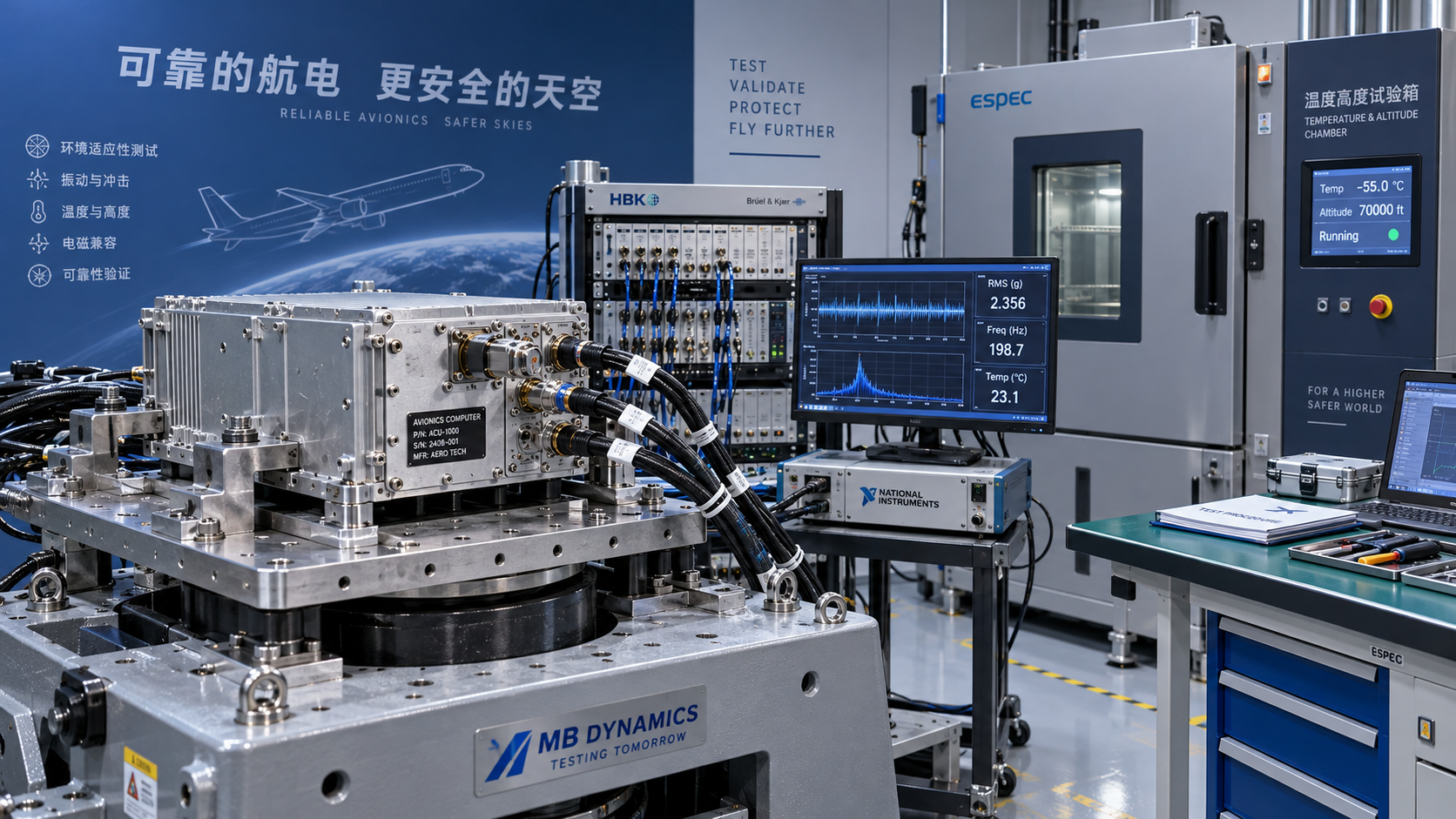
- Extended environmental, fatigue, or thermal cycling campaigns lasting 8 to 20 weeks
- Software assurance evidence growth across multiple revision baselines
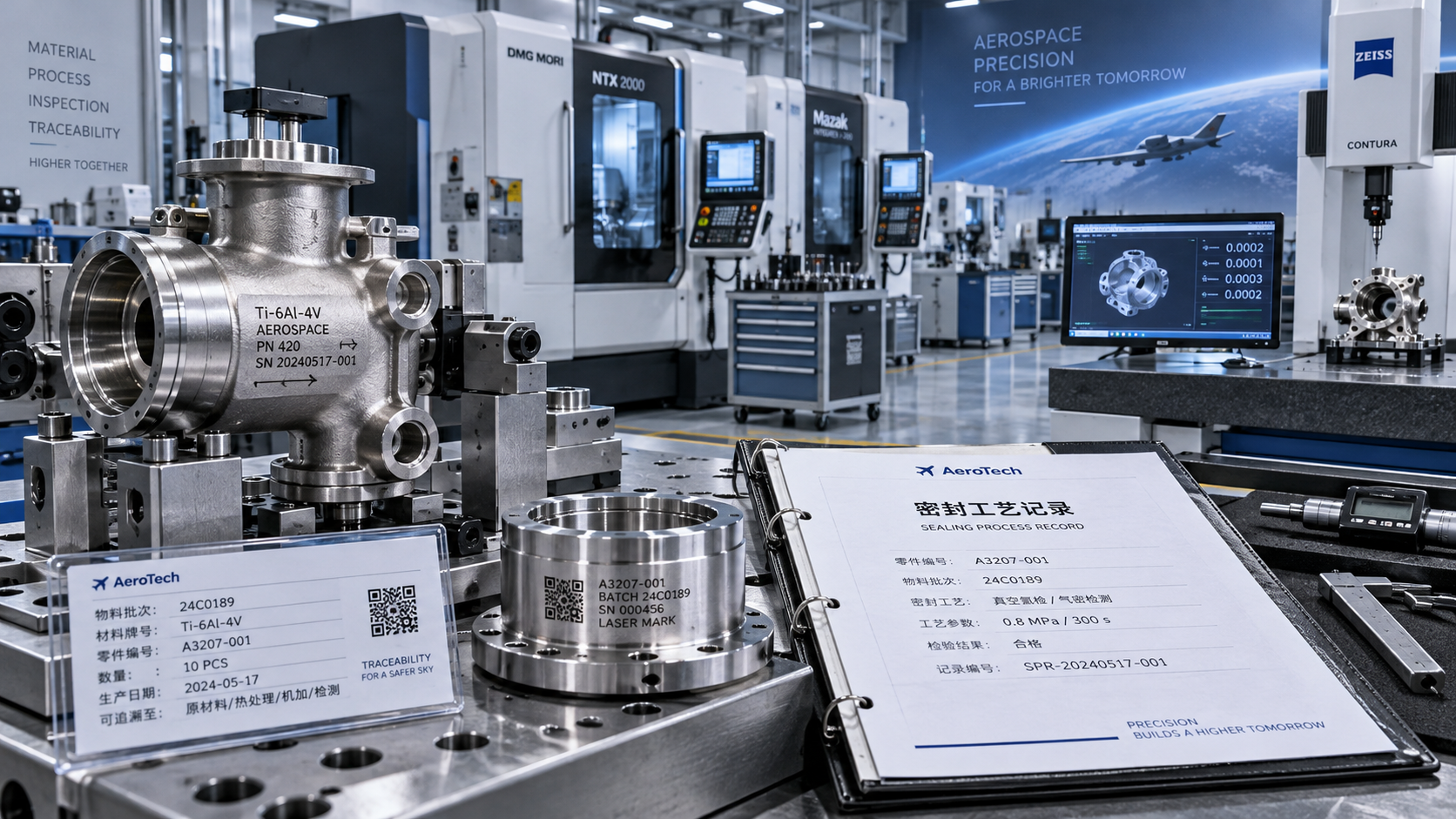
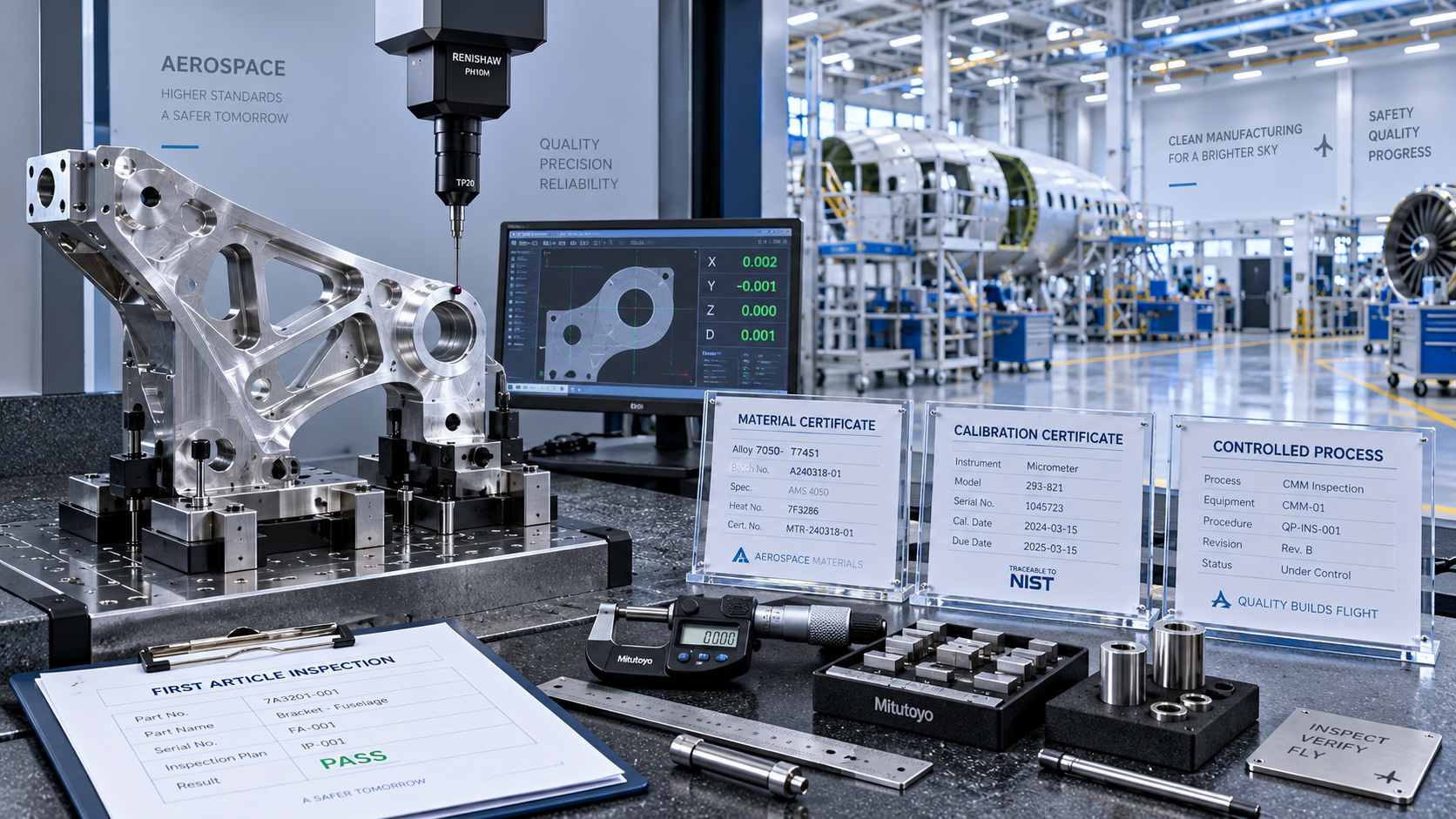
- Supplier requalification when traceability records do not match regulator expectations
Advanced materials create hidden budget volatility
Advanced materials are often justified by performance gains: lower mass, higher temperature tolerance, better fatigue behavior, or improved energy efficiency. Yet the first budget spike usually comes from process control rather than raw material pricing. Composite layup consistency, bonded joint validation, cryogenic compatibility, and NDT protocol development can add 10 to 30 weeks to an R&D plan if process maturity is low.
This is particularly relevant for N-type composite fuselages, thermal protection structures, hydrogen-compatible tanks, and lightweight rail components operating at 500 to 600 km/h. Materials that perform well in simulation still require repeatable manufacturing evidence. Without that, the finance case rests on assumptions that cannot survive industrial scaling.
The table below shows where early Aerospace R&D budget pressure tends to emerge before production ramp or fleet deployment.
The main conclusion is that early cost escalation in Aerospace R&D is not random. It clusters around a small set of high-consequence technical decisions. If those decisions are funded without benchmarked review criteria, capital exposure expands long before the board sees a revised business case.
Where Financial Approvers Should Look First: The Three Highest-Risk Cost Zones
Across aerospace and advanced mobility programs, three zones repeatedly show the earliest and steepest increase in development spending: certification readiness, cross-domain system integration, and supplier capability alignment. Each zone can trigger change orders, milestone delays, and budget restatement within the first 2 to 4 development phases.
1. Certification readiness before formal testing
A common budgeting error is treating certification as a late-stage event linked mainly to testing or authority review. In practice, Aerospace R&D programs begin accumulating compliance cost as soon as requirements are allocated to structures, avionics, propulsion, software, and operations. Missing or weak traceability in month 3 can become a six-figure rework event in month 12.
For financial reviewers, one of the most useful indicators is the percentage of critical requirements already mapped to verification methods. If that number remains below 70% after preliminary design review, the probability of budget instability rises sharply.
2. System integration across software, hardware, and operations
Integration is where technically sound subsystems become financially difficult programs. A propulsion module, control computer, structural assembly, and sensor suite may each meet local targets, yet fail when timing, thermal load, electromagnetic compatibility, or redundancy logic are evaluated as a complete system.
This challenge is acute in UAM/eVTOL aircraft, autonomous rail control, satellite payload integration, and hybrid or zero-emission platforms. In Aerospace R&D, integration delays of 12 to 16 weeks are not unusual when interface ownership is split across more than 4 engineering groups or 3 external suppliers.
3. Supplier capability misalignment in frontier technologies
High-performance suppliers are not automatically high-readiness suppliers. A vendor may deliver exceptional prototype quality but lack the documentation discipline, process stability, or material traceability required for regulated development. That gap is especially costly in cryogenic systems, battery enclosures, composite structures, and safety-critical electronics.
Financial teams should request evidence in at least 4 areas before approving larger R&D commitments: process capability, inspection method maturity, configuration control, and certification support history. Without those checks, procurement savings can be erased by qualification delays.
Practical questions for approval committees
- Which 3 technical assumptions create the largest compliance cost if they fail?
- How many interfaces are still unstable across subsystems?
- What percentage of prototype suppliers can support regulated documentation?
- Is there budget reserved for redesign after first-round verification?
The matrix below can help capital approvers distinguish manageable R&D uncertainty from early structural risk.
The benefit of this approach is not excessive caution. It is sharper capital deployment. Aerospace R&D can absorb high uncertainty when that uncertainty is mapped, staged, and funded against clear gates rather than broad optimism.
Budgeting Methods That Improve Accuracy in Aerospace R&D
Aerospace R&D budgeting works best when finance and engineering use the same maturity logic. Traditional line-item budgeting often underestimates redesign loops, evidence generation, and integration effort. A better method is to structure funding around maturity gates, each tied to measurable outputs rather than calendar assumptions alone.
Use stage-gated funding with technical exit criteria
A practical model is a 5-stage release structure: concept validation, architecture freeze, subsystem verification, integrated system demonstration, and certification preparation. Each stage should have costed exit criteria, such as test repeatability, interface closure rate, or compliance traceability percentage.
This approach reduces the risk of committing 100% of a program budget when only 35% to 45% of technical uncertainty has been retired. It also gives boards and approval committees a clearer basis for partial release decisions.
Separate innovation cost from certification cost
In many reviews, novel engineering and compliance effort are merged into one headline budget. That makes it difficult to understand whether rising spend comes from technical ambition or regulatory execution. In Aerospace R&D, these should be tracked separately from the first budget cycle.
A finance team may use 2 cost buckets for every major subsystem: innovation-driven development and certifiability-driven development. If the second bucket rises faster than planned while the first remains stable, management can intervene earlier with design simplification, supplier adjustment, or test scope refinement.
Benchmark assumptions across adjacent sectors
G-AIT’s cross-sector perspective is valuable because many cost lessons transfer between aerospace and advanced transportation. High-speed maglev signaling, autonomous air-taxi controls, and space-grade thermal systems all share one financial truth: integration and assurance costs often outpace component innovation costs once systems become mission-critical.
A benchmark review every 8 to 12 weeks can help identify whether a program is drifting outside normal cost ranges for testing cadence, engineering change frequency, or supplier qualification duration. That review is especially useful when internal teams are pioneering new architectures without deep organizational precedent.
Budget disciplines that consistently help
- Reserve 10% to 20% contingency for compliance-driven redesign in novel platforms
- Track engineering changes by subsystem and by root cause, not only by total value
- Require supplier documentation readiness reviews before major prototype awards
- Reforecast based on maturity evidence every 6 to 8 weeks, not only quarterly
How Finance Leaders Can Turn Early Cost Insight Into Better Investment Decisions
The strongest financial position in Aerospace R&D does not come from pushing engineering teams to minimize spending at all costs. It comes from funding the right uncertainty at the right time, with enough visibility to stop weak assumptions from becoming institutional commitments.
For capital approvers in aerospace, space infrastructure, UAM, high-speed rail, and extreme-environment logistics, that means evaluating programs through three lenses: certifiability, manufacturability, and integration maturity. If one of those three is underdeveloped, early savings may simply postpone a larger cash call.
What a stronger approval framework looks like
A robust approval framework typically includes 4 features: milestone-based release, independent technical benchmarking, supplier readiness review, and quantified redesign reserve. Together, these measures improve budget accuracy while preserving innovation velocity.
In Aerospace R&D, the earlier these disciplines are applied, the lower the chance that a promising technology becomes a financially unstable program. That is particularly important when dealing with safety-critical systems whose commercial success depends not just on performance, but on regulatory acceptance and repeatable industrial execution.
Final decision guidance for B2B stakeholders
Before approving the next wave of R&D investment, financial leaders should ask whether the program has credible evidence on certification path, material process stability, interface ownership, and supplier traceability. If the answer is incomplete, the right next step is not automatic rejection. It is structured clarification before additional capital is exposed.
G-AIT supports this decision process by aligning frontier engineering benchmarks with the operational and compliance realities that determine whether innovation scales responsibly. For organizations navigating Aerospace R&D across air, space, and advanced ground mobility, that alignment can make the difference between ambitious spending and defensible investment.
If your team needs a clearer framework for assessing early development cost drivers, comparing technology risk across programs, or improving approval confidence in regulated mobility projects, contact us to get a tailored evaluation, discuss program-specific benchmarks, and explore more solutions for disciplined Aerospace R&D investment.
Article Categories
SYSTEM_ALERT_URGENT
Q3 SYMPOSIUM ON ORBITAL DYNAMICS
Registration for the Orbital Aerospace technical committee is now open. Node access required.
Recent Articles
![]() Oct 27, 2026FAA Certifies Boeing 737 MAX 10 After Years of DelaysFAA Certifies Boeing 737 MAX 10 After Years of Delays
Oct 27, 2026FAA Certifies Boeing 737 MAX 10 After Years of DelaysFAA Certifies Boeing 737 MAX 10 After Years of Delays Oct 27, 2026Can an intermodal connectivity platform reduce rail handoff delays?Can an intermodal connectivity platform reduce rail handoff delays?
![]() Oct 26, 2026Chery Unveils Global Smart Mobility Strategy Targeting Robotaxis and eVTOLsChery Unveils Global Smart Mobility Strategy Targeting Robotaxis and eVTOLs
Oct 26, 2026Chery Unveils Global Smart Mobility Strategy Targeting Robotaxis and eVTOLsChery Unveils Global Smart Mobility Strategy Targeting Robotaxis and eVTOLs Oct 26, 2026How to evaluate avionics for helicopters used in IFR operationsHow to evaluate avionics for helicopters used in IFR operations
![]() Oct 25, 2026Ukraine’s Defence Minister Says SpaceX Satellite Services Restored After Speed RestrictionsUkraine’s Defence Minister Says SpaceX Satellite Services Restored After Speed Restrictions
Oct 25, 2026Ukraine’s Defence Minister Says SpaceX Satellite Services Restored After Speed RestrictionsUkraine’s Defence Minister Says SpaceX Satellite Services Restored After Speed Restrictions Oct 25, 2026How satellite infrastructure for IoT affects sensor reporting delaysHow satellite infrastructure for IoT affects sensor reporting delays
![]() Oct 24, 2026China Successfully Launches Yaogan 50-03 SatelliteChina Successfully Launches Yaogan 50-03 Satellite
Oct 24, 2026China Successfully Launches Yaogan 50-03 SatelliteChina Successfully Launches Yaogan 50-03 Satellite Oct 24, 2026How gradients affect traction power needs in high-speed rolling stockHow gradients affect traction power needs in high-speed rolling stock
![]() Oct 23, 2026FAA Proposes Checks on Nearly 2,000 Boeing 737NGs Over Loss-of-Control RiskFAA Proposes Checks on Nearly 2,000 Boeing 737NGs Over Loss-of-Control Risk
Oct 23, 2026FAA Proposes Checks on Nearly 2,000 Boeing 737NGs Over Loss-of-Control RiskFAA Proposes Checks on Nearly 2,000 Boeing 737NGs Over Loss-of-Control Risk Oct 23, 2026How fuel choice affects specific impulse in liquid oxygen propulsionHow fuel choice affects specific impulse in liquid oxygen propulsion
![]() Oct 22, 2026QuantumScape Plans 100 MWh Solid-State Battery Line Targeting Aerospace and Other MarketsQuantumScape Plans 100 MWh Solid-State Battery Line Targeting Aerospace and Other Markets
Oct 22, 2026QuantumScape Plans 100 MWh Solid-State Battery Line Targeting Aerospace and Other MarketsQuantumScape Plans 100 MWh Solid-State Battery Line Targeting Aerospace and Other Markets Oct 22, 2026How tank size limits hydrogen aircraft range on regional flightsHow tank size limits hydrogen aircraft range on regional flights
![]() Oct 21, 2026FAA Certifies Boeing 737-10, Clearing Regulatory Hurdle for DeliveriesFAA Certifies Boeing 737-10, Clearing Regulatory Hurdle for Deliveries
Oct 21, 2026FAA Certifies Boeing 737-10, Clearing Regulatory Hurdle for DeliveriesFAA Certifies Boeing 737-10, Clearing Regulatory Hurdle for Deliveries Oct 21, 2026How are electric vertical takeoff aircraft certified in the US?How are electric vertical takeoff aircraft certified in the US?
![]() Oct 20, 2026Ohio Department of Transportation Releases Three-Year Advanced Air Mobility Action PlanOhio Department of Transportation Releases Three-Year Advanced Air Mobility Action Plan
Oct 20, 2026Ohio Department of Transportation Releases Three-Year Advanced Air Mobility Action PlanOhio Department of Transportation Releases Three-Year Advanced Air Mobility Action Plan Oct 20, 2026How does magnetic flux density in tesla affect maglev lift force?How does magnetic flux density in tesla affect maglev lift force?
![]() Oct 19, 2026ZeroAvia Completes Key Ground Tests of ZA600 Hydrogen Fuel Cell PowertrainZeroAvia Completes Key Ground Tests of ZA600 Hydrogen Fuel Cell Powertrain
Oct 19, 2026ZeroAvia Completes Key Ground Tests of ZA600 Hydrogen Fuel Cell PowertrainZeroAvia Completes Key Ground Tests of ZA600 Hydrogen Fuel Cell Powertrain Oct 19, 2026How spacecraft integration affects advanced propulsion costsHow spacecraft integration affects advanced propulsion costs
 Oct 18, 2026How chilldown prevents cavitation in cryogenic engine systemsHow chilldown prevents cavitation in cryogenic engine systems
 Oct 17, 2026How explainability affects algorithmic trust in AI flight systemsHow explainability affects algorithmic trust in AI flight systems
 Oct 16, 2026How to evaluate transportation technology for Middle East heatHow to evaluate transportation technology for Middle East heat
 Oct 15, 2026How common-cause failures defeat redundancy logic in European avionicsHow common-cause failures defeat redundancy logic in European avionics
 Oct 14, 2026How DO-160 applies to aerospace technology testing for avionicsHow DO-160 applies to aerospace technology testing for avionics
 Oct 13, 2026How fuel price volatility shapes commercial aviation cost trendsHow fuel price volatility shapes commercial aviation cost trends
 Oct 12, 2026How to qualify aerospace manufacturing components for traceabilityHow to qualify aerospace manufacturing components for traceability
 Oct 11, 2026Which certification hurdles are slowing hydrogen aviation in Europe?Which certification hurdles are slowing hydrogen aviation in Europe?
 Oct 10, 2026What evidence should a magnetic gap stability supplier provide?What evidence should a magnetic gap stability supplier provide?
 Oct 09, 2026Which ISO standards matter when qualifying industrial technology suppliers?Which ISO standards matter when qualifying industrial technology suppliers?
 Oct 08, 2026When does reusability actually lower launch vehicle costs?When does reusability actually lower launch vehicle costs?
 Oct 07, 2026Where to find reliable product knowledge resources in the Middle EastWhere to find reliable product knowledge resources in the Middle East
 Oct 06, 2026What drives high-speed rail systems cost per kilometer?What drives high-speed rail systems cost per kilometer?
 Oct 05, 2026When does hydrogen propulsion for UAV extend mission range enough to justify it?When does hydrogen propulsion for UAV extend mission range enough to justify it?
 Oct 04, 2026How rail systems integration reduces commissioning delaysHow rail systems integration reduces commissioning delays
 Oct 03, 2026How to evaluate an advanced propulsion manufacturer for hydrogen systemsHow to evaluate an advanced propulsion manufacturer for hydrogen systems
 Oct 02, 2026How to qualify aircraft components for OEM production approvalHow to qualify aircraft components for OEM production approval