Future Mobility Technology Trends Reshaping Urban Networks
Lead Author
Published
Views:
Future Mobility technology is rapidly transforming how urban networks are designed, funded, and evaluated. From autonomous high-speed rail and zero-emission aviation to urban air mobility and intelligent logistics, these trends are reshaping infrastructure priorities, regulatory frameworks, and long-term business value. For assessment professionals, understanding this shift is essential to identifying scalable opportunities, managing risk, and aligning strategic decisions with the next era of global transportation.
For business evaluators, the challenge is no longer identifying whether mobility innovation matters. The real task is determining which technologies can move from pilot programs to bankable infrastructure within 3 to 10 years, under measurable safety, certification, and return-on-investment criteria.
In this environment, Future Mobility technology must be assessed across engineering maturity, network compatibility, regulatory readiness, capital intensity, and operational resilience. Institutions such as G-AIT help decision-makers benchmark advanced aviation, rail, space-enabled logistics, and urban air mobility systems against practical deployment standards rather than promotional claims.
Why Future Mobility Technology Is Reshaping Urban Networks

Urban transportation networks are no longer limited to roads, metro corridors, and airports operating in isolation. They are becoming layered systems where ground automation, digital signaling, zero-emission propulsion, and low-altitude air traffic management interact across shared data environments. This shift changes how cities evaluate throughput, land use, energy demand, and emergency redundancy.
For assessment teams, one of the most important changes is the compression of planning cycles. Where conventional transport assets were often evaluated over 20 to 30 years with incremental upgrades, future mobility platforms now require scenario analysis in 3 phases: pilot validation, scaled corridor deployment, and cross-network integration. Each phase has different capital exposure and compliance risk.
Four forces driving the transition
- Decarbonization targets are pushing operators toward electric, hydrogen, hybrid, and sustainable fuel pathways.
- Automation is reducing dependence on manual control in rail, logistics, and air-traffic-supported operations.
- Urban density is increasing the value of high-capacity, low-footprint transport modes such as maglev, autonomous rail, and eVTOL links.
- Data-centric operations now allow asset health monitoring, route optimization, and predictive maintenance within response windows of 5 to 30 minutes instead of end-of-day reviews.
What changes in business valuation
Traditional transport evaluation often focused on ridership forecasts and asset depreciation. Future Mobility technology requires broader metrics. A credible business case may now include energy intensity per passenger-kilometer, autonomous system intervention frequency, certification timeline, infrastructure retrofit ratio, and digital interoperability across at least 3 operating domains.
For example, a 600 km/h maglev corridor and an urban eVTOL shuttle network have very different revenue models, but both depend on regulatory acceptance, control-system reliability, and integration with existing urban nodes. In practice, the cost of delay caused by certification gaps can be more material than the cost of hardware itself.
Typical assessment questions
- Can the technology scale from a 1-route pilot to a multi-node network without redesigning the core architecture?
- Does the safety framework align with FAA, EASA, UIC, ISO, or equivalent sector-specific benchmarks?
- What is the likely operational break-even window: 5 years, 8 years, or longer than 10 years?
- How much new infrastructure is required versus retrofit of current assets?
The table below outlines how leading future mobility segments differ in evaluation logic. This is useful for business reviewers comparing corridor-scale projects, advanced fleet programs, and multimodal logistics investments.
The key conclusion is that Future Mobility technology cannot be screened with a single template. Each segment has a different maturity curve, but all require disciplined benchmarking of safety, integration, and long-cycle operating economics.
Core Technology Trends Business Evaluators Should Track
The most relevant trends are not always the most visible ones. For evaluation teams, value usually emerges where technical innovation intersects with certifiable performance and repeatable operations. G-AIT’s cross-sector perspective is especially relevant because future mobility depends on comparing aerospace-grade reliability expectations with transport-network scale.
Autonomous rail and high-speed corridor intelligence
High-speed rail and maglev programs are moving toward tighter automation in train control, predictive track diagnostics, and distributed signaling. A strong evaluation model should test fault-detection intervals, network recovery time, and corridor throughput under degraded conditions. In many projects, a difference of 2 to 4 minutes in turnaround efficiency materially affects annual capacity planning.
Business reviewers should also consider whether upgraded control systems can coexist with legacy rail assets for 24 to 60 months. Full replacement often looks attractive on paper, but hybrid transition models may lower implementation risk and preserve service continuity.
Urban air mobility and eVTOL network formation
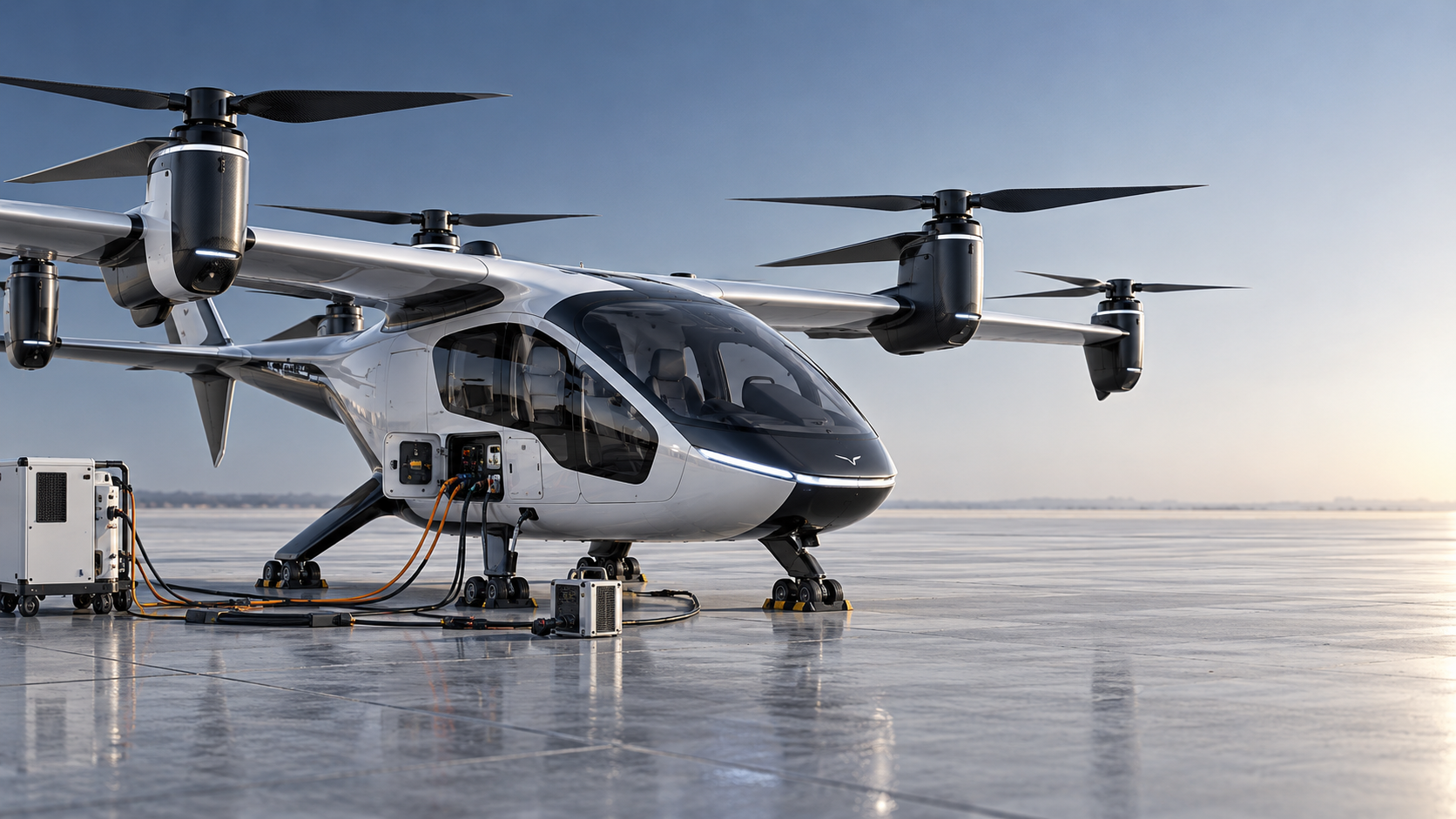
Urban air mobility is often discussed as an aircraft story, yet the decisive issue is network design. A viable eVTOL model needs vertiport placement, energy turnaround, digital traffic management, maintenance support, and emergency diversion logic. Without these elements, aircraft performance alone does not produce a scalable transport service.
Evaluation teams should test at least 4 operational variables: payload-range balance, turnaround time, weather sensitivity, and pilot-to-autonomy transition path. In early deployments, a 15 to 25 minute turnaround target may be commercially acceptable, while later phases may demand less than 12 minutes to sustain route economics.
Zero-emission aviation and propulsion transition
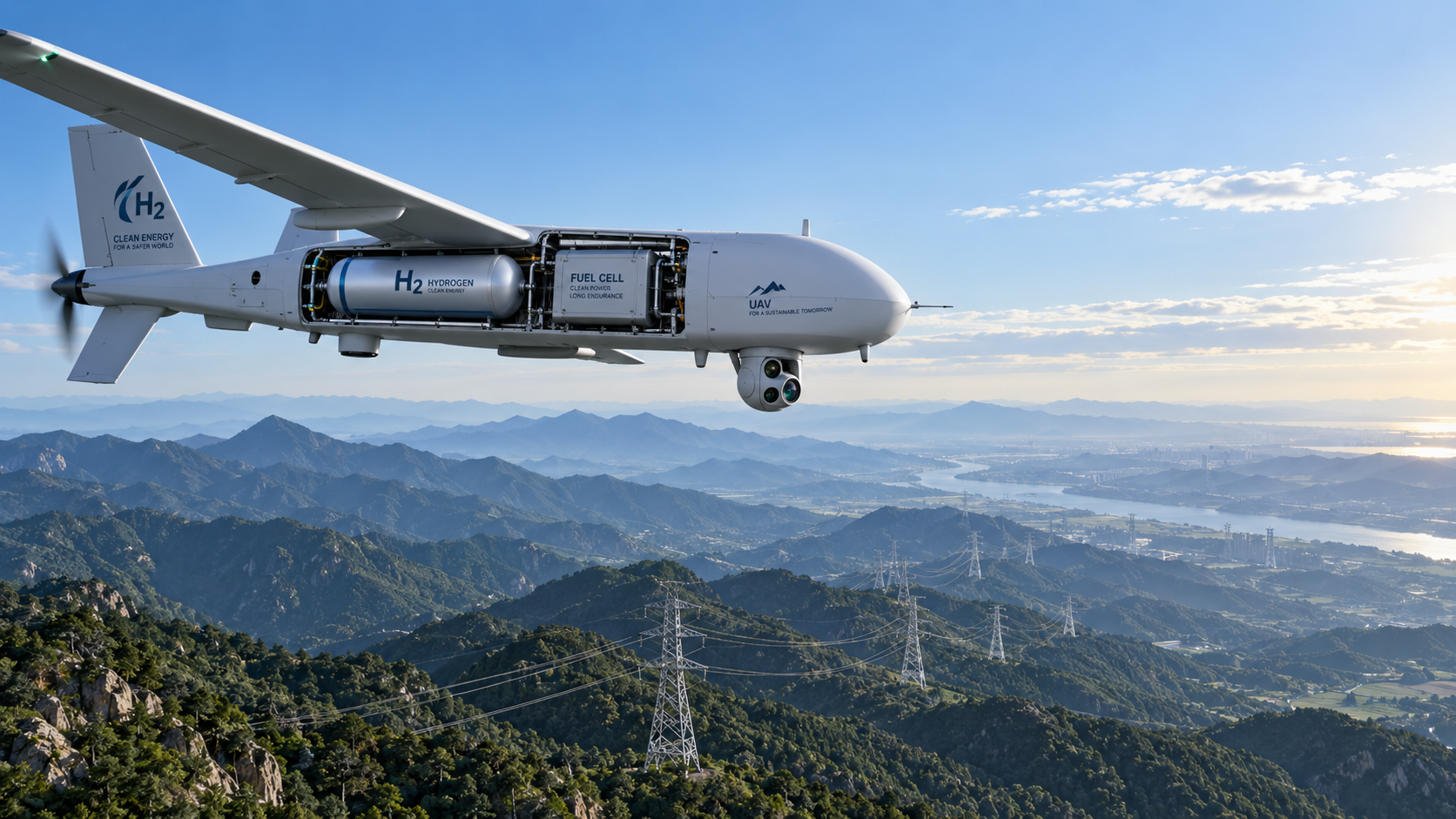
Zero-emission aviation includes battery-electric, hydrogen, hybrid-electric, and sustainable fuel pathways. For assessment professionals, the priority is not choosing a universal winner but identifying mission fit. Short-haul regional routes, airport shuttle services, and cargo feeders may adopt lower-range platforms earlier than long-haul commercial fleets.
Here, Future Mobility technology should be assessed against certification complexity, energy infrastructure footprint, thermal management, and life-cycle maintenance burden. A propulsion system that reduces direct emissions but requires heavy ground-side retrofit may shift cost from operators to airport authorities, affecting the whole business case.
Space-linked logistics and intelligent infrastructure
Satellite infrastructure and advanced space systems increasingly support terrestrial mobility through navigation resilience, communications continuity, and remote asset monitoring. In practical terms, this means better route visibility, stronger synchronization across nodes, and improved performance in remote or extreme environments.
For high-value freight, defense-adjacent logistics, and offshore operations, even a 1 to 3 hour reduction in decision latency can change service viability. Business evaluators should therefore include orbital or satellite-enabled dependencies in risk mapping, especially when projects claim continuous autonomous operation.
How to Evaluate Future Mobility Technology for Investment and Procurement
A sound investment process should move beyond trend recognition into a repeatable screening framework. In B2B mobility evaluation, procurement and strategic planning teams often need a method that can compare aircraft systems, rail automation, logistics software, and infrastructure programs on consistent terms.
A five-point assessment framework
- Technical maturity: define whether the system is in prototype, demonstration, pre-certification, or operational deployment stage.
- Regulatory pathway: map the expected approval route, review cycles, and dependency on evolving standards.
- Infrastructure compatibility: estimate retrofit ratio, land requirement, energy interface, and digital backbone needs.
- Operational economics: model maintenance intervals, staffing profile, uptime expectations, and asset utilization.
- Risk resilience: test cybersecurity, supply chain continuity, weather exposure, and failure containment procedures.
Key procurement filters
When screening vendors or consortium partners, assessors should request evidence across 6 areas: verification testing, subsystem redundancy, standards alignment, maintenance planning, data integration capability, and support response model. Projects that cannot document these basics usually create hidden downstream cost.
The following table provides a practical decision matrix for business evaluators reviewing Future Mobility technology proposals across infrastructure, vehicles, and digital systems.
This matrix shows that evaluation quality depends on evidence depth. The stronger proposals are usually not those with the broadest claims, but those that show clear pathways from technical validation to operational continuity.
Common evaluation mistakes
- Assuming pilot success guarantees city-scale replication.
- Underestimating the cost of certification support, training, and digital infrastructure.
- Focusing on vehicle performance while ignoring network interfaces.
- Comparing advanced mobility projects solely on upfront capital expense rather than total 10-year operating value.
Implementation Risks, Standards, and Strategic Next Steps
Future Mobility technology creates opportunity only when deployment risk is managed early. In advanced transportation, delays often emerge from certification sequencing, fragmented governance, or mismatch between technical ambition and infrastructure readiness. That is why standards-based benchmarking is becoming central to business evaluation.
Where standards matter most
Across aviation, rail, urban air mobility, and specialized logistics, standards define the boundary between experimental capability and commercial acceptance. Reviewers should map project components against relevant frameworks for safety, signaling, materials integrity, software assurance, and operating procedures. Even where standards are still evolving, the discipline of structured compliance planning reduces uncertainty.
A practical approach is to establish 3 review gates: concept alignment, pre-deployment verification, and operational audit readiness. This allows investors and procurement teams to release capital in stages rather than committing full exposure before key technical risks are retired.
Recommended next steps for assessment professionals
- Prioritize mobility segments by deployment horizon: near-term, mid-term, and frontier.
- Build a benchmark set using at least 4 criteria: safety, scalability, economics, and integration complexity.
- Request scenario models for normal operations, degraded operations, and emergency recovery.
- Use independent technical benchmarking to compare claims across suppliers, operators, and infrastructure partners.
Why this matters now
Over the next 5 to 15 years, the most valuable urban networks are likely to be those that combine capacity, resilience, and low-emission performance without sacrificing certification discipline. Future Mobility technology is therefore not just a transport upgrade. It is a strategic asset class that connects industrial policy, public infrastructure, and commercial competitiveness.
For organizations assessing advanced aviation, autonomous rail, satellite-supported logistics, or UAM ecosystems, the advantage lies in structured evaluation rather than speed alone. G-AIT’s multidisciplinary benchmarking model is relevant because it connects frontier engineering with the operational integrity required for real deployment.
The next wave of mobility investment will reward teams that can distinguish scalable systems from attractive prototypes, and compliant roadmaps from speculative narratives. If you are reviewing Future Mobility technology for investment, procurement, partnership, or network planning, now is the right time to refine your evaluation framework, benchmark technical pathways, and align decisions with measurable deployment outcomes. Contact us to discuss tailored assessment support, request a customized benchmarking approach, or explore more advanced transportation solutions.
Article Categories
SYSTEM_ALERT_URGENT
Q3 SYMPOSIUM ON ORBITAL DYNAMICS
Registration for the Orbital Aerospace technical committee is now open. Node access required.
Recent Articles
![]() Oct 27, 2026FAA Certifies Boeing 737 MAX 10 After Years of DelaysFAA Certifies Boeing 737 MAX 10 After Years of Delays
Oct 27, 2026FAA Certifies Boeing 737 MAX 10 After Years of DelaysFAA Certifies Boeing 737 MAX 10 After Years of Delays Oct 27, 2026Can an intermodal connectivity platform reduce rail handoff delays?Can an intermodal connectivity platform reduce rail handoff delays?
![]() Oct 26, 2026Chery Unveils Global Smart Mobility Strategy Targeting Robotaxis and eVTOLsChery Unveils Global Smart Mobility Strategy Targeting Robotaxis and eVTOLs
Oct 26, 2026Chery Unveils Global Smart Mobility Strategy Targeting Robotaxis and eVTOLsChery Unveils Global Smart Mobility Strategy Targeting Robotaxis and eVTOLs Oct 26, 2026How to evaluate avionics for helicopters used in IFR operationsHow to evaluate avionics for helicopters used in IFR operations
![]() Oct 25, 2026Ukraine’s Defence Minister Says SpaceX Satellite Services Restored After Speed RestrictionsUkraine’s Defence Minister Says SpaceX Satellite Services Restored After Speed Restrictions
Oct 25, 2026Ukraine’s Defence Minister Says SpaceX Satellite Services Restored After Speed RestrictionsUkraine’s Defence Minister Says SpaceX Satellite Services Restored After Speed Restrictions Oct 25, 2026How satellite infrastructure for IoT affects sensor reporting delaysHow satellite infrastructure for IoT affects sensor reporting delays
![]() Oct 24, 2026China Successfully Launches Yaogan 50-03 SatelliteChina Successfully Launches Yaogan 50-03 Satellite
Oct 24, 2026China Successfully Launches Yaogan 50-03 SatelliteChina Successfully Launches Yaogan 50-03 Satellite Oct 24, 2026How gradients affect traction power needs in high-speed rolling stockHow gradients affect traction power needs in high-speed rolling stock
![]() Oct 23, 2026FAA Proposes Checks on Nearly 2,000 Boeing 737NGs Over Loss-of-Control RiskFAA Proposes Checks on Nearly 2,000 Boeing 737NGs Over Loss-of-Control Risk
Oct 23, 2026FAA Proposes Checks on Nearly 2,000 Boeing 737NGs Over Loss-of-Control RiskFAA Proposes Checks on Nearly 2,000 Boeing 737NGs Over Loss-of-Control Risk Oct 23, 2026How fuel choice affects specific impulse in liquid oxygen propulsionHow fuel choice affects specific impulse in liquid oxygen propulsion
![]() Oct 22, 2026QuantumScape Plans 100 MWh Solid-State Battery Line Targeting Aerospace and Other MarketsQuantumScape Plans 100 MWh Solid-State Battery Line Targeting Aerospace and Other Markets
Oct 22, 2026QuantumScape Plans 100 MWh Solid-State Battery Line Targeting Aerospace and Other MarketsQuantumScape Plans 100 MWh Solid-State Battery Line Targeting Aerospace and Other Markets Oct 22, 2026How tank size limits hydrogen aircraft range on regional flightsHow tank size limits hydrogen aircraft range on regional flights
![]() Oct 21, 2026FAA Certifies Boeing 737-10, Clearing Regulatory Hurdle for DeliveriesFAA Certifies Boeing 737-10, Clearing Regulatory Hurdle for Deliveries
Oct 21, 2026FAA Certifies Boeing 737-10, Clearing Regulatory Hurdle for DeliveriesFAA Certifies Boeing 737-10, Clearing Regulatory Hurdle for Deliveries Oct 21, 2026How are electric vertical takeoff aircraft certified in the US?How are electric vertical takeoff aircraft certified in the US?
![]() Oct 20, 2026Ohio Department of Transportation Releases Three-Year Advanced Air Mobility Action PlanOhio Department of Transportation Releases Three-Year Advanced Air Mobility Action Plan
Oct 20, 2026Ohio Department of Transportation Releases Three-Year Advanced Air Mobility Action PlanOhio Department of Transportation Releases Three-Year Advanced Air Mobility Action Plan Oct 20, 2026How does magnetic flux density in tesla affect maglev lift force?How does magnetic flux density in tesla affect maglev lift force?
![]() Oct 19, 2026ZeroAvia Completes Key Ground Tests of ZA600 Hydrogen Fuel Cell PowertrainZeroAvia Completes Key Ground Tests of ZA600 Hydrogen Fuel Cell Powertrain
Oct 19, 2026ZeroAvia Completes Key Ground Tests of ZA600 Hydrogen Fuel Cell PowertrainZeroAvia Completes Key Ground Tests of ZA600 Hydrogen Fuel Cell Powertrain Oct 19, 2026How spacecraft integration affects advanced propulsion costsHow spacecraft integration affects advanced propulsion costs
 Oct 18, 2026How chilldown prevents cavitation in cryogenic engine systemsHow chilldown prevents cavitation in cryogenic engine systems
 Oct 17, 2026How explainability affects algorithmic trust in AI flight systemsHow explainability affects algorithmic trust in AI flight systems
 Oct 16, 2026How to evaluate transportation technology for Middle East heatHow to evaluate transportation technology for Middle East heat
 Oct 15, 2026How common-cause failures defeat redundancy logic in European avionicsHow common-cause failures defeat redundancy logic in European avionics
 Oct 14, 2026How DO-160 applies to aerospace technology testing for avionicsHow DO-160 applies to aerospace technology testing for avionics
 Oct 13, 2026How fuel price volatility shapes commercial aviation cost trendsHow fuel price volatility shapes commercial aviation cost trends
 Oct 12, 2026How to qualify aerospace manufacturing components for traceabilityHow to qualify aerospace manufacturing components for traceability
 Oct 11, 2026Which certification hurdles are slowing hydrogen aviation in Europe?Which certification hurdles are slowing hydrogen aviation in Europe?
 Oct 10, 2026What evidence should a magnetic gap stability supplier provide?What evidence should a magnetic gap stability supplier provide?
 Oct 09, 2026Which ISO standards matter when qualifying industrial technology suppliers?Which ISO standards matter when qualifying industrial technology suppliers?
 Oct 08, 2026When does reusability actually lower launch vehicle costs?When does reusability actually lower launch vehicle costs?
 Oct 07, 2026Where to find reliable product knowledge resources in the Middle EastWhere to find reliable product knowledge resources in the Middle East
 Oct 06, 2026What drives high-speed rail systems cost per kilometer?What drives high-speed rail systems cost per kilometer?
 Oct 05, 2026When does hydrogen propulsion for UAV extend mission range enough to justify it?When does hydrogen propulsion for UAV extend mission range enough to justify it?
 Oct 04, 2026How rail systems integration reduces commissioning delaysHow rail systems integration reduces commissioning delays
 Oct 03, 2026How to evaluate an advanced propulsion manufacturer for hydrogen systemsHow to evaluate an advanced propulsion manufacturer for hydrogen systems
 Oct 02, 2026How to qualify aircraft components for OEM production approvalHow to qualify aircraft components for OEM production approval