Industrial 3D Printing: When It Beats CNC Machining
Lead Author
Published
Views:
For engineering project leaders, the choice between CNC machining and industrial 3D printing is no longer a prototyping debate—it is a strategic production decision.
In aerospace, advanced transportation, and high-performance mobility systems, additive manufacturing can outperform CNC when complexity, weight reduction, lead-time compression, and part consolidation matter most.
This guide explains when industrial 3D printing beats CNC machining, where CNC remains stronger, and how teams can evaluate cost, certification, materials, and scalability.
What Makes Industrial 3D Printing Different from CNC Machining?
Industrial 3D printing builds parts layer by layer, while CNC machining removes material from a solid block, casting, forging, or extrusion.
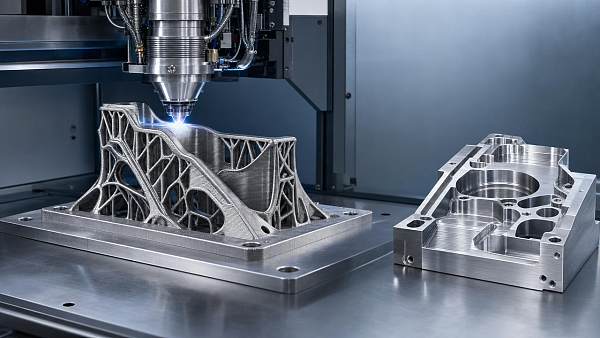
That difference changes the economics of geometry. CNC rewards simple access, stable fixturing, and efficient tool paths.
Industrial 3D printing rewards internal channels, lattice structures, topology optimization, and integrated assemblies that cannot be machined easily.
CNC machining is highly predictable for prismatic parts, tight tolerances, and established alloys. It also offers excellent surface finish after finishing passes.
Industrial 3D printing is different. It can produce near-net-shape parts with fewer fixtures, less waste, and fewer assembly interfaces.
For mobility systems, that difference can affect fuel burn, payload, maintenance intervals, vibration behavior, and installation time.
Why does this matter in advanced transportation?
Aircraft, satellites, rail systems, eVTOL platforms, and extreme-environment vehicles often depend on compact, lightweight, multifunctional components.
Industrial 3D printing can turn a complex bracket, duct, manifold, or heat exchanger into a lighter and more integrated structure.
The result is not only manufacturing efficiency. It can become system-level performance improvement.
When Does Industrial 3D Printing Beat CNC on Design Complexity?
Industrial 3D printing often wins when a design has internal geometry that cutting tools cannot reach.
Examples include conformal cooling channels, regenerative cooling passages, fluid manifolds, optimized ducts, and lightweight lattice structures.
CNC machining can produce complex parts, but complexity usually increases setups, fixtures, specialized tools, and inspection steps.
With industrial 3D printing, complexity may add limited production cost if the part fits the build envelope and process rules.
Which geometries favor additive manufacturing?
- Internal channels with curved or branching paths.
- Topology-optimized brackets with organic load paths.
- Heat exchangers with dense surface area.
- Fuel, hydraulic, or coolant manifolds with merged passages.
- Lightweight lattice cores for stiffness and energy absorption.
In aerospace propulsion, industrial 3D printing can combine many machined and brazed parts into one qualified assembly.
In high-speed rail and maglev systems, it can reduce part mass while preserving stiffness and thermal stability.
In eVTOL applications, industrial 3D printing supports compact structures where packaging space is extremely limited.
When Is CNC Machining Still the Better Option?
CNC machining remains the better route for many high-volume, simple, and tolerance-critical components.
Flat plates, shafts, housings, bushings, and simple brackets often cost less when machined from standard stock.
CNC also performs well when material properties are already certified through mature supply chains.
For tight surface finish, bearing interfaces, sealing lands, and precision bores, CNC may require fewer post-processing steps.
What should trigger caution with industrial 3D printing?
Industrial 3D printing is not automatically cheaper, faster, or stronger. It depends on geometry, material, machine capacity, and qualification burden.
Large solid parts are often poor candidates because build time and powder usage become expensive.
Parts requiring very smooth surfaces may need machining, polishing, coating, or hot isostatic pressing.
If the design can be machined in one setup from affordable material, CNC may remain the rational choice.
How Should Teams Compare Cost, Lead Time, and Production Scale?
The cost comparison should include more than machine time. It must cover design labor, qualification, inspection, post-processing, and supply risk.
Industrial 3D printing can reduce tooling, fixtures, minimum order quantities, and inventory for low-volume or mission-specific parts.
CNC machining may scale better when part geometry is stable and production volumes justify dedicated fixtures and optimized cycle times.
Lead time is often where industrial 3D printing becomes highly competitive. It can remove casting tooling, forging dies, and multi-supplier delays.
For urgent aerospace spares or specialized logistics equipment, faster availability can outweigh a higher unit price.
What is the practical cost model?
Start with total delivered cost, not quoted part price. Include testing, scrap, nonconformance handling, and documentation.
For industrial 3D printing, add powder control, build orientation studies, support removal, heat treatment, and inspection planning.
For CNC, add material buy-to-fly ratio, tool wear, fixtures, workholding, programming, and multiple machine setups.
The winning method is the one that meets performance and compliance at the lowest system-level risk.
Which Materials and Certifications Matter Most?
Material choice is central to any industrial 3D printing decision. Common options include titanium alloys, nickel superalloys, aluminum alloys, stainless steels, and polymers.
Aerospace and transportation components often require fatigue data, fracture behavior, corrosion resistance, and thermal stability.
Certification expectations may involve FAA, EASA, ISO, UIC, customer specifications, or internal airworthiness and safety procedures.
Industrial 3D printing introduces process-sensitive variables. Powder chemistry, particle size, laser parameters, atmosphere, and build orientation can affect properties.
What documentation should be planned early?
- Material certificates and powder batch traceability.
- Machine qualification and maintenance records.
- Build parameter control and deviation logs.
- Heat treatment and post-processing reports.
- Non-destructive inspection and dimensional results.
- Mechanical test data tied to representative builds.
For safety-critical systems, industrial 3D printing should be introduced through controlled qualification, not informal substitution.
The design, material, machine, parameter set, and inspection method form one validated production chain.
How Can Part Consolidation Change the Business Case?
Part consolidation is one of the strongest reasons industrial 3D printing beats CNC machining.
A traditional assembly may require machined plates, tubes, welds, fasteners, seals, and inspection of every interface.
Industrial 3D printing can merge those elements into a single component with fewer leak paths and fewer assembly errors.
This matters in rocket propulsion, thermal management, aircraft environmental control, battery cooling, and hydraulic distribution.
What benefits come from fewer parts?
- Lower assembly labor and fewer fasteners.
- Reduced inspection points and documentation burden.
- Improved reliability through fewer joints.
- Shorter supply chains and fewer vendor dependencies.
- More design freedom for fluid, thermal, or structural performance.
However, consolidation can also create risk. A single failed feature may scrap a more expensive integrated part.
Industrial 3D printing should therefore include repair strategy, inspection access, and failure mode analysis.
What Are the Main Risks and Misconceptions?
The biggest misconception is that industrial 3D printing is a universal replacement for CNC machining.
It is better understood as a complementary route for parts where additive design creates measurable value.
Another risk is copying a CNC design directly into an additive process. That often preserves cost without unlocking performance.
Design for additive manufacturing should be applied early, especially for load paths, support strategy, powder removal, and inspection access.
How can risk be reduced?
Begin with non-flight, non-safety-critical components when organizational experience is limited.
Then expand industrial 3D printing adoption through material allowables, process qualification, and digital inspection workflows.
Benchmark every candidate against CNC, casting, forging, and fabrication. Avoid choosing a process before defining the performance target.
How Should a Project Team Decide Between Industrial 3D Printing and CNC?
A structured decision process prevents both overuse and underuse of industrial 3D printing.
Start with function, not process. Define load, environment, tolerance, certification level, maintenance expectations, and production volume.
Then identify whether additive design can create an advantage impossible or uneconomic through CNC.
- Use industrial 3D printing for complexity, consolidation, lightweighting, and rapid low-volume availability.
- Use CNC for simple geometry, tight finishes, mature materials, and predictable high-volume production.
- Use hybrid manufacturing when printed near-net shapes need machined precision features.
- Use qualification gates before moving additive parts into critical service.
For advanced mobility programs, the best answer is often not additive versus subtractive. It is an engineered combination.
Industrial 3D printing can create the geometry. CNC machining can finish critical interfaces. Inspection can verify both.
Conclusion: When Industrial 3D Printing Wins
Industrial 3D printing beats CNC machining when the design benefits from complexity, lightweight structures, integrated functions, and shorter supply chains.
It is especially valuable for aerospace, space systems, eVTOL platforms, high-speed rail, and specialized extreme-environment logistics.
CNC machining remains essential for precision, simplicity, mature qualification, and scalable production economics.
The practical next step is a candidate-part review. Rank parts by complexity, lead time, assembly count, material risk, and certification impact.
Where industrial 3D printing improves total system value, proceed with design optimization, process qualification, and hybrid finishing planning.
Where CNC remains stronger, preserve it. The strongest manufacturing strategy uses each process where it delivers measurable engineering advantage.
Article Categories
SYSTEM_ALERT_URGENT
Q3 SYMPOSIUM ON ORBITAL DYNAMICS
Registration for the Orbital Aerospace technical committee is now open. Node access required.
Recent Articles
![]() Oct 27, 2026FAA Certifies Boeing 737 MAX 10 After Years of DelaysFAA Certifies Boeing 737 MAX 10 After Years of Delays
Oct 27, 2026FAA Certifies Boeing 737 MAX 10 After Years of DelaysFAA Certifies Boeing 737 MAX 10 After Years of Delays Oct 27, 2026Can an intermodal connectivity platform reduce rail handoff delays?Can an intermodal connectivity platform reduce rail handoff delays?
![]() Oct 26, 2026Chery Unveils Global Smart Mobility Strategy Targeting Robotaxis and eVTOLsChery Unveils Global Smart Mobility Strategy Targeting Robotaxis and eVTOLs
Oct 26, 2026Chery Unveils Global Smart Mobility Strategy Targeting Robotaxis and eVTOLsChery Unveils Global Smart Mobility Strategy Targeting Robotaxis and eVTOLs Oct 26, 2026How to evaluate avionics for helicopters used in IFR operationsHow to evaluate avionics for helicopters used in IFR operations
![]() Oct 25, 2026Ukraine’s Defence Minister Says SpaceX Satellite Services Restored After Speed RestrictionsUkraine’s Defence Minister Says SpaceX Satellite Services Restored After Speed Restrictions
Oct 25, 2026Ukraine’s Defence Minister Says SpaceX Satellite Services Restored After Speed RestrictionsUkraine’s Defence Minister Says SpaceX Satellite Services Restored After Speed Restrictions Oct 25, 2026How satellite infrastructure for IoT affects sensor reporting delaysHow satellite infrastructure for IoT affects sensor reporting delays
![]() Oct 24, 2026China Successfully Launches Yaogan 50-03 SatelliteChina Successfully Launches Yaogan 50-03 Satellite
Oct 24, 2026China Successfully Launches Yaogan 50-03 SatelliteChina Successfully Launches Yaogan 50-03 Satellite Oct 24, 2026How gradients affect traction power needs in high-speed rolling stockHow gradients affect traction power needs in high-speed rolling stock
![]() Oct 23, 2026FAA Proposes Checks on Nearly 2,000 Boeing 737NGs Over Loss-of-Control RiskFAA Proposes Checks on Nearly 2,000 Boeing 737NGs Over Loss-of-Control Risk
Oct 23, 2026FAA Proposes Checks on Nearly 2,000 Boeing 737NGs Over Loss-of-Control RiskFAA Proposes Checks on Nearly 2,000 Boeing 737NGs Over Loss-of-Control Risk Oct 23, 2026How fuel choice affects specific impulse in liquid oxygen propulsionHow fuel choice affects specific impulse in liquid oxygen propulsion
![]() Oct 22, 2026QuantumScape Plans 100 MWh Solid-State Battery Line Targeting Aerospace and Other MarketsQuantumScape Plans 100 MWh Solid-State Battery Line Targeting Aerospace and Other Markets
Oct 22, 2026QuantumScape Plans 100 MWh Solid-State Battery Line Targeting Aerospace and Other MarketsQuantumScape Plans 100 MWh Solid-State Battery Line Targeting Aerospace and Other Markets Oct 22, 2026How tank size limits hydrogen aircraft range on regional flightsHow tank size limits hydrogen aircraft range on regional flights
![]() Oct 21, 2026FAA Certifies Boeing 737-10, Clearing Regulatory Hurdle for DeliveriesFAA Certifies Boeing 737-10, Clearing Regulatory Hurdle for Deliveries
Oct 21, 2026FAA Certifies Boeing 737-10, Clearing Regulatory Hurdle for DeliveriesFAA Certifies Boeing 737-10, Clearing Regulatory Hurdle for Deliveries Oct 21, 2026How are electric vertical takeoff aircraft certified in the US?How are electric vertical takeoff aircraft certified in the US?
![]() Oct 20, 2026Ohio Department of Transportation Releases Three-Year Advanced Air Mobility Action PlanOhio Department of Transportation Releases Three-Year Advanced Air Mobility Action Plan
Oct 20, 2026Ohio Department of Transportation Releases Three-Year Advanced Air Mobility Action PlanOhio Department of Transportation Releases Three-Year Advanced Air Mobility Action Plan Oct 20, 2026How does magnetic flux density in tesla affect maglev lift force?How does magnetic flux density in tesla affect maglev lift force?
![]() Oct 19, 2026ZeroAvia Completes Key Ground Tests of ZA600 Hydrogen Fuel Cell PowertrainZeroAvia Completes Key Ground Tests of ZA600 Hydrogen Fuel Cell Powertrain
Oct 19, 2026ZeroAvia Completes Key Ground Tests of ZA600 Hydrogen Fuel Cell PowertrainZeroAvia Completes Key Ground Tests of ZA600 Hydrogen Fuel Cell Powertrain Oct 19, 2026How spacecraft integration affects advanced propulsion costsHow spacecraft integration affects advanced propulsion costs
 Oct 18, 2026How chilldown prevents cavitation in cryogenic engine systemsHow chilldown prevents cavitation in cryogenic engine systems
 Oct 17, 2026How explainability affects algorithmic trust in AI flight systemsHow explainability affects algorithmic trust in AI flight systems
 Oct 16, 2026How to evaluate transportation technology for Middle East heatHow to evaluate transportation technology for Middle East heat
 Oct 15, 2026How common-cause failures defeat redundancy logic in European avionicsHow common-cause failures defeat redundancy logic in European avionics
 Oct 14, 2026How DO-160 applies to aerospace technology testing for avionicsHow DO-160 applies to aerospace technology testing for avionics
 Oct 13, 2026How fuel price volatility shapes commercial aviation cost trendsHow fuel price volatility shapes commercial aviation cost trends
 Oct 12, 2026How to qualify aerospace manufacturing components for traceabilityHow to qualify aerospace manufacturing components for traceability
 Oct 11, 2026Which certification hurdles are slowing hydrogen aviation in Europe?Which certification hurdles are slowing hydrogen aviation in Europe?
 Oct 10, 2026What evidence should a magnetic gap stability supplier provide?What evidence should a magnetic gap stability supplier provide?
 Oct 09, 2026Which ISO standards matter when qualifying industrial technology suppliers?Which ISO standards matter when qualifying industrial technology suppliers?
 Oct 08, 2026When does reusability actually lower launch vehicle costs?When does reusability actually lower launch vehicle costs?
 Oct 07, 2026Where to find reliable product knowledge resources in the Middle EastWhere to find reliable product knowledge resources in the Middle East
 Oct 06, 2026What drives high-speed rail systems cost per kilometer?What drives high-speed rail systems cost per kilometer?
 Oct 05, 2026When does hydrogen propulsion for UAV extend mission range enough to justify it?When does hydrogen propulsion for UAV extend mission range enough to justify it?
 Oct 04, 2026How rail systems integration reduces commissioning delaysHow rail systems integration reduces commissioning delays
 Oct 03, 2026How to evaluate an advanced propulsion manufacturer for hydrogen systemsHow to evaluate an advanced propulsion manufacturer for hydrogen systems
 Oct 02, 2026How to qualify aircraft components for OEM production approvalHow to qualify aircraft components for OEM production approval