Structural Fatigue Life: What Shortens Service Life First
Lead Author
Published
Views:
Structural fatigue life is rarely reduced by one dramatic event. In most high-performance systems, service life is shortened earlier by small, cumulative conditions that remain easy to miss during design reviews or operational monitoring.
That matters across aerospace, rail, space infrastructure, urban air mobility, and extreme-environment logistics. A shortfall in fatigue margin can change certification strategy, maintenance intervals, fleet availability, and total lifecycle cost long before visible cracking appears.
For organizations working with frontier mobility platforms, the real question is not whether fatigue exists. The real question is which mechanism starts shortening structural fatigue life first, and how early that signal can be detected.
Why early fatigue drivers deserve closer attention
In conventional assets, fatigue is already a core durability issue. In advanced mobility systems, the challenge grows because structures are lighter, duty cycles are more variable, and certification evidence must connect design intent with real operating conditions.
G-AIT’s cross-sector perspective is useful here. When next-generation airframes, cryogenic launch structures, maglev platforms, and eVTOL assemblies are compared against FAA, EASA, UIC, and ISO expectations, one pattern appears repeatedly.
Structural fatigue life is usually lost at interfaces, transitions, and assumptions. It is not only a material issue. It is also a systems issue involving geometry, loads, environment, manufacturing quality, inspection access, and operational discipline.
What structural fatigue life really measures
At a practical level, structural fatigue life describes how long a component or assembly can withstand repeated loading before crack initiation or crack growth reaches an unacceptable condition.
The phrase often sounds straightforward, but it includes several distinct stages. A structure may spend a long time in micro-damage accumulation, then move into crack initiation, and only later into measurable propagation.
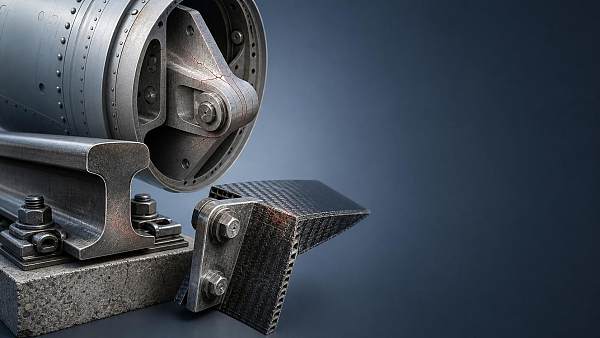
Because of that, service life does not disappear evenly. One local feature can govern the whole system. A bracket hole, bonded joint edge, weld toe, rail fastening point, or pressure-cycle transition may become the true life limiter.
This is why fatigue assessment cannot rely only on headline material strength. Structural fatigue life depends on local stress behavior under actual mission profiles, not idealized loads alone.
The first factors that shorten service life
Four drivers usually appear early and often interact with each other.
- Stress concentrations created by cutouts, fastener holes, weld geometry, sharp transitions, or stiffness mismatch.
- Load spectrum shifts caused by route changes, heavier payloads, new mission profiles, automation behavior, or more frequent start-stop cycles.
- Material and process discontinuities such as porosity, inclusions, fiber waviness, residual stress, poor surface finish, or heat-affected zone weakness.
- Maintenance blind spots where inspection intervals, sensor coverage, or access constraints allow small defects to grow unnoticed.
Usually, the first shortening mechanism is the one least visible in baseline assumptions. That is why fatigue surprises often emerge after a platform enters wider operational use.
Where the risks show up across advanced transportation
Although the physics are shared, the fatigue trigger points differ by platform. Looking at them by operating context makes evaluation more useful.
Across these sectors, structural fatigue life becomes a decision metric, not just a materials topic. It influences redesign timing, certification evidence, maintenance economics, and operational confidence.
Why assumptions fail before hardware does
Fatigue programs often begin with sound analysis and still drift off course. The usual reason is not a lack of engineering effort. It is a gap between assumed usage and actual usage.
A vehicle may experience more aggressive maneuvering, a rail platform may see higher vibration exposure, or a launch-support structure may cycle through unplanned thermal events. Each shift changes damage accumulation.
Another weak point is local manufacturing variation. Nominally identical parts may not share the same structural fatigue life if drilling quality, cure control, residual stress, or weld finishing are inconsistent.
This is where benchmarking matters. G-AIT’s value lies in comparing high-performance systems across sectors, then testing whether design claims still hold against real standards, real duty cycles, and real inspection constraints.
Signals that deserve immediate review
- Unexpected maintenance findings around joints, edges, and cutouts.
- Operational expansion without updated load spectrum validation.
- Field data showing different vibration or thermal behavior than predicted.
- Repeated rework associated with one manufacturing step or supplier batch.
- Inspection plans that depend on difficult access or narrow detection windows.
How to judge structural fatigue life more effectively
A useful evaluation method starts by locating the most damage-sensitive features, then testing whether service assumptions remain valid throughout the lifecycle.
That means looking beyond pass-fail results from a single qualification campaign. Structural fatigue life should be reviewed as an evolving envelope shaped by design, process control, operations, and inspection capability.
Five practical lenses
- Geometry lens: identify abrupt stiffness changes, load path interruptions, and attachment details with crack initiation potential.
- Spectrum lens: compare original design loads with current and planned operating profiles.
- Process lens: trace how fabrication variability could create local fatigue sensitivity.
- Environment lens: include temperature swings, corrosion exposure, humidity, vibration, and contamination.
- Inspection lens: confirm that likely damage locations are actually detectable early enough to matter.
When these five lenses are used together, structural fatigue life becomes easier to interpret in business terms. Risk ranking improves, inspection intervals become more defensible, and redesign priorities become clearer.
What this means for next decisions
The most effective next step is rarely a broad redesign. It is usually a sharper mapping of life-limiting details, supported by updated load data and a realistic view of inspection reach.
In practice, that can mean revisiting one joint family, one thermal transition, one composite layup feature, or one rail interface that carries disproportionate fatigue risk.
It also helps to compare programs across adjacent sectors. Lessons from aircraft fuselage joints, launch structures, and high-speed ground systems often reveal common patterns in how structural fatigue life is shortened early.
A disciplined review should connect three questions: where damage begins, how fast assumptions are changing, and whether the current maintenance framework can still keep pace.
If those questions are answered clearly, structural fatigue life becomes more than a durability estimate. It becomes a basis for safer certification strategy, better asset planning, and more confident technology benchmarking across the future mobility landscape.
Article Categories
SYSTEM_ALERT_URGENT
Q3 SYMPOSIUM ON ORBITAL DYNAMICS
Registration for the Orbital Aerospace technical committee is now open. Node access required.
Recent Articles
![]() Oct 27, 2026FAA Certifies Boeing 737 MAX 10 After Years of DelaysFAA Certifies Boeing 737 MAX 10 After Years of Delays
Oct 27, 2026FAA Certifies Boeing 737 MAX 10 After Years of DelaysFAA Certifies Boeing 737 MAX 10 After Years of Delays Oct 27, 2026Can an intermodal connectivity platform reduce rail handoff delays?Can an intermodal connectivity platform reduce rail handoff delays?
![]() Oct 26, 2026Chery Unveils Global Smart Mobility Strategy Targeting Robotaxis and eVTOLsChery Unveils Global Smart Mobility Strategy Targeting Robotaxis and eVTOLs
Oct 26, 2026Chery Unveils Global Smart Mobility Strategy Targeting Robotaxis and eVTOLsChery Unveils Global Smart Mobility Strategy Targeting Robotaxis and eVTOLs Oct 26, 2026How to evaluate avionics for helicopters used in IFR operationsHow to evaluate avionics for helicopters used in IFR operations
![]() Oct 25, 2026Ukraine’s Defence Minister Says SpaceX Satellite Services Restored After Speed RestrictionsUkraine’s Defence Minister Says SpaceX Satellite Services Restored After Speed Restrictions
Oct 25, 2026Ukraine’s Defence Minister Says SpaceX Satellite Services Restored After Speed RestrictionsUkraine’s Defence Minister Says SpaceX Satellite Services Restored After Speed Restrictions Oct 25, 2026How satellite infrastructure for IoT affects sensor reporting delaysHow satellite infrastructure for IoT affects sensor reporting delays
![]() Oct 24, 2026China Successfully Launches Yaogan 50-03 SatelliteChina Successfully Launches Yaogan 50-03 Satellite
Oct 24, 2026China Successfully Launches Yaogan 50-03 SatelliteChina Successfully Launches Yaogan 50-03 Satellite Oct 24, 2026How gradients affect traction power needs in high-speed rolling stockHow gradients affect traction power needs in high-speed rolling stock
![]() Oct 23, 2026FAA Proposes Checks on Nearly 2,000 Boeing 737NGs Over Loss-of-Control RiskFAA Proposes Checks on Nearly 2,000 Boeing 737NGs Over Loss-of-Control Risk
Oct 23, 2026FAA Proposes Checks on Nearly 2,000 Boeing 737NGs Over Loss-of-Control RiskFAA Proposes Checks on Nearly 2,000 Boeing 737NGs Over Loss-of-Control Risk Oct 23, 2026How fuel choice affects specific impulse in liquid oxygen propulsionHow fuel choice affects specific impulse in liquid oxygen propulsion
![]() Oct 22, 2026QuantumScape Plans 100 MWh Solid-State Battery Line Targeting Aerospace and Other MarketsQuantumScape Plans 100 MWh Solid-State Battery Line Targeting Aerospace and Other Markets
Oct 22, 2026QuantumScape Plans 100 MWh Solid-State Battery Line Targeting Aerospace and Other MarketsQuantumScape Plans 100 MWh Solid-State Battery Line Targeting Aerospace and Other Markets Oct 22, 2026How tank size limits hydrogen aircraft range on regional flightsHow tank size limits hydrogen aircraft range on regional flights
![]() Oct 21, 2026FAA Certifies Boeing 737-10, Clearing Regulatory Hurdle for DeliveriesFAA Certifies Boeing 737-10, Clearing Regulatory Hurdle for Deliveries
Oct 21, 2026FAA Certifies Boeing 737-10, Clearing Regulatory Hurdle for DeliveriesFAA Certifies Boeing 737-10, Clearing Regulatory Hurdle for Deliveries Oct 21, 2026How are electric vertical takeoff aircraft certified in the US?How are electric vertical takeoff aircraft certified in the US?
![]() Oct 20, 2026Ohio Department of Transportation Releases Three-Year Advanced Air Mobility Action PlanOhio Department of Transportation Releases Three-Year Advanced Air Mobility Action Plan
Oct 20, 2026Ohio Department of Transportation Releases Three-Year Advanced Air Mobility Action PlanOhio Department of Transportation Releases Three-Year Advanced Air Mobility Action Plan Oct 20, 2026How does magnetic flux density in tesla affect maglev lift force?How does magnetic flux density in tesla affect maglev lift force?
![]() Oct 19, 2026ZeroAvia Completes Key Ground Tests of ZA600 Hydrogen Fuel Cell PowertrainZeroAvia Completes Key Ground Tests of ZA600 Hydrogen Fuel Cell Powertrain
Oct 19, 2026ZeroAvia Completes Key Ground Tests of ZA600 Hydrogen Fuel Cell PowertrainZeroAvia Completes Key Ground Tests of ZA600 Hydrogen Fuel Cell Powertrain Oct 19, 2026How spacecraft integration affects advanced propulsion costsHow spacecraft integration affects advanced propulsion costs
 Oct 18, 2026How chilldown prevents cavitation in cryogenic engine systemsHow chilldown prevents cavitation in cryogenic engine systems
 Oct 17, 2026How explainability affects algorithmic trust in AI flight systemsHow explainability affects algorithmic trust in AI flight systems
 Oct 16, 2026How to evaluate transportation technology for Middle East heatHow to evaluate transportation technology for Middle East heat
 Oct 15, 2026How common-cause failures defeat redundancy logic in European avionicsHow common-cause failures defeat redundancy logic in European avionics
 Oct 14, 2026How DO-160 applies to aerospace technology testing for avionicsHow DO-160 applies to aerospace technology testing for avionics
 Oct 13, 2026How fuel price volatility shapes commercial aviation cost trendsHow fuel price volatility shapes commercial aviation cost trends
 Oct 12, 2026How to qualify aerospace manufacturing components for traceabilityHow to qualify aerospace manufacturing components for traceability
 Oct 11, 2026Which certification hurdles are slowing hydrogen aviation in Europe?Which certification hurdles are slowing hydrogen aviation in Europe?
 Oct 10, 2026What evidence should a magnetic gap stability supplier provide?What evidence should a magnetic gap stability supplier provide?
 Oct 09, 2026Which ISO standards matter when qualifying industrial technology suppliers?Which ISO standards matter when qualifying industrial technology suppliers?
 Oct 08, 2026When does reusability actually lower launch vehicle costs?When does reusability actually lower launch vehicle costs?
 Oct 07, 2026Where to find reliable product knowledge resources in the Middle EastWhere to find reliable product knowledge resources in the Middle East
 Oct 06, 2026What drives high-speed rail systems cost per kilometer?What drives high-speed rail systems cost per kilometer?
 Oct 05, 2026When does hydrogen propulsion for UAV extend mission range enough to justify it?When does hydrogen propulsion for UAV extend mission range enough to justify it?
 Oct 04, 2026How rail systems integration reduces commissioning delaysHow rail systems integration reduces commissioning delays
 Oct 03, 2026How to evaluate an advanced propulsion manufacturer for hydrogen systemsHow to evaluate an advanced propulsion manufacturer for hydrogen systems
 Oct 02, 2026How to qualify aircraft components for OEM production approvalHow to qualify aircraft components for OEM production approval