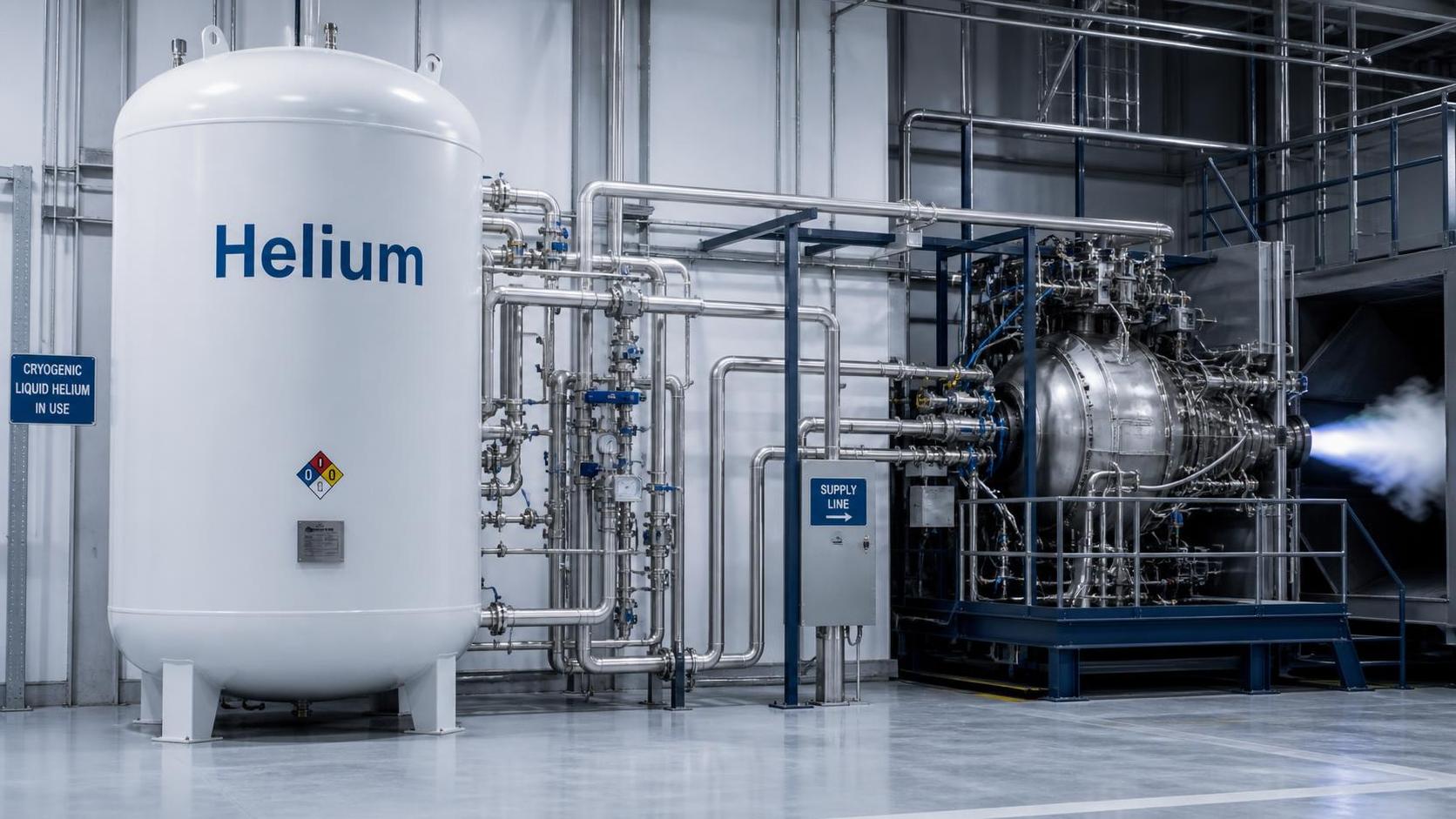
Cryogenic Propulsion: Key Design Tradeoffs and Failure Risks
Lead Author
Published
Views:
Cryogenic Propulsion: Key Design Tradeoffs and Failure Risks
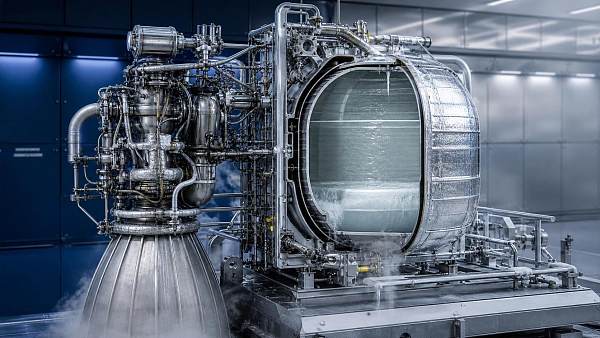
Cryogenic Propulsion remains a defining technology for high-performance launch systems and advanced mobility programs.
It delivers exceptional specific impulse, but the engineering burden is never limited to engine performance alone.
Storage temperature, insulation strategy, structural loading, ignition sequencing, and maintenance discipline all shape actual mission value.
That is why Cryogenic Propulsion must be evaluated as a full system, not as an isolated thrust device.
From a benchmarking perspective, the real question is simple.
Where do efficiency gains justify added design complexity, and where do failure risks begin to outweigh performance margins?
The answer depends on mission profile, ground handling model, certification path, and tolerance for operational uncertainty.
In practice, the strongest architectures balance thermal control, reliability, manufacturability, and inspection access from the start.
Why Cryogenic Propulsion Still Leads High-Energy Missions
Cryogenic Propulsion usually relies on liquid hydrogen, liquid oxygen, or liquid methane stored at extremely low temperatures.
These propellants offer strong energy performance, especially when compared with many storable or solid alternatives.
Liquid hydrogen and liquid oxygen combinations are particularly attractive when upper-stage efficiency matters most.
The tradeoff is obvious.
Higher efficiency comes with lower fluid density, larger tank volume, severe thermal gradients, and stricter handling constraints.
More importantly, Cryogenic Propulsion often shifts engineering effort upstream into storage and feed system integrity.
That shift affects launch cadence, turnaround time, boil-off control, and infrastructure cost.
So the value case is strongest when mission economics reward maximum payload performance or reusable efficiency over simplified operations.
Core Design Tradeoffs in Cryogenic Propulsion
Every Cryogenic Propulsion architecture sits inside a chain of tightly coupled tradeoffs.
Optimizing one variable often makes another harder to control.
1. Performance versus tank mass
Low-density cryogenic fuels demand larger tanks.
Larger tanks increase structural weight, insulation area, and packaging difficulty within airframe or stage geometry.
This means a high-efficiency propellant does not automatically create a lighter system.
2. Thermal protection versus maintainability
Better insulation reduces heat leak and boil-off.
However, complex insulation systems can hide cracks, trap moisture, and slow inspection after each mission cycle.
For reusable vehicles, maintainability becomes as important as thermal efficiency.
3. Higher chamber pressure versus turbomachinery stress
Higher pressure can improve combustion performance.
It also pushes pumps, seals, bearings, and start transients into narrower safe operating windows.
That is a classic Cryogenic Propulsion tradeoff with direct reliability implications.
4. Reusability versus contamination control
Reusable systems save cost only when condition-based maintenance is credible.
Cryogenic Propulsion hardware is sensitive to particulate contamination, thermal cycling, and sealing surface degradation.
Without disciplined inspection architecture, reuse can increase hidden failure exposure instead of reducing lifecycle cost.
Most Important Failure Risks to Benchmark
From recent programs, the clearest signal is that failures rarely come from a single dramatic cause.
They usually emerge from coupled weaknesses across thermal design, operations, materials, and controls.
- Boil-off and overpressure risk caused by inadequate venting logic or prolonged ground hold conditions.
- Thermal shock cracking in feed lines, manifolds, valves, and sensor interfaces during chill-down or restart.
- Hydrogen leakage through seals, joints, or weld defects, creating ignition danger and inspection complexity.
- Cavitation and unstable pump inlet conditions due to poor pressure margin or transient flow behavior.
- Combustion instability triggered by injector imbalance, off-nominal mixture ratio, or start sequence error.
- Material embrittlement, especially where repeated thermal cycling changes local fracture tolerance over time.
- Sensor drift or false confidence in automated health monitoring during dynamic low-temperature operations.
Each of these risks can remain invisible during nominal testing if the validation envelope is too narrow.
That is why Cryogenic Propulsion qualification must include off-nominal starts, delayed countdown cases, and repeat thermal cycles.
Materials and Interfaces: Where Small Flaws Become Major Events
Materials selection is often treated as a supporting topic.
In Cryogenic Propulsion, it is central to mission assurance.
Metals, composites, seals, adhesives, and coatings respond differently at cryogenic temperatures.
Even when each material passes standalone tests, the interface between them may become the real weak point.
Differential contraction can open leakage paths, change bolt preload, or distort valve seating geometry.
This also affects sensor reliability.
A temperature reading may be accurate in calibration, yet misleading once the surrounding structure shifts under real thermal load.
For that reason, interface validation deserves the same attention as engine thrust or tank efficiency.
Operations, Certification, and Readiness Implications
Cryogenic Propulsion decisions do not stop at the design office.
They shape fueling procedures, hazard zones, crew training, turnaround planning, and incident response logic.
This matters even more in environments moving toward tighter certification and safety benchmarking.
Standards from bodies such as FAA, EASA, ISO, and mission-specific authorities increasingly expect traceable design rationale.
That rationale must connect hazard analysis with inspection intervals, fault detection, and safe shutdown behavior.
In actual programs, readiness is rarely blocked by peak thrust numbers.
It is more often limited by repeatability, documentation maturity, and confidence in abnormal procedure handling.
A technically impressive Cryogenic Propulsion system can still underperform if operational controls remain fragile.
A Practical Evaluation Framework for Cryogenic Propulsion
A useful review framework should stay practical.
It should compare performance promise against measurable operational burden.
- Map mission energy needs against propellant choice, storage volume, and allowable boil-off.
- Review tank, feed, and valve architecture for inspection access and leak isolation capability.
- Check transient robustness during chill-down, start, throttling, shutdown, and restart conditions.
- Assess materials compatibility at interfaces, not only in standalone coupon data.
- Verify sensor coverage, fault logic, and safe-state behavior under delayed or degraded operations.
- Link reliability evidence to maintenance manpower, spares demand, and certification traceability.
This kind of framework makes Cryogenic Propulsion comparison more realistic across launch, aviation, and advanced transport applications.
It also prevents a common mistake.
Teams stop chasing isolated efficiency metrics and start measuring system resilience under real operating pressure.
Closing View
Cryogenic Propulsion will continue to anchor many high-energy mobility platforms because the performance upside is real.
Still, strong performance alone does not define a strong architecture.
The better question is whether the system can hold that performance through thermal stress, operational variation, and certification scrutiny.
When Cryogenic Propulsion is assessed through that wider lens, design tradeoffs become clearer and failure risks become manageable earlier.
That is usually where the best decisions are made.
Focus on integrated evidence, off-nominal behavior, and lifecycle readiness, then the technology becomes easier to benchmark with confidence.
Article Categories
SYSTEM_ALERT_URGENT
Q3 SYMPOSIUM ON ORBITAL DYNAMICS
Registration for the Orbital Aerospace technical committee is now open. Node access required.
Taglist:
Recent Articles
 Sep 15, 2026How railway infrastructure funding policy shapes project delivery riskHow railway infrastructure funding policy shapes project delivery risk
 Sep 14, 2026What airworthiness certification requirements apply to new avionics?What airworthiness certification requirements apply to new avionics?
 Sep 13, 2026How rail signaling systems improve freight corridor capacityHow rail signaling systems improve freight corridor capacity
 Sep 12, 2026What GoA4 autonomous rail requires for safe unattended operationWhat GoA4 autonomous rail requires for safe unattended operation
 Sep 11, 2026What drives orbital data analytics pricing for satellite operators?What drives orbital data analytics pricing for satellite operators?
 Sep 10, 2026How cross-border standards shape high-speed rail infrastructure in EuropeHow cross-border standards shape high-speed rail infrastructure in Europe
 Sep 09, 2026How propulsion physics shapes an aircraft’s fuel efficiencyHow propulsion physics shapes an aircraft’s fuel efficiency
 Sep 08, 2026When does a railway digital twin platform justify its cost?When does a railway digital twin platform justify its cost?
 Sep 07, 2026How fail operational systems maintain aircraft control after a faultHow fail operational systems maintain aircraft control after a fault
 Sep 07, 2026How to evaluate a power electronics price quote for avionics systemsHow to evaluate a power electronics price quote for avionics systems
 Sep 05, 2026What evidence is needed to support aircraft certification?What evidence is needed to support aircraft certification?
 Sep 04, 2026Do cryogenic propulsion systems suit satellite infrastructure?Do cryogenic propulsion systems suit satellite infrastructure?
 Sep 03, 2026When should an Urban Air Mobility OEM pursue FAA type certification?When should an Urban Air Mobility OEM pursue FAA type certification?
 Sep 02, 2026How aerospace manufacturing in Europe is adapting to supply chain riskHow aerospace manufacturing in Europe is adapting to supply chain risk
 Sep 01, 2026When does a B2B product knowledge base reduce sales support delays?When does a B2B product knowledge base reduce sales support delays?
 Aug 31, 2026Can zero emission flight in the Middle East withstand extreme heat?Can zero emission flight in the Middle East withstand extreme heat?
 Aug 30, 2026When does an aerospace conglomerate strategy reduce program risk?When does an aerospace conglomerate strategy reduce program risk?
 Aug 29, 2026How to assess a high-speed rail supplier's signaling reliabilityHow to assess a high-speed rail supplier's signaling reliability
 Aug 28, 2026How to assess the safety case for an autonomous flight system for cargoHow to assess the safety case for an autonomous flight system for cargo
 Aug 27, 2026How thermal control prevents equipment overheating on the lunar surfaceHow thermal control prevents equipment overheating on the lunar surface
 Aug 26, 2026How to evaluate an aerospace R&D reference in Southeast AsiaHow to evaluate an aerospace R&D reference in Southeast Asia
 Aug 25, 2026When train control systems integration fails, where do delays usually start?When train control systems integration fails, where do delays usually start?
 Aug 24, 2026What sets an Urban Air Mobility OEM apart in certification readinessWhat sets an Urban Air Mobility OEM apart in certification readiness
 Aug 23, 2026What makes an aerospace intelligence provider reliable for fleet risk monitoringWhat makes an aerospace intelligence provider reliable for fleet risk monitoring
 Aug 22, 2026How to verify surgicalinstruments meet sterilization standardsHow to verify surgicalinstruments meet sterilization standards
 Aug 21, 2026What to compare when evaluating autonomous rail systems vendorsWhat to compare when evaluating autonomous rail systems vendors
 Aug 20, 2026Do GaN chargers run too hot when charging laptops at full power?Do GaN chargers run too hot when charging laptops at full power?
 Aug 19, 2026What is slowing the decarbonization of rail in North AmericaWhat is slowing the decarbonization of rail in North America
 Aug 18, 2026When does intermodal connectivity for ports become a bottleneckWhen does intermodal connectivity for ports become a bottleneck
 Aug 17, 2026When can clean hydrogen aircraft compete with SAF on operating cost?When can clean hydrogen aircraft compete with SAF on operating cost?
 Aug 16, 2026China Tightens Case-by-Case Review of Drone Exports to the U.S.China Tightens Case-by-Case Review of Drone Exports to the U.S.
 Aug 16, 2026What drives low vacuum tube transport energy consumption per kilometerWhat drives low vacuum tube transport energy consumption per kilometer
 Aug 15, 2026China Expands Cross-Border Cash Pooling Nationwide for MultinationalsChina Expands Cross-Border Cash Pooling Nationwide for Multinationals
 Aug 15, 2026Are solar panels wholesale Europe prices lower for large orders?Are solar panels wholesale Europe prices lower for large orders?
 Aug 14, 2026China Imposes Temporary Export Ban on Helium, Squeezing Cryogenic and Medical Supply ChainsChina Imposes Temporary Export Ban on Helium, Squeezing Cryogenic and Medical Supply Chains