How to Compare Die Casting Parts for Industrial Machinery by Load and Life
Lead Author
Published
Views:
Comparing die casting parts for industrial machinery by load and life means looking past quoted cost and nominal size. The stronger evaluation starts with how a part carries force, how it reacts to heat and vibration, and how long that performance remains stable in real service. In sectors tracked by G-AIT, where aviation structures, rail systems, automated mobility platforms, and extreme-environment equipment all depend on repeatable component behavior, this approach matters because a casting that looks acceptable on paper can still underperform when duty cycles, shock events, and thermal variation are fully considered.
Load and life are the real comparison baseline
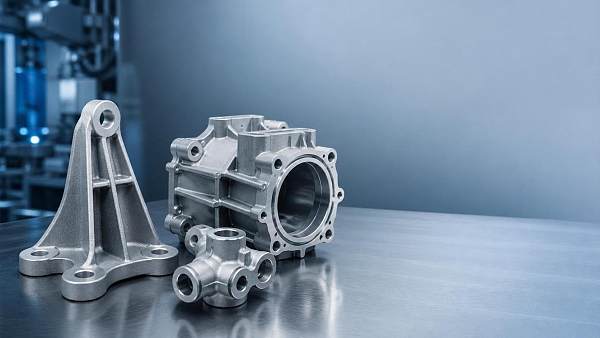
A die-cast housing, bracket, cover, frame node, or support arm is never judged by geometry alone. Its value comes from the relationship between applied load and usable life.
Load includes static force, cyclic stress, impact, torsion, clamping pressure, and thermal expansion mismatch. Life includes fatigue endurance, dimensional stability, corrosion resistance, and retention of mechanical properties over time.
That is why die casting parts for industrial machinery are often compared through service conditions first, then by alloy, process control, and supplier capability.
This is especially relevant in advanced transportation systems. A part used near traction equipment, actuator assemblies, battery enclosures, or motion-control structures may face combined loads rather than one simple design case.
What should be understood before comparing castings
Two castings can share the same drawing and still behave differently in operation. Internal porosity, local wall transitions, gate design, alloy chemistry, and heat treatment history can change performance significantly.
In practice, the comparison of die casting parts for industrial machinery should begin with four linked questions:
- Where does the highest stress concentrate during normal and off-design operation?
- How many cycles will the part experience across its target service interval?
- What temperature range, chemical exposure, or humidity level changes the material response?
- How sensitive is the assembly to dimensional drift or local cracking?
Without those answers, even detailed material data can be misleading. A high nominal strength number does not guarantee better life in a casting with unfavorable section changes or trapped gas.
Why the industry pays closer attention now
Equipment across aerospace-adjacent and transportation-heavy industries is becoming lighter, faster, hotter, and more automated. That trend increases sensitivity to part consistency.
G-AIT’s benchmark perspective is useful here. Whether the system involves zero-emission aviation, maglev infrastructure, satellite support hardware, or specialized logistics equipment, components are judged within stricter reliability and certification frameworks.
As a result, die casting parts for industrial machinery are no longer seen as interchangeable commodities. They are structural and functional contributors to uptime, safety margins, and maintenance economics.
Another reason for greater scrutiny is lifecycle accountability. When service interruptions are expensive, the cost of premature cracking, mounting distortion, leak paths, or fastening failure quickly exceeds any savings from a lower initial part price.
The most useful comparison factors
A practical comparison works best when technical data is organized around performance, not only around catalog specifications.
Load path and geometry response
Start with wall thickness transitions, rib layout, boss support, corner radii, and fastening zones. These details determine whether the part spreads load smoothly or creates local stress peaks.
A heavier casting is not automatically stronger. In many cases, better rib placement and cleaner force transfer improve fatigue life more than added mass.
Alloy behavior under service conditions
Aluminum, zinc, and magnesium die castings each fit different priorities. Aluminum often suits lightweight structural use, zinc supports precision and surface finish, and magnesium can benefit high weight-sensitive systems.
The better choice depends on stiffness, creep resistance, corrosion environment, impact tolerance, and temperature exposure, not just on basic tensile strength.
Fatigue and service life evidence
For die casting parts for industrial machinery, fatigue data often matters more than ultimate load data. Many parts fail after repeated medium stresses rather than one extreme event.
Useful evidence includes cycle test results, fracture analysis history, field return rates, and correlation between simulation and actual service behavior.
Manufacturing consistency
Consistent die temperature control, shot parameters, venting, trimming, machining reference control, and inspection discipline affect repeatability. The strongest sample part does not matter if the next production batch shifts.
Where these comparisons matter most
Not all cast parts carry the same risk. Some are cosmetic or protective. Others sit directly in the path of motion, force transfer, thermal cycling, or sealing duty.
The most critical review usually applies to these scenarios:
- Motor, gearbox, or pump housings exposed to vibration and heat.
- Mounting brackets that experience alternating loads and alignment sensitivity.
- Control enclosures where sealing, dimensional stability, and fastening integrity matter.
- Lightweight structural supports in transport, automation, and mobility systems.
- Battery, thermal-management, or actuator-related parts facing combined mechanical and thermal stress.
In these applications, selecting die casting parts for industrial machinery by load and life helps prevent hidden reliability problems from entering the system architecture.
How to make the comparison more practical
A useful review process connects drawing data, test evidence, and process capability. It should not stop at material certificates or dimensional inspection reports.
Match the part to the duty profile
Define actual loads, cycle counts, shock conditions, thermal swings, and expected maintenance intervals. Then compare candidate castings against that profile rather than against generic requirements.
Look for proof of stability, not isolated test success
Review batch consistency, Cpk data where available, NDT practices, porosity control strategy, and traceability records. Stable production often matters more than one impressive prototype result.
Check interfaces as carefully as the casting body
Failure often begins at threaded zones, machined datums, sealing faces, or inserts. Those areas deserve the same attention as global strength calculations.
Use standards and benchmark context
For higher-consequence systems, align evaluation with relevant ISO, FAA, EASA, UIC, or internal qualification frameworks when applicable. Benchmark discipline reduces subjective selection.
A better next step for evaluating service life risk
The strongest way to compare die casting parts for industrial machinery is to build a short review matrix around duty profile, stress hotspots, alloy fit, defect tolerance, and process repeatability.
That matrix makes trade-offs visible. A lower-cost option may still be valid if loads are modest and inspection controls are strong. A premium option may be justified where fatigue, sealing, or thermal stability drives lifecycle cost.
From there, the decision becomes clearer: confirm the critical load cases, request evidence tied to service life, and compare suppliers by repeatable performance rather than by quote alone. That is usually where long-term equipment value is decided.
Article Categories
SYSTEM_ALERT_URGENT
Q3 SYMPOSIUM ON ORBITAL DYNAMICS
Registration for the Orbital Aerospace technical committee is now open. Node access required.
Taglist:
Recent Articles
![]() Jun 24, 2026Shunluo Electronics Cites Space-Grade Standards for Aerospace ComponentsShunluo Electronics Cites Space-Grade Standards for Aerospace Components
Jun 24, 2026Shunluo Electronics Cites Space-Grade Standards for Aerospace ComponentsShunluo Electronics Cites Space-Grade Standards for Aerospace Components![]() Jun 24, 2026Counterpoint Sees Drone Market at $77B by 2035Counterpoint Sees Drone Market at $77B by 2035
Jun 24, 2026Counterpoint Sees Drone Market at $77B by 2035Counterpoint Sees Drone Market at $77B by 2035![]() Jun 24, 2026Aviation Compliance Signals Emerge in AI and Space SupplyAviation Compliance Signals Emerge in AI and Space Supply
Jun 24, 2026Aviation Compliance Signals Emerge in AI and Space SupplyAviation Compliance Signals Emerge in AI and Space Supply![]() Jun 24, 2026EU Expands SVHC Filing for High-Strength Steel PartsEU Expands SVHC Filing for High-Strength Steel Parts
Jun 24, 2026EU Expands SVHC Filing for High-Strength Steel PartsEU Expands SVHC Filing for High-Strength Steel Parts![]() Jun 24, 2026Starfall Reentry Test Succeeds as FAA Cuts Reusable Launcher Review Time 40%Starfall Reentry Test Succeeds as FAA Cuts Reusable Launcher Review Time 40%
Jun 24, 2026Starfall Reentry Test Succeeds as FAA Cuts Reusable Launcher Review Time 40%Starfall Reentry Test Succeeds as FAA Cuts Reusable Launcher Review Time 40% Jun 24, 2026Sheet Metal Bending Machine Price: What Changes Total Cost?Sheet Metal Bending Machine Price: What Changes Total Cost?
 Jun 24, 2026Reefer Tracking Guide: Reducing Cold Chain Losses in TransitReefer Tracking Guide: Reducing Cold Chain Losses in Transit
 Jun 24, 2026EV Charging Stations: Key Site Costs and ROI Factors to CompareEV Charging Stations: Key Site Costs and ROI Factors to Compare
 Jun 24, 2026Transportation Innovation Trends Shaping Urban Mobility in 2026Transportation Innovation Trends Shaping Urban Mobility in 2026
 Jun 24, 2026NFC Stickers: Best Uses for Access, Payments, and Product TagsNFC Stickers: Best Uses for Access, Payments, and Product Tags
![]() Jun 23, 2026PPE Shortage Lifts Cryogenic Reefer Insulation Costs 35%PPE Shortage Lifts Cryogenic Reefer Insulation Costs 35%
Jun 23, 2026PPE Shortage Lifts Cryogenic Reefer Insulation Costs 35%PPE Shortage Lifts Cryogenic Reefer Insulation Costs 35%![]() Jun 23, 2026EU Expands Steel Artery Rules for High-Strength SteelEU Expands Steel Artery Rules for High-Strength Steel
Jun 23, 2026EU Expands Steel Artery Rules for High-Strength SteelEU Expands Steel Artery Rules for High-Strength Steel![]() Jun 23, 2026Japan Revives LNG Shipbuilding, Spillover in Cryogenic Systems GrowsJapan Revives LNG Shipbuilding, Spillover in Cryogenic Systems Grows
Jun 23, 2026Japan Revives LNG Shipbuilding, Spillover in Cryogenic Systems GrowsJapan Revives LNG Shipbuilding, Spillover in Cryogenic Systems Grows![]() Jun 23, 2026Long March 12B Debut Lifts Demand for Sat-Grid Tech AntennasLong March 12B Debut Lifts Demand for Sat-Grid Tech Antennas
Jun 23, 2026Long March 12B Debut Lifts Demand for Sat-Grid Tech AntennasLong March 12B Debut Lifts Demand for Sat-Grid Tech Antennas![]() Jun 23, 2026US-Iran Interim Deal Speeds Reusable Launcher PermitsUS-Iran Interim Deal Speeds Reusable Launcher Permits
Jun 23, 2026US-Iran Interim Deal Speeds Reusable Launcher PermitsUS-Iran Interim Deal Speeds Reusable Launcher Permits Jun 23, 2026Smart Rail Investment Insights for 2026: Growth, Risk, and TimingSmart Rail Investment Insights for 2026: Growth, Risk, and Timing
 Jun 23, 2026Ultrasonic Welding Defects: Causes, Fixes, and Process ChecksUltrasonic Welding Defects: Causes, Fixes, and Process Checks
 Jun 23, 2026Precision Engineering Components for Aerospace: Tolerance Risks That MatterPrecision Engineering Components for Aerospace: Tolerance Risks That Matter
: How to Compare Rail Efficiency") Jun 23, 2026Energy Consumption (Wh/pkm): How to Compare Rail EfficiencyEnergy Consumption (Wh/pkm): How to Compare Rail Efficiency
Jun 23, 2026Energy Consumption (Wh/pkm): How to Compare Rail EfficiencyEnergy Consumption (Wh/pkm): How to Compare Rail Efficiency Jun 23, 2026Plastic Injection Molding Cost Drivers and Quality Trade-OffsPlastic Injection Molding Cost Drivers and Quality Trade-Offs
![]() Jun 22, 2026Japan Revives LNG Shipbuilding as Cryogenic Reefer Spillover Gains PaceJapan Revives LNG Shipbuilding as Cryogenic Reefer Spillover Gains Pace
Jun 22, 2026Japan Revives LNG Shipbuilding as Cryogenic Reefer Spillover Gains PaceJapan Revives LNG Shipbuilding as Cryogenic Reefer Spillover Gains Pace![]() Jun 22, 2026LZ-12B Debut Drives Compliance Focus in Antenna ExportsLZ-12B Debut Drives Compliance Focus in Antenna Exports
Jun 22, 2026LZ-12B Debut Drives Compliance Focus in Antenna ExportsLZ-12B Debut Drives Compliance Focus in Antenna Exports![]() Jun 22, 2026Interim Deal Speeds Reusable Launcher Export ReviewsInterim Deal Speeds Reusable Launcher Export Reviews
Jun 22, 2026Interim Deal Speeds Reusable Launcher Export ReviewsInterim Deal Speeds Reusable Launcher Export Reviews![]() Jun 22, 2026PPE Supply Disruption Lifts Cryogenic Reefer Costs 35%PPE Supply Disruption Lifts Cryogenic Reefer Costs 35%
Jun 22, 2026PPE Supply Disruption Lifts Cryogenic Reefer Costs 35%PPE Supply Disruption Lifts Cryogenic Reefer Costs 35%![]() Jun 22, 2026EU Tightens Steel Artery Export Rules for High-Strength PartsEU Tightens Steel Artery Export Rules for High-Strength Parts
Jun 22, 2026EU Tightens Steel Artery Export Rules for High-Strength PartsEU Tightens Steel Artery Export Rules for High-Strength Parts Jun 22, 2026OEM Machined Parts for Aerospace: Key Tolerances, Certifications, and Lead-Time RisksOEM Machined Parts for Aerospace: Key Tolerances, Certifications, and Lead-Time Risks
 Jun 22, 2026Geothermal Heat Pumps: Upfront Cost, Payback, and Common Budget RisksGeothermal Heat Pumps: Upfront Cost, Payback, and Common Budget Risks
 Jun 22, 2026How to Compare Surgical Microscopes for Precision and WorkflowHow to Compare Surgical Microscopes for Precision and Workflow
 Jun 22, 2026Wireless EV Charging vs Plug-In Systems: What Matters Most in 2026?Wireless EV Charging vs Plug-In Systems: What Matters Most in 2026?
 Jun 22, 2026Lean Manufacturing Consulting: 7 Signs Your Plant Needs Outside HelpLean Manufacturing Consulting: 7 Signs Your Plant Needs Outside Help
![]() Jun 21, 2026US-Iran memo speeds reusable launcher export reviewsUS-Iran memo speeds reusable launcher export reviews
Jun 21, 2026US-Iran memo speeds reusable launcher export reviewsUS-Iran memo speeds reusable launcher export reviews![]() Jun 21, 2026PPE Supply Shock Raises Cryogenic Reefer Insulation Costs 35%PPE Supply Shock Raises Cryogenic Reefer Insulation Costs 35%
Jun 21, 2026PPE Supply Shock Raises Cryogenic Reefer Insulation Costs 35%PPE Supply Shock Raises Cryogenic Reefer Insulation Costs 35%![]() Jun 21, 2026EU Tightens REACH-SVHC Rules for Steel Artery ExportsEU Tightens REACH-SVHC Rules for Steel Artery Exports
Jun 21, 2026EU Tightens REACH-SVHC Rules for Steel Artery ExportsEU Tightens REACH-SVHC Rules for Steel Artery Exports![]() Jun 21, 2026Launch Success Drives Export Scrutiny for Sat-Grid Tech AntennasLaunch Success Drives Export Scrutiny for Sat-Grid Tech Antennas
Jun 21, 2026Launch Success Drives Export Scrutiny for Sat-Grid Tech AntennasLaunch Success Drives Export Scrutiny for Sat-Grid Tech Antennas![]() Jun 21, 2026SpaceX IPO Puts Reusable Launcher Standards in FocusSpaceX IPO Puts Reusable Launcher Standards in Focus
Jun 21, 2026SpaceX IPO Puts Reusable Launcher Standards in FocusSpaceX IPO Puts Reusable Launcher Standards in Focus