Lathe Turning Tolerances: What Affects Surface Finish Most
Lead Author
Published
Views:
Lathe Turning Tolerances: What Affects Surface Finish Most
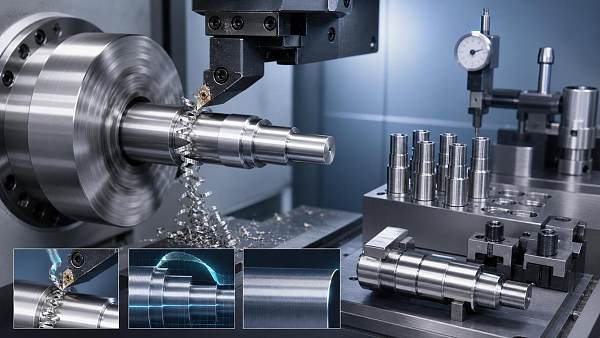
In lathe turning, surface finish rarely depends on one setting.
A smooth result comes from how cutting data, tooling, material response, and machine condition work together.
That matters even more in aerospace and advanced transportation production.
Small changes in roughness can affect sealing, fatigue life, coating adhesion, and downstream assembly accuracy.
For teams working around FAA, EASA, UIC, and ISO expectations, lathe turning quality is not just cosmetic.
It supports repeatable tolerance control and reduces hidden process risk.
The practical question is simple.
Which factors affect surface finish most during lathe turning, and which ones deserve attention first?
The short answer is feed rate usually has the strongest direct effect.
Still, feed rate alone will not save a process with poor tool geometry, chatter, or unstable heat control.
In real production, the best surface finish comes from balancing several variables at once.
Why Surface Finish Matters in Lathe Turning
Surface finish affects much more than appearance.
On shafts, sleeves, valve parts, bearing seats, and sealing faces, poor finish can create friction, noise, leakage, and premature wear.
In high-speed rail, aviation, and propulsion systems, those issues become expensive very quickly.
This also means turning tolerances and surface roughness should be controlled together.
A dimension can be within tolerance and still fail function because the finish is too rough.
That is a common gap in everyday lathe turning decisions.
When scrap rises, many shops check inserts first.
Often, the bigger issue is process interaction rather than one damaged tool.
The Main Factors That Affect Surface Finish Most
Several inputs shape surface finish in lathe turning.
Some create the surface pattern directly.
Others change vibration, heat, chip flow, and tool wear, which then change the final texture.
1. Feed Rate Usually Has the Strongest Direct Effect
In most lathe turning operations, feed rate leaves the clearest mark on the surface.
A higher feed creates deeper feed marks and a rougher finish.
A lower feed usually improves finish, assuming the tool remains stable and sharp.
This is why finish passes often use reduced feed even when cycle time pressure is high.
However, extremely low feed can create rubbing instead of clean cutting.
That can worsen finish, especially on tough alloys and work-hardened materials.
2. Tool Nose Radius Shapes the Surface Pattern
Tool geometry matters more than many people expect.
A larger nose radius can improve surface finish by smoothing the path between feed marks.
That said, a larger radius also increases cutting force.
If the setup lacks rigidity, that extra force may trigger chatter and ruin the surface.
So in lathe turning, bigger is not always better.
The right radius depends on part geometry, overhang, material, and machine stiffness.
3. Cutting Speed Changes Heat and Built-Up Edge
Cutting speed has a mixed but important role.
At the wrong speed, material may weld to the tool edge.
That built-up edge tears the surface and makes finish inconsistent from one pass to the next.
In many steels and aluminum alloys, slightly higher cutting speed reduces built-up edge.
But speed that is too high may overheat the insert and accelerate wear.
When that happens, lathe turning finish falls off quickly instead of gradually.
4. Tool Wear Is a Silent Surface Finish Killer
A worn insert often causes rough finish before dimensional failure appears.
Flank wear increases friction.
Crater wear changes chip flow.
Edge chipping leaves scratches and random marks.
For repeatable lathe turning, insert life should be managed by data, not guesswork.
If finish drifts late in the batch, tool wear is a likely source.
5. Machine Rigidity and Chatter Often Override Good Settings
Even ideal speeds and feeds cannot overcome an unstable setup.
Chatter leaves a repeating wave pattern that no insert grade can hide.
Common causes include long tool overhang, weak workholding, worn spindle components, and poor tailstock support.
This is especially relevant in thin-wall parts and long shafts.
In those cases, surface finish problems in lathe turning are often structural, not parametric.
6. Material Behavior Can Change Everything
Different materials respond very differently in lathe turning.
Free-machining steel may deliver stable chips and easy finish control.
Titanium, nickel alloys, and some stainless grades behave less kindly.
They generate heat, work harden, and punish weak edge preparation.
In advanced mobility components, these materials appear often.
So finish strategy must follow material behavior, not generic charts.
How Coolant, Chip Control, and Depth of Cut Influence Results
These factors may not always be the first suspects.
Still, they often explain why similar lathe turning settings produce different finishes on the machine.
Coolant Stability
Coolant controls heat and helps flush chips away from the cutting zone.
If flow is weak or inconsistent, chips can re-cut the surface.
That leaves scratches and random finish variation.
For heat-sensitive alloys, coolant delivery angle matters almost as much as pressure.
Chip Formation
Good chip control supports good surface finish.
Long stringy chips wrap around the part, hit the insert again, and mark the fresh surface.
That problem is common in ductile alloys and light finishing passes.
Depth of Cut
Depth of cut affects force balance and chip thickness.
If the cut is too shallow, the tool may rub instead of shearing cleanly.
If it is too deep for the setup, vibration may start.
The best lathe turning finish usually comes from a depth that keeps the edge engaged but stable.
A Practical Priority Order for Troubleshooting
When finish drops, troubleshooting should follow a clear order.
That prevents random changes and protects process stability.
- Check the insert edge for wear, chipping, or built-up edge.
- Reduce feed rate slightly and compare the surface pattern.
- Review nose radius against setup rigidity and part geometry.
- Adjust cutting speed to reduce built-up edge or excess heat.
- Inspect workholding, overhang, tailstock support, and spindle behavior.
- Confirm coolant direction, concentration, and chip evacuation.
- Recheck material lot differences if the process changed unexpectedly.
This sequence works well because it moves from the most immediate causes to deeper system issues.
In many lathe turning cells, the winning move is not a dramatic change.
It is one controlled adjustment backed by observation.
Quick Reference Table for Lathe Turning Surface Finish
What Matters Most in Daily Operation
If one factor must be named first, feed rate usually affects surface finish most in lathe turning.
But that answer is only useful when paired with context.
A low feed cannot overcome chatter.
A perfect insert cannot fix poor chip control.
And the wrong speed can destroy a stable finish through built-up edge alone.
The more reliable approach is to treat lathe turning as a connected system.
Start with feed, verify tool condition, then confirm rigidity, speed, coolant, and material response.
That sequence reduces trial and error.
It also improves tolerance consistency, lowers scrap, and supports cleaner, more repeatable production outcomes.
For any lathe turning process with demanding standards, smoother finish is rarely luck.
It is the result of disciplined settings, stable hardware, and careful observation on every pass.
Article Categories
SYSTEM_ALERT_URGENT
Q3 SYMPOSIUM ON ORBITAL DYNAMICS
Registration for the Orbital Aerospace technical committee is now open. Node access required.
Taglist:
Recent Articles
![]() Oct 27, 2026FAA Certifies Boeing 737 MAX 10 After Years of DelaysFAA Certifies Boeing 737 MAX 10 After Years of Delays
Oct 27, 2026FAA Certifies Boeing 737 MAX 10 After Years of DelaysFAA Certifies Boeing 737 MAX 10 After Years of Delays Oct 27, 2026Can an intermodal connectivity platform reduce rail handoff delays?Can an intermodal connectivity platform reduce rail handoff delays?
![]() Oct 26, 2026Chery Unveils Global Smart Mobility Strategy Targeting Robotaxis and eVTOLsChery Unveils Global Smart Mobility Strategy Targeting Robotaxis and eVTOLs
Oct 26, 2026Chery Unveils Global Smart Mobility Strategy Targeting Robotaxis and eVTOLsChery Unveils Global Smart Mobility Strategy Targeting Robotaxis and eVTOLs Oct 26, 2026How to evaluate avionics for helicopters used in IFR operationsHow to evaluate avionics for helicopters used in IFR operations
![]() Oct 25, 2026Ukraine’s Defence Minister Says SpaceX Satellite Services Restored After Speed RestrictionsUkraine’s Defence Minister Says SpaceX Satellite Services Restored After Speed Restrictions
Oct 25, 2026Ukraine’s Defence Minister Says SpaceX Satellite Services Restored After Speed RestrictionsUkraine’s Defence Minister Says SpaceX Satellite Services Restored After Speed Restrictions Oct 25, 2026How satellite infrastructure for IoT affects sensor reporting delaysHow satellite infrastructure for IoT affects sensor reporting delays
![]() Oct 24, 2026China Successfully Launches Yaogan 50-03 SatelliteChina Successfully Launches Yaogan 50-03 Satellite
Oct 24, 2026China Successfully Launches Yaogan 50-03 SatelliteChina Successfully Launches Yaogan 50-03 Satellite Oct 24, 2026How gradients affect traction power needs in high-speed rolling stockHow gradients affect traction power needs in high-speed rolling stock
![]() Oct 23, 2026FAA Proposes Checks on Nearly 2,000 Boeing 737NGs Over Loss-of-Control RiskFAA Proposes Checks on Nearly 2,000 Boeing 737NGs Over Loss-of-Control Risk
Oct 23, 2026FAA Proposes Checks on Nearly 2,000 Boeing 737NGs Over Loss-of-Control RiskFAA Proposes Checks on Nearly 2,000 Boeing 737NGs Over Loss-of-Control Risk Oct 23, 2026How fuel choice affects specific impulse in liquid oxygen propulsionHow fuel choice affects specific impulse in liquid oxygen propulsion
![]() Oct 22, 2026QuantumScape Plans 100 MWh Solid-State Battery Line Targeting Aerospace and Other MarketsQuantumScape Plans 100 MWh Solid-State Battery Line Targeting Aerospace and Other Markets
Oct 22, 2026QuantumScape Plans 100 MWh Solid-State Battery Line Targeting Aerospace and Other MarketsQuantumScape Plans 100 MWh Solid-State Battery Line Targeting Aerospace and Other Markets Oct 22, 2026How tank size limits hydrogen aircraft range on regional flightsHow tank size limits hydrogen aircraft range on regional flights
![]() Oct 21, 2026FAA Certifies Boeing 737-10, Clearing Regulatory Hurdle for DeliveriesFAA Certifies Boeing 737-10, Clearing Regulatory Hurdle for Deliveries
Oct 21, 2026FAA Certifies Boeing 737-10, Clearing Regulatory Hurdle for DeliveriesFAA Certifies Boeing 737-10, Clearing Regulatory Hurdle for Deliveries Oct 21, 2026How are electric vertical takeoff aircraft certified in the US?How are electric vertical takeoff aircraft certified in the US?
![]() Oct 20, 2026Ohio Department of Transportation Releases Three-Year Advanced Air Mobility Action PlanOhio Department of Transportation Releases Three-Year Advanced Air Mobility Action Plan
Oct 20, 2026Ohio Department of Transportation Releases Three-Year Advanced Air Mobility Action PlanOhio Department of Transportation Releases Three-Year Advanced Air Mobility Action Plan Oct 20, 2026How does magnetic flux density in tesla affect maglev lift force?How does magnetic flux density in tesla affect maglev lift force?
![]() Oct 19, 2026ZeroAvia Completes Key Ground Tests of ZA600 Hydrogen Fuel Cell PowertrainZeroAvia Completes Key Ground Tests of ZA600 Hydrogen Fuel Cell Powertrain
Oct 19, 2026ZeroAvia Completes Key Ground Tests of ZA600 Hydrogen Fuel Cell PowertrainZeroAvia Completes Key Ground Tests of ZA600 Hydrogen Fuel Cell Powertrain Oct 19, 2026How spacecraft integration affects advanced propulsion costsHow spacecraft integration affects advanced propulsion costs
 Oct 18, 2026How chilldown prevents cavitation in cryogenic engine systemsHow chilldown prevents cavitation in cryogenic engine systems
 Oct 17, 2026How explainability affects algorithmic trust in AI flight systemsHow explainability affects algorithmic trust in AI flight systems
 Oct 16, 2026How to evaluate transportation technology for Middle East heatHow to evaluate transportation technology for Middle East heat
 Oct 15, 2026How common-cause failures defeat redundancy logic in European avionicsHow common-cause failures defeat redundancy logic in European avionics
 Oct 14, 2026How DO-160 applies to aerospace technology testing for avionicsHow DO-160 applies to aerospace technology testing for avionics
 Oct 13, 2026How fuel price volatility shapes commercial aviation cost trendsHow fuel price volatility shapes commercial aviation cost trends
 Oct 12, 2026How to qualify aerospace manufacturing components for traceabilityHow to qualify aerospace manufacturing components for traceability
 Oct 11, 2026Which certification hurdles are slowing hydrogen aviation in Europe?Which certification hurdles are slowing hydrogen aviation in Europe?
 Oct 10, 2026What evidence should a magnetic gap stability supplier provide?What evidence should a magnetic gap stability supplier provide?
 Oct 09, 2026Which ISO standards matter when qualifying industrial technology suppliers?Which ISO standards matter when qualifying industrial technology suppliers?
 Oct 08, 2026When does reusability actually lower launch vehicle costs?When does reusability actually lower launch vehicle costs?
 Oct 07, 2026Where to find reliable product knowledge resources in the Middle EastWhere to find reliable product knowledge resources in the Middle East
 Oct 06, 2026What drives high-speed rail systems cost per kilometer?What drives high-speed rail systems cost per kilometer?
 Oct 05, 2026When does hydrogen propulsion for UAV extend mission range enough to justify it?When does hydrogen propulsion for UAV extend mission range enough to justify it?
 Oct 04, 2026How rail systems integration reduces commissioning delaysHow rail systems integration reduces commissioning delays
 Oct 03, 2026How to evaluate an advanced propulsion manufacturer for hydrogen systemsHow to evaluate an advanced propulsion manufacturer for hydrogen systems
 Oct 02, 2026How to qualify aircraft components for OEM production approvalHow to qualify aircraft components for OEM production approval