LiFePO4 Battery Safety: What Matters in Industrial Use
Lead Author
Published
Views:
In industrial aerospace and advanced transportation environments, lifepo4 battery safety is not just a component-level concern—it is a certification, quality control, and operational risk priority.
For high-reliability systems, the real issue is performance under vibration, thermal stress, rapid charging, and long duty cycles.
This article examines the safety factors that matter most in industrial use, from chemistry and BMS design to compliance testing and lifecycle monitoring.
LiFePO4 Battery Safety in Industrial Mobility Systems

A lifepo4 battery uses lithium iron phosphate chemistry, known for thermal stability, long cycle life, and reduced combustion risk.
Compared with many lithium-ion chemistries, it has a stronger phosphate bond and lower oxygen release during abuse conditions.
That does not make a lifepo4 battery risk-free. Industrial safety depends on cell quality, pack architecture, electronics, and operating discipline.
In advanced transportation, batteries may support ground power, auxiliary systems, signaling equipment, autonomous platforms, or emergency backup functions.
Each role introduces different electrical loads, enclosure constraints, cooling requirements, and maintenance expectations.
A safe lifepo4 battery design therefore begins with system context, not only cell datasheets.
Core Chemistry Advantages and Practical Limits
The primary safety advantage of lifepo4 battery chemistry is resistance to thermal runaway initiation.
Its cathode structure remains more stable at elevated temperatures than cobalt-rich alternatives.
This helps reduce escalation risk when a cell experiences overcharge, external heating, or mechanical damage.
However, industrial packs contain many cells, busbars, insulation materials, sensors, and control electronics.
A lifepo4 battery can still fail through poor assembly, internal shorts, coolant leakage, connector fatigue, or software errors.
The chemistry creates a safer foundation, but engineering controls define operational safety.
- Lower thermal runaway propagation tendency than many nickel-rich lithium systems.
- Long cycle life when operated within validated voltage and temperature windows.
- Good abuse tolerance for stationary, rail, logistics, and aerospace-adjacent support uses.
- Lower energy density, requiring careful space and weight trade-off analysis.
Industrial Safety Factors That Require Verification
A lifepo4 battery used in demanding environments must be assessed through measurable safety parameters.
General claims are not enough for aviation support, high-speed rail, unmanned vehicles, or extreme logistics systems.
The following factors are commonly reviewed during technical selection and qualification.
A robust lifepo4 battery program links these checks to real operating profiles, not only laboratory averages.
Battery Management System Design and Fault Control
The BMS is the primary active safety layer in a lifepo4 battery pack.
It monitors cell voltage, pack current, temperature distribution, state of charge, and state of health.
In industrial systems, the BMS must do more than display data.
It should detect abnormal patterns, isolate faults, command contactors, and communicate with higher-level controllers.
A lifepo4 battery may tolerate abuse better, but delayed detection still increases risk.
Important BMS capabilities include:
- Cell-level voltage monitoring with calibrated measurement channels.
- Temperature sensing across hot spots, terminals, and module interiors.
- Current limiting during rapid charge, cold start, and peak discharge.
- Pre-charge control to reduce inrush stress on downstream electronics.
- Fault memory for traceability, maintenance, and safety investigations.
For high-integrity applications, BMS software should follow structured validation and configuration control.
Firmware updates, parameter changes, and communication failures must be managed as safety-relevant events.
Thermal Management Under Real Duty Cycles
Thermal stability is a major reason to choose a lifepo4 battery, but heat still affects reliability.
Repeated high-current charging can create uneven temperature zones inside modules.
Cold conditions can also reduce charge acceptance and increase lithium plating risk if controls are poor.
Industrial designs should define operating, storage, transport, and emergency temperature limits separately.
A lifepo4 battery in a sealed enclosure may need conductive plates, forced air, or liquid-assisted cooling.
Thermal simulations should be validated with physical tests under worst-case load profiles.
Safety evaluation should also include blocked ventilation, sensor drift, fan failure, and high ambient exposure.
Compliance Testing and Certification Alignment
Industrial adoption of a lifepo4 battery depends on evidence that matches regulatory and operating requirements.
Relevant standards may include UN 38.3, IEC 62619, UL 1973, IEC 62133, and transport-specific rules.
For aerospace and advanced mobility contexts, integration requirements may also reference FAA, EASA, ISO, or railway safety frameworks.
The exact pathway depends on installation location, voltage class, mobility function, and failure consequence.
A certified lifepo4 battery should provide clear reports, test conditions, sample traceability, and configuration references.
Outdated certificates can be misleading if cells, BMS firmware, enclosure materials, or suppliers have changed.
Typical Industrial Application Scenarios
A lifepo4 battery is selected when long life, predictable safety behavior, and stable power delivery matter.
In aerospace-related infrastructure, it may support ground service equipment, telemetry stations, backup power, and mobile maintenance tools.
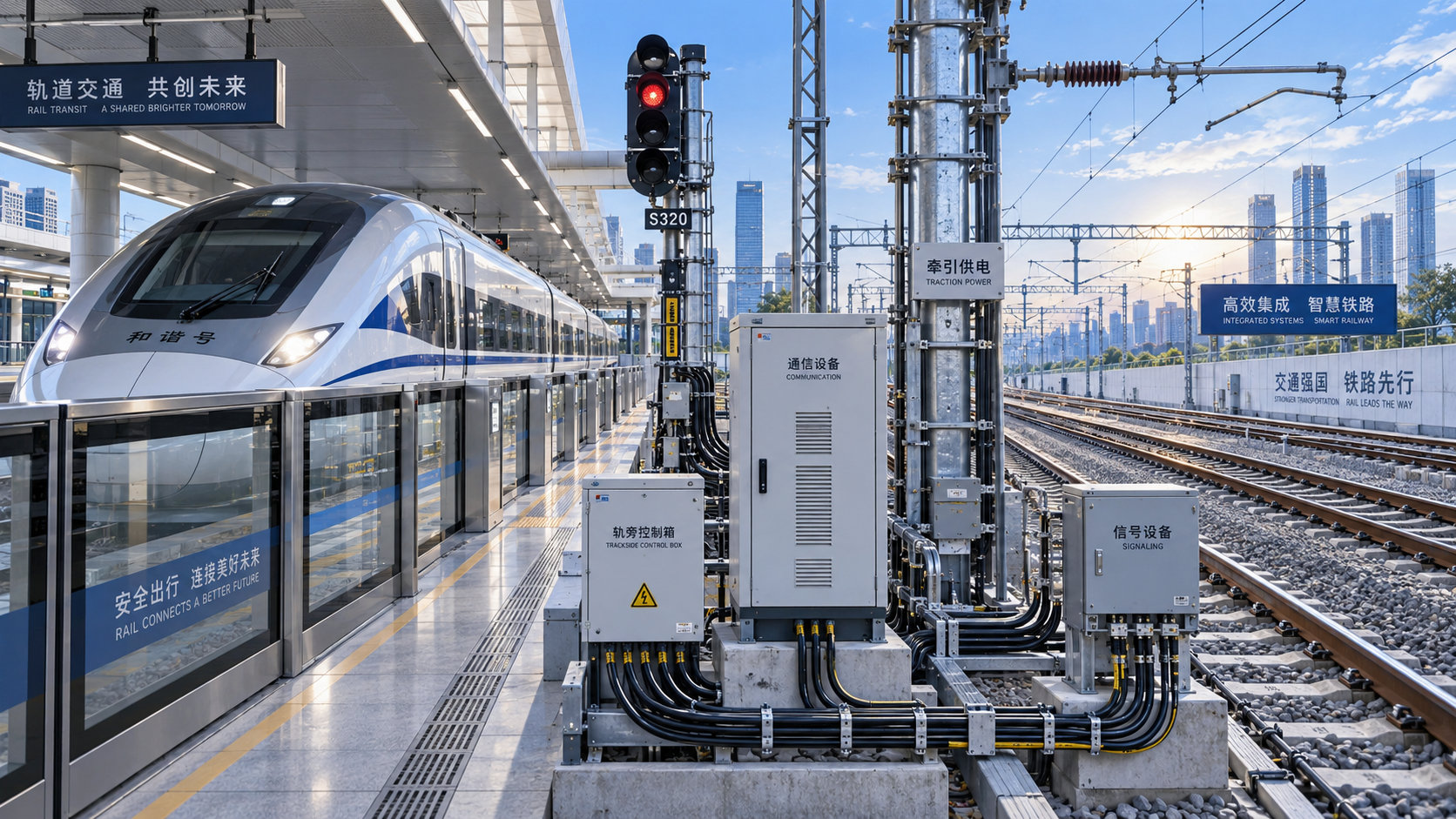
In rail and maglev systems, it can serve signaling cabinets, emergency lighting, control backups, and wayside power storage.
In autonomous logistics, it may power sensors, robotic platforms, cold-chain modules, or remote communication nodes.
Lifecycle Monitoring and Failure Prevention
A lifepo4 battery may deliver thousands of cycles, but aging still changes internal resistance and available capacity.
Safety programs should track more than remaining energy.
Useful indicators include cell imbalance, charge time variation, abnormal heat rise, contactor behavior, and insulation resistance trends.
Predictive maintenance becomes stronger when BMS data is linked with environmental and mission data.
For example, vibration history can explain connector faults or intermittent voltage drops.
Temperature exposure can explain accelerated capacity fade or unexpected current limitation.
A lifepo4 battery should also have defined retirement criteria before performance becomes unsafe or unreliable.
- Set inspection intervals based on duty cycle severity.
- Record fault codes with operating conditions.
- Compare module temperature spread during standard loads.
- Replace damaged harnesses, vents, seals, and terminals promptly.
- Review end-of-life thresholds during system safety assessments.
Practical Selection and Integration Guidance
Selecting a lifepo4 battery for industrial use should follow a structured technical review.
The review should connect electrical needs, environmental exposure, certification scope, and maintenance capability.
Start with a load profile covering continuous power, surge current, recharge pattern, standby time, and emergency demand.
Then confirm voltage limits, protection settings, communication interfaces, enclosure rating, and mounting strategy.
A safe lifepo4 battery installation also needs installation procedures, torque specifications, labeling, and isolation checks.
Charging equipment must match chemistry-specific voltage limits and BMS communication requirements.
Never assume a generic lithium charger is suitable without validation.
- Define the safety function of the battery within the complete system.
- Request cell, module, pack, and BMS documentation.
- Verify certifications against the exact product configuration.
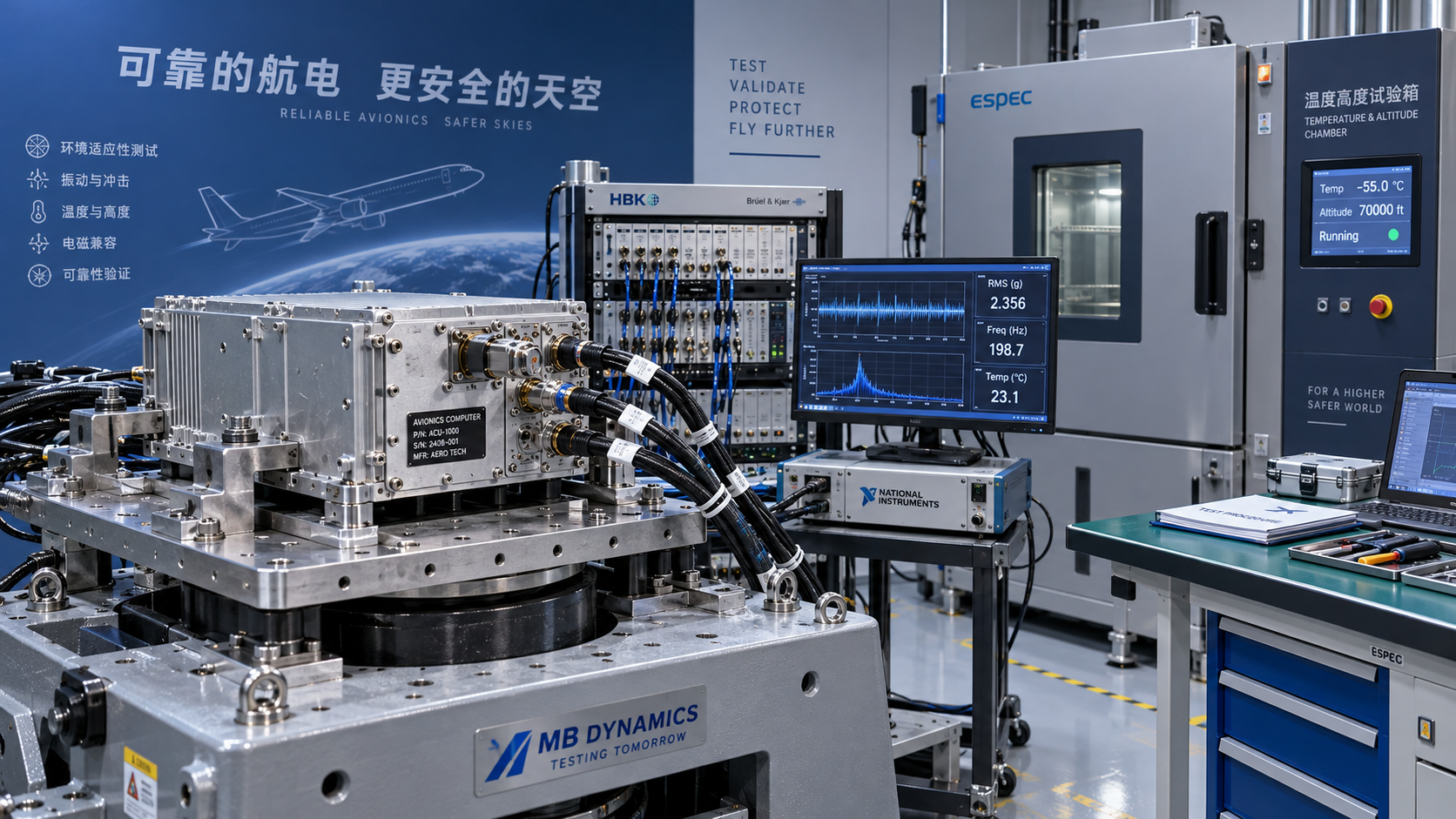
- Run integration tests under realistic temperature and vibration conditions.
- Establish monitoring, maintenance, and replacement rules before deployment.
Operational Discipline for Safer Deployment
The safety of a lifepo4 battery continues after installation.
Operators need clear procedures for charging, storage, transport, inspection, fault response, and emergency isolation.
Storage conditions should control temperature, humidity, state of charge, and physical protection.
Damaged packs should be quarantined, documented, and evaluated by qualified personnel.
A lifepo4 battery involved in impact, flooding, overheating, or unexplained shutdown should not return to service automatically.
Incident data should feed back into design reviews, supplier audits, and maintenance planning.
This closed-loop approach is essential in aerospace, rail, UAM, and extreme-environment logistics ecosystems.
Next Steps for Industrial Decision-Making
A lifepo4 battery offers a strong safety platform for industrial power systems, but success depends on disciplined engineering.
Chemistry, BMS design, thermal control, compliance evidence, and lifecycle monitoring must be reviewed together.
For high-reliability mobility programs, the practical next step is a structured safety and integration assessment.
Map the operating profile, identify failure consequences, verify standards alignment, and test the complete battery system.
When these steps are applied consistently, lifepo4 battery technology can support safer, longer-lasting, and more predictable industrial operations.
Article Categories
SYSTEM_ALERT_URGENT
Q3 SYMPOSIUM ON ORBITAL DYNAMICS
Registration for the Orbital Aerospace technical committee is now open. Node access required.
Recent Articles
![]() Oct 27, 2026FAA Certifies Boeing 737 MAX 10 After Years of DelaysFAA Certifies Boeing 737 MAX 10 After Years of Delays
Oct 27, 2026FAA Certifies Boeing 737 MAX 10 After Years of DelaysFAA Certifies Boeing 737 MAX 10 After Years of Delays Oct 27, 2026Can an intermodal connectivity platform reduce rail handoff delays?Can an intermodal connectivity platform reduce rail handoff delays?
![]() Oct 26, 2026Chery Unveils Global Smart Mobility Strategy Targeting Robotaxis and eVTOLsChery Unveils Global Smart Mobility Strategy Targeting Robotaxis and eVTOLs
Oct 26, 2026Chery Unveils Global Smart Mobility Strategy Targeting Robotaxis and eVTOLsChery Unveils Global Smart Mobility Strategy Targeting Robotaxis and eVTOLs Oct 26, 2026How to evaluate avionics for helicopters used in IFR operationsHow to evaluate avionics for helicopters used in IFR operations
![]() Oct 25, 2026Ukraine’s Defence Minister Says SpaceX Satellite Services Restored After Speed RestrictionsUkraine’s Defence Minister Says SpaceX Satellite Services Restored After Speed Restrictions
Oct 25, 2026Ukraine’s Defence Minister Says SpaceX Satellite Services Restored After Speed RestrictionsUkraine’s Defence Minister Says SpaceX Satellite Services Restored After Speed Restrictions Oct 25, 2026How satellite infrastructure for IoT affects sensor reporting delaysHow satellite infrastructure for IoT affects sensor reporting delays
![]() Oct 24, 2026China Successfully Launches Yaogan 50-03 SatelliteChina Successfully Launches Yaogan 50-03 Satellite
Oct 24, 2026China Successfully Launches Yaogan 50-03 SatelliteChina Successfully Launches Yaogan 50-03 Satellite Oct 24, 2026How gradients affect traction power needs in high-speed rolling stockHow gradients affect traction power needs in high-speed rolling stock
![]() Oct 23, 2026FAA Proposes Checks on Nearly 2,000 Boeing 737NGs Over Loss-of-Control RiskFAA Proposes Checks on Nearly 2,000 Boeing 737NGs Over Loss-of-Control Risk
Oct 23, 2026FAA Proposes Checks on Nearly 2,000 Boeing 737NGs Over Loss-of-Control RiskFAA Proposes Checks on Nearly 2,000 Boeing 737NGs Over Loss-of-Control Risk Oct 23, 2026How fuel choice affects specific impulse in liquid oxygen propulsionHow fuel choice affects specific impulse in liquid oxygen propulsion
![]() Oct 22, 2026QuantumScape Plans 100 MWh Solid-State Battery Line Targeting Aerospace and Other MarketsQuantumScape Plans 100 MWh Solid-State Battery Line Targeting Aerospace and Other Markets
Oct 22, 2026QuantumScape Plans 100 MWh Solid-State Battery Line Targeting Aerospace and Other MarketsQuantumScape Plans 100 MWh Solid-State Battery Line Targeting Aerospace and Other Markets Oct 22, 2026How tank size limits hydrogen aircraft range on regional flightsHow tank size limits hydrogen aircraft range on regional flights
![]() Oct 21, 2026FAA Certifies Boeing 737-10, Clearing Regulatory Hurdle for DeliveriesFAA Certifies Boeing 737-10, Clearing Regulatory Hurdle for Deliveries
Oct 21, 2026FAA Certifies Boeing 737-10, Clearing Regulatory Hurdle for DeliveriesFAA Certifies Boeing 737-10, Clearing Regulatory Hurdle for Deliveries Oct 21, 2026How are electric vertical takeoff aircraft certified in the US?How are electric vertical takeoff aircraft certified in the US?
![]() Oct 20, 2026Ohio Department of Transportation Releases Three-Year Advanced Air Mobility Action PlanOhio Department of Transportation Releases Three-Year Advanced Air Mobility Action Plan
Oct 20, 2026Ohio Department of Transportation Releases Three-Year Advanced Air Mobility Action PlanOhio Department of Transportation Releases Three-Year Advanced Air Mobility Action Plan Oct 20, 2026How does magnetic flux density in tesla affect maglev lift force?How does magnetic flux density in tesla affect maglev lift force?
![]() Oct 19, 2026ZeroAvia Completes Key Ground Tests of ZA600 Hydrogen Fuel Cell PowertrainZeroAvia Completes Key Ground Tests of ZA600 Hydrogen Fuel Cell Powertrain
Oct 19, 2026ZeroAvia Completes Key Ground Tests of ZA600 Hydrogen Fuel Cell PowertrainZeroAvia Completes Key Ground Tests of ZA600 Hydrogen Fuel Cell Powertrain Oct 19, 2026How spacecraft integration affects advanced propulsion costsHow spacecraft integration affects advanced propulsion costs
 Oct 18, 2026How chilldown prevents cavitation in cryogenic engine systemsHow chilldown prevents cavitation in cryogenic engine systems
 Oct 17, 2026How explainability affects algorithmic trust in AI flight systemsHow explainability affects algorithmic trust in AI flight systems
 Oct 16, 2026How to evaluate transportation technology for Middle East heatHow to evaluate transportation technology for Middle East heat
 Oct 15, 2026How common-cause failures defeat redundancy logic in European avionicsHow common-cause failures defeat redundancy logic in European avionics
 Oct 14, 2026How DO-160 applies to aerospace technology testing for avionicsHow DO-160 applies to aerospace technology testing for avionics
 Oct 13, 2026How fuel price volatility shapes commercial aviation cost trendsHow fuel price volatility shapes commercial aviation cost trends
 Oct 12, 2026How to qualify aerospace manufacturing components for traceabilityHow to qualify aerospace manufacturing components for traceability
 Oct 11, 2026Which certification hurdles are slowing hydrogen aviation in Europe?Which certification hurdles are slowing hydrogen aviation in Europe?
 Oct 10, 2026What evidence should a magnetic gap stability supplier provide?What evidence should a magnetic gap stability supplier provide?
 Oct 09, 2026Which ISO standards matter when qualifying industrial technology suppliers?Which ISO standards matter when qualifying industrial technology suppliers?
 Oct 08, 2026When does reusability actually lower launch vehicle costs?When does reusability actually lower launch vehicle costs?
 Oct 07, 2026Where to find reliable product knowledge resources in the Middle EastWhere to find reliable product knowledge resources in the Middle East
 Oct 06, 2026What drives high-speed rail systems cost per kilometer?What drives high-speed rail systems cost per kilometer?
 Oct 05, 2026When does hydrogen propulsion for UAV extend mission range enough to justify it?When does hydrogen propulsion for UAV extend mission range enough to justify it?
 Oct 04, 2026How rail systems integration reduces commissioning delaysHow rail systems integration reduces commissioning delays
 Oct 03, 2026How to evaluate an advanced propulsion manufacturer for hydrogen systemsHow to evaluate an advanced propulsion manufacturer for hydrogen systems
 Oct 02, 2026How to qualify aircraft components for OEM production approvalHow to qualify aircraft components for OEM production approval