Transportation Technology Trends 2026 Worth Tracking
Lead Author
Published
Views:
Transportation Technology in 2026 is accelerating the shift toward Future Mobility, where Aerospace Engineering, Space Exploration, eVTOL, High-Speed Rail, and Smart Transportation converge into scalable Global Mobility Solutions. For operators, evaluators, procurement teams, and decision-makers, tracking these Transportation Innovation trends is essential to balancing performance, safety, certification, and investment value across Urban Air Mobility and next-generation transport ecosystems.
For B2B stakeholders, the priority is no longer simply adopting new transport systems earlier than competitors. The real challenge is identifying which technologies can move from pilot to certified, safe, and financially defensible deployment within 12 to 36 months. In aviation, rail, and advanced logistics, capital decisions increasingly depend on lifecycle cost, interoperability, digital resilience, and regulatory readiness.
This matters directly to the audience served by G-AIT: engineering leaders, technical evaluation teams, safety managers, procurement departments, distributors, and strategic planners who need a structured view of what is commercially relevant in 2026. Across aerospace and advanced transportation, the most important trends are not isolated inventions. They are integrated capability shifts that connect propulsion, autonomy, infrastructure, data systems, and certification pathways.
The sections below focus on the transportation technology trends worth tracking because they affect asset performance, network capacity, maintenance models, supplier selection, and long-term competitiveness. Rather than treating innovation as a marketing theme, the article approaches it as a decision framework for real-world deployment.
Zero-Emission Propulsion Moves From Vision to Procurement Criteria

By 2026, zero-emission propulsion is becoming a measurable procurement category rather than a distant R&D objective. For advanced commercial aviation, urban air mobility, rail, and specialized logistics, buyers are now comparing battery-electric, hydrogen-electric, hybrid-electric, and sustainable-fuel-compatible platforms against mission profile, safety constraints, and infrastructure availability. In practical terms, a system that reduces direct emissions but adds unmanageable turnaround time or certification complexity may not be commercially viable.
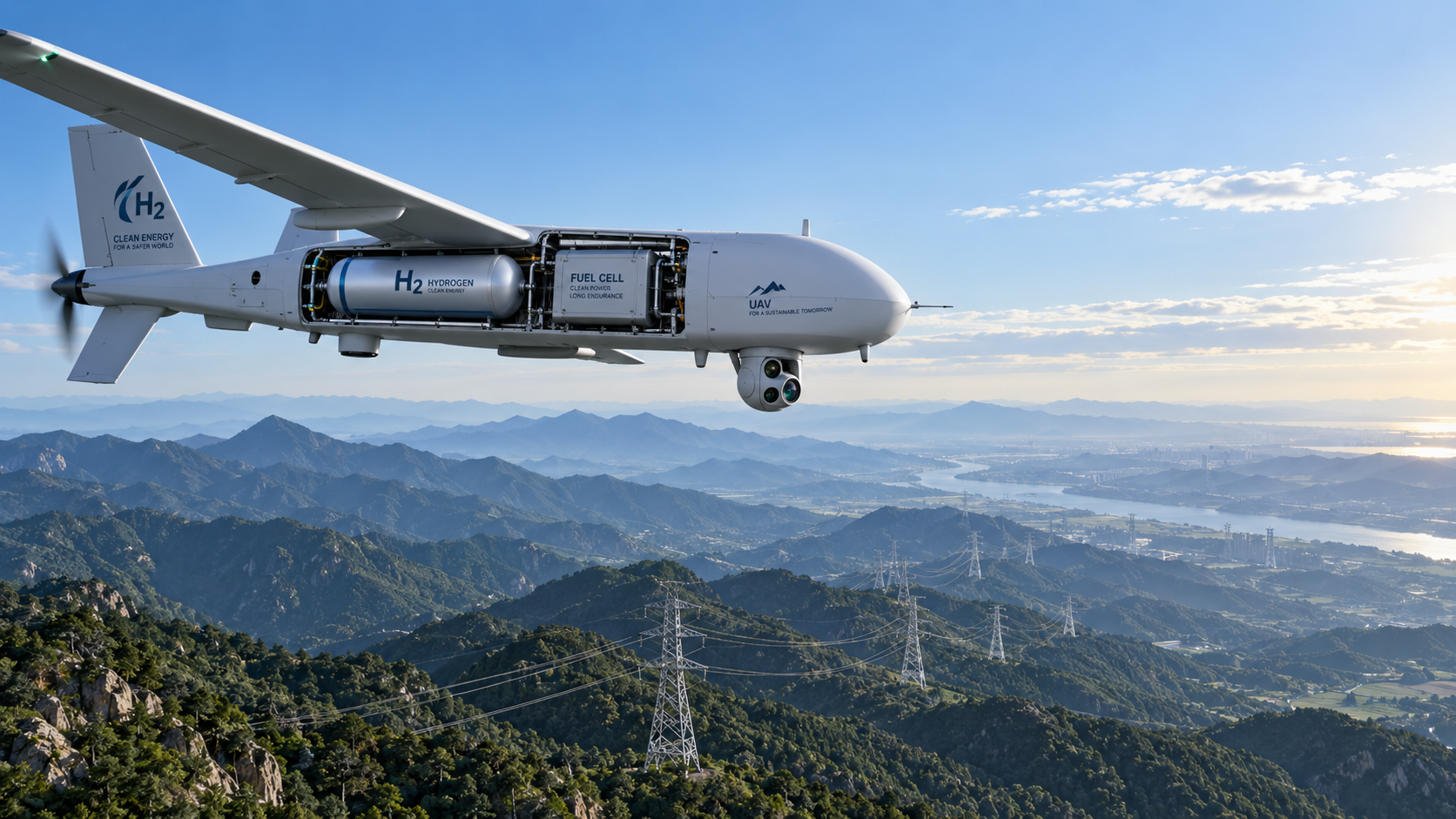
In short-range and urban missions, battery-electric systems remain most practical when route lengths are limited, payload is controlled, and charging cycles can be planned within 20 to 60 minutes. Hydrogen-based options are attracting attention for longer-range missions because of their energy-density potential, but the operational question in 2026 is not only aircraft readiness. It is also the maturity of storage, ground handling, leak detection, and airport-side fueling procedures.
For high-speed rail and intermodal freight, decarbonization is less about replacing electrification and more about improving grid efficiency, regenerative braking, energy management software, and low-emission auxiliary systems. Operators evaluating next-generation networks are increasingly looking at total energy consumption per passenger-kilometer or ton-kilometer, not just headline top speed.
This shift creates a new screening standard for procurement teams. Instead of asking whether a platform is green, teams are asking whether it can deliver range, recharge or refuel cycles, maintainability, compliance documentation, and cost predictability across a 5- to 15-year operating window.
What procurement teams should compare first
The propulsion conversation often gets distorted by prototype performance claims. A more reliable comparison starts with mission duty cycle, reserve margins, temperature sensitivity, infrastructure dependency, and maintenance burden. For example, battery systems may perform well in stable urban corridors but degrade faster under heavy thermal cycling, while hydrogen systems may support longer missions but require more complex safety zones and fueling logistics.
- Mission range under regulated reserve requirements, not only nominal test range
- Turnaround time per cycle, including charging, cooling, inspection, or fueling
- Energy storage lifecycle, especially replacement intervals after 1,000 to 3,000 cycles
- Ground infrastructure compatibility across 2 to 5 operating sites
- Certification path under applicable FAA, EASA, rail, or ISO-aligned frameworks
The following table helps benchmark the major propulsion pathways that procurement and technical assessment teams are likely to review in 2026.
The key takeaway is that propulsion selection in 2026 is becoming mission-specific. No single pathway wins across all use cases. Decision-makers should treat energy architecture as part of a larger operational system that includes ground support, maintenance capability, route structure, and compliance risk.
Autonomy and AI-Assisted Operations Are Reshaping Safety and Throughput
Autonomy in transportation technology is entering a more disciplined phase in 2026. The market is moving beyond broad claims about fully autonomous mobility and focusing instead on bounded autonomy, AI-assisted decision support, remote supervision, and safety-validated automation. This shift is especially relevant in eVTOL operations, smart rail control, ground logistics, and advanced aerospace systems where the operator remains in the loop, but software increasingly manages routing, diagnostics, collision avoidance, and resource optimization.
For operators and safety managers, the main value of autonomy is not labor replacement alone. It is consistency. AI-assisted systems can process high-frequency data streams in milliseconds, detect anomalies earlier, and reduce human workload in high-stress conditions. However, every efficiency gain must be weighed against software assurance, fail-safe behavior, cybersecurity exposure, and the clarity of human override procedures.
In high-speed rail, autonomous functions are being used to improve signaling response, predictive braking coordination, timetable resilience, and energy optimization. In aerospace, autonomy increasingly supports condition monitoring, flight envelope protection, and mission planning. In urban air mobility, remote fleet oversight and digital dispatch systems are expected to play a major role before wide-scale high-autonomy operations are approved.
A practical benchmark for 2026 is whether an autonomous function can be validated in a constrained domain with clear sensor redundancy, tested edge-case handling, and a traceable incident response chain. Systems that cannot document these elements may remain impressive demonstrations without procurement confidence.
Four questions technical evaluators should ask
- What is the operational design domain, and where does the autonomous function stop being reliable?
- How many redundant sensing or positioning channels are built into the system: 2, 3, or more?
- What is the manual takeover or remote intervention time in degraded mode?
- Can software updates be validated without disrupting certification, maintenance schedules, or fleet consistency?
Why autonomy procurement often fails
Autonomy projects often stall because buyers focus on feature count instead of operational assurance. A vendor may demonstrate computer vision, automated routing, or adaptive learning, but if the documentation does not explain fallback logic, cyber-hardening, sensor contamination handling, and training requirements for operators, the real deployment cost can rise sharply after acquisition.
Minimum readiness signals in 2026
- Validated simulation plus live-environment testing across at least 3 representative conditions
- Clear event logging for incident review within seconds rather than manual reconstruction
- Cybersecurity patch governance aligned with maintenance windows of 30, 60, or 90 days
- Training modules for controllers, operators, and maintenance staff delivered in role-specific tiers
For enterprise buyers, the best autonomy investments in transportation technology are often the least theatrical. They produce measurable gains in dispatch stability, safety margin, maintenance planning, and network throughput without creating hidden certification or liability exposure.
Digital Certification, Cybersecurity, and Data Integrity Become Core Infrastructure
In 2026, transportation innovation is no longer judged only by physical performance. Digital compliance is becoming part of the product itself. Aircraft, rail systems, satellite-enabled mobility infrastructure, and connected logistics platforms all depend on software-driven control layers, over-the-air updates, digital twins, and continuous data exchange. That makes certification documentation, configuration control, and cybersecurity governance central to deployment decisions.
For quality leaders and project managers, one of the biggest risks is mismatch between engineering speed and approval speed. A platform may iterate software every 2 weeks, while validation and compliance review may take 6 to 12 weeks. Without disciplined version control, traceability, and test evidence, the organization can lose operational confidence even before a regulator intervenes.
This issue spans all advanced transportation segments. In UAM, secure communication and navigation integrity are essential for fleet coordination. In high-speed rail and maglev networks, signaling systems must maintain resilience against interference and unauthorized access. In aerospace and space-related logistics, data integrity is tied directly to mission assurance, fleet health, and command reliability.
The procurement implication is straightforward: digital architecture must be evaluated as a safety-critical subsystem. Buyers should request not just functionality descriptions, but also update policies, access controls, anomaly logging, backup modes, and third-party integration methods.
A practical digital risk checklist
Before approval, many organizations now use structured digital assurance reviews covering data flow, system authority, and recovery steps. The table below summarizes a practical comparison framework for procurement and technical due diligence.
The most valuable lesson for 2026 is that cybersecurity and certification are converging in practice. A digitally vulnerable transportation platform can quickly become an operational liability, even if the mechanical design is strong. Strong bidders will be those that can prove both engineering performance and controlled digital lifecycle management.
Infrastructure Readiness Determines Whether Future Mobility Can Scale
Many transportation technology programs fail not because the vehicle or platform is weak, but because the supporting infrastructure is underdeveloped. In 2026, infrastructure readiness is one of the clearest dividing lines between pilot-stage innovation and commercially scalable mobility. This is especially visible in vertiports for eVTOL, charging and hydrogen systems, maglev corridor integration, satellite-supported communications, and multimodal logistics handoff points.
For project owners and commercial evaluators, infrastructure should be measured in three layers. The first is physical capability: pads, tracks, substations, fueling systems, thermal controls, and maintenance access. The second is digital capability: traffic management, monitoring, scheduling, and predictive diagnostics. The third is institutional capability: local approvals, operator training, emergency response procedures, and service-level accountability.
A common planning mistake is treating infrastructure as a late-stage add-on after platform selection. In reality, route economics can change dramatically if an operator needs 2 additional charging nodes, a larger safety perimeter, or backup grid support. A 15-minute difference in turnaround time can materially affect daily sortie count, crew planning, and revenue assumptions.
For high-speed rail and maglev projects, the issue is even broader. Signaling integrity, civil alignment tolerances, power quality, and evacuation procedures must all be coordinated. For specialized extreme-environment logistics, resilience under temperature swings, dust exposure, icing, or remote communications loss may determine whether the concept is usable at all.
Infrastructure planning priorities for 2026
- Map energy demand peaks over 24-hour and 7-day operating cycles rather than using average assumptions
- Validate maintenance access, spare storage, and emergency isolation procedures before route launch
- Test interoperability between operator software, infrastructure control systems, and external traffic management tools
- Build phased deployment plans in 3 stages: pilot, limited commercial service, and scaled network operations
Scenario-based deployment view
The table below outlines how infrastructure needs differ across advanced transportation scenarios that many enterprises are now benchmarking.
The broader point is simple: infrastructure readiness should be reviewed at the same time as vehicle selection, not after it. Organizations that model both together are more likely to reach scalable deployment within 18 to 30 months rather than remain in repeated pilot cycles.
Procurement Strategy in 2026: Buy for Integration, Maintainability, and Standards Alignment
As transportation technology becomes more interconnected, procurement strategy is shifting from unit price comparisons to full-system evaluation. In 2026, the best purchasing decisions will come from teams that assess platform performance together with maintenance access, software support, regulatory compatibility, training requirements, and supplier responsiveness. This is particularly important for multinational operators and distributors that must support varied operating environments across regions.
For enterprise buyers, maintainability is often the most underestimated cost driver. A high-performance mobility asset that requires specialized tools, scarce replacement modules, or frequent software intervention can create avoidable downtime. Procurement teams should ask what the expected inspection intervals are, how many maintenance skill tiers are required, and whether spare parts can be sourced within 7 days, 30 days, or longer.
Standards alignment is equally important. G-AIT’s benchmarking orientation highlights why systems should be reviewed against recognized frameworks such as FAA, EASA, UIC, and ISO where applicable. Even when a project is in early deployment, standards-based design improves future interoperability, audit readiness, and investor confidence. It also reduces the likelihood of costly redesign once commercialization expands.
Commercially, procurement leaders should also consider supplier maturity. A technically strong vendor may still present risk if documentation is incomplete, post-sale engineering support is thin, or global service capability is unproven. In advanced transportation, weak after-sales support can erase the benefit of an attractive initial quote within the first 12 months of operation.
A five-point procurement framework
- Define the use case precisely, including route length, duty cycle, climate range, and safety thresholds.
- Score the platform on performance, compliance readiness, maintainability, digital security, and supplier support.
- Request lifecycle documentation covering inspections, software updates, and parts replacement.
- Verify integration effort with existing fleet, infrastructure, and data systems.
- Pilot in controlled phases before scaling beyond 1 site or 1 network corridor.
Common procurement mistakes to avoid
- Selecting on top speed or range alone without assessing turnaround, reserve margins, and maintenance hours
- Approving software-heavy systems without patch governance and event traceability
- Ignoring training requirements for operators, dispatchers, and quality teams
- Underestimating the time needed for local approval, site readiness, and safety documentation
For decision-makers tracking transportation technology trends in 2026, the winning strategy is disciplined rather than reactive. Buy assets and systems that can scale safely, integrate cleanly, and hold up under audit, maintenance, and evolving operational pressure.
FAQ for Evaluators, Operators, and Decision-Makers
How should organizations prioritize transportation technology investments in 2026?
Start with bottlenecks that affect safety, throughput, emissions, or network reliability. For some organizations, the best first step is not buying a new vehicle platform but upgrading digital control, predictive maintenance, or infrastructure readiness. A 10% to 20% improvement in utilization can sometimes produce more value than a headline technology purchase.
Which advanced mobility segment is closest to scalable adoption?
In many markets, digitally enhanced rail and ground logistics are scaling faster because infrastructure and regulatory models are more mature. UAM and zero-emission aviation remain high-potential segments, but commercial expansion depends heavily on certification pace, vertiport readiness, and route economics. The answer therefore depends on whether the buyer needs near-term deployment within 12 to 24 months or a longer innovation horizon.
What should safety and quality teams examine before approving new mobility systems?
They should review failure modes, redundancy architecture, maintenance intervals, data logging, operator training, emergency procedures, and software governance. A useful internal rule is to require evidence for normal mode, degraded mode, and recovery mode operations before final approval. That 3-part view often reveals hidden operational risk early.
How long does advanced transportation deployment usually take?
A limited pilot can begin in 6 to 12 months if infrastructure is simple and approvals are clear. Larger deployments involving new charging systems, vertiports, specialized rail interfaces, or multi-vendor digital integration often take 18 to 36 months. The longest delays usually come from site readiness, certification documentation, and cross-stakeholder coordination rather than from core hardware alone.
Transportation technology trends worth tracking in 2026 are the ones that improve deployable capability, not just technical excitement. Zero-emission propulsion, bounded autonomy, digital assurance, and infrastructure-linked scalability are reshaping how aerospace and advanced transportation systems are evaluated, purchased, and operated. For organizations benchmarking future mobility, the most resilient path is to align innovation with certification, lifecycle support, and network-level integration from day one.
G-AIT’s strategic value lies in connecting frontier engineering with operational integrity across aviation, space infrastructure, high-speed rail, urban air mobility, and specialized logistics. If your team is assessing next-generation transport platforms, refining procurement criteria, or planning a scalable deployment roadmap, now is the right time to move from trend awareness to actionable benchmarking. Contact us to discuss technical evaluation priorities, request a customized solution view, or explore more advanced transportation intelligence options.
Article Categories
SYSTEM_ALERT_URGENT
Q3 SYMPOSIUM ON ORBITAL DYNAMICS
Registration for the Orbital Aerospace technical committee is now open. Node access required.
Recent Articles
![]() Oct 27, 2026FAA Certifies Boeing 737 MAX 10 After Years of DelaysFAA Certifies Boeing 737 MAX 10 After Years of Delays
Oct 27, 2026FAA Certifies Boeing 737 MAX 10 After Years of DelaysFAA Certifies Boeing 737 MAX 10 After Years of Delays Oct 27, 2026Can an intermodal connectivity platform reduce rail handoff delays?Can an intermodal connectivity platform reduce rail handoff delays?
![]() Oct 26, 2026Chery Unveils Global Smart Mobility Strategy Targeting Robotaxis and eVTOLsChery Unveils Global Smart Mobility Strategy Targeting Robotaxis and eVTOLs
Oct 26, 2026Chery Unveils Global Smart Mobility Strategy Targeting Robotaxis and eVTOLsChery Unveils Global Smart Mobility Strategy Targeting Robotaxis and eVTOLs Oct 26, 2026How to evaluate avionics for helicopters used in IFR operationsHow to evaluate avionics for helicopters used in IFR operations
![]() Oct 25, 2026Ukraine’s Defence Minister Says SpaceX Satellite Services Restored After Speed RestrictionsUkraine’s Defence Minister Says SpaceX Satellite Services Restored After Speed Restrictions
Oct 25, 2026Ukraine’s Defence Minister Says SpaceX Satellite Services Restored After Speed RestrictionsUkraine’s Defence Minister Says SpaceX Satellite Services Restored After Speed Restrictions Oct 25, 2026How satellite infrastructure for IoT affects sensor reporting delaysHow satellite infrastructure for IoT affects sensor reporting delays
![]() Oct 24, 2026China Successfully Launches Yaogan 50-03 SatelliteChina Successfully Launches Yaogan 50-03 Satellite
Oct 24, 2026China Successfully Launches Yaogan 50-03 SatelliteChina Successfully Launches Yaogan 50-03 Satellite Oct 24, 2026How gradients affect traction power needs in high-speed rolling stockHow gradients affect traction power needs in high-speed rolling stock
![]() Oct 23, 2026FAA Proposes Checks on Nearly 2,000 Boeing 737NGs Over Loss-of-Control RiskFAA Proposes Checks on Nearly 2,000 Boeing 737NGs Over Loss-of-Control Risk
Oct 23, 2026FAA Proposes Checks on Nearly 2,000 Boeing 737NGs Over Loss-of-Control RiskFAA Proposes Checks on Nearly 2,000 Boeing 737NGs Over Loss-of-Control Risk Oct 23, 2026How fuel choice affects specific impulse in liquid oxygen propulsionHow fuel choice affects specific impulse in liquid oxygen propulsion
![]() Oct 22, 2026QuantumScape Plans 100 MWh Solid-State Battery Line Targeting Aerospace and Other MarketsQuantumScape Plans 100 MWh Solid-State Battery Line Targeting Aerospace and Other Markets
Oct 22, 2026QuantumScape Plans 100 MWh Solid-State Battery Line Targeting Aerospace and Other MarketsQuantumScape Plans 100 MWh Solid-State Battery Line Targeting Aerospace and Other Markets Oct 22, 2026How tank size limits hydrogen aircraft range on regional flightsHow tank size limits hydrogen aircraft range on regional flights
![]() Oct 21, 2026FAA Certifies Boeing 737-10, Clearing Regulatory Hurdle for DeliveriesFAA Certifies Boeing 737-10, Clearing Regulatory Hurdle for Deliveries
Oct 21, 2026FAA Certifies Boeing 737-10, Clearing Regulatory Hurdle for DeliveriesFAA Certifies Boeing 737-10, Clearing Regulatory Hurdle for Deliveries Oct 21, 2026How are electric vertical takeoff aircraft certified in the US?How are electric vertical takeoff aircraft certified in the US?
![]() Oct 20, 2026Ohio Department of Transportation Releases Three-Year Advanced Air Mobility Action PlanOhio Department of Transportation Releases Three-Year Advanced Air Mobility Action Plan
Oct 20, 2026Ohio Department of Transportation Releases Three-Year Advanced Air Mobility Action PlanOhio Department of Transportation Releases Three-Year Advanced Air Mobility Action Plan Oct 20, 2026How does magnetic flux density in tesla affect maglev lift force?How does magnetic flux density in tesla affect maglev lift force?
![]() Oct 19, 2026ZeroAvia Completes Key Ground Tests of ZA600 Hydrogen Fuel Cell PowertrainZeroAvia Completes Key Ground Tests of ZA600 Hydrogen Fuel Cell Powertrain
Oct 19, 2026ZeroAvia Completes Key Ground Tests of ZA600 Hydrogen Fuel Cell PowertrainZeroAvia Completes Key Ground Tests of ZA600 Hydrogen Fuel Cell Powertrain Oct 19, 2026How spacecraft integration affects advanced propulsion costsHow spacecraft integration affects advanced propulsion costs
 Oct 18, 2026How chilldown prevents cavitation in cryogenic engine systemsHow chilldown prevents cavitation in cryogenic engine systems
 Oct 17, 2026How explainability affects algorithmic trust in AI flight systemsHow explainability affects algorithmic trust in AI flight systems
 Oct 16, 2026How to evaluate transportation technology for Middle East heatHow to evaluate transportation technology for Middle East heat
 Oct 15, 2026How common-cause failures defeat redundancy logic in European avionicsHow common-cause failures defeat redundancy logic in European avionics
 Oct 14, 2026How DO-160 applies to aerospace technology testing for avionicsHow DO-160 applies to aerospace technology testing for avionics
 Oct 13, 2026How fuel price volatility shapes commercial aviation cost trendsHow fuel price volatility shapes commercial aviation cost trends
 Oct 12, 2026How to qualify aerospace manufacturing components for traceabilityHow to qualify aerospace manufacturing components for traceability
 Oct 11, 2026Which certification hurdles are slowing hydrogen aviation in Europe?Which certification hurdles are slowing hydrogen aviation in Europe?
 Oct 10, 2026What evidence should a magnetic gap stability supplier provide?What evidence should a magnetic gap stability supplier provide?
 Oct 09, 2026Which ISO standards matter when qualifying industrial technology suppliers?Which ISO standards matter when qualifying industrial technology suppliers?
 Oct 08, 2026When does reusability actually lower launch vehicle costs?When does reusability actually lower launch vehicle costs?
 Oct 07, 2026Where to find reliable product knowledge resources in the Middle EastWhere to find reliable product knowledge resources in the Middle East
 Oct 06, 2026What drives high-speed rail systems cost per kilometer?What drives high-speed rail systems cost per kilometer?
 Oct 05, 2026When does hydrogen propulsion for UAV extend mission range enough to justify it?When does hydrogen propulsion for UAV extend mission range enough to justify it?
 Oct 04, 2026How rail systems integration reduces commissioning delaysHow rail systems integration reduces commissioning delays
 Oct 03, 2026How to evaluate an advanced propulsion manufacturer for hydrogen systemsHow to evaluate an advanced propulsion manufacturer for hydrogen systems
 Oct 02, 2026How to qualify aircraft components for OEM production approvalHow to qualify aircraft components for OEM production approval