Space Exploration Logistics: What Delays Missions Most
Lead Author
Published
Views:
In Space Exploration, mission delays rarely stem from a single failure—they emerge from complex Aerospace Engineering trade-offs, certification hurdles, supply chain constraints, and launch integration risks. For stakeholders shaping Future Mobility and Global Mobility Solutions, understanding these bottlenecks is essential to improving Transportation Technology, safety, cost control, and decision-making across advanced aerospace programs.
For research teams, operators, technical evaluators, procurement managers, quality leaders, and enterprise decision-makers, the core question is not whether delays happen, but which delay drivers are most predictable, which are avoidable, and which must be designed into schedule and budget reserves from day one. In institutional programs, commercial launch campaigns, and satellite infrastructure projects alike, schedule realism has become a competitive capability.
Within the G-AIT perspective, mission logistics should be assessed as a cross-functional system spanning propulsion readiness, supplier maturity, environmental testing, launch slot allocation, documentation control, and mission assurance. Programs that treat these as separate workstreams often absorb 3–12 months of preventable drift. Programs that benchmark interfaces early tend to reduce rework, accelerate approvals, and improve launch confidence.
Why space missions slip even when the hardware is nearly ready
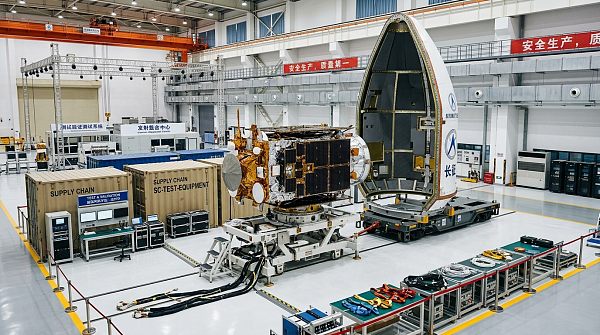
A spacecraft can be mechanically complete and still remain months away from launch. That gap is where logistics becomes decisive. In most advanced programs, the final 10% of technical closure can consume 30%–40% of the calendar because unresolved interfaces accumulate across software validation, ground support equipment, shipping constraints, hazardous material handling, and launch provider acceptance processes.
Mission delay risk usually concentrates in 4 operational layers: component supply, verification and validation, transport and site integration, and regulatory or customer sign-off. If one layer slips by 2 weeks, the downstream impact can expand to 6–10 weeks when test windows, cleanroom bookings, or launch campaign sequences are already fixed. This is especially common in multi-party missions involving primes, subsystem vendors, insurers, and range authorities.
For project leaders, the practical lesson is clear: schedule risk is not linear. It compounds when a critical item lacks a second source, when qualification evidence is incomplete, or when launch-side documentation packages are submitted late. Procurement teams that focus only on part price miss the much larger financial exposure linked to delayed deployment, idle personnel, rebooking fees, and postponed revenue service.
The most common delay categories in mission logistics
The table below summarizes the delay categories that most often shift mission timelines. These are not isolated engineering issues; they are logistics multipliers that affect planning, cost control, and operational readiness across the aerospace value chain.
The key takeaway is that the most severe mission delays often arise at interfaces, not within a single subsystem. That is why mature logistics governance must connect engineering readiness reviews with supplier surveillance, documentation control, and launch campaign planning rather than waiting for final assembly to expose hidden dependencies.
Early warning signals decision-makers should not ignore
- More than 5% of the bill of materials remains open inside the last 90 days before environmental test entry.
- A critical component has only 1 qualified supplier and a replenishment cycle above 20 weeks.
- Launch interface control documents have changed 2 or more times after spacecraft mechanical closure.
- Shipment plans do not yet include customs, dangerous goods, and clean handling ownership.
These signals are useful because they allow technical assessment teams and commercial stakeholders to move from reactive schedule recovery to structured mitigation. In many programs, a 2-week intervention at the right interface prevents a 2-month campaign slip.
Supply chain fragility remains one of the biggest hidden schedule risks
Space exploration logistics depends on highly specialized suppliers with narrow production capacity. Radiation-tolerant semiconductors, cryogenic valves, composite tanks, star trackers, and high-reliability connectors are not commodity items. Lead times of 16–52 weeks are still common, and a single late batch can halt integration across propulsion, power, and payload subsystems.
The challenge for procurement and engineering is that nominal supplier delivery dates do not always reflect actual readiness. A part may ship on time but still fail incoming inspection, arrive with incomplete traceability, or require deviation approval. For quality and safety managers, this means supplier maturity must be judged on configuration control, lot documentation, environmental storage conditions, and nonconformance response time, not simply price and quoted lead time.
Programs with international supply networks face added friction from export reviews, customs handling, and route selection for temperature-sensitive or hazardous equipment. Even when transport itself takes only 3–7 days, release approvals and border processing can extend the effective logistics cycle to 2–4 weeks. That mismatch frequently undermines launch integration plans built on optimistic assumptions.
What a resilient mission supply strategy looks like
A resilient strategy does not eliminate every shortage, but it reduces exposure through structured sourcing and planning controls. The following comparison is useful for procurement teams, project managers, and technical reviewers evaluating whether a program is vulnerable to predictable disruption.
The strongest pattern is that schedule protection comes from visibility and redundancy, not from aggressive calendar compression alone. For high-value missions, investing in supplier surveillance and alternate-path planning usually costs less than absorbing launch delay penalties and prolonged engineering occupancy.
Recommended procurement checks for critical space programs
- Map all components with lead times above 12 weeks and assign risk ownership at program level.
- Separate flight-critical, launch-critical, and schedule-critical parts; they are not always the same category.
- Review supplier change notices every 30 days during active build phases.
- Maintain at least 1 approved contingency path for transport, customs, or substitute inventory where feasible.
This approach is especially relevant for distributors, agents, and sourcing teams serving institutional buyers. Their value is not limited to availability; it includes schedule intelligence, packaging integrity, and documentation completeness under mission-grade conditions.
Testing, certification, and mission assurance often delay launch more than fabrication
In many aerospace programs, fabrication appears to be the pace-setting activity, but verification is where schedules actually break. Thermal vacuum testing, vibration campaigns, EMI/EMC assessment, software regression, propulsion leak checks, and mission assurance reviews are sequentially sensitive. One failed test article or one unresolved anomaly can trigger weeks of root-cause analysis, retest planning, and customer approval cycles.
The issue is not that testing is unexpectedly strict; it is that many schedules assume first-pass success. In practice, teams should plan for 1–2 retest loops on critical subsystems, especially when new designs, mixed-vendor interfaces, or late engineering changes are involved. For complex spacecraft or payloads, environmental test preparation alone may require 2–6 weeks of fixture validation, instrumentation setup, and procedural approval before the chamber or shaker even starts running.
Certification-related delays can also emerge outside formal regulators. Insurance underwriters, launch service providers, range operators, and end customers may all require evidence packages, hazard reports, or interface compliance records. If documentation maturity trails hardware maturity by even 15%–20%, mission readiness reviews can stall regardless of physical completion status.
Where verification programs lose time
The following areas deserve focused schedule protection because they regularly create disproportionate delay during mission assurance and launch acceptance.
- Late software baselines that force repeated hardware-in-the-loop validation.
- Test procedures that are technically correct but not yet approved by customer, quality, or safety teams.
- Inadequate anomaly closure discipline, especially when corrective actions affect mass, power, or thermal margins.
- Shared facility bottlenecks, where one missed slot can push testing by 2–8 weeks.
Operators and project managers should therefore treat test readiness reviews as logistics milestones, not just engineering milestones. Test equipment booking, witness coordination, calibrated instrumentation, hazardous operations permits, and data-review staffing all belong in the same integrated plan.
A practical 5-step control framework
A disciplined framework can significantly reduce verification-driven delay risk without weakening safety or mission assurance requirements.
- Freeze test objectives and success criteria at least 6 weeks before major environmental campaigns.
- Link every test article and software version to a controlled configuration record.
- Reserve retest capacity in facilities where recovery windows are longer than 10 business days.
- Close Category A anomalies before downstream integration, not after shipment.
- Align mission assurance documentation with customer and launch provider templates early.
For technical evaluators and decision-makers, the priority is not to minimize testing, but to prevent fragmented ownership. When verification, quality, and logistics work from separate calendars, schedule confidence becomes artificially high and then collapses near launch.
Launch integration and ground logistics are the final bottleneck
Even after a spacecraft passes major tests, launch integration remains a high-risk phase. Ground transport routing, shock and vibration limits, battery handling rules, fueling constraints, fairing interface checks, range scheduling, and pad access windows all shape whether a mission proceeds on its target date. The final logistics leg is often less forgiving than factory operations because the launch campaign runs on a tightly sequenced, shared infrastructure model.
One recurring cause of delay is mismatch between spacecraft readiness and launch campaign readiness. A flight unit may be qualified, yet support equipment, handling fixtures, or shipping containers are still awaiting inspection or certification. In other cases, documentation such as hazardous processing plans, mass properties reports, or battery declarations is delivered late, forcing review boards to pause progression to the next campaign gate.
For global programs, site logistics become even more complex. Transport to a launch base can involve multimodal routing, customs pre-clearance, secure escorts, and controlled environmental exposure. Depending on mission profile, acceptable transport temperature may need to remain within 15°C–25°C, while humidity, shock loads, and electrostatic discharge controls must also be managed. Small excursions can trigger inspections that consume critical campaign time.
Critical launch-campaign checkpoints
A strong campaign plan assigns ownership and timing to each checkpoint below. These are the items that most directly determine whether site operations remain on schedule.
The pattern here is that final integration delays are rarely caused by one dramatic failure. More often, 5 or 6 smaller readiness gaps converge inside a fixed launch campaign where there is limited slack. That is why launch logistics should be managed as a gated readiness system with go/no-go criteria, not as a last-minute shipping exercise.
Common launch logistics mistakes
- Assuming site support equipment can be finalized after the spacecraft is complete.
- Treating shipping as an administrative task rather than a controlled mission operation.
- Underestimating launch provider review cycles for hazardous, electrical, and mass-property data.
- Failing to budget time for contingency inspection, quarantine, or minor campaign rework.
These errors matter not only to spacecraft manufacturers but also to operators, resellers, and institutional buyers managing cross-border project execution. In a launch-linked environment, operational discipline in the final 30 days can determine whether years of development convert into on-time deployment.
How organizations can reduce delay exposure across the full mission lifecycle
Reducing mission delay requires more than adding schedule margin. It requires an integrated governance model that connects engineering maturity, supplier health, quality evidence, transport planning, and launch acceptance. Programs that outperform on schedule typically use stage-gated decisions, cross-functional dashboards, and escalation thresholds tied to calendar risk rather than waiting for monthly status summaries to expose problems too late.
From a G-AIT benchmarking viewpoint, the most effective organizations build schedule resilience in 3 layers. First, they classify risk by mission criticality, not by department. Second, they maintain data continuity from design through launch campaign. Third, they use procurement and quality teams as active schedule-control functions. This is particularly valuable in Future Mobility and advanced transportation ecosystems where aerospace, logistics, and compliance boundaries increasingly overlap.
For buyers and strategic planners, partner selection should therefore focus on execution capability as much as technical competence. A supplier or integration partner that can document traceability, manage complex transport conditions, support interface reviews, and respond within 24–72 hours to nonconformance events often delivers greater schedule security than a lower-cost option with weaker operational control.
FAQ for procurement, engineering, and project teams
Which phase causes the longest delays in space exploration logistics?
There is no universal answer, but the longest delays usually appear where supply chain, test readiness, and launch integration overlap. In many programs, the combined effect of these three phases exceeds pure manufacturing delay. A 4-week supplier slip can become a 10-week mission slip if it also moves environmental testing and causes a missed launch campaign gate.
How much schedule buffer is realistic?
For standard mission planning, teams often reserve 10%–20% schedule contingency on critical-path items, but the correct buffer depends on novelty, qualification maturity, and launch constraints. Programs using first-time designs, limited-source components, or tight launch windows typically need more explicit contingency at subsystem and campaign level rather than one undifferentiated reserve at program end.
What should procurement teams prioritize besides price?
Priority factors include lead-time stability, change-notice discipline, documentation quality, packaging controls, and responsiveness to deviations. For mission-critical hardware, the total cost of delay can exceed the purchase-price gap by a wide margin, especially when rebooking, idle labor, facility occupancy, and launch-slot disruption are included.
How can project managers spot delay risk earlier?
Track interface closure, not just task completion. If software versions remain unstable, supplier documentation is incomplete, or campaign support equipment is late, the schedule may already be at risk even if manufacturing progress appears green. Weekly review of the top 10 schedule-sensitive interfaces is often more effective than broad status reporting.
Space exploration logistics is ultimately a discipline of controlled interfaces. Missions are delayed most by the compounded effects of specialized supply constraints, verification bottlenecks, and launch integration readiness gaps. Organizations that benchmark these factors early, assign clear ownership, and align procurement, engineering, quality, and campaign operations can materially improve schedule confidence, cost control, and mission assurance.
For stakeholders navigating advanced aerospace programs, G-AIT supports a more structured view of mission logistics through technical benchmarking, standards-oriented evaluation, and decision-ready insight across the Future of Global Mobility. To discuss your program challenges, request a tailored assessment, or explore more space and transportation solutions, contact us to get a customized plan.
Article Categories
SYSTEM_ALERT_URGENT
Q3 SYMPOSIUM ON ORBITAL DYNAMICS
Registration for the Orbital Aerospace technical committee is now open. Node access required.
Recent Articles
![]() Oct 27, 2026FAA Certifies Boeing 737 MAX 10 After Years of DelaysFAA Certifies Boeing 737 MAX 10 After Years of Delays
Oct 27, 2026FAA Certifies Boeing 737 MAX 10 After Years of DelaysFAA Certifies Boeing 737 MAX 10 After Years of Delays Oct 27, 2026Can an intermodal connectivity platform reduce rail handoff delays?Can an intermodal connectivity platform reduce rail handoff delays?
![]() Oct 26, 2026Chery Unveils Global Smart Mobility Strategy Targeting Robotaxis and eVTOLsChery Unveils Global Smart Mobility Strategy Targeting Robotaxis and eVTOLs
Oct 26, 2026Chery Unveils Global Smart Mobility Strategy Targeting Robotaxis and eVTOLsChery Unveils Global Smart Mobility Strategy Targeting Robotaxis and eVTOLs Oct 26, 2026How to evaluate avionics for helicopters used in IFR operationsHow to evaluate avionics for helicopters used in IFR operations
![]() Oct 25, 2026Ukraine’s Defence Minister Says SpaceX Satellite Services Restored After Speed RestrictionsUkraine’s Defence Minister Says SpaceX Satellite Services Restored After Speed Restrictions
Oct 25, 2026Ukraine’s Defence Minister Says SpaceX Satellite Services Restored After Speed RestrictionsUkraine’s Defence Minister Says SpaceX Satellite Services Restored After Speed Restrictions Oct 25, 2026How satellite infrastructure for IoT affects sensor reporting delaysHow satellite infrastructure for IoT affects sensor reporting delays
![]() Oct 24, 2026China Successfully Launches Yaogan 50-03 SatelliteChina Successfully Launches Yaogan 50-03 Satellite
Oct 24, 2026China Successfully Launches Yaogan 50-03 SatelliteChina Successfully Launches Yaogan 50-03 Satellite Oct 24, 2026How gradients affect traction power needs in high-speed rolling stockHow gradients affect traction power needs in high-speed rolling stock
![]() Oct 23, 2026FAA Proposes Checks on Nearly 2,000 Boeing 737NGs Over Loss-of-Control RiskFAA Proposes Checks on Nearly 2,000 Boeing 737NGs Over Loss-of-Control Risk
Oct 23, 2026FAA Proposes Checks on Nearly 2,000 Boeing 737NGs Over Loss-of-Control RiskFAA Proposes Checks on Nearly 2,000 Boeing 737NGs Over Loss-of-Control Risk Oct 23, 2026How fuel choice affects specific impulse in liquid oxygen propulsionHow fuel choice affects specific impulse in liquid oxygen propulsion
![]() Oct 22, 2026QuantumScape Plans 100 MWh Solid-State Battery Line Targeting Aerospace and Other MarketsQuantumScape Plans 100 MWh Solid-State Battery Line Targeting Aerospace and Other Markets
Oct 22, 2026QuantumScape Plans 100 MWh Solid-State Battery Line Targeting Aerospace and Other MarketsQuantumScape Plans 100 MWh Solid-State Battery Line Targeting Aerospace and Other Markets Oct 22, 2026How tank size limits hydrogen aircraft range on regional flightsHow tank size limits hydrogen aircraft range on regional flights
![]() Oct 21, 2026FAA Certifies Boeing 737-10, Clearing Regulatory Hurdle for DeliveriesFAA Certifies Boeing 737-10, Clearing Regulatory Hurdle for Deliveries
Oct 21, 2026FAA Certifies Boeing 737-10, Clearing Regulatory Hurdle for DeliveriesFAA Certifies Boeing 737-10, Clearing Regulatory Hurdle for Deliveries Oct 21, 2026How are electric vertical takeoff aircraft certified in the US?How are electric vertical takeoff aircraft certified in the US?
![]() Oct 20, 2026Ohio Department of Transportation Releases Three-Year Advanced Air Mobility Action PlanOhio Department of Transportation Releases Three-Year Advanced Air Mobility Action Plan
Oct 20, 2026Ohio Department of Transportation Releases Three-Year Advanced Air Mobility Action PlanOhio Department of Transportation Releases Three-Year Advanced Air Mobility Action Plan Oct 20, 2026How does magnetic flux density in tesla affect maglev lift force?How does magnetic flux density in tesla affect maglev lift force?
![]() Oct 19, 2026ZeroAvia Completes Key Ground Tests of ZA600 Hydrogen Fuel Cell PowertrainZeroAvia Completes Key Ground Tests of ZA600 Hydrogen Fuel Cell Powertrain
Oct 19, 2026ZeroAvia Completes Key Ground Tests of ZA600 Hydrogen Fuel Cell PowertrainZeroAvia Completes Key Ground Tests of ZA600 Hydrogen Fuel Cell Powertrain Oct 19, 2026How spacecraft integration affects advanced propulsion costsHow spacecraft integration affects advanced propulsion costs
 Oct 18, 2026How chilldown prevents cavitation in cryogenic engine systemsHow chilldown prevents cavitation in cryogenic engine systems
 Oct 17, 2026How explainability affects algorithmic trust in AI flight systemsHow explainability affects algorithmic trust in AI flight systems
 Oct 16, 2026How to evaluate transportation technology for Middle East heatHow to evaluate transportation technology for Middle East heat
 Oct 15, 2026How common-cause failures defeat redundancy logic in European avionicsHow common-cause failures defeat redundancy logic in European avionics
 Oct 14, 2026How DO-160 applies to aerospace technology testing for avionicsHow DO-160 applies to aerospace technology testing for avionics
 Oct 13, 2026How fuel price volatility shapes commercial aviation cost trendsHow fuel price volatility shapes commercial aviation cost trends
 Oct 12, 2026How to qualify aerospace manufacturing components for traceabilityHow to qualify aerospace manufacturing components for traceability
 Oct 11, 2026Which certification hurdles are slowing hydrogen aviation in Europe?Which certification hurdles are slowing hydrogen aviation in Europe?
 Oct 10, 2026What evidence should a magnetic gap stability supplier provide?What evidence should a magnetic gap stability supplier provide?
 Oct 09, 2026Which ISO standards matter when qualifying industrial technology suppliers?Which ISO standards matter when qualifying industrial technology suppliers?
 Oct 08, 2026When does reusability actually lower launch vehicle costs?When does reusability actually lower launch vehicle costs?
 Oct 07, 2026Where to find reliable product knowledge resources in the Middle EastWhere to find reliable product knowledge resources in the Middle East
 Oct 06, 2026What drives high-speed rail systems cost per kilometer?What drives high-speed rail systems cost per kilometer?
 Oct 05, 2026When does hydrogen propulsion for UAV extend mission range enough to justify it?When does hydrogen propulsion for UAV extend mission range enough to justify it?
 Oct 04, 2026How rail systems integration reduces commissioning delaysHow rail systems integration reduces commissioning delays
 Oct 03, 2026How to evaluate an advanced propulsion manufacturer for hydrogen systemsHow to evaluate an advanced propulsion manufacturer for hydrogen systems
 Oct 02, 2026How to qualify aircraft components for OEM production approvalHow to qualify aircraft components for OEM production approval