Composite Airframes in Aerospace Engineering: Key Tradeoffs
Lead Author
Published
Views:
Composite airframes are reshaping Aerospace Engineering by balancing weight, strength, cost, and certification demands across Future Mobility systems. From Space Exploration platforms to eVTOL and High-Speed Rail-adjacent Transportation Technology, these material choices influence safety, efficiency, and scalability. This article examines the key tradeoffs decision-makers must understand to align Transportation Innovation with real-world Global Mobility Solutions and Smart Transportation goals.
For engineering leaders, procurement teams, safety managers, and project owners, the debate is no longer whether composites matter. The practical question is which composite airframe strategy delivers the best lifecycle value under real operating conditions, production volumes, and regulatory constraints. In advanced mobility programs, a 5% to 15% structural weight change can alter range, payload, energy use, and maintenance planning in measurable ways.
Within the G-AIT perspective, composite airframes sit at the intersection of technical performance and certification discipline. Whether a program targets a next-generation regional aircraft, a reusable space platform, or an eVTOL fleet, the same decision framework applies: quantify structural benefit, understand manufacturing complexity, map inspection burden, and align material selection with the intended service environment.
Why Composite Airframes Matter Across Aerospace and Advanced Mobility
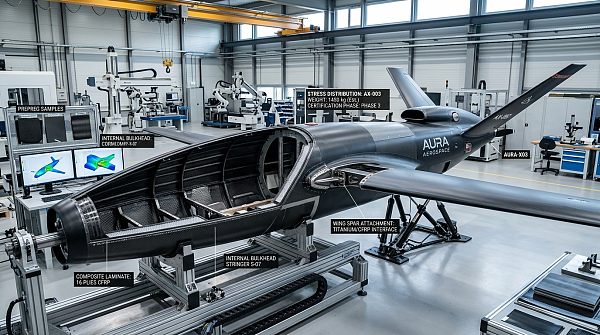
Composite airframes are used because they can deliver high specific strength and stiffness at lower mass than many metallic alternatives. In aircraft design, reducing empty weight by even 8% to 12% can improve fuel efficiency, battery endurance, or payload flexibility. That makes composites especially relevant for zero-emission aviation, long-endurance drones, and mass-sensitive orbital systems.
However, lighter structures do not automatically mean lower total cost. Material prices, tooling, cure cycles, defect control, and non-destructive inspection can raise both capital expenditure and recurring manufacturing cost. For low-rate production programs, such as specialized spacecraft or defense-adjacent demonstrators, the economics can be very different from a commercial platform producing 50 to 200 units per year.
The importance of composite airframes also varies by mission profile. A high-cycle eVTOL aircraft may prioritize corrosion resistance and rapid structural optimization. A commercial narrow-body platform may focus on fuel burn over 20 to 30 years. A launch vehicle or satellite structure may prioritize thermal performance, dimensional stability, and mass reduction under tightly constrained payload economics.
Decision-makers should also note that composite strategy affects more than the aircraft shell. It influences joining methods, lightning protection design, repair capability, warehouse storage conditions, technician training, and certification evidence packages. In other words, the airframe material choice cascades into operations, supply chain resilience, and long-term asset support.
Core drivers behind adoption
- Weight reduction that can improve fuel burn or energy efficiency by a meaningful percentage over mission life.
- Greater geometric freedom for aerodynamic shaping, integrated parts, and smooth external surfaces.
- Better corrosion resistance in humid, coastal, or chemically aggressive service environments.
- Potential parts-count reduction, sometimes cutting assembly interfaces by 20% to 40% in optimized designs.
Typical material families
The most common options include carbon fiber reinforced polymer, glass fiber reinforced polymer, and hybrid laminates. Carbon fiber systems dominate high-performance aerospace applications because they offer strong stiffness-to-weight ratios. Glass fiber remains useful in secondary structures, radomes, and cost-sensitive applications. Hybrid approaches are often selected when impact tolerance, cost, and electromagnetic behavior must be balanced instead of maximized in one direction.
The Main Tradeoffs: Weight, Strength, Cost, and Manufacturability
The central tradeoff in composite airframes is simple to state but difficult to optimize: lower weight often comes with higher material and process complexity. Carbon fiber laminates can significantly reduce structural mass, but they may require tightly controlled layup, curing, and inspection processes. In some cases, a structure that is 10% lighter at the part level may still be more expensive at the aircraft level if scrap rates, rework, or takt-time limits are not controlled.
Strength is also multidimensional. Engineers must evaluate tensile properties, compressive performance, fatigue response, impact tolerance, delamination risk, and out-of-plane behavior. A composite panel may perform exceptionally well under one load path and require local reinforcement under another. That is why design teams increasingly rely on digital simulation, coupon testing, subcomponent validation, and full-scale structural substantiation in 3 to 4 development stages.
Manufacturability becomes decisive when a program moves from prototype to industrial scale. Autoclave-cured structures can deliver high consistency, but cycle times may range from 2 to 8 hours per cure, not including layup and inspection. Out-of-autoclave and resin infusion methods may lower equipment constraints, yet they introduce their own controls around porosity, resin flow, and repeatability.
For procurement and business evaluators, the right question is not which material is strongest in isolation. The better question is which structural concept meets performance targets at acceptable recurring cost, supply risk, and certification burden across the full service life. That usually requires comparing at least 4 dimensions: material cost, rate capability, repairability, and compliance evidence.
Comparing common composite airframe priorities
The table below summarizes how major tradeoffs usually appear in commercial aerospace, space systems, and advanced mobility programs.
The key conclusion is that composite airframes usually create value when the operational benefit accumulates over time or when the mission strongly rewards mass reduction. They are less compelling when production rate is unstable, repair infrastructure is weak, or certification evidence is under-budgeted.
A practical evaluation checklist
- Define the target mission life, such as 10,000 cycles, 30,000 flight hours, or a reusable launch cadence.
- Estimate structural mass savings at system level, not only at coupon or component level.
- Map expected manufacturing throughput in units per month or per year.
- Quantify inspection, repair, and downtime implications before freeze of the baseline design.
Certification, Safety, and Quality Control Risks
Certification is one of the most underestimated tradeoffs in composite airframe programs. Composite structures demand robust substantiation because damage can be less visible than in conventional metal structures. Regulators and airworthiness teams typically require evidence across material allowables, process controls, environmental conditioning, structural testing, and continued airworthiness planning. That work can extend program schedules by 6 to 18 months if not planned early.
Quality control starts well before final assembly. Storage conditions for prepregs, humidity control, layup discipline, cure logging, void content limits, and traceability of batches all matter. A minor variation in process temperature or resin handling can affect repeatability. For high-integrity aerospace structures, teams often monitor multiple checkpoints per part, from incoming material verification to ultrasonic inspection and bondline acceptance.
Safety managers also focus on operational hazards that extend beyond pure strength values. Lightning strike behavior, fire-smoke-toxicity considerations, impact damage from tools or runway debris, and environmental degradation under moisture or temperature cycling must all be addressed. For space and high-altitude platforms, outgassing, thermal cycling, and radiation-adjacent material behavior may add additional qualification steps.
The business implication is clear: certification and quality assurance cannot be treated as back-end documentation tasks. They are design inputs. Programs that embed compliance, NDI planning, and repair philosophy in the first 20% to 30% of development usually avoid more expensive redesign loops later.
Common risk areas in composite airframe programs
The following table highlights recurring risk categories that matter to engineering, quality, procurement, and executive stakeholders.
For many organizations, the most effective risk reduction move is cross-functional governance. Engineering, quality, procurement, and certification teams should review composite design maturity at set gates, often every 4 to 8 weeks in active development, instead of waiting for late-stage design release.
What quality teams should verify
- Material storage windows, freezer logs, and out-time controls for prepreg-based systems.
- Tool calibration and cure profile records for each critical structure batch.
- Documented acceptance criteria for porosity, bond integrity, and surface defects.
- Technician certification and recurring retraining intervals, often every 6 to 12 months.
How Different Applications Change the Best Airframe Choice
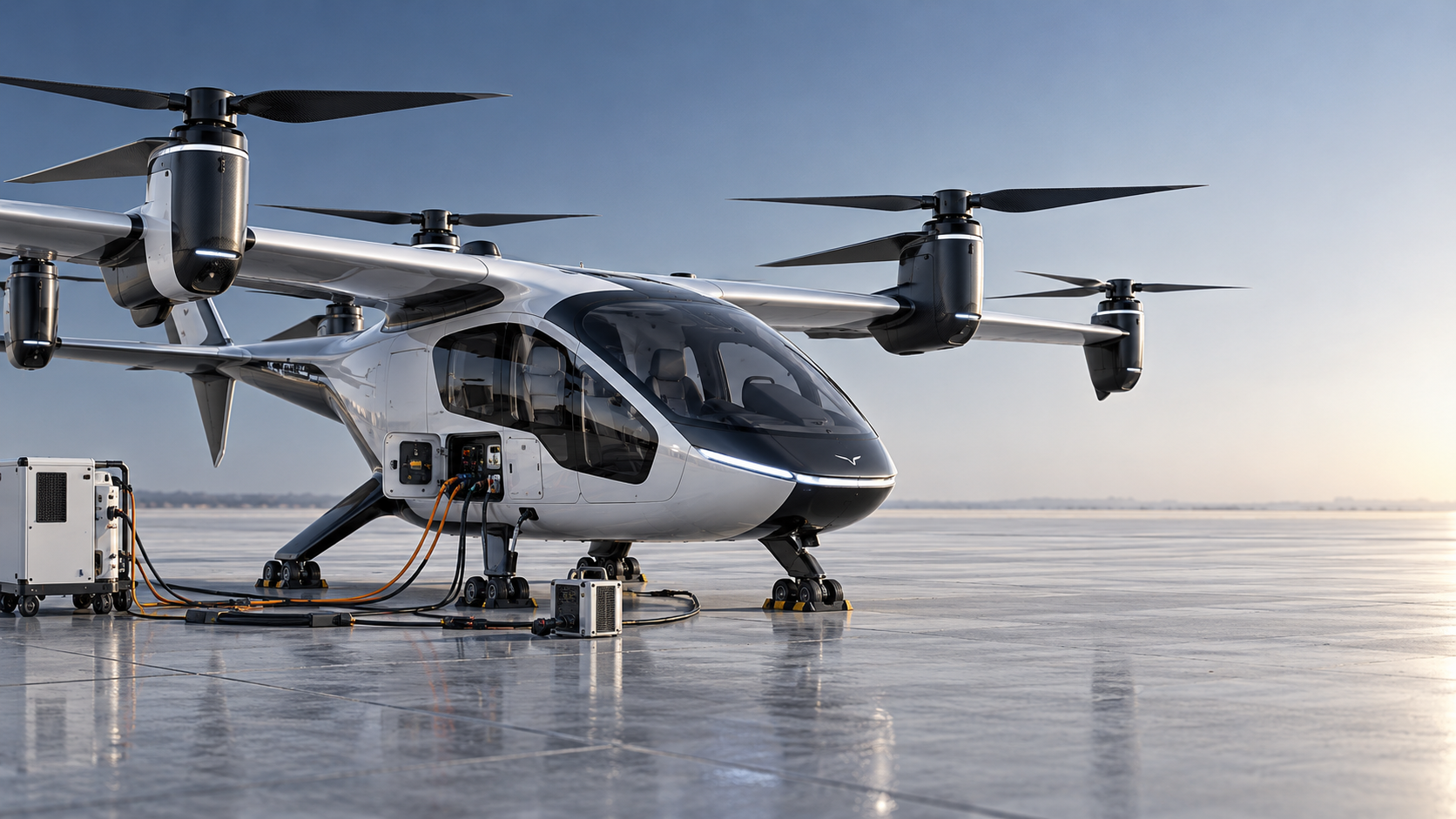
Not every aerospace platform needs the same composite strategy. In advanced commercial aviation, the value proposition often centers on fuel efficiency, corrosion resistance, and cabin-driven structural optimization over decades of service. In urban air mobility, designers may place more emphasis on battery range, acoustic performance, modular manufacturing, and fast replacement of damaged components within fleet operations.
Space exploration adds another layer of tradeoffs. Primary structures may face cryogenic interfaces, launch loads, thermal cycling, and strict mass budgets. Here, even a few kilograms saved can influence payload economics. But testing and qualification can become more specialized, especially when structures interact with propulsion systems, composite overwrapped pressure vessels, or thermally sensitive subsystems.
Specialized logistics and extreme-environment mobility systems may operate in sand, salt, cold, or high-humidity conditions. In these cases, corrosion resistance and environmental durability become attractive, but field repair capacity can be limited. A theoretically optimal composite structure may become operationally inefficient if it requires advanced repair tools that are unavailable at remote sites.
For procurement and distribution partners, application fit is critical because it affects spare strategy, technician training, inspection equipment, and aftersales support. The best airframe material is therefore mission-specific, service-network-specific, and compliance-specific rather than universally superior.
Application-based selection guidance
The matrix below provides a practical way to align composite airframe choices with operating context.
This comparison shows why benchmarking matters. G-AIT-style evaluation is valuable because it compares material decisions against actual operating models, regulatory pathways, and support ecosystems instead of isolated laboratory performance.
Questions project teams should ask before final selection
- Will the platform operate at low volume, medium volume, or above 100 units per year?
- Is the main business case driven by energy efficiency, payload, maintenance interval, or certification speed?
- Can the operator support bonded repairs, scarf repairs, and qualified inspections in the field?
- How sensitive is the program to a 3 to 6 month schedule slip caused by requalification or tooling delay?
Procurement, Implementation, and Long-Term Service Strategy
A successful composite airframe decision depends as much on commercial execution as on design quality. Procurement teams should assess raw material availability, qualified supplier depth, tooling lead times, and process maturity. A technically attractive composite concept can become high risk if key fiber or resin inputs come from only 1 or 2 qualified sources with lead times exceeding 20 weeks.
Implementation should be staged. Most organizations benefit from a phased approach: concept screening, process qualification, pilot production, and scaled manufacturing. Each phase should have measurable exit criteria such as target defect rate, cure repeatability, inspection yield, and repair validation status. That is more reliable than compressing development into a single aggressive industrialization step.
Long-term support strategy must also be defined early. Operators need clear instructions for allowable damage, inspection methods, storage of repair kits, and escalation thresholds. If field repair is expected, training programs, spare laminate systems, and NDI access need to be budgeted from the start. Without that preparation, nominal lifecycle savings may erode through downtime and outsourced repair costs.
For enterprise decision-makers, the strongest programs treat composite airframes as a system business case rather than a materials decision. They align engineering, certification, supply chain, maintenance, and commercial planning around a shared baseline. That is especially important in future mobility sectors where speed to qualification and scalable reliability can determine market entry success.
Recommended procurement criteria
- Supplier qualification depth: aim for at least 2 viable sources for critical materials where possible.
- Process capability evidence: request yield data, inspection methods, and repeatability controls.
- Support readiness: verify repair manuals, training plans, and spares strategy before contract award.
- Compliance alignment: confirm how FAA, EASA, ISO, or other applicable standards are addressed in deliverables.
Implementation roadmap
- Baseline the mission and structural requirements, including cycle targets, environment, and payload assumptions.
- Run material-process down-selection using cost, risk, and certification criteria, not only weight reduction.
- Execute coupon and subcomponent testing before committing to full-rate tooling.
- Establish service documentation, field inspection routines, and repair governance before fleet entry.
FAQ: what buyers and technical evaluators ask most often
How long does composite airframe implementation usually take? For a new program, process qualification and structural substantiation can take anywhere from 6 months for simpler secondary structures to 18 months or more for high-criticality primary structures, depending on test scope and certification pathway.
Are composite airframes always cheaper over time? Not always. They often reduce operating weight and corrosion-related burden, but actual lifecycle savings depend on flight profile, repair capacity, inspection frequency, and production efficiency. Programs with weak field support may not capture the full economic benefit.
What should quality teams prioritize first? Start with process control and traceability. If storage, layup discipline, cure logging, and inspection criteria are inconsistent, even strong material properties on paper will not translate into reliable fleet performance.
Who benefits most from benchmarking support? Engineering directors, sourcing managers, safety leads, and executive planners benefit when they need to compare composite airframe options across multiple mobility sectors and align technical choices with operational integrity.
Composite airframes offer clear advantages, but the winning decision is rarely based on weight alone. The right choice balances performance, manufacturability, certification readiness, inspection burden, and service support across the entire asset lifecycle. For organizations navigating advanced aviation, space systems, eVTOL, or specialized mobility programs, a disciplined benchmark-driven approach reduces uncertainty and improves capital efficiency.
If your team is assessing next-generation airframe materials, supplier pathways, or certification-aligned implementation models, now is the time to structure the decision with measurable criteria. Contact G-AIT to discuss a tailored evaluation framework, request a sector-specific benchmark, or explore more solutions for future-ready global mobility programs.
Article Categories
SYSTEM_ALERT_URGENT
Q3 SYMPOSIUM ON ORBITAL DYNAMICS
Registration for the Orbital Aerospace technical committee is now open. Node access required.
Recent Articles
![]() Oct 27, 2026FAA Certifies Boeing 737 MAX 10 After Years of DelaysFAA Certifies Boeing 737 MAX 10 After Years of Delays
Oct 27, 2026FAA Certifies Boeing 737 MAX 10 After Years of DelaysFAA Certifies Boeing 737 MAX 10 After Years of Delays Oct 27, 2026Can an intermodal connectivity platform reduce rail handoff delays?Can an intermodal connectivity platform reduce rail handoff delays?
![]() Oct 26, 2026Chery Unveils Global Smart Mobility Strategy Targeting Robotaxis and eVTOLsChery Unveils Global Smart Mobility Strategy Targeting Robotaxis and eVTOLs
Oct 26, 2026Chery Unveils Global Smart Mobility Strategy Targeting Robotaxis and eVTOLsChery Unveils Global Smart Mobility Strategy Targeting Robotaxis and eVTOLs Oct 26, 2026How to evaluate avionics for helicopters used in IFR operationsHow to evaluate avionics for helicopters used in IFR operations
![]() Oct 25, 2026Ukraine’s Defence Minister Says SpaceX Satellite Services Restored After Speed RestrictionsUkraine’s Defence Minister Says SpaceX Satellite Services Restored After Speed Restrictions
Oct 25, 2026Ukraine’s Defence Minister Says SpaceX Satellite Services Restored After Speed RestrictionsUkraine’s Defence Minister Says SpaceX Satellite Services Restored After Speed Restrictions Oct 25, 2026How satellite infrastructure for IoT affects sensor reporting delaysHow satellite infrastructure for IoT affects sensor reporting delays
![]() Oct 24, 2026China Successfully Launches Yaogan 50-03 SatelliteChina Successfully Launches Yaogan 50-03 Satellite
Oct 24, 2026China Successfully Launches Yaogan 50-03 SatelliteChina Successfully Launches Yaogan 50-03 Satellite Oct 24, 2026How gradients affect traction power needs in high-speed rolling stockHow gradients affect traction power needs in high-speed rolling stock
![]() Oct 23, 2026FAA Proposes Checks on Nearly 2,000 Boeing 737NGs Over Loss-of-Control RiskFAA Proposes Checks on Nearly 2,000 Boeing 737NGs Over Loss-of-Control Risk
Oct 23, 2026FAA Proposes Checks on Nearly 2,000 Boeing 737NGs Over Loss-of-Control RiskFAA Proposes Checks on Nearly 2,000 Boeing 737NGs Over Loss-of-Control Risk Oct 23, 2026How fuel choice affects specific impulse in liquid oxygen propulsionHow fuel choice affects specific impulse in liquid oxygen propulsion
![]() Oct 22, 2026QuantumScape Plans 100 MWh Solid-State Battery Line Targeting Aerospace and Other MarketsQuantumScape Plans 100 MWh Solid-State Battery Line Targeting Aerospace and Other Markets
Oct 22, 2026QuantumScape Plans 100 MWh Solid-State Battery Line Targeting Aerospace and Other MarketsQuantumScape Plans 100 MWh Solid-State Battery Line Targeting Aerospace and Other Markets Oct 22, 2026How tank size limits hydrogen aircraft range on regional flightsHow tank size limits hydrogen aircraft range on regional flights
![]() Oct 21, 2026FAA Certifies Boeing 737-10, Clearing Regulatory Hurdle for DeliveriesFAA Certifies Boeing 737-10, Clearing Regulatory Hurdle for Deliveries
Oct 21, 2026FAA Certifies Boeing 737-10, Clearing Regulatory Hurdle for DeliveriesFAA Certifies Boeing 737-10, Clearing Regulatory Hurdle for Deliveries Oct 21, 2026How are electric vertical takeoff aircraft certified in the US?How are electric vertical takeoff aircraft certified in the US?
![]() Oct 20, 2026Ohio Department of Transportation Releases Three-Year Advanced Air Mobility Action PlanOhio Department of Transportation Releases Three-Year Advanced Air Mobility Action Plan
Oct 20, 2026Ohio Department of Transportation Releases Three-Year Advanced Air Mobility Action PlanOhio Department of Transportation Releases Three-Year Advanced Air Mobility Action Plan Oct 20, 2026How does magnetic flux density in tesla affect maglev lift force?How does magnetic flux density in tesla affect maglev lift force?
![]() Oct 19, 2026ZeroAvia Completes Key Ground Tests of ZA600 Hydrogen Fuel Cell PowertrainZeroAvia Completes Key Ground Tests of ZA600 Hydrogen Fuel Cell Powertrain
Oct 19, 2026ZeroAvia Completes Key Ground Tests of ZA600 Hydrogen Fuel Cell PowertrainZeroAvia Completes Key Ground Tests of ZA600 Hydrogen Fuel Cell Powertrain Oct 19, 2026How spacecraft integration affects advanced propulsion costsHow spacecraft integration affects advanced propulsion costs
 Oct 18, 2026How chilldown prevents cavitation in cryogenic engine systemsHow chilldown prevents cavitation in cryogenic engine systems
 Oct 17, 2026How explainability affects algorithmic trust in AI flight systemsHow explainability affects algorithmic trust in AI flight systems
 Oct 16, 2026How to evaluate transportation technology for Middle East heatHow to evaluate transportation technology for Middle East heat
 Oct 15, 2026How common-cause failures defeat redundancy logic in European avionicsHow common-cause failures defeat redundancy logic in European avionics
 Oct 14, 2026How DO-160 applies to aerospace technology testing for avionicsHow DO-160 applies to aerospace technology testing for avionics
 Oct 13, 2026How fuel price volatility shapes commercial aviation cost trendsHow fuel price volatility shapes commercial aviation cost trends
 Oct 12, 2026How to qualify aerospace manufacturing components for traceabilityHow to qualify aerospace manufacturing components for traceability
 Oct 11, 2026Which certification hurdles are slowing hydrogen aviation in Europe?Which certification hurdles are slowing hydrogen aviation in Europe?
 Oct 10, 2026What evidence should a magnetic gap stability supplier provide?What evidence should a magnetic gap stability supplier provide?
 Oct 09, 2026Which ISO standards matter when qualifying industrial technology suppliers?Which ISO standards matter when qualifying industrial technology suppliers?
 Oct 08, 2026When does reusability actually lower launch vehicle costs?When does reusability actually lower launch vehicle costs?
 Oct 07, 2026Where to find reliable product knowledge resources in the Middle EastWhere to find reliable product knowledge resources in the Middle East
 Oct 06, 2026What drives high-speed rail systems cost per kilometer?What drives high-speed rail systems cost per kilometer?
 Oct 05, 2026When does hydrogen propulsion for UAV extend mission range enough to justify it?When does hydrogen propulsion for UAV extend mission range enough to justify it?
 Oct 04, 2026How rail systems integration reduces commissioning delaysHow rail systems integration reduces commissioning delays
 Oct 03, 2026How to evaluate an advanced propulsion manufacturer for hydrogen systemsHow to evaluate an advanced propulsion manufacturer for hydrogen systems
 Oct 02, 2026How to qualify aircraft components for OEM production approvalHow to qualify aircraft components for OEM production approval