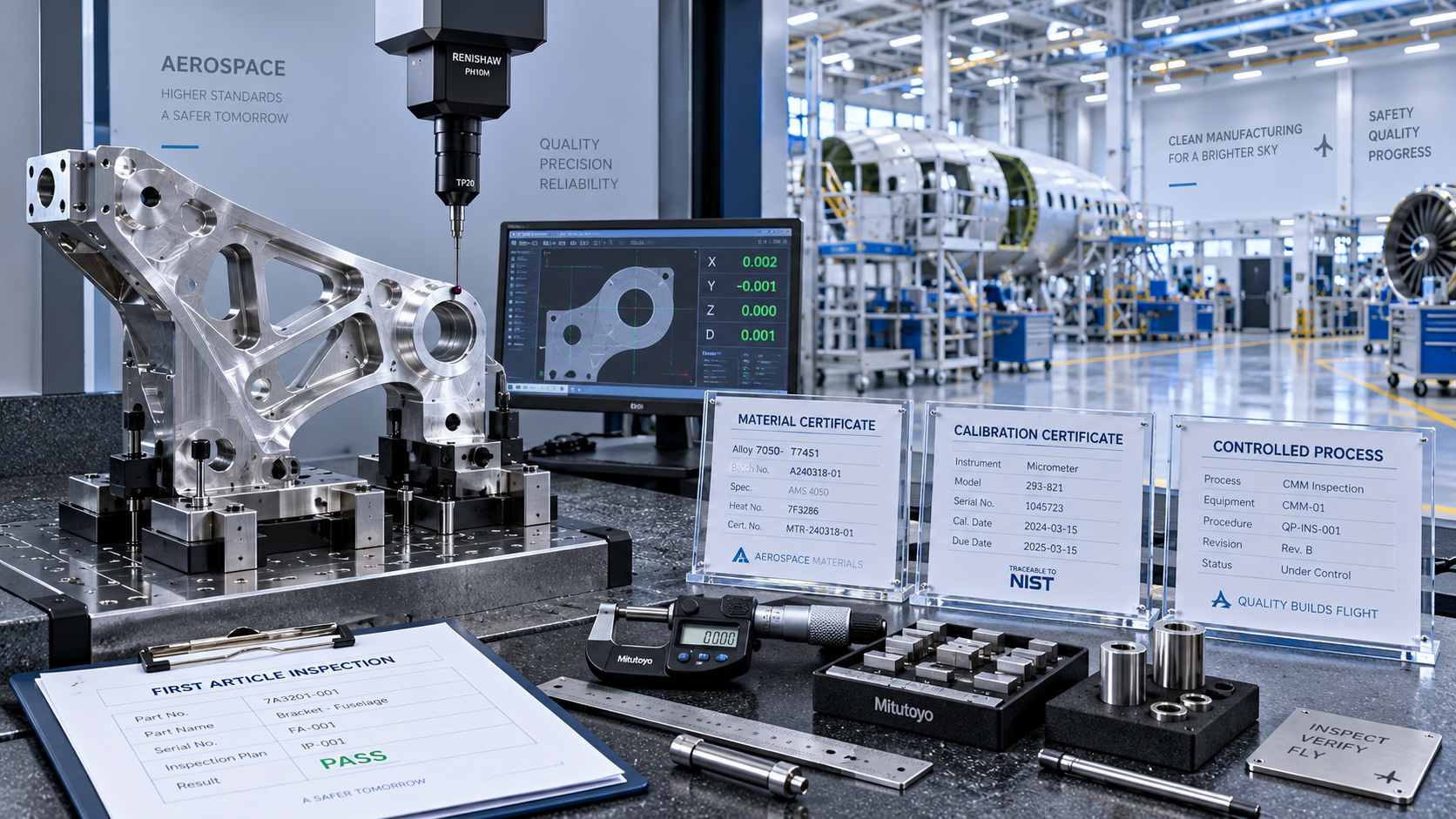
Aerospace R&D: Common Investment Risks and Timing Signals
Lead Author
Published
Views:
Aerospace R&D offers outsized upside, but timing matters as much as technology. Investment quality improves when technical progress, certification readiness, and capital discipline begin moving in the same direction.
In today’s mobility economy, Aerospace R&D shapes aviation, space systems, autonomous transport, and adjacent industrial supply chains. Yet strong narratives alone do not reduce execution risk, delayed revenue, or compliance exposure.
This article highlights common investment risks and practical timing signals. The goal is clearer judgment on when Aerospace R&D is entering a fundable phase rather than remaining an expensive technical ambition.
Why Aerospace R&D now sits at a critical inflection point

Aerospace R&D is no longer confined to long-cycle defense or flagship aircraft programs. It now intersects with satellites, zero-emission propulsion, advanced materials, autonomy, and high-speed transportation infrastructure.
Several trend signals explain this shift. Governments want strategic resilience. Operators want efficiency. Regulators want safer innovation. Capital markets want shorter paths from prototype to certifiable deployment.
That creates a selective opportunity. Well-positioned programs can gain policy support and premium valuation. Poorly timed programs can burn cash while waiting for certification, supply normalization, or customer adoption.
The market is rewarding disciplined Aerospace R&D, not pure technical ambition
The biggest change is not reduced interest in innovation. It is a stricter definition of investable innovation. Aerospace R&D now needs evidence of manufacturability, regulatory compatibility, and system-level integration.
Programs with beautiful demonstrations but weak industrial planning often face valuation pressure. By contrast, programs showing test maturity, supplier depth, and certification mapping tend to attract steadier support.
This matters across the broader industrial landscape. Aerospace R&D influences composites, electronics, simulation software, precision machining, energy systems, and digital safety verification tools.
Key trend signals shaping current Aerospace R&D decisions
- Certification pathways are becoming a primary valuation driver.
- Supply-chain resilience now matters almost as much as core engineering.
- Energy transition goals are accelerating propulsion experimentation.
- Dual-use technologies are attracting strategic public and private funding.
- Digital engineering reduces some risk, but not physical validation risk.
Common investment risks in Aerospace R&D are more predictable than they appear
Many Aerospace R&D failures look sudden from the outside. In practice, warning signs usually appear earlier in test schedules, compliance documents, supplier dependencies, or cost assumptions.
Risk factors that deserve early scrutiny
These risks are relevant beyond aircraft manufacturers. Aerospace R&D programs often depend on cross-sector inputs, including power electronics, software assurance, thermal management, and advanced manufacturing equipment.
A useful principle is simple: if the investment story depends on several future breakthroughs happening on schedule, the risk profile is usually higher than headline forecasts suggest.
What is driving these Aerospace R&D trends across the wider industry
Aerospace R&D momentum is being shaped by structural forces, not just company ambition. Those forces can support long-term value, but they also change the timing of when value becomes investable.
Main drivers behind the current cycle
- Geopolitical competition is raising demand for sovereign aerospace capability.
- Decarbonization pressure is expanding work on hydrogen, SAF, electrification, and lighter structures.
- Digital twins and model-based engineering improve design speed and traceability.
- Commercial satellite growth is broadening launch and platform requirements.
- Urban mobility concepts are forcing new conversations on safety and airspace integration.
For diversified industrial groups, Aerospace R&D can be a capability platform. Materials science, autonomous control, sensors, and high-reliability software can create spillover value across rail, defense, and energy-linked transport systems.
How Aerospace R&D timing signals appear before the best entry window
The best time to support Aerospace R&D is rarely at first publicity or final commercialization. Strong timing usually appears when uncertainty begins narrowing, but before market confidence becomes crowded.
Signals that a program may be entering a healthier funding phase
- A regulator-aligned certification roadmap is published and updated consistently.
- Subsystem testing transitions into integrated system validation.
- Supplier agreements move from exploratory to production-oriented terms.
- Cash burn becomes linked to milestone completion rather than open-ended experimentation.
- Commercial partners commit through deposits, framework orders, or infrastructure support.
- Independent benchmark data confirms performance against FAA, EASA, ISO, or equivalent standards.
Aerospace R&D also becomes more attractive when management language changes. Early-stage teams talk about possibility. Maturing teams talk about traceability, test evidence, qualification sequences, and risk retirement.
Where the impact of Aerospace R&D risk is felt across business operations
Aerospace R&D risk is not limited to investors or engineering teams. It can affect portfolio planning, procurement stability, compliance costs, production tooling, and long-term infrastructure commitments.
When a major program slips, adjacent suppliers often face idle capacity or redesign costs. When a program matures successfully, associated sectors may benefit from standardization, recurring demand, and stronger qualification pipelines.
Operational areas most influenced by Aerospace R&D outcomes
- Capital allocation and portfolio sequencing
- Supplier onboarding and dual-source strategy
- Quality assurance and digital compliance systems
- Infrastructure buildout for testing, charging, fueling, or launch support
- Talent planning in systems engineering and certification management
What deserves close attention before allocating more capital to Aerospace R&D
Before increasing exposure, focus on evidence that uncertainty is shrinking in the right order. In Aerospace R&D, sequence matters. A bold market forecast cannot compensate for weak compliance or immature manufacturing assumptions.
Core checkpoints worth monitoring
- Does test data support the claimed readiness level?
- Are certification milestones realistic for the chosen architecture?
- Is the bill of materials resilient under scaling pressure?
- Can the program survive one major schedule slip without structural damage?
- Are partners strategically aligned beyond headline announcements?
A practical framework for judging the next Aerospace R&D move
Use this framework repeatedly, not once. Aerospace R&D timing is dynamic. New test results, export controls, regulator feedback, or component shortages can quickly improve or weaken the investment case.
The strongest next step is disciplined monitoring. Track certification progress, funding runway, supplier diversification, and standard compliance evidence. In Aerospace R&D, better timing comes from verified signals, not from excitement alone.
Article Categories
SYSTEM_ALERT_URGENT
Q3 SYMPOSIUM ON ORBITAL DYNAMICS
Registration for the Orbital Aerospace technical committee is now open. Node access required.
Taglist:
Recent Articles
![]() Oct 27, 2026FAA Certifies Boeing 737 MAX 10 After Years of DelaysFAA Certifies Boeing 737 MAX 10 After Years of Delays
Oct 27, 2026FAA Certifies Boeing 737 MAX 10 After Years of DelaysFAA Certifies Boeing 737 MAX 10 After Years of Delays Oct 27, 2026Can an intermodal connectivity platform reduce rail handoff delays?Can an intermodal connectivity platform reduce rail handoff delays?
![]() Oct 26, 2026Chery Unveils Global Smart Mobility Strategy Targeting Robotaxis and eVTOLsChery Unveils Global Smart Mobility Strategy Targeting Robotaxis and eVTOLs
Oct 26, 2026Chery Unveils Global Smart Mobility Strategy Targeting Robotaxis and eVTOLsChery Unveils Global Smart Mobility Strategy Targeting Robotaxis and eVTOLs Oct 26, 2026How to evaluate avionics for helicopters used in IFR operationsHow to evaluate avionics for helicopters used in IFR operations
![]() Oct 25, 2026Ukraine’s Defence Minister Says SpaceX Satellite Services Restored After Speed RestrictionsUkraine’s Defence Minister Says SpaceX Satellite Services Restored After Speed Restrictions
Oct 25, 2026Ukraine’s Defence Minister Says SpaceX Satellite Services Restored After Speed RestrictionsUkraine’s Defence Minister Says SpaceX Satellite Services Restored After Speed Restrictions Oct 25, 2026How satellite infrastructure for IoT affects sensor reporting delaysHow satellite infrastructure for IoT affects sensor reporting delays
![]() Oct 24, 2026China Successfully Launches Yaogan 50-03 SatelliteChina Successfully Launches Yaogan 50-03 Satellite
Oct 24, 2026China Successfully Launches Yaogan 50-03 SatelliteChina Successfully Launches Yaogan 50-03 Satellite Oct 24, 2026How gradients affect traction power needs in high-speed rolling stockHow gradients affect traction power needs in high-speed rolling stock
![]() Oct 23, 2026FAA Proposes Checks on Nearly 2,000 Boeing 737NGs Over Loss-of-Control RiskFAA Proposes Checks on Nearly 2,000 Boeing 737NGs Over Loss-of-Control Risk
Oct 23, 2026FAA Proposes Checks on Nearly 2,000 Boeing 737NGs Over Loss-of-Control RiskFAA Proposes Checks on Nearly 2,000 Boeing 737NGs Over Loss-of-Control Risk Oct 23, 2026How fuel choice affects specific impulse in liquid oxygen propulsionHow fuel choice affects specific impulse in liquid oxygen propulsion
![]() Oct 22, 2026QuantumScape Plans 100 MWh Solid-State Battery Line Targeting Aerospace and Other MarketsQuantumScape Plans 100 MWh Solid-State Battery Line Targeting Aerospace and Other Markets
Oct 22, 2026QuantumScape Plans 100 MWh Solid-State Battery Line Targeting Aerospace and Other MarketsQuantumScape Plans 100 MWh Solid-State Battery Line Targeting Aerospace and Other Markets Oct 22, 2026How tank size limits hydrogen aircraft range on regional flightsHow tank size limits hydrogen aircraft range on regional flights
![]() Oct 21, 2026FAA Certifies Boeing 737-10, Clearing Regulatory Hurdle for DeliveriesFAA Certifies Boeing 737-10, Clearing Regulatory Hurdle for Deliveries
Oct 21, 2026FAA Certifies Boeing 737-10, Clearing Regulatory Hurdle for DeliveriesFAA Certifies Boeing 737-10, Clearing Regulatory Hurdle for Deliveries Oct 21, 2026How are electric vertical takeoff aircraft certified in the US?How are electric vertical takeoff aircraft certified in the US?
![]() Oct 20, 2026Ohio Department of Transportation Releases Three-Year Advanced Air Mobility Action PlanOhio Department of Transportation Releases Three-Year Advanced Air Mobility Action Plan
Oct 20, 2026Ohio Department of Transportation Releases Three-Year Advanced Air Mobility Action PlanOhio Department of Transportation Releases Three-Year Advanced Air Mobility Action Plan Oct 20, 2026How does magnetic flux density in tesla affect maglev lift force?How does magnetic flux density in tesla affect maglev lift force?
![]() Oct 19, 2026ZeroAvia Completes Key Ground Tests of ZA600 Hydrogen Fuel Cell PowertrainZeroAvia Completes Key Ground Tests of ZA600 Hydrogen Fuel Cell Powertrain
Oct 19, 2026ZeroAvia Completes Key Ground Tests of ZA600 Hydrogen Fuel Cell PowertrainZeroAvia Completes Key Ground Tests of ZA600 Hydrogen Fuel Cell Powertrain Oct 19, 2026How spacecraft integration affects advanced propulsion costsHow spacecraft integration affects advanced propulsion costs
 Oct 18, 2026How chilldown prevents cavitation in cryogenic engine systemsHow chilldown prevents cavitation in cryogenic engine systems
 Oct 17, 2026How explainability affects algorithmic trust in AI flight systemsHow explainability affects algorithmic trust in AI flight systems
 Oct 16, 2026How to evaluate transportation technology for Middle East heatHow to evaluate transportation technology for Middle East heat
 Oct 15, 2026How common-cause failures defeat redundancy logic in European avionicsHow common-cause failures defeat redundancy logic in European avionics
 Oct 14, 2026How DO-160 applies to aerospace technology testing for avionicsHow DO-160 applies to aerospace technology testing for avionics
 Oct 13, 2026How fuel price volatility shapes commercial aviation cost trendsHow fuel price volatility shapes commercial aviation cost trends
 Oct 12, 2026How to qualify aerospace manufacturing components for traceabilityHow to qualify aerospace manufacturing components for traceability
 Oct 11, 2026Which certification hurdles are slowing hydrogen aviation in Europe?Which certification hurdles are slowing hydrogen aviation in Europe?
 Oct 10, 2026What evidence should a magnetic gap stability supplier provide?What evidence should a magnetic gap stability supplier provide?
 Oct 09, 2026Which ISO standards matter when qualifying industrial technology suppliers?Which ISO standards matter when qualifying industrial technology suppliers?
 Oct 08, 2026When does reusability actually lower launch vehicle costs?When does reusability actually lower launch vehicle costs?
 Oct 07, 2026Where to find reliable product knowledge resources in the Middle EastWhere to find reliable product knowledge resources in the Middle East
 Oct 06, 2026What drives high-speed rail systems cost per kilometer?What drives high-speed rail systems cost per kilometer?
 Oct 05, 2026When does hydrogen propulsion for UAV extend mission range enough to justify it?When does hydrogen propulsion for UAV extend mission range enough to justify it?
 Oct 04, 2026How rail systems integration reduces commissioning delaysHow rail systems integration reduces commissioning delays
 Oct 03, 2026How to evaluate an advanced propulsion manufacturer for hydrogen systemsHow to evaluate an advanced propulsion manufacturer for hydrogen systems
 Oct 02, 2026How to qualify aircraft components for OEM production approvalHow to qualify aircraft components for OEM production approval