Railway Signaling and Control: Key Safety Upgrade Points
Lead Author
Published
Views:
In modern rail networks, railway signaling and control is no longer just an operational tool—it is a frontline safety system. For quality control and safety management professionals, identifying the right upgrade points is essential to reduce risk, improve system integrity, and align with stricter performance and compliance demands. This article highlights the most critical safety-focused improvements shaping the next generation of reliable railway operations.
What does railway signaling and control include in a modern safety framework?
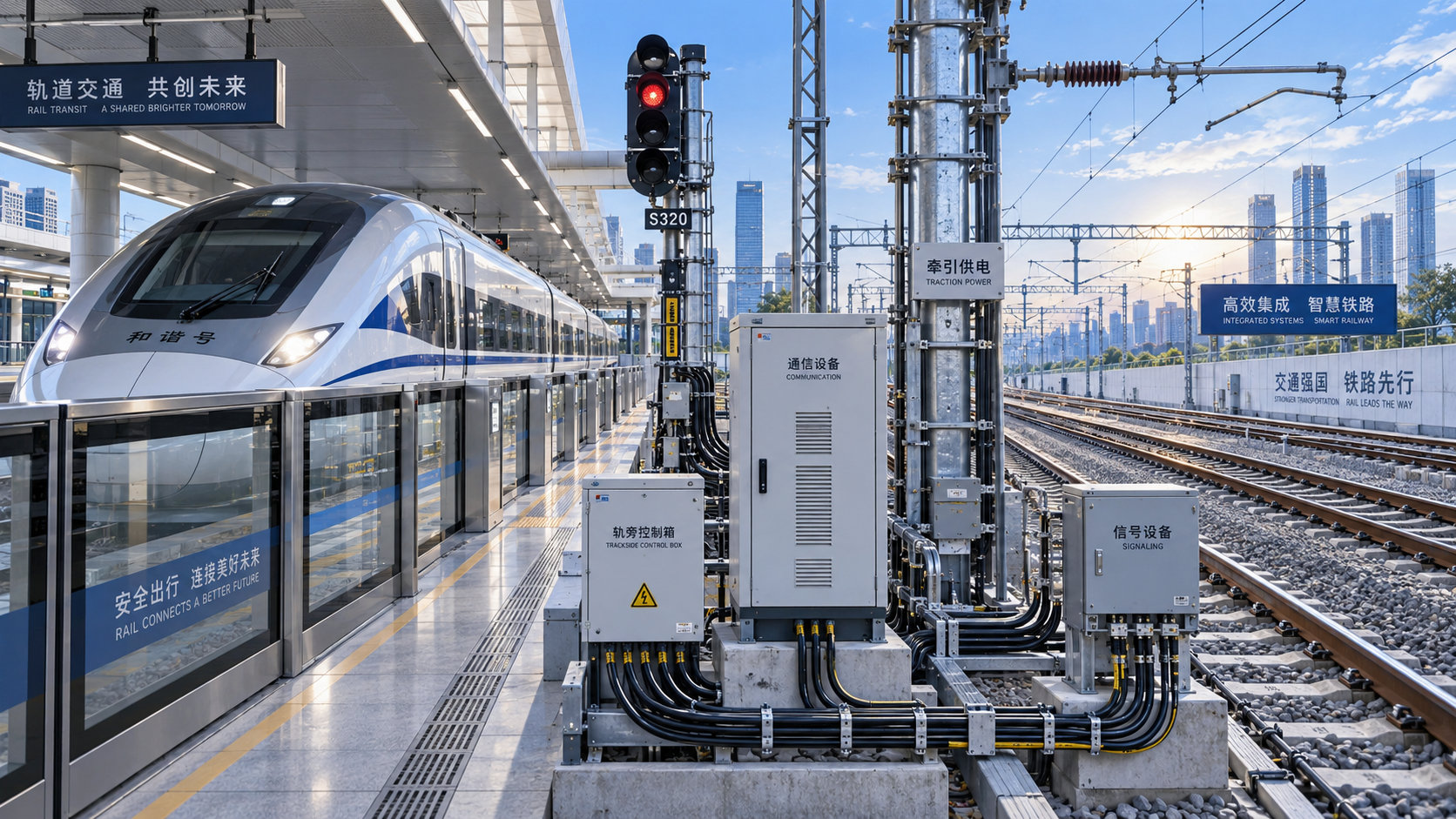
Railway signaling and control combines field devices, software logic, communications, and operating rules to separate trains and prevent unsafe movements.

It covers interlocking, train detection, wayside signals, onboard protection, centralized traffic control, radio links, and diagnostic platforms.
In legacy networks, these layers often evolved separately. That creates hidden interfaces, uneven redundancy, and inconsistent safety evidence.
A modern safety framework treats railway signaling and control as one integrated assurance architecture rather than a set of isolated assets.
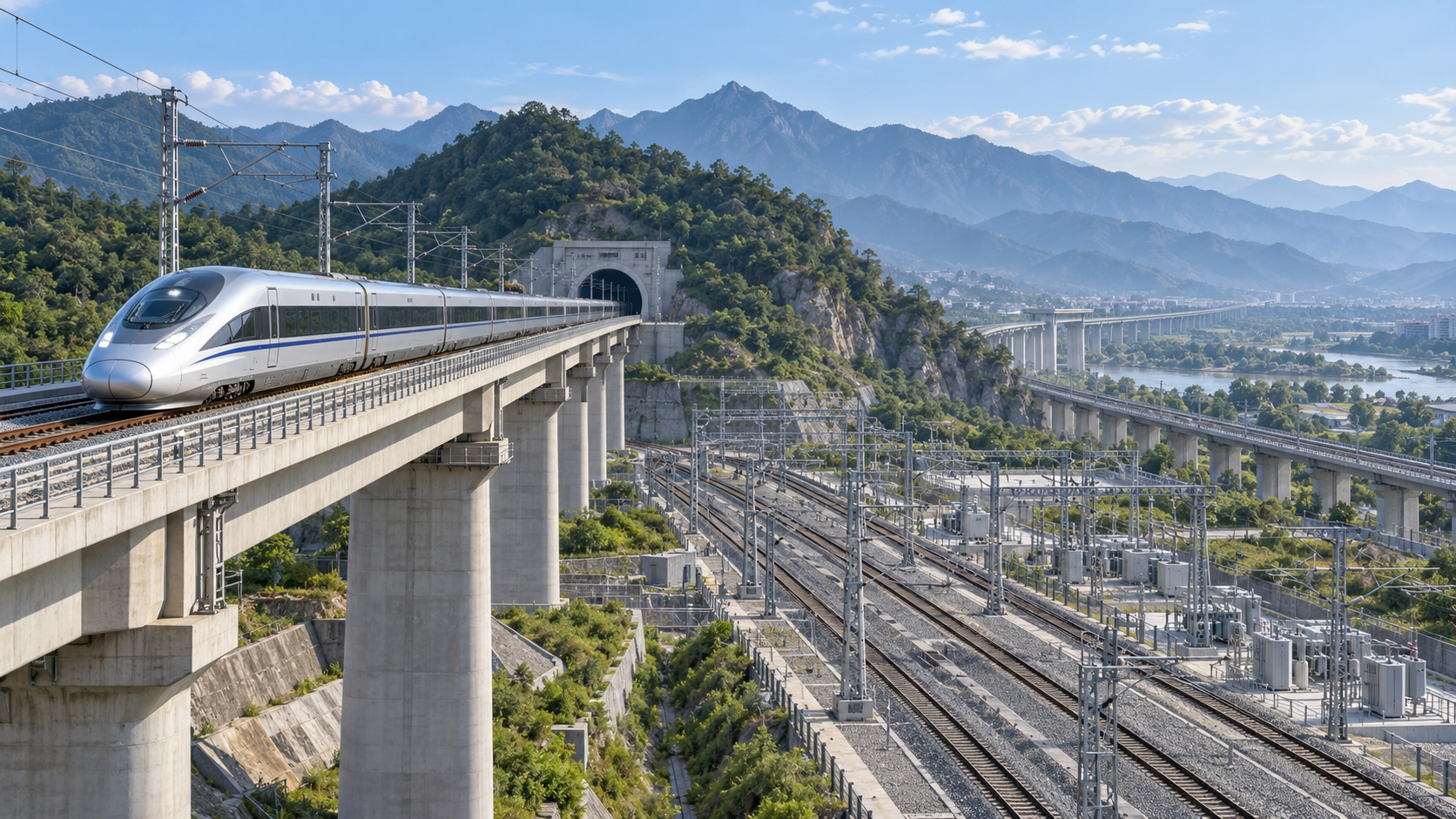
This shift matters across the broader mobility sector. High-speed rail, maglev, airport connectors, freight corridors, and autonomous transit share similar integrity challenges.
The core question is not only whether equipment works. It is whether the whole system fails safely under degraded conditions.
That requires attention to four basic safety layers:
- Detection accuracy for train position and occupancy
- Command integrity between control center and field assets
- Fail-safe logic inside interlocking and protection functions
- Human-machine clarity during normal and abnormal operations
When these layers are assessed together, safety upgrade priorities become clearer and investment decisions become more defensible.
Which safety upgrade points deliver the highest value first?
Not every upgrade produces the same risk reduction. The highest-value points usually sit where failure consequences are severe and detection is difficult.
In railway signaling and control, the first priority is often interlocking modernization. Aging relay or mixed-logic systems can remain robust, but interfaces may not.
Upgrading to safety-certified electronic interlocking can improve route protection, diagnostics, event logging, and lifecycle maintainability.
The second priority is train detection resilience. Track circuits and axle counters both work well, but each needs environment-specific validation.
Harsh weather, electromagnetic interference, poor bonding, and contamination can create occupancy uncertainty. That uncertainty directly affects safe headway management.
A third major upgrade point is communication security and availability. As railway signaling and control becomes more digital, cyber risk becomes operational risk.
Protected data links, segmented networks, authenticated commands, and secure remote maintenance are now basic safety enablers.
A fourth priority is automatic train protection integration. Overspeed enforcement and movement authority supervision reduce dependency on perfect human response.
High-value safety upgrades often include:
- Replacing obsolete interlocking processors and unsupported software
- Improving point machine monitoring and switch position feedback
- Adding redundant power supply and surge protection
- Hardening communication paths against latency and intrusion
- Integrating real-time condition monitoring into fault response workflows
For high-speed rail and maglev systems, tolerance for ambiguity is even lower. Small timing errors can become major safety concerns at higher operating speeds.
How can you judge whether a railway signaling and control system is truly safety-ready?
A safety-ready system is not defined by new hardware alone. It is defined by evidence, validation depth, and predictable behavior during upset conditions.
Start with hazard analysis. Review whether the railway signaling and control design addresses wrong-side failures, common-cause events, and degraded mode transitions.
Then evaluate the quality of verification. Independent testing should cover logic, interfaces, data integrity, fallback states, and maintenance actions.
Certification alignment also matters. Projects should map to applicable railway, electrical, software, and cybersecurity standards from the beginning.
A practical review should examine these indicators:
If one area lacks evidence, the full railway signaling and control system may still carry hidden safety debt.
What are the most common upgrade mistakes and safety misconceptions?
A common mistake is treating capacity improvement as separate from safety improvement. In reality, unstable control logic can damage both.
Another misconception is assuming digital always means safer. Digital railway signaling and control can improve visibility, but poor integration may introduce new failure paths.
Teams also underestimate interface risk. Mixed fleets, legacy relays, new software, and third-party communications can create ambiguous responsibilities.
A further error is weak configuration control. Safety logic, software versions, circuit changes, and field adjustments must stay synchronized.
The following warning signs deserve immediate attention:
- Frequent temporary bypasses during maintenance
- Manual resets without full root-cause analysis
- Inconsistent event logs across subsystems
- Obsolete components without secure spares availability
- Cyber controls added after commissioning, not by design
In advanced transportation programs, this matters beyond rail alone. Cross-domain mobility systems increasingly depend on software-defined safety assurance.
That is why railway signaling and control upgrades should be reviewed with the same discipline applied in aerospace-grade certification cultures.
How should implementation be phased to balance safety, cost, and downtime?
The best implementation plans reduce safety exposure early while preserving operational continuity. Full replacement is not always the safest first move.
A phased model usually works better for railway signaling and control, especially across mixed-traffic or high-availability corridors.
Phase one should identify critical assets, unsupported technologies, and high-consequence interface points. This builds a risk-ranked upgrade roadmap.
Phase two often targets enabling infrastructure. Power quality, cable health, grounding, network segmentation, and diagnostics should be strengthened first.
Phase three addresses core control functions such as interlocking, train detection, and automatic protection integration.
Phase four completes validation, operator training, maintenance readiness, and post-cutover performance monitoring.
A simple decision guide can help:
This approach helps align cost control with measurable risk reduction rather than replacing assets on age alone.
Which next steps create a stronger long-term railway signaling and control strategy?
Long-term resilience comes from governance as much as technology. Railway signaling and control should be managed as a living safety system.
Start with a baseline review of assets, software versions, failure history, interfaces, and standards alignment. Missing data often hides the biggest risk.
Then create a structured upgrade matrix covering safety criticality, lifecycle support, cyber exposure, operational dependence, and implementation complexity.
For advanced transportation organizations, a strong strategy also links rail upgrades with broader system intelligence, remote diagnostics, and certification discipline.
The most effective programs usually follow five actions:
- Map safety-critical failure modes across all control layers
- Prioritize upgrade points with the highest risk-reduction return
- Require evidence-based validation before and after cutover
- Embed cybersecurity into railway signaling and control design
- Monitor field performance and feed lessons into future projects
The safest upgrade is rarely the fastest or cheapest in isolation. It is the one that improves integrity across the full operating lifecycle.
If a network is preparing its next modernization step, begin with the safety gaps that affect train separation, command trust, and degraded-mode control.
That is where railway signaling and control delivers its greatest value: preventing uncertainty before uncertainty becomes an incident.
Article Categories
SYSTEM_ALERT_URGENT
Q3 SYMPOSIUM ON ORBITAL DYNAMICS
Registration for the Orbital Aerospace technical committee is now open. Node access required.
Recent Articles
![]() Oct 27, 2026FAA Certifies Boeing 737 MAX 10 After Years of DelaysFAA Certifies Boeing 737 MAX 10 After Years of Delays
Oct 27, 2026FAA Certifies Boeing 737 MAX 10 After Years of DelaysFAA Certifies Boeing 737 MAX 10 After Years of Delays Oct 27, 2026Can an intermodal connectivity platform reduce rail handoff delays?Can an intermodal connectivity platform reduce rail handoff delays?
![]() Oct 26, 2026Chery Unveils Global Smart Mobility Strategy Targeting Robotaxis and eVTOLsChery Unveils Global Smart Mobility Strategy Targeting Robotaxis and eVTOLs
Oct 26, 2026Chery Unveils Global Smart Mobility Strategy Targeting Robotaxis and eVTOLsChery Unveils Global Smart Mobility Strategy Targeting Robotaxis and eVTOLs Oct 26, 2026How to evaluate avionics for helicopters used in IFR operationsHow to evaluate avionics for helicopters used in IFR operations
![]() Oct 25, 2026Ukraine’s Defence Minister Says SpaceX Satellite Services Restored After Speed RestrictionsUkraine’s Defence Minister Says SpaceX Satellite Services Restored After Speed Restrictions
Oct 25, 2026Ukraine’s Defence Minister Says SpaceX Satellite Services Restored After Speed RestrictionsUkraine’s Defence Minister Says SpaceX Satellite Services Restored After Speed Restrictions Oct 25, 2026How satellite infrastructure for IoT affects sensor reporting delaysHow satellite infrastructure for IoT affects sensor reporting delays
![]() Oct 24, 2026China Successfully Launches Yaogan 50-03 SatelliteChina Successfully Launches Yaogan 50-03 Satellite
Oct 24, 2026China Successfully Launches Yaogan 50-03 SatelliteChina Successfully Launches Yaogan 50-03 Satellite Oct 24, 2026How gradients affect traction power needs in high-speed rolling stockHow gradients affect traction power needs in high-speed rolling stock
![]() Oct 23, 2026FAA Proposes Checks on Nearly 2,000 Boeing 737NGs Over Loss-of-Control RiskFAA Proposes Checks on Nearly 2,000 Boeing 737NGs Over Loss-of-Control Risk
Oct 23, 2026FAA Proposes Checks on Nearly 2,000 Boeing 737NGs Over Loss-of-Control RiskFAA Proposes Checks on Nearly 2,000 Boeing 737NGs Over Loss-of-Control Risk Oct 23, 2026How fuel choice affects specific impulse in liquid oxygen propulsionHow fuel choice affects specific impulse in liquid oxygen propulsion
![]() Oct 22, 2026QuantumScape Plans 100 MWh Solid-State Battery Line Targeting Aerospace and Other MarketsQuantumScape Plans 100 MWh Solid-State Battery Line Targeting Aerospace and Other Markets
Oct 22, 2026QuantumScape Plans 100 MWh Solid-State Battery Line Targeting Aerospace and Other MarketsQuantumScape Plans 100 MWh Solid-State Battery Line Targeting Aerospace and Other Markets Oct 22, 2026How tank size limits hydrogen aircraft range on regional flightsHow tank size limits hydrogen aircraft range on regional flights
![]() Oct 21, 2026FAA Certifies Boeing 737-10, Clearing Regulatory Hurdle for DeliveriesFAA Certifies Boeing 737-10, Clearing Regulatory Hurdle for Deliveries
Oct 21, 2026FAA Certifies Boeing 737-10, Clearing Regulatory Hurdle for DeliveriesFAA Certifies Boeing 737-10, Clearing Regulatory Hurdle for Deliveries Oct 21, 2026How are electric vertical takeoff aircraft certified in the US?How are electric vertical takeoff aircraft certified in the US?
![]() Oct 20, 2026Ohio Department of Transportation Releases Three-Year Advanced Air Mobility Action PlanOhio Department of Transportation Releases Three-Year Advanced Air Mobility Action Plan
Oct 20, 2026Ohio Department of Transportation Releases Three-Year Advanced Air Mobility Action PlanOhio Department of Transportation Releases Three-Year Advanced Air Mobility Action Plan Oct 20, 2026How does magnetic flux density in tesla affect maglev lift force?How does magnetic flux density in tesla affect maglev lift force?
![]() Oct 19, 2026ZeroAvia Completes Key Ground Tests of ZA600 Hydrogen Fuel Cell PowertrainZeroAvia Completes Key Ground Tests of ZA600 Hydrogen Fuel Cell Powertrain
Oct 19, 2026ZeroAvia Completes Key Ground Tests of ZA600 Hydrogen Fuel Cell PowertrainZeroAvia Completes Key Ground Tests of ZA600 Hydrogen Fuel Cell Powertrain Oct 19, 2026How spacecraft integration affects advanced propulsion costsHow spacecraft integration affects advanced propulsion costs
 Oct 18, 2026How chilldown prevents cavitation in cryogenic engine systemsHow chilldown prevents cavitation in cryogenic engine systems
 Oct 17, 2026How explainability affects algorithmic trust in AI flight systemsHow explainability affects algorithmic trust in AI flight systems
 Oct 16, 2026How to evaluate transportation technology for Middle East heatHow to evaluate transportation technology for Middle East heat
 Oct 15, 2026How common-cause failures defeat redundancy logic in European avionicsHow common-cause failures defeat redundancy logic in European avionics
 Oct 14, 2026How DO-160 applies to aerospace technology testing for avionicsHow DO-160 applies to aerospace technology testing for avionics
 Oct 13, 2026How fuel price volatility shapes commercial aviation cost trendsHow fuel price volatility shapes commercial aviation cost trends
 Oct 12, 2026How to qualify aerospace manufacturing components for traceabilityHow to qualify aerospace manufacturing components for traceability
 Oct 11, 2026Which certification hurdles are slowing hydrogen aviation in Europe?Which certification hurdles are slowing hydrogen aviation in Europe?
 Oct 10, 2026What evidence should a magnetic gap stability supplier provide?What evidence should a magnetic gap stability supplier provide?
 Oct 09, 2026Which ISO standards matter when qualifying industrial technology suppliers?Which ISO standards matter when qualifying industrial technology suppliers?
 Oct 08, 2026When does reusability actually lower launch vehicle costs?When does reusability actually lower launch vehicle costs?
 Oct 07, 2026Where to find reliable product knowledge resources in the Middle EastWhere to find reliable product knowledge resources in the Middle East
 Oct 06, 2026What drives high-speed rail systems cost per kilometer?What drives high-speed rail systems cost per kilometer?
 Oct 05, 2026When does hydrogen propulsion for UAV extend mission range enough to justify it?When does hydrogen propulsion for UAV extend mission range enough to justify it?
 Oct 04, 2026How rail systems integration reduces commissioning delaysHow rail systems integration reduces commissioning delays
 Oct 03, 2026How to evaluate an advanced propulsion manufacturer for hydrogen systemsHow to evaluate an advanced propulsion manufacturer for hydrogen systems
 Oct 02, 2026How to qualify aircraft components for OEM production approvalHow to qualify aircraft components for OEM production approval