Smart Sleep Trackers: Which Metrics Actually Help Improve Sleep?
Lead Author
Published
Views:
Smart Sleep Trackers: Which Metrics Actually Help Improve Sleep?
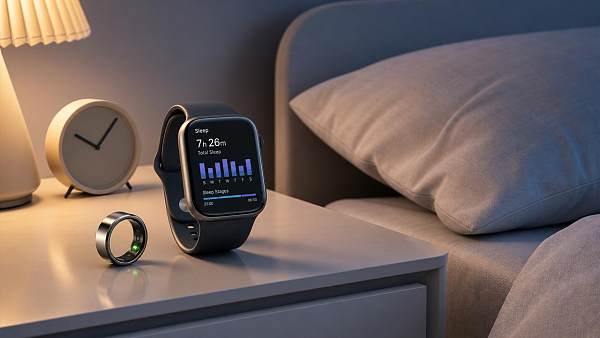
Smart sleep trackers promise better rest by turning your nights into data, but not every metric truly helps you sleep better.
Before chasing sleep scores, REM percentages, or heart rate graphs, it helps to ask a simpler question.
Which numbers lead to useful changes the next day?
That is where smart sleep trackers become valuable, or surprisingly distracting.
The best devices do not just collect data.
They highlight trends you can act on, like inconsistent bedtimes, poor recovery, or frequent wake-ups.
The weaker ones overload you with colorful charts that look scientific but change nothing.
This guide breaks down which smart sleep tracker metrics matter most, which ones need caution, and how to choose the right device.
What Smart Sleep Trackers Measure Well
Most smart sleep trackers estimate sleep using movement, heart rate, skin temperature, and sometimes blood oxygen.
They are usually better at spotting broad patterns than exact sleep stages.
That distinction matters when comparing devices.
If your goal is sleep improvement, consistency beats complexity.
The most reliable signals tend to be:
- Sleep duration over time
- Bedtime and wake time consistency
- Nighttime awakenings or fragmentation
- Resting heart rate trends
- Heart rate variability trends, if measured consistently
These metrics connect more directly to daily behavior.
You can adjust caffeine timing, bedtime routines, exercise load, room temperature, or alcohol intake and watch the trend respond.
That makes smart sleep trackers useful decision tools rather than passive dashboards.
The Metrics That Actually Help Improve Sleep
1. Total Sleep Time
This is the foundation.
If a smart sleep tracker shows you average only six hours, the problem is often obvious before deeper analysis starts.
Look for weekly averages, not one dramatic night.
From a decision standpoint, any tracker that reports sleep duration clearly already covers a major need.
2. Sleep Consistency
A regular schedule is one of the strongest predictors of better sleep quality.
Many smart sleep trackers now score bedtime regularity or circadian consistency.
This metric often helps more than stage breakdowns.
If your weekday and weekend schedules swing widely, the tracker can reveal why mornings feel rough.
3. Sleep Fragmentation
Frequent brief awakenings matter.
Even with enough hours in bed, broken sleep can leave you tired.
A good smart sleep tracker should show wake frequency, restlessness, or periods of interrupted sleep.
This can point to stress, late meals, heat, noise, or possible breathing issues.
4. Resting Heart Rate During Sleep
Nighttime heart rate can be surprisingly actionable.
A higher-than-usual reading may follow alcohol, illness, heavy training, stress, or poor recovery.
Smart sleep trackers that display this trend clearly can help you connect habits with recovery.
The key is trend direction, not one isolated number.
5. Heart Rate Variability Trends
HRV is often marketed as advanced wellness intelligence.
In practice, it is useful when read as a personal baseline.
Higher or stable HRV may reflect better recovery.
Lower HRV can suggest strain, poor sleep, travel fatigue, or overtraining.
Not every smart sleep tracker measures HRV well, so consistency matters more than flashy presentation.
Which Metrics Are Often Overrated
Some sleep data looks impressive but has limited day-to-day value.
This is where many buying decisions go off track.
REM, Deep, and Light Sleep Percentages
Sleep stages are interesting, but consumer devices estimate them indirectly.
That means stage accuracy can vary a lot between brands.
A smart sleep tracker may say you got less deep sleep, yet the actionable lesson is still simple.
Did you sleep less, go to bed later, drink alcohol, or wake up repeatedly?
Single Sleep Score Numbers
A sleep score can be a helpful summary.
Still, it should never replace the underlying metrics.
Different smart sleep trackers use different formulas, so an 82 on one device may not equal an 82 on another.
Scores are useful shortcuts, not final answers.
Blood Oxygen for Everyone, Every Night
SpO2 can be relevant in some cases.
It may flag possible breathing concerns or altitude effects.
But for many people, nightly oxygen readings add worry without clear action.
It is not the first reason to choose one smart sleep tracker over another.
How to Choose Smart Sleep Trackers for Real Results
The best smart sleep trackers are not always the ones with the longest feature list.
They are the ones you will actually wear, trust, and learn from.
When comparing options, focus on these buying criteria:
- Comfort through the night, especially for side sleepers
- Clear trend reporting across weeks, not just daily snapshots
- Battery life that supports continuous wear
- Reliable app design with simple explanations
- Useful recovery metrics, not decorative charts
- Privacy controls for health-related data
Form factor also matters.
A ring may feel less intrusive than a watch.
A bedside sensor may suit people who dislike wearables.
In other words, the best smart sleep tracker is the one that fits your routine without friction.
A Simple Decision Framework
If you are comparing smart sleep trackers, this quick framework can keep the choice practical.
This approach helps filter marketing claims.
More importantly, it keeps the focus on outcomes instead of feature overload.
How to Use Sleep Data Without Becoming Obsessed
There is a real downside to smart sleep trackers.
Too much focus on perfect sleep can create stress around sleep itself.
That makes the data less useful.
A better method is to review trends once or twice a week.
Then test one behavior change at a time.
- Move bedtime earlier by 20 minutes
- Cut caffeine after lunch
- Avoid alcohol close to sleep
- Lower bedroom temperature slightly
- Keep wake-up time stable on weekends
The more obvious signal is whether your smart sleep tracker shows a repeatable improvement after the change.
If yes, keep it.
If not, move on.
Final Take: Buy for Actionable Trends, Not Fancy Numbers
Smart sleep trackers can absolutely support better sleep, but only when they guide real choices.
The most helpful metrics are usually sleep duration, schedule consistency, nighttime disruption, resting heart rate, and HRV trends.
By contrast, exact sleep stages and single score summaries often matter less than marketing suggests.
When evaluating smart sleep trackers, choose the device that makes patterns easy to understand and behavior changes easy to test.
Start with one metric, one habit change, and one week of observation.
That is usually how better sleep begins, not with more data, but with clearer signals.
Article Categories
SYSTEM_ALERT_URGENT
Q3 SYMPOSIUM ON ORBITAL DYNAMICS
Registration for the Orbital Aerospace technical committee is now open. Node access required.
Taglist:
Recent Articles
![]() Oct 27, 2026FAA Certifies Boeing 737 MAX 10 After Years of DelaysFAA Certifies Boeing 737 MAX 10 After Years of Delays
Oct 27, 2026FAA Certifies Boeing 737 MAX 10 After Years of DelaysFAA Certifies Boeing 737 MAX 10 After Years of Delays Oct 27, 2026Can an intermodal connectivity platform reduce rail handoff delays?Can an intermodal connectivity platform reduce rail handoff delays?
![]() Oct 26, 2026Chery Unveils Global Smart Mobility Strategy Targeting Robotaxis and eVTOLsChery Unveils Global Smart Mobility Strategy Targeting Robotaxis and eVTOLs
Oct 26, 2026Chery Unveils Global Smart Mobility Strategy Targeting Robotaxis and eVTOLsChery Unveils Global Smart Mobility Strategy Targeting Robotaxis and eVTOLs Oct 26, 2026How to evaluate avionics for helicopters used in IFR operationsHow to evaluate avionics for helicopters used in IFR operations
![]() Oct 25, 2026Ukraine’s Defence Minister Says SpaceX Satellite Services Restored After Speed RestrictionsUkraine’s Defence Minister Says SpaceX Satellite Services Restored After Speed Restrictions
Oct 25, 2026Ukraine’s Defence Minister Says SpaceX Satellite Services Restored After Speed RestrictionsUkraine’s Defence Minister Says SpaceX Satellite Services Restored After Speed Restrictions Oct 25, 2026How satellite infrastructure for IoT affects sensor reporting delaysHow satellite infrastructure for IoT affects sensor reporting delays
![]() Oct 24, 2026China Successfully Launches Yaogan 50-03 SatelliteChina Successfully Launches Yaogan 50-03 Satellite
Oct 24, 2026China Successfully Launches Yaogan 50-03 SatelliteChina Successfully Launches Yaogan 50-03 Satellite Oct 24, 2026How gradients affect traction power needs in high-speed rolling stockHow gradients affect traction power needs in high-speed rolling stock
![]() Oct 23, 2026FAA Proposes Checks on Nearly 2,000 Boeing 737NGs Over Loss-of-Control RiskFAA Proposes Checks on Nearly 2,000 Boeing 737NGs Over Loss-of-Control Risk
Oct 23, 2026FAA Proposes Checks on Nearly 2,000 Boeing 737NGs Over Loss-of-Control RiskFAA Proposes Checks on Nearly 2,000 Boeing 737NGs Over Loss-of-Control Risk Oct 23, 2026How fuel choice affects specific impulse in liquid oxygen propulsionHow fuel choice affects specific impulse in liquid oxygen propulsion
![]() Oct 22, 2026QuantumScape Plans 100 MWh Solid-State Battery Line Targeting Aerospace and Other MarketsQuantumScape Plans 100 MWh Solid-State Battery Line Targeting Aerospace and Other Markets
Oct 22, 2026QuantumScape Plans 100 MWh Solid-State Battery Line Targeting Aerospace and Other MarketsQuantumScape Plans 100 MWh Solid-State Battery Line Targeting Aerospace and Other Markets Oct 22, 2026How tank size limits hydrogen aircraft range on regional flightsHow tank size limits hydrogen aircraft range on regional flights
![]() Oct 21, 2026FAA Certifies Boeing 737-10, Clearing Regulatory Hurdle for DeliveriesFAA Certifies Boeing 737-10, Clearing Regulatory Hurdle for Deliveries
Oct 21, 2026FAA Certifies Boeing 737-10, Clearing Regulatory Hurdle for DeliveriesFAA Certifies Boeing 737-10, Clearing Regulatory Hurdle for Deliveries Oct 21, 2026How are electric vertical takeoff aircraft certified in the US?How are electric vertical takeoff aircraft certified in the US?
![]() Oct 20, 2026Ohio Department of Transportation Releases Three-Year Advanced Air Mobility Action PlanOhio Department of Transportation Releases Three-Year Advanced Air Mobility Action Plan
Oct 20, 2026Ohio Department of Transportation Releases Three-Year Advanced Air Mobility Action PlanOhio Department of Transportation Releases Three-Year Advanced Air Mobility Action Plan Oct 20, 2026How does magnetic flux density in tesla affect maglev lift force?How does magnetic flux density in tesla affect maglev lift force?
![]() Oct 19, 2026ZeroAvia Completes Key Ground Tests of ZA600 Hydrogen Fuel Cell PowertrainZeroAvia Completes Key Ground Tests of ZA600 Hydrogen Fuel Cell Powertrain
Oct 19, 2026ZeroAvia Completes Key Ground Tests of ZA600 Hydrogen Fuel Cell PowertrainZeroAvia Completes Key Ground Tests of ZA600 Hydrogen Fuel Cell Powertrain Oct 19, 2026How spacecraft integration affects advanced propulsion costsHow spacecraft integration affects advanced propulsion costs
 Oct 18, 2026How chilldown prevents cavitation in cryogenic engine systemsHow chilldown prevents cavitation in cryogenic engine systems
 Oct 17, 2026How explainability affects algorithmic trust in AI flight systemsHow explainability affects algorithmic trust in AI flight systems
 Oct 16, 2026How to evaluate transportation technology for Middle East heatHow to evaluate transportation technology for Middle East heat
 Oct 15, 2026How common-cause failures defeat redundancy logic in European avionicsHow common-cause failures defeat redundancy logic in European avionics
 Oct 14, 2026How DO-160 applies to aerospace technology testing for avionicsHow DO-160 applies to aerospace technology testing for avionics
 Oct 13, 2026How fuel price volatility shapes commercial aviation cost trendsHow fuel price volatility shapes commercial aviation cost trends
 Oct 12, 2026How to qualify aerospace manufacturing components for traceabilityHow to qualify aerospace manufacturing components for traceability
 Oct 11, 2026Which certification hurdles are slowing hydrogen aviation in Europe?Which certification hurdles are slowing hydrogen aviation in Europe?
 Oct 10, 2026What evidence should a magnetic gap stability supplier provide?What evidence should a magnetic gap stability supplier provide?
 Oct 09, 2026Which ISO standards matter when qualifying industrial technology suppliers?Which ISO standards matter when qualifying industrial technology suppliers?
 Oct 08, 2026When does reusability actually lower launch vehicle costs?When does reusability actually lower launch vehicle costs?
 Oct 07, 2026Where to find reliable product knowledge resources in the Middle EastWhere to find reliable product knowledge resources in the Middle East
 Oct 06, 2026What drives high-speed rail systems cost per kilometer?What drives high-speed rail systems cost per kilometer?
 Oct 05, 2026When does hydrogen propulsion for UAV extend mission range enough to justify it?When does hydrogen propulsion for UAV extend mission range enough to justify it?
 Oct 04, 2026How rail systems integration reduces commissioning delaysHow rail systems integration reduces commissioning delays
 Oct 03, 2026How to evaluate an advanced propulsion manufacturer for hydrogen systemsHow to evaluate an advanced propulsion manufacturer for hydrogen systems
 Oct 02, 2026How to qualify aircraft components for OEM production approvalHow to qualify aircraft components for OEM production approval