Solar Mounting Mistakes That Raise Maintenance Risk
Lead Author
Published
Views:
Why do small solar mounting mistakes create such large maintenance problems?
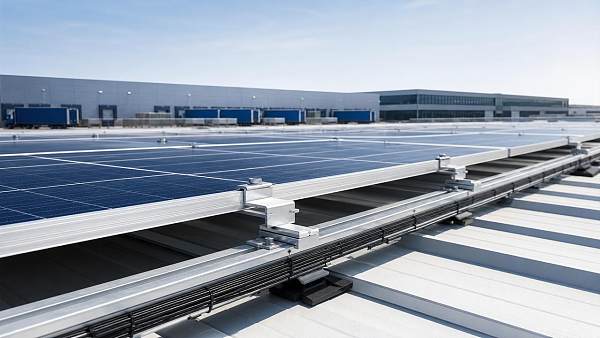
A solar mounting system often looks static, simple, and low-risk. In service life, it is none of those things.
It carries wind load, thermal expansion, vibration, water flow, and electrical routing at the same time.
That is why minor installation errors can quietly grow into repeat maintenance events, power loss, or premature replacement.
In transport hubs, hangars, logistics depots, rail facilities, and remote support sites, reliability standards are usually stricter.
G-AIT’s broader engineering view is useful here. High-performance mobility systems depend on tight tolerances and predictable lifecycle behavior.
The same principle applies to solar mounting. If the structure is misjudged early, maintenance teams inherit the risk later.
The most common pattern is not dramatic collapse. It is recurring service demand caused by looseness, trapped water, corrosion, or uneven stress.
So the real question is not whether solar mounting works. It is whether it remains stable after years of exposure.
Which solar mounting errors show up first in maintenance records?
Some faults appear quickly, while others stay hidden until weather cycles expose them.
In actual field reviews, a few mistakes account for most repeat interventions.
This is where maintenance teams often lose time. The visible symptom is electrical, but the root cause sits in the solar mounting hardware.
A useful check is to compare failure locations against structural transitions, roof edges, drainage zones, and thermal movement points.
If incidents cluster there, the problem is rarely random.
Is alignment really that critical, or is that just an installation detail?
Alignment is not cosmetic. It determines how load travels through the entire solar mounting structure.
When rails are out of plane, clamps start compensating for geometry that the structure should handle.
That creates local stress at module frames, brackets, and attachment points.
The result may be subtle at first. One corner lifts. A clamp sits at an angle. Expansion movement becomes uneven.
Over time, service records show recurring retightening, cracked seals, or unexplained frame marks.
In facilities exposed to vibration, such as rail-linked depots or aviation support infrastructure, this sensitivity increases.
Small geometric error plus cyclic loading is a poor combination.
What should be checked before modules are fixed?
- Rail straightness across the full array, not just between adjacent supports.
- Elevation consistency at roof transitions and penetration zones.
- Spacing tolerance versus module clamp range.
- Allowance for thermal movement in long rail runs.
A good solar mounting inspection treats alignment as a structural parameter, not a visual preference.
Why do fastening and material choices fail long before the design life?
Because many failures are not caused by lack of strength. They are caused by loss of stability at the joint.
A fastener can be technically strong and still perform badly if torque is wrong, surfaces settle, or metals react poorly together.
In solar mounting assemblies, those details matter more than many teams expect.
Over-tightening may deform slots or clamp faces. Under-tightening invites micro-movement and fatigue.
Mixing aluminum, stainless steel, and coated steel without separation planning can accelerate corrosion in humid or coastal zones.
This is especially relevant for mobility infrastructure with aggressive environmental profiles, including saline airfields and exposed transport corridors.
How can you judge whether the joint design is maintenance-safe?
A practical review looks beyond datasheet load values.
- Is the torque specification measurable and repeatable on site?
- Are dissimilar metals isolated where moisture can remain?
- Do washers, slots, and clamp faces resist slip under thermal cycling?
- Can maintenance teams re-access joints without removing large array sections?
If the answer to the last point is no, even a small fastening problem becomes expensive later.
How do drainage and roof interface mistakes turn into long-term service calls?
This is one of the most underestimated solar mounting risks.
Installers may focus on attachment strength, while water management is treated as a secondary detail.
In reality, trapped water changes corrosion behavior, increases dirt buildup, and weakens seals around penetrations.
That means the maintenance issue may first appear as roof staining, leakage suspicion, or biological growth around supports.
The root cause is often poor spacing, blocked runoff channels, or brackets positioned at drainage low points.
More demanding sites, including aerospace and advanced transportation facilities, usually require better control of water paths and inspection access.
That is not overengineering. It is lifecycle risk control.
What tends to be missed during design review?
- Whether rails create debris traps near drains.
- Whether mounting feet interrupt natural water flow.
- Whether sealants are being used to compensate for bad geometry.
- Whether enough access exists for periodic cleaning and inspection.
If drainage cannot be inspected easily, solar mounting maintenance becomes reactive instead of planned.
When should a solar mounting system be reconsidered instead of repeatedly repaired?
Not every problem needs redesign. Some do.
A useful threshold is repeatability. If the same defect returns after proper repair, the original solar mounting logic may be wrong.
Examples include recurring clamp loosening in one wind zone, chronic corrosion at mixed-metal joints, or pooling around identical supports.
At that point, replacing parts without reviewing the design only delays cost.
The better approach is to compare field behavior against assumptions on load path, environment, access, and maintenance interval.
That benchmarking mindset is common in safety-critical industries. It also suits solar mounting well.
A short decision guide helps
This kind of review reduces unnecessary service loops and supports more accurate lifecycle planning.
What is the smartest next step if maintenance risk is already rising?
Start with evidence, not assumptions.
Map all incidents by location, weather exposure, roof type, support type, and hardware family.
That usually reveals whether the issue comes from workmanship, design tolerance, or a deeper solar mounting mismatch.
Then build a short review checklist covering alignment, torque traceability, galvanic isolation, drainage continuity, and service access.
If future projects involve high-value infrastructure, it helps to borrow the discipline used in aerospace and advanced transportation programs.
That means validating not only strength, but inspection logic, recovery time, and failure containment.
A reliable solar mounting strategy is rarely defined by the lowest initial complexity.
It is defined by whether the system stays predictable after years of heat, moisture, movement, and maintenance access.
If service calls are increasing, the right move is to review the structure before the next failure cluster forms.
That single step often saves more than another round of isolated repairs.
Article Categories
SYSTEM_ALERT_URGENT
Q3 SYMPOSIUM ON ORBITAL DYNAMICS
Registration for the Orbital Aerospace technical committee is now open. Node access required.
Taglist:
Recent Articles
![]() Oct 27, 2026FAA Certifies Boeing 737 MAX 10 After Years of DelaysFAA Certifies Boeing 737 MAX 10 After Years of Delays
Oct 27, 2026FAA Certifies Boeing 737 MAX 10 After Years of DelaysFAA Certifies Boeing 737 MAX 10 After Years of Delays Oct 27, 2026Can an intermodal connectivity platform reduce rail handoff delays?Can an intermodal connectivity platform reduce rail handoff delays?
![]() Oct 26, 2026Chery Unveils Global Smart Mobility Strategy Targeting Robotaxis and eVTOLsChery Unveils Global Smart Mobility Strategy Targeting Robotaxis and eVTOLs
Oct 26, 2026Chery Unveils Global Smart Mobility Strategy Targeting Robotaxis and eVTOLsChery Unveils Global Smart Mobility Strategy Targeting Robotaxis and eVTOLs Oct 26, 2026How to evaluate avionics for helicopters used in IFR operationsHow to evaluate avionics for helicopters used in IFR operations
![]() Oct 25, 2026Ukraine’s Defence Minister Says SpaceX Satellite Services Restored After Speed RestrictionsUkraine’s Defence Minister Says SpaceX Satellite Services Restored After Speed Restrictions
Oct 25, 2026Ukraine’s Defence Minister Says SpaceX Satellite Services Restored After Speed RestrictionsUkraine’s Defence Minister Says SpaceX Satellite Services Restored After Speed Restrictions Oct 25, 2026How satellite infrastructure for IoT affects sensor reporting delaysHow satellite infrastructure for IoT affects sensor reporting delays
![]() Oct 24, 2026China Successfully Launches Yaogan 50-03 SatelliteChina Successfully Launches Yaogan 50-03 Satellite
Oct 24, 2026China Successfully Launches Yaogan 50-03 SatelliteChina Successfully Launches Yaogan 50-03 Satellite Oct 24, 2026How gradients affect traction power needs in high-speed rolling stockHow gradients affect traction power needs in high-speed rolling stock
![]() Oct 23, 2026FAA Proposes Checks on Nearly 2,000 Boeing 737NGs Over Loss-of-Control RiskFAA Proposes Checks on Nearly 2,000 Boeing 737NGs Over Loss-of-Control Risk
Oct 23, 2026FAA Proposes Checks on Nearly 2,000 Boeing 737NGs Over Loss-of-Control RiskFAA Proposes Checks on Nearly 2,000 Boeing 737NGs Over Loss-of-Control Risk Oct 23, 2026How fuel choice affects specific impulse in liquid oxygen propulsionHow fuel choice affects specific impulse in liquid oxygen propulsion
![]() Oct 22, 2026QuantumScape Plans 100 MWh Solid-State Battery Line Targeting Aerospace and Other MarketsQuantumScape Plans 100 MWh Solid-State Battery Line Targeting Aerospace and Other Markets
Oct 22, 2026QuantumScape Plans 100 MWh Solid-State Battery Line Targeting Aerospace and Other MarketsQuantumScape Plans 100 MWh Solid-State Battery Line Targeting Aerospace and Other Markets Oct 22, 2026How tank size limits hydrogen aircraft range on regional flightsHow tank size limits hydrogen aircraft range on regional flights
![]() Oct 21, 2026FAA Certifies Boeing 737-10, Clearing Regulatory Hurdle for DeliveriesFAA Certifies Boeing 737-10, Clearing Regulatory Hurdle for Deliveries
Oct 21, 2026FAA Certifies Boeing 737-10, Clearing Regulatory Hurdle for DeliveriesFAA Certifies Boeing 737-10, Clearing Regulatory Hurdle for Deliveries Oct 21, 2026How are electric vertical takeoff aircraft certified in the US?How are electric vertical takeoff aircraft certified in the US?
![]() Oct 20, 2026Ohio Department of Transportation Releases Three-Year Advanced Air Mobility Action PlanOhio Department of Transportation Releases Three-Year Advanced Air Mobility Action Plan
Oct 20, 2026Ohio Department of Transportation Releases Three-Year Advanced Air Mobility Action PlanOhio Department of Transportation Releases Three-Year Advanced Air Mobility Action Plan Oct 20, 2026How does magnetic flux density in tesla affect maglev lift force?How does magnetic flux density in tesla affect maglev lift force?
![]() Oct 19, 2026ZeroAvia Completes Key Ground Tests of ZA600 Hydrogen Fuel Cell PowertrainZeroAvia Completes Key Ground Tests of ZA600 Hydrogen Fuel Cell Powertrain
Oct 19, 2026ZeroAvia Completes Key Ground Tests of ZA600 Hydrogen Fuel Cell PowertrainZeroAvia Completes Key Ground Tests of ZA600 Hydrogen Fuel Cell Powertrain Oct 19, 2026How spacecraft integration affects advanced propulsion costsHow spacecraft integration affects advanced propulsion costs
 Oct 18, 2026How chilldown prevents cavitation in cryogenic engine systemsHow chilldown prevents cavitation in cryogenic engine systems
 Oct 17, 2026How explainability affects algorithmic trust in AI flight systemsHow explainability affects algorithmic trust in AI flight systems
 Oct 16, 2026How to evaluate transportation technology for Middle East heatHow to evaluate transportation technology for Middle East heat
 Oct 15, 2026How common-cause failures defeat redundancy logic in European avionicsHow common-cause failures defeat redundancy logic in European avionics
 Oct 14, 2026How DO-160 applies to aerospace technology testing for avionicsHow DO-160 applies to aerospace technology testing for avionics
 Oct 13, 2026How fuel price volatility shapes commercial aviation cost trendsHow fuel price volatility shapes commercial aviation cost trends
 Oct 12, 2026How to qualify aerospace manufacturing components for traceabilityHow to qualify aerospace manufacturing components for traceability
 Oct 11, 2026Which certification hurdles are slowing hydrogen aviation in Europe?Which certification hurdles are slowing hydrogen aviation in Europe?
 Oct 10, 2026What evidence should a magnetic gap stability supplier provide?What evidence should a magnetic gap stability supplier provide?
 Oct 09, 2026Which ISO standards matter when qualifying industrial technology suppliers?Which ISO standards matter when qualifying industrial technology suppliers?
 Oct 08, 2026When does reusability actually lower launch vehicle costs?When does reusability actually lower launch vehicle costs?
 Oct 07, 2026Where to find reliable product knowledge resources in the Middle EastWhere to find reliable product knowledge resources in the Middle East
 Oct 06, 2026What drives high-speed rail systems cost per kilometer?What drives high-speed rail systems cost per kilometer?
 Oct 05, 2026When does hydrogen propulsion for UAV extend mission range enough to justify it?When does hydrogen propulsion for UAV extend mission range enough to justify it?
 Oct 04, 2026How rail systems integration reduces commissioning delaysHow rail systems integration reduces commissioning delays
 Oct 03, 2026How to evaluate an advanced propulsion manufacturer for hydrogen systemsHow to evaluate an advanced propulsion manufacturer for hydrogen systems
 Oct 02, 2026How to qualify aircraft components for OEM production approvalHow to qualify aircraft components for OEM production approval