CNC Machining Services for High-Precision Parts
Lead Author
Published
Views:
For technical evaluators in aerospace, advanced transportation, and extreme-environment systems, selecting CNC machining services high precision is a critical step in validating component reliability, certification readiness, and lifecycle performance. From lightweight airframe structures and propulsion assemblies to rail control hardware and eVTOL mechanisms, precision-machined parts must meet strict tolerances, material integrity requirements, and repeatable production standards. This article examines how high-precision CNC machining supports mission-critical engineering programs where dimensional accuracy, traceability, and compliance directly influence safety and operational success.
Where CNC Machining Services High Precision Fit in Critical Mobility Programs

In advanced mobility programs, machined components rarely function as isolated hardware. They connect structures, thermal paths, sensors, actuators, and certified safety architectures.
For evaluators, CNC machining services high precision should be assessed as an engineering control, not only as a manufacturing purchase.
G-AIT views precision manufacturing through five connected pillars: next-generation airframes, satellite infrastructure, high-speed rail, UAM/eVTOL systems, and extreme-environment logistics.
Key evaluation questions before releasing drawings
- Can the supplier hold critical tolerances across prototypes, qualification batches, and controlled production lots?
- Are material certificates, inspection records, and revision histories traceable enough for audit-driven engineering environments?
- Does the machining plan protect fatigue life, surface integrity, and assembly repeatability under operational loads?
- Can the supplier communicate manufacturability risks before schedule pressure converts them into field reliability issues?
The best results usually come when machining capability is reviewed alongside load cases, interface stacks, thermal expansion, and certification evidence requirements.
Which Application Scenarios Demand Higher Precision?
Precision requirements differ sharply between a non-critical bracket and a propulsion interface, even when both appear simple in a CAD model.
The table below helps evaluators map CNC machining services high precision to common mobility-system scenarios and technical risks.
This comparison shows why the cheapest quote is often misleading. The relevant question is whether machining evidence supports the system-level safety case.
Technical Parameters Evaluators Should Verify First
A drawing tolerance alone does not prove supplier capability. Technical evaluators need measurable controls that link equipment, process planning, inspection, and documentation.
When reviewing CNC machining services high precision, the following parameters usually determine whether a supplier can support demanding aerospace and transportation programs.
Parameter review should include manufacturability feedback. If a tolerance is costly but not function-critical, early dialogue can reduce budget pressure.
How to Compare CNC Machining Services High Precision Suppliers
Supplier comparison should move beyond machine lists. Five-axis equipment matters, but process discipline and engineering communication often matter more.
For technical evaluators, a structured scorecard reduces subjective decisions and reveals whether a provider can scale from prototype to certification support.
Procurement scorecard for mission-critical components
- Confirm machine capability for part geometry, including axis travel, rigidity, spindle speed, and workholding access.
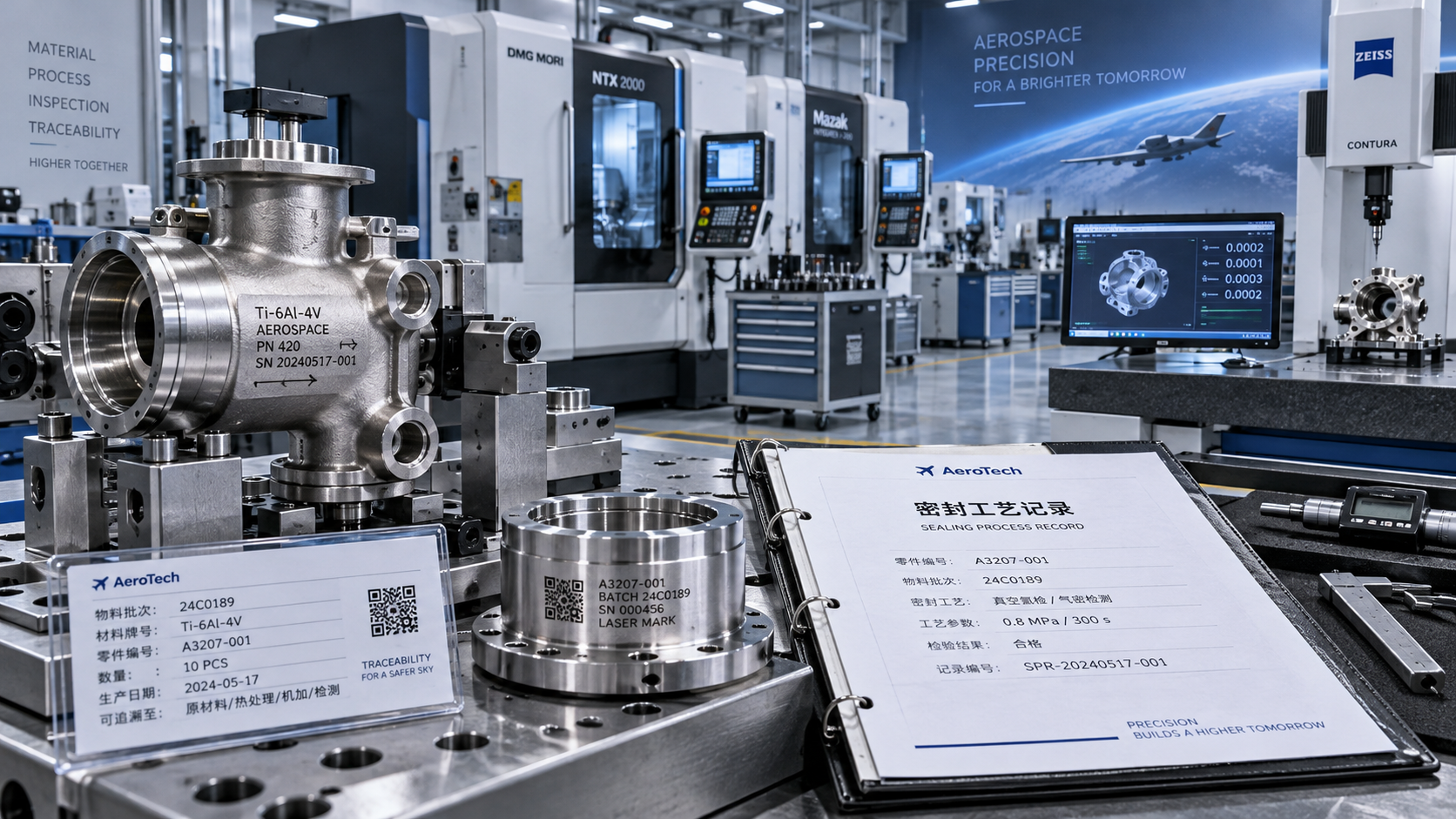
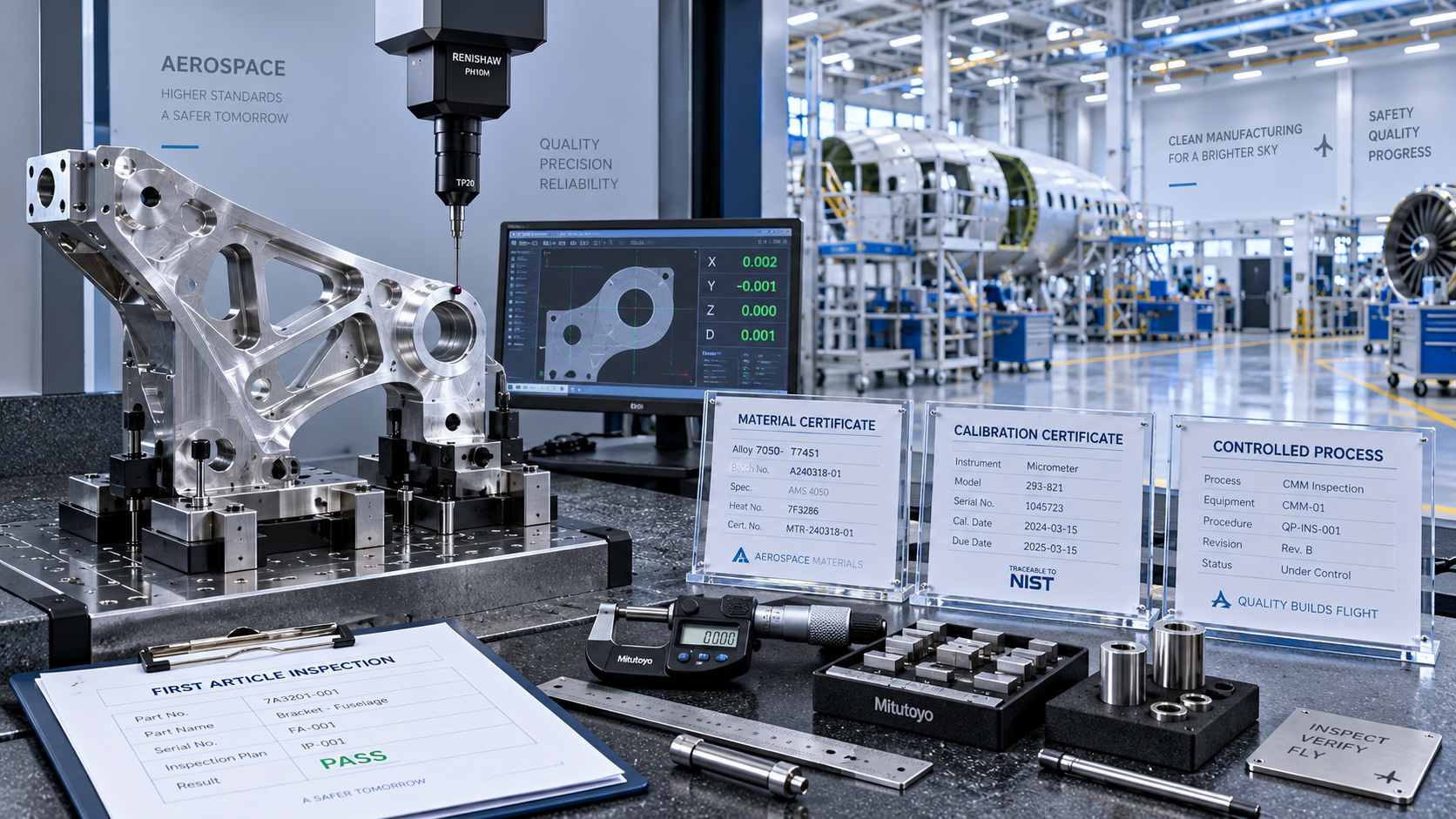
- Review inspection capacity, including CMM availability, calibrated gauges, surface measurement, and documented sampling plans.
- Assess engineering feedback quality, especially around tolerance stackups, thin-wall distortion, burr control, and datum selection.
- Verify documentation discipline, including revision control, material certificates, inspection records, and nonconformance communication.
- Evaluate delivery resilience by asking how urgent design changes, special materials, and reinspection requests are handled.
G-AIT’s benchmarking approach emphasizes evidence-based review. A supplier should demonstrate process maturity before handling flight, rail, or autonomous mobility hardware.
Cost, Alternatives, and When Precision Becomes Over-Specification
High precision has value only when it protects function, compliance, or lifecycle cost. Over-specification can increase machining time without improving safety.
The following comparison helps decide where CNC machining services high precision are justified and where alternative manufacturing routes may fit.
Cost control begins at requirement review. A tolerance should be linked to a function, test requirement, or certification concern.
Standards, Traceability, and Certification Readiness
Machined parts for aviation, rail, space, and UAM programs often become evidence in broader compliance packages. Documentation must survive technical scrutiny.
CNC machining services high precision should therefore support traceable workflows aligned with applicable quality and safety expectations, not informal shop-floor decisions.
Documentation items that reduce audit friction
- Material certificates showing grade, heat lot, condition, and any required treatment records.
- First-article inspection reports that reference current drawing revisions and defined datums.
- Calibration records for measurement equipment used on critical dimensions and surfaces.
- Nonconformance and concession records that explain technical disposition before shipment.
- Process notes covering deburring, cleaning, marking, packaging, and protection of precision surfaces.
Relevant frameworks may include ISO-based quality systems, FAA or EASA program expectations, UIC-related rail practices, and customer-specific acceptance rules.
Implementation Workflow from RFQ to Qualified Parts
A controlled workflow helps avoid late rework, unclear acceptance criteria, and disputes over inspection methods.
For CNC machining services high precision, implementation should begin before the purchase order and continue through post-delivery feedback.
This workflow protects both schedule and technical confidence. It also makes supplier communication more objective when design changes occur.
FAQ: Practical Questions from Technical Evaluators
How should I choose CNC machining services high precision for aerospace parts?
Start with critical features, material traceability, inspection capability, and change-control discipline. Then review whether the supplier can explain manufacturability risks clearly.
What information should be included in an RFQ?
Include drawings, 3D models, material grade, quantity, surface finish, inspection requirements, target delivery, and any certification documentation expectations.
Is five-axis machining always necessary?
Not always. Five-axis machining helps complex geometry and reduced setups, but simpler parts may only need stable fixturing and strong inspection control.
What lead-time risks are common?
Special alloys, coating queues, inspection bottlenecks, thin-wall distortion, and unclear drawing notes often delay CNC machining services high precision projects.
Why Choose G-AIT for Precision Machining Evaluation Support?
G-AIT helps technical teams connect machining decisions with broader mobility-system requirements, including airframe integrity, satellite reliability, rail safety, and eVTOL readiness.
Our value lies in structured benchmarking across advanced aviation, space infrastructure, high-speed rail, UAM, and extreme-environment logistics programs.
Contact us for targeted technical review
- Parameter confirmation for tolerance, surface finish, material, GD&T, and inspection documentation requirements.
- Supplier selection support for CNC machining services high precision in aerospace and advanced transportation applications.
- Delivery-cycle discussion for prototypes, first articles, qualification lots, and controlled production batches.
- Customized evaluation frameworks aligned with FAA, EASA, UIC, ISO, or project-specific compliance expectations.
- Quotation review support to distinguish necessary precision costs from avoidable over-specification.
If your team is qualifying precision-machined parts for a mission-critical program, consult G-AIT before finalizing specifications, supplier criteria, or acceptance evidence.
Article Categories
SYSTEM_ALERT_URGENT
Q3 SYMPOSIUM ON ORBITAL DYNAMICS
Registration for the Orbital Aerospace technical committee is now open. Node access required.
Recent Articles
![]() Oct 27, 2026FAA Certifies Boeing 737 MAX 10 After Years of DelaysFAA Certifies Boeing 737 MAX 10 After Years of Delays
Oct 27, 2026FAA Certifies Boeing 737 MAX 10 After Years of DelaysFAA Certifies Boeing 737 MAX 10 After Years of Delays Oct 27, 2026Can an intermodal connectivity platform reduce rail handoff delays?Can an intermodal connectivity platform reduce rail handoff delays?
![]() Oct 26, 2026Chery Unveils Global Smart Mobility Strategy Targeting Robotaxis and eVTOLsChery Unveils Global Smart Mobility Strategy Targeting Robotaxis and eVTOLs
Oct 26, 2026Chery Unveils Global Smart Mobility Strategy Targeting Robotaxis and eVTOLsChery Unveils Global Smart Mobility Strategy Targeting Robotaxis and eVTOLs Oct 26, 2026How to evaluate avionics for helicopters used in IFR operationsHow to evaluate avionics for helicopters used in IFR operations
![]() Oct 25, 2026Ukraine’s Defence Minister Says SpaceX Satellite Services Restored After Speed RestrictionsUkraine’s Defence Minister Says SpaceX Satellite Services Restored After Speed Restrictions
Oct 25, 2026Ukraine’s Defence Minister Says SpaceX Satellite Services Restored After Speed RestrictionsUkraine’s Defence Minister Says SpaceX Satellite Services Restored After Speed Restrictions Oct 25, 2026How satellite infrastructure for IoT affects sensor reporting delaysHow satellite infrastructure for IoT affects sensor reporting delays
![]() Oct 24, 2026China Successfully Launches Yaogan 50-03 SatelliteChina Successfully Launches Yaogan 50-03 Satellite
Oct 24, 2026China Successfully Launches Yaogan 50-03 SatelliteChina Successfully Launches Yaogan 50-03 Satellite Oct 24, 2026How gradients affect traction power needs in high-speed rolling stockHow gradients affect traction power needs in high-speed rolling stock
![]() Oct 23, 2026FAA Proposes Checks on Nearly 2,000 Boeing 737NGs Over Loss-of-Control RiskFAA Proposes Checks on Nearly 2,000 Boeing 737NGs Over Loss-of-Control Risk
Oct 23, 2026FAA Proposes Checks on Nearly 2,000 Boeing 737NGs Over Loss-of-Control RiskFAA Proposes Checks on Nearly 2,000 Boeing 737NGs Over Loss-of-Control Risk Oct 23, 2026How fuel choice affects specific impulse in liquid oxygen propulsionHow fuel choice affects specific impulse in liquid oxygen propulsion
![]() Oct 22, 2026QuantumScape Plans 100 MWh Solid-State Battery Line Targeting Aerospace and Other MarketsQuantumScape Plans 100 MWh Solid-State Battery Line Targeting Aerospace and Other Markets
Oct 22, 2026QuantumScape Plans 100 MWh Solid-State Battery Line Targeting Aerospace and Other MarketsQuantumScape Plans 100 MWh Solid-State Battery Line Targeting Aerospace and Other Markets Oct 22, 2026How tank size limits hydrogen aircraft range on regional flightsHow tank size limits hydrogen aircraft range on regional flights
![]() Oct 21, 2026FAA Certifies Boeing 737-10, Clearing Regulatory Hurdle for DeliveriesFAA Certifies Boeing 737-10, Clearing Regulatory Hurdle for Deliveries
Oct 21, 2026FAA Certifies Boeing 737-10, Clearing Regulatory Hurdle for DeliveriesFAA Certifies Boeing 737-10, Clearing Regulatory Hurdle for Deliveries Oct 21, 2026How are electric vertical takeoff aircraft certified in the US?How are electric vertical takeoff aircraft certified in the US?
![]() Oct 20, 2026Ohio Department of Transportation Releases Three-Year Advanced Air Mobility Action PlanOhio Department of Transportation Releases Three-Year Advanced Air Mobility Action Plan
Oct 20, 2026Ohio Department of Transportation Releases Three-Year Advanced Air Mobility Action PlanOhio Department of Transportation Releases Three-Year Advanced Air Mobility Action Plan Oct 20, 2026How does magnetic flux density in tesla affect maglev lift force?How does magnetic flux density in tesla affect maglev lift force?
![]() Oct 19, 2026ZeroAvia Completes Key Ground Tests of ZA600 Hydrogen Fuel Cell PowertrainZeroAvia Completes Key Ground Tests of ZA600 Hydrogen Fuel Cell Powertrain
Oct 19, 2026ZeroAvia Completes Key Ground Tests of ZA600 Hydrogen Fuel Cell PowertrainZeroAvia Completes Key Ground Tests of ZA600 Hydrogen Fuel Cell Powertrain Oct 19, 2026How spacecraft integration affects advanced propulsion costsHow spacecraft integration affects advanced propulsion costs
 Oct 18, 2026How chilldown prevents cavitation in cryogenic engine systemsHow chilldown prevents cavitation in cryogenic engine systems
 Oct 17, 2026How explainability affects algorithmic trust in AI flight systemsHow explainability affects algorithmic trust in AI flight systems
 Oct 16, 2026How to evaluate transportation technology for Middle East heatHow to evaluate transportation technology for Middle East heat
 Oct 15, 2026How common-cause failures defeat redundancy logic in European avionicsHow common-cause failures defeat redundancy logic in European avionics
 Oct 14, 2026How DO-160 applies to aerospace technology testing for avionicsHow DO-160 applies to aerospace technology testing for avionics
 Oct 13, 2026How fuel price volatility shapes commercial aviation cost trendsHow fuel price volatility shapes commercial aviation cost trends
 Oct 12, 2026How to qualify aerospace manufacturing components for traceabilityHow to qualify aerospace manufacturing components for traceability
 Oct 11, 2026Which certification hurdles are slowing hydrogen aviation in Europe?Which certification hurdles are slowing hydrogen aviation in Europe?
 Oct 10, 2026What evidence should a magnetic gap stability supplier provide?What evidence should a magnetic gap stability supplier provide?
 Oct 09, 2026Which ISO standards matter when qualifying industrial technology suppliers?Which ISO standards matter when qualifying industrial technology suppliers?
 Oct 08, 2026When does reusability actually lower launch vehicle costs?When does reusability actually lower launch vehicle costs?
 Oct 07, 2026Where to find reliable product knowledge resources in the Middle EastWhere to find reliable product knowledge resources in the Middle East
 Oct 06, 2026What drives high-speed rail systems cost per kilometer?What drives high-speed rail systems cost per kilometer?
 Oct 05, 2026When does hydrogen propulsion for UAV extend mission range enough to justify it?When does hydrogen propulsion for UAV extend mission range enough to justify it?
 Oct 04, 2026How rail systems integration reduces commissioning delaysHow rail systems integration reduces commissioning delays
 Oct 03, 2026How to evaluate an advanced propulsion manufacturer for hydrogen systemsHow to evaluate an advanced propulsion manufacturer for hydrogen systems
 Oct 02, 2026How to qualify aircraft components for OEM production approvalHow to qualify aircraft components for OEM production approval