Redundant Autonomous Flight System: Failure Paths That Matter
Lead Author
Published
Views:
Redundant Autonomous Flight System: Failure Paths That Matter
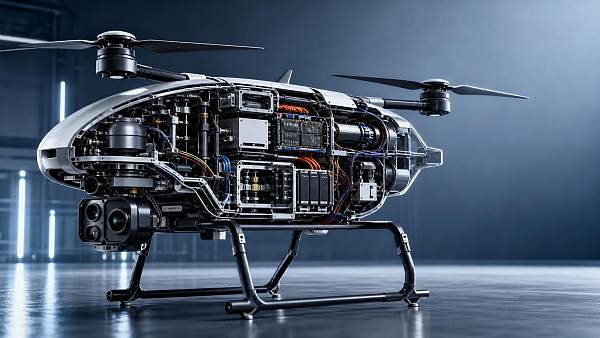
In a redundant autonomous flight system, the hard question is not whether parts fail. It is which failure paths can quietly combine into a hazardous state.
That distinction matters in technical evaluation, especially when architectures look robust on paper but behave differently under timing stress, degraded data, or abnormal transitions.
A modern redundant autonomous flight system often includes duplicated sensors, independent computing lanes, segregated power, and fallback control logic. Yet redundancy alone does not guarantee resilience.
What matters is fault containment, detection speed, recovery behavior, and the ability to prevent a local defect from becoming a fleet-level risk.
From recent certification discussions, the clearer signal is this: assess paths, not just parts. The most serious failures usually emerge through interaction, not isolated component loss.
Why Failure Paths Matter More Than Single Failures
A single failed sensor is rarely the decisive issue in a redundant autonomous flight system. The real concern is whether disagreement handling pushes the aircraft into confusion or delay.
Many evaluation teams still start with hardware counts. That is necessary, but incomplete. A triple-redundant design can still fail unsafely if voting logic is fragile.
The better approach is path-based analysis. Trace how faults propagate across sensing, estimation, guidance, control execution, power availability, and fallback engagement.
This also aligns with certification thinking under FAA and EASA expectations. Functional hazard assessment and system safety assessment both care about effect, escalation, and detectability.
In practical review work, the strongest systems are not those with the most channels. They are the ones that fail predictably, isolate faults cleanly, and degrade with control authority intact.
The Sensor Disagreement Path
Sensor disagreement is one of the first paths to examine in a redundant autonomous flight system. It often starts small and looks manageable until correlation assumptions break.
Air data, inertial measurement, GNSS, radar altimetry, and vision-based perception can diverge for different reasons. Noise is common, but bias drift is usually more dangerous.
When one lane slowly drifts, the estimator may continue accepting it. That can poison state estimation before threshold logic recognizes a hard conflict.
A strong evaluation should test four points:
- Whether fault detection catches bias, not only dropout.
- Whether channels share hidden dependencies, such as common timing sources.
- Whether the estimator can reconfigure without oscillation.
- Whether degraded mode keeps guidance stable during transition.
This is where many autonomous aviation concepts look mature in nominal operation yet remain exposed during edge-case data conflicts.
The Flight-Control Divergence Path
Control divergence inside a redundant autonomous flight system deserves immediate attention because it directly affects command integrity and aircraft stability.
Two computing lanes may receive the same inputs and still produce different outputs. Causes include numeric overflow, task scheduling latency, stale memory, or software version mismatch.
What makes this path serious is timing. Divergence may appear only during high-rate maneuvers, gust response, or mode transition near envelope limits.
Reviewers should look beyond output comparison. The critical question is whether disagreement resolution occurs before actuator commands create measurable attitude or trajectory separation.
This also means checking deterministic execution, synchronization strategy, and reset recovery. Restarting one lane can be safe, but only if reintegration logic is disciplined.
In a credible redundant autonomous flight system, split-brain behavior must be both improbable and well-contained when it does occur.
Power and Distribution as Escalation Multipliers
Power failures are often underestimated because they seem easy to quantify. In reality, distribution architecture determines whether power loss remains local or becomes systemic.
A redundant autonomous flight system can have separate sources but still share converters, buses, thermal zones, or protection logic. Those shared elements can collapse independence.
The important failure path is not simply source loss. It is source loss plus load shedding, plus timing delay, plus restart behavior in computing and actuation subsystems.
That chain matters even more in electric propulsion and eVTOL platforms, where propulsion, flight controls, and mission computers may compete for the same energy margin.
During evaluation, ask whether the architecture supports graceful degradation or abrupt reallocation. The difference can decide whether a transient becomes controllable or catastrophic.
Communication and Data-Bus Failure Paths
In any redundant autonomous flight system, communication integrity is often the quiet weak point. The buses may survive, yet the meaning of exchanged data can still degrade.
Dropped packets are only one issue. More subtle hazards include sequence errors, timestamp skew, corrupted health flags, and stale data accepted as current.
These faults are dangerous because they can mimic valid operation. A controller may act decisively on data that is internally consistent but operationally late.
A solid review should examine:
- End-to-end latency budgets under fault conditions.
- Partitioning between critical and noncritical traffic.
- Data freshness checks at the receiving function.
- Behavior when health-monitor messages disappear first.
This is especially relevant where autonomy stacks merge perception, navigation, and control over high-throughput internal networks.
Fallback Logic and Reversion Modes
Fallback logic is where many redundant autonomous flight system claims face their toughest test. A backup mode only helps if engagement criteria are timely and unambiguous.
Too much sensitivity causes nuisance reversion. Too little sensitivity allows unsafe persistence in a compromised primary mode. Both outcomes damage operational integrity.
The key issue is transition quality. Can the aircraft shift to direct law, limited autonomy, or remote supervision without a control upset or mission dead end?
For technical assessment, fallback logic should be judged on three dimensions: trigger validity, control continuity, and crew or operator comprehension where applicable.
This also affects certification readiness. Authorities will look closely at whether degraded states are well-defined, bounded, and validated by scenario-based evidence.
Common-Cause Failure Still Dominates
The most important warning in redundant autonomous flight system evaluation is simple: redundancy does little against common-cause failure.
Common software baselines, shared environmental exposure, identical manufacturing defects, and synchronized update pipelines can defeat multiple lanes at once.
This is why independence needs proof, not labels. Separate boxes do not create true separation if they depend on the same assumptions, tools, or hidden services.
In actual programs, the strongest signal is diversity where it matters most: sensing principles, processing paths, power routing, and fault-detection methods.
That does not always mean dissimilar hardware everywhere. It means reducing shared failure triggers in the functions that protect continued safe flight.
A Practical Evaluation Checklist
A useful review of a redundant autonomous flight system should stay concrete. The following table helps focus on failure paths that affect safety and certification outcomes.
This kind of structure keeps discussion tied to evidence. It also makes cross-platform comparison more disciplined, whether the platform is fixed-wing, rotorcraft, or UAM.
What Good Looks Like
A mature redundant autonomous flight system does not hide complexity. It makes fault behavior observable, bounded, and testable under realistic operating stress.
Good architectures show clean segregation, reliable state awareness, credible degraded modes, and evidence that timing faults were tested as seriously as hard failures.
Just as important, they connect engineering choices to certification logic. That bridge is essential when resilience claims must stand up to formal scrutiny.
For any technical review, start with the paths that combine silent faults, delayed detection, and unstable reversion. Those are the places where real risk usually lives.
If the redundant autonomous flight system can contain those paths with clear evidence, it is far closer to operational integrity than a design that merely counts duplicate components.
Article Categories
SYSTEM_ALERT_URGENT
Q3 SYMPOSIUM ON ORBITAL DYNAMICS
Registration for the Orbital Aerospace technical committee is now open. Node access required.
Recent Articles
![]() Oct 27, 2026FAA Certifies Boeing 737 MAX 10 After Years of DelaysFAA Certifies Boeing 737 MAX 10 After Years of Delays
Oct 27, 2026FAA Certifies Boeing 737 MAX 10 After Years of DelaysFAA Certifies Boeing 737 MAX 10 After Years of Delays Oct 27, 2026Can an intermodal connectivity platform reduce rail handoff delays?Can an intermodal connectivity platform reduce rail handoff delays?
![]() Oct 26, 2026Chery Unveils Global Smart Mobility Strategy Targeting Robotaxis and eVTOLsChery Unveils Global Smart Mobility Strategy Targeting Robotaxis and eVTOLs
Oct 26, 2026Chery Unveils Global Smart Mobility Strategy Targeting Robotaxis and eVTOLsChery Unveils Global Smart Mobility Strategy Targeting Robotaxis and eVTOLs Oct 26, 2026How to evaluate avionics for helicopters used in IFR operationsHow to evaluate avionics for helicopters used in IFR operations
![]() Oct 25, 2026Ukraine’s Defence Minister Says SpaceX Satellite Services Restored After Speed RestrictionsUkraine’s Defence Minister Says SpaceX Satellite Services Restored After Speed Restrictions
Oct 25, 2026Ukraine’s Defence Minister Says SpaceX Satellite Services Restored After Speed RestrictionsUkraine’s Defence Minister Says SpaceX Satellite Services Restored After Speed Restrictions Oct 25, 2026How satellite infrastructure for IoT affects sensor reporting delaysHow satellite infrastructure for IoT affects sensor reporting delays
![]() Oct 24, 2026China Successfully Launches Yaogan 50-03 SatelliteChina Successfully Launches Yaogan 50-03 Satellite
Oct 24, 2026China Successfully Launches Yaogan 50-03 SatelliteChina Successfully Launches Yaogan 50-03 Satellite Oct 24, 2026How gradients affect traction power needs in high-speed rolling stockHow gradients affect traction power needs in high-speed rolling stock
![]() Oct 23, 2026FAA Proposes Checks on Nearly 2,000 Boeing 737NGs Over Loss-of-Control RiskFAA Proposes Checks on Nearly 2,000 Boeing 737NGs Over Loss-of-Control Risk
Oct 23, 2026FAA Proposes Checks on Nearly 2,000 Boeing 737NGs Over Loss-of-Control RiskFAA Proposes Checks on Nearly 2,000 Boeing 737NGs Over Loss-of-Control Risk Oct 23, 2026How fuel choice affects specific impulse in liquid oxygen propulsionHow fuel choice affects specific impulse in liquid oxygen propulsion
![]() Oct 22, 2026QuantumScape Plans 100 MWh Solid-State Battery Line Targeting Aerospace and Other MarketsQuantumScape Plans 100 MWh Solid-State Battery Line Targeting Aerospace and Other Markets
Oct 22, 2026QuantumScape Plans 100 MWh Solid-State Battery Line Targeting Aerospace and Other MarketsQuantumScape Plans 100 MWh Solid-State Battery Line Targeting Aerospace and Other Markets Oct 22, 2026How tank size limits hydrogen aircraft range on regional flightsHow tank size limits hydrogen aircraft range on regional flights
![]() Oct 21, 2026FAA Certifies Boeing 737-10, Clearing Regulatory Hurdle for DeliveriesFAA Certifies Boeing 737-10, Clearing Regulatory Hurdle for Deliveries
Oct 21, 2026FAA Certifies Boeing 737-10, Clearing Regulatory Hurdle for DeliveriesFAA Certifies Boeing 737-10, Clearing Regulatory Hurdle for Deliveries Oct 21, 2026How are electric vertical takeoff aircraft certified in the US?How are electric vertical takeoff aircraft certified in the US?
![]() Oct 20, 2026Ohio Department of Transportation Releases Three-Year Advanced Air Mobility Action PlanOhio Department of Transportation Releases Three-Year Advanced Air Mobility Action Plan
Oct 20, 2026Ohio Department of Transportation Releases Three-Year Advanced Air Mobility Action PlanOhio Department of Transportation Releases Three-Year Advanced Air Mobility Action Plan Oct 20, 2026How does magnetic flux density in tesla affect maglev lift force?How does magnetic flux density in tesla affect maglev lift force?
![]() Oct 19, 2026ZeroAvia Completes Key Ground Tests of ZA600 Hydrogen Fuel Cell PowertrainZeroAvia Completes Key Ground Tests of ZA600 Hydrogen Fuel Cell Powertrain
Oct 19, 2026ZeroAvia Completes Key Ground Tests of ZA600 Hydrogen Fuel Cell PowertrainZeroAvia Completes Key Ground Tests of ZA600 Hydrogen Fuel Cell Powertrain Oct 19, 2026How spacecraft integration affects advanced propulsion costsHow spacecraft integration affects advanced propulsion costs
 Oct 18, 2026How chilldown prevents cavitation in cryogenic engine systemsHow chilldown prevents cavitation in cryogenic engine systems
 Oct 17, 2026How explainability affects algorithmic trust in AI flight systemsHow explainability affects algorithmic trust in AI flight systems
 Oct 16, 2026How to evaluate transportation technology for Middle East heatHow to evaluate transportation technology for Middle East heat
 Oct 15, 2026How common-cause failures defeat redundancy logic in European avionicsHow common-cause failures defeat redundancy logic in European avionics
 Oct 14, 2026How DO-160 applies to aerospace technology testing for avionicsHow DO-160 applies to aerospace technology testing for avionics
 Oct 13, 2026How fuel price volatility shapes commercial aviation cost trendsHow fuel price volatility shapes commercial aviation cost trends
 Oct 12, 2026How to qualify aerospace manufacturing components for traceabilityHow to qualify aerospace manufacturing components for traceability
 Oct 11, 2026Which certification hurdles are slowing hydrogen aviation in Europe?Which certification hurdles are slowing hydrogen aviation in Europe?
 Oct 10, 2026What evidence should a magnetic gap stability supplier provide?What evidence should a magnetic gap stability supplier provide?
 Oct 09, 2026Which ISO standards matter when qualifying industrial technology suppliers?Which ISO standards matter when qualifying industrial technology suppliers?
 Oct 08, 2026When does reusability actually lower launch vehicle costs?When does reusability actually lower launch vehicle costs?
 Oct 07, 2026Where to find reliable product knowledge resources in the Middle EastWhere to find reliable product knowledge resources in the Middle East
 Oct 06, 2026What drives high-speed rail systems cost per kilometer?What drives high-speed rail systems cost per kilometer?
 Oct 05, 2026When does hydrogen propulsion for UAV extend mission range enough to justify it?When does hydrogen propulsion for UAV extend mission range enough to justify it?
 Oct 04, 2026How rail systems integration reduces commissioning delaysHow rail systems integration reduces commissioning delays
 Oct 03, 2026How to evaluate an advanced propulsion manufacturer for hydrogen systemsHow to evaluate an advanced propulsion manufacturer for hydrogen systems
 Oct 02, 2026How to qualify aircraft components for OEM production approvalHow to qualify aircraft components for OEM production approval