Electrolyzer Components That Drive Efficiency and Maintenance Costs
Lead Author
Published
Views:
Why do electrolyzer components matter so much in system economics?
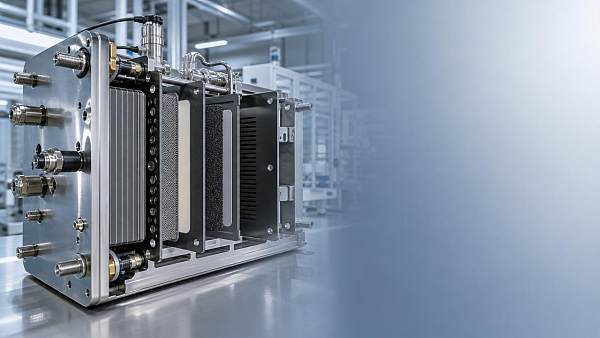
Hydrogen projects are often judged by stack efficiency first. In practice, maintenance burden can reshape the business case just as quickly.
That is why electrolyzer components deserve closer attention than a simple nameplate figure suggests. Small design choices can affect uptime, purity, service intervals, and replacement cost.
For mobility-focused industries, this matters even more. Aerospace, advanced rail, and zero-emission transport platforms depend on predictable energy infrastructure, not only theoretical efficiency.
Within the broader G-AIT perspective, the useful question is not just which system produces hydrogen. It is which component set supports certified, high-reliability, long-cycle operation.
When people search for electrolyzer components, they usually want a practical answer. Which parts drive output, which parts fail early, and which parts quietly increase service cost?
A good evaluation starts with the stack core, then moves outward to flow management, sealing, power interface, and maintainability. That sequence usually reveals the real ownership picture.
Which electrolyzer components have the biggest impact on efficiency?
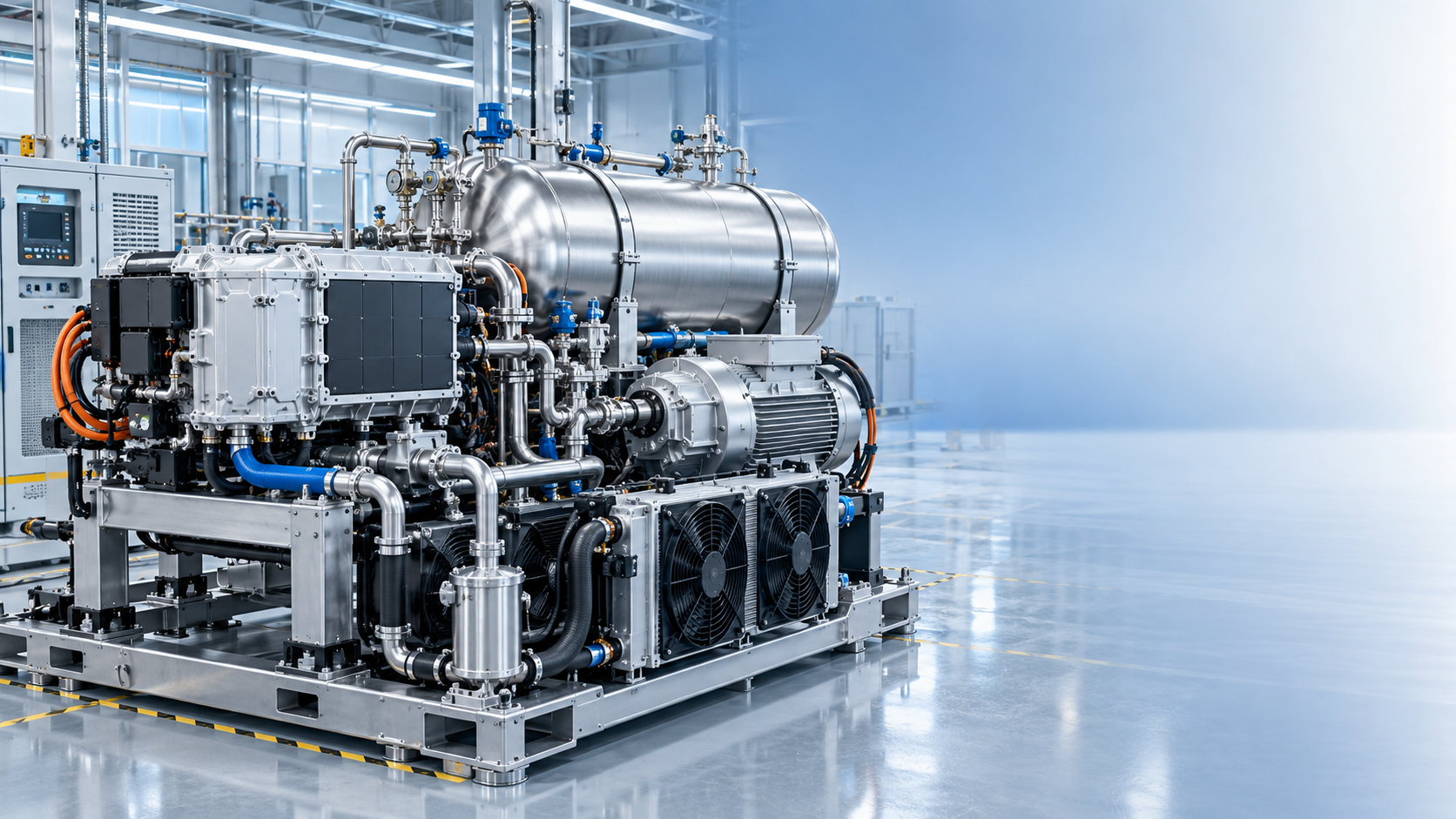
The short answer is the membrane, catalyst layer, bipolar plates, and current distribution path. These parts determine how effectively electricity becomes hydrogen rather than waste heat.
Membranes are central because they control ionic transport and gas separation. If conductivity drops or crossover rises, efficiency falls while safety concerns increase.
Catalysts also shape performance more than many buyers expect. A high-activity catalyst can lower required voltage, but durability under real cycling conditions matters just as much.
Bipolar plates influence current flow, thermal balance, and fluid movement. Poor channel design can create local hot spots, pressure loss, and uneven reaction zones.
Compression hardware is another overlooked factor. Uneven clamping pressure can reduce membrane life and create small efficiency penalties that become expensive at scale.
In actual operation, efficiency is rarely tied to one part alone. The best electrolyzer components work as an integrated system with stable conductivity, balanced cooling, and consistent gas removal.
- Membrane quality affects ionic resistance and gas purity.
- Catalyst loading influences voltage demand and degradation rate.
- Bipolar plate geometry shapes thermal and flow uniformity.
- Current collectors and contacts affect electrical losses.
What usually drives maintenance costs more than expected?
Maintenance costs often come from supporting electrolyzer components rather than the headline stack chemistry alone. Seals, coatings, filters, sensors, and water-quality control frequently decide service frequency.
Sealing systems are a common example. If gaskets harden, creep, or react with process conditions, leaks emerge long before the stack reaches its intended life.
Water management components also deserve scrutiny. Impurities can poison catalysts, foul channels, and accelerate membrane degradation, creating a chain of avoidable replacement events.
Corrosion-resistant coatings on bipolar plates or structural metals look like a minor specification detail. Yet when coatings fail, conductivity drops and contamination risk rises.
Instrumentation can quietly influence maintenance budgets too. Inaccurate pressure, temperature, or conductivity readings lead to poor operating windows and unnecessary troubleshooting.
This is especially relevant in high-dependability transport ecosystems. G-AIT-aligned infrastructure decisions tend to favor component traceability, failure-mode transparency, and serviceability over optimistic brochure lifetimes.
A quick comparison of where cost pressure usually appears
The table below helps separate efficiency-critical electrolyzer components from those that often dominate field maintenance and lifecycle budgeting.
How should electrolyzer components be compared across applications?
The right comparison depends on operating profile. A steady industrial load stresses components differently than a renewable-powered system with daily ramping and frequent start-stop cycles.
That difference matters for future mobility infrastructure. Aviation-adjacent fuel hubs, rail corridors, and remote logistics sites may all demand different stack behavior.
A membrane that performs well at stable temperature may lose value in a dynamic duty cycle. A catalyst with excellent lab efficiency may degrade faster under intermittent load.
More useful comparisons often include these questions: how does the stack respond to part-load operation, how sensitive is it to water variation, and how quickly can service be completed?
For advanced transportation environments, standards alignment also matters. Materials, pressure boundaries, and documentation practices should support broader safety and certification frameworks where needed.
- Compare rated efficiency and real operating efficiency separately.
- Review dynamic response, not just steady-state performance.
- Check whether key electrolyzer components are modular and accessible.
- Ask for degradation data by hours, starts, and load swings.
What mistakes are common when selecting electrolyzer components?
One frequent mistake is treating all electrolyzer components as commodity items. In reality, material compatibility, manufacturing tolerance, and coating quality can create very different outcomes.
Another mistake is overvaluing peak efficiency while ignoring service logistics. If replacement parts are difficult to source or require long shutdowns, lifecycle performance suffers.
Some evaluations also miss the interaction between components. For example, a stronger catalyst does not solve poor water purity or uneven compression across the stack.
There is also a documentation gap in some projects. Buyers may receive stack output claims but not enough detail on membrane chemistry, seal material, or plate coating validation.
In practical terms, the safer path is to judge electrolyzer components through a combined lens: efficiency, degradation behavior, maintenance access, and evidence quality.
A simple checkpoint list before final comparison
- Confirm membrane life assumptions under the expected duty cycle.
- Review catalyst material exposure to contaminants and shutdown events.
- Check bipolar plate corrosion data, not just substrate type.
- Verify gasket replacement intervals and leak detection approach.
- Map spare parts lead time against planned uptime targets.
What is the most practical next step when evaluating long-term value?
A practical review starts by separating stack efficiency claims from service reality. Both matter, but they should never be blended into one simplified performance number.
It helps to build a component-level checklist for membranes, catalysts, bipolar plates, seals, coatings, and water treatment. That creates a clearer basis for comparison.
Then compare electrolyzer components against the intended operating environment. Intermittent renewable supply, high-purity hydrogen demand, or harsh site conditions can change the ranking quickly.
From a G-AIT-style benchmarking perspective, the stronger choice is usually the one with transparent degradation data, maintainable architecture, and evidence aligned with international engineering discipline.
In other words, the best electrolyzer components are not only efficient on day one. They remain stable, inspectable, and economical over the operating life that actually matters.
The next step is straightforward: define operating conditions, compare component data beyond headline efficiency, and test maintenance assumptions before final selection.
Article Categories
SYSTEM_ALERT_URGENT
Q3 SYMPOSIUM ON ORBITAL DYNAMICS
Registration for the Orbital Aerospace technical committee is now open. Node access required.
Taglist:
Recent Articles
![]() Oct 27, 2026FAA Certifies Boeing 737 MAX 10 After Years of DelaysFAA Certifies Boeing 737 MAX 10 After Years of Delays
Oct 27, 2026FAA Certifies Boeing 737 MAX 10 After Years of DelaysFAA Certifies Boeing 737 MAX 10 After Years of Delays Oct 27, 2026Can an intermodal connectivity platform reduce rail handoff delays?Can an intermodal connectivity platform reduce rail handoff delays?
![]() Oct 26, 2026Chery Unveils Global Smart Mobility Strategy Targeting Robotaxis and eVTOLsChery Unveils Global Smart Mobility Strategy Targeting Robotaxis and eVTOLs
Oct 26, 2026Chery Unveils Global Smart Mobility Strategy Targeting Robotaxis and eVTOLsChery Unveils Global Smart Mobility Strategy Targeting Robotaxis and eVTOLs Oct 26, 2026How to evaluate avionics for helicopters used in IFR operationsHow to evaluate avionics for helicopters used in IFR operations
![]() Oct 25, 2026Ukraine’s Defence Minister Says SpaceX Satellite Services Restored After Speed RestrictionsUkraine’s Defence Minister Says SpaceX Satellite Services Restored After Speed Restrictions
Oct 25, 2026Ukraine’s Defence Minister Says SpaceX Satellite Services Restored After Speed RestrictionsUkraine’s Defence Minister Says SpaceX Satellite Services Restored After Speed Restrictions Oct 25, 2026How satellite infrastructure for IoT affects sensor reporting delaysHow satellite infrastructure for IoT affects sensor reporting delays
![]() Oct 24, 2026China Successfully Launches Yaogan 50-03 SatelliteChina Successfully Launches Yaogan 50-03 Satellite
Oct 24, 2026China Successfully Launches Yaogan 50-03 SatelliteChina Successfully Launches Yaogan 50-03 Satellite Oct 24, 2026How gradients affect traction power needs in high-speed rolling stockHow gradients affect traction power needs in high-speed rolling stock
![]() Oct 23, 2026FAA Proposes Checks on Nearly 2,000 Boeing 737NGs Over Loss-of-Control RiskFAA Proposes Checks on Nearly 2,000 Boeing 737NGs Over Loss-of-Control Risk
Oct 23, 2026FAA Proposes Checks on Nearly 2,000 Boeing 737NGs Over Loss-of-Control RiskFAA Proposes Checks on Nearly 2,000 Boeing 737NGs Over Loss-of-Control Risk Oct 23, 2026How fuel choice affects specific impulse in liquid oxygen propulsionHow fuel choice affects specific impulse in liquid oxygen propulsion
![]() Oct 22, 2026QuantumScape Plans 100 MWh Solid-State Battery Line Targeting Aerospace and Other MarketsQuantumScape Plans 100 MWh Solid-State Battery Line Targeting Aerospace and Other Markets
Oct 22, 2026QuantumScape Plans 100 MWh Solid-State Battery Line Targeting Aerospace and Other MarketsQuantumScape Plans 100 MWh Solid-State Battery Line Targeting Aerospace and Other Markets Oct 22, 2026How tank size limits hydrogen aircraft range on regional flightsHow tank size limits hydrogen aircraft range on regional flights
![]() Oct 21, 2026FAA Certifies Boeing 737-10, Clearing Regulatory Hurdle for DeliveriesFAA Certifies Boeing 737-10, Clearing Regulatory Hurdle for Deliveries
Oct 21, 2026FAA Certifies Boeing 737-10, Clearing Regulatory Hurdle for DeliveriesFAA Certifies Boeing 737-10, Clearing Regulatory Hurdle for Deliveries Oct 21, 2026How are electric vertical takeoff aircraft certified in the US?How are electric vertical takeoff aircraft certified in the US?
![]() Oct 20, 2026Ohio Department of Transportation Releases Three-Year Advanced Air Mobility Action PlanOhio Department of Transportation Releases Three-Year Advanced Air Mobility Action Plan
Oct 20, 2026Ohio Department of Transportation Releases Three-Year Advanced Air Mobility Action PlanOhio Department of Transportation Releases Three-Year Advanced Air Mobility Action Plan Oct 20, 2026How does magnetic flux density in tesla affect maglev lift force?How does magnetic flux density in tesla affect maglev lift force?
![]() Oct 19, 2026ZeroAvia Completes Key Ground Tests of ZA600 Hydrogen Fuel Cell PowertrainZeroAvia Completes Key Ground Tests of ZA600 Hydrogen Fuel Cell Powertrain
Oct 19, 2026ZeroAvia Completes Key Ground Tests of ZA600 Hydrogen Fuel Cell PowertrainZeroAvia Completes Key Ground Tests of ZA600 Hydrogen Fuel Cell Powertrain Oct 19, 2026How spacecraft integration affects advanced propulsion costsHow spacecraft integration affects advanced propulsion costs
 Oct 18, 2026How chilldown prevents cavitation in cryogenic engine systemsHow chilldown prevents cavitation in cryogenic engine systems
 Oct 17, 2026How explainability affects algorithmic trust in AI flight systemsHow explainability affects algorithmic trust in AI flight systems
 Oct 16, 2026How to evaluate transportation technology for Middle East heatHow to evaluate transportation technology for Middle East heat
 Oct 15, 2026How common-cause failures defeat redundancy logic in European avionicsHow common-cause failures defeat redundancy logic in European avionics
 Oct 14, 2026How DO-160 applies to aerospace technology testing for avionicsHow DO-160 applies to aerospace technology testing for avionics
 Oct 13, 2026How fuel price volatility shapes commercial aviation cost trendsHow fuel price volatility shapes commercial aviation cost trends
 Oct 12, 2026How to qualify aerospace manufacturing components for traceabilityHow to qualify aerospace manufacturing components for traceability
 Oct 11, 2026Which certification hurdles are slowing hydrogen aviation in Europe?Which certification hurdles are slowing hydrogen aviation in Europe?
 Oct 10, 2026What evidence should a magnetic gap stability supplier provide?What evidence should a magnetic gap stability supplier provide?
 Oct 09, 2026Which ISO standards matter when qualifying industrial technology suppliers?Which ISO standards matter when qualifying industrial technology suppliers?
 Oct 08, 2026When does reusability actually lower launch vehicle costs?When does reusability actually lower launch vehicle costs?
 Oct 07, 2026Where to find reliable product knowledge resources in the Middle EastWhere to find reliable product knowledge resources in the Middle East
 Oct 06, 2026What drives high-speed rail systems cost per kilometer?What drives high-speed rail systems cost per kilometer?
 Oct 05, 2026When does hydrogen propulsion for UAV extend mission range enough to justify it?When does hydrogen propulsion for UAV extend mission range enough to justify it?
 Oct 04, 2026How rail systems integration reduces commissioning delaysHow rail systems integration reduces commissioning delays
 Oct 03, 2026How to evaluate an advanced propulsion manufacturer for hydrogen systemsHow to evaluate an advanced propulsion manufacturer for hydrogen systems
 Oct 02, 2026How to qualify aircraft components for OEM production approvalHow to qualify aircraft components for OEM production approval