Zero-Emission Aviation Tech: What Changes in 2026
Lead Author
Published
Views:
Zero-emission flight is moving from ambitious roadmap to measurable engineering reality, and 2026 may become a decisive year for certification, infrastructure, and fleet strategy. For researchers tracking Transportation Technology for zero-emission aviation, the key changes will not be limited to batteries or hydrogen propulsion; they will also involve airframe design, safety validation, airport energy systems, and regulatory alignment. This article examines the technical and market signals shaping the next phase of sustainable aviation.
What Changes in 2026 for Transportation Technology for Zero-Emission Aviation?

The year 2026 matters because many early demonstrators will face harder questions: can they certify, scale, refuel, maintain, and operate reliably?
For information researchers, the shift is from concept comparison to evidence comparison. Power density, thermal control, airport readiness, and safety cases become procurement-level issues.
- Certification pathways will become more specific for hydrogen fuel systems, high-voltage propulsion, cryogenic storage, and emergency response procedures.
- Airports will need energy planning models that combine grid capacity, hydrogen logistics, fire safety, and turnaround time constraints.
- Fleet planners will compare zero-emission aircraft not only with kerosene aircraft, but also with high-speed rail, eVTOL links, and hybrid solutions.
- Investors and engineering teams will expect clearer technology readiness signals before committing to route trials or infrastructure pilots.
G-AIT evaluates these changes through advanced aviation, UAM, rail, space infrastructure, and extreme-environment logistics perspectives, avoiding narrow propulsion-only conclusions.
Which Propulsion Paths Are Becoming More Decision-Relevant?
Transportation Technology for zero-emission aviation includes several propulsion routes. Each has different implications for range, payload, safety validation, and infrastructure investment.
The following comparison helps researchers separate near-term operational fit from long-term strategic potential.
No single route dominates every scenario. The practical question is whether the aircraft, airport, route network, and certification pathway mature together.
Why propulsion selection cannot be isolated
A propulsion system changes the aircraft center of gravity, emergency procedures, ground equipment, maintenance training, and route economics.
This is why Transportation Technology for zero-emission aviation must be assessed as an operating system, not as a component upgrade.
How Should Researchers Assess Airframe, Energy, and Airport Readiness?
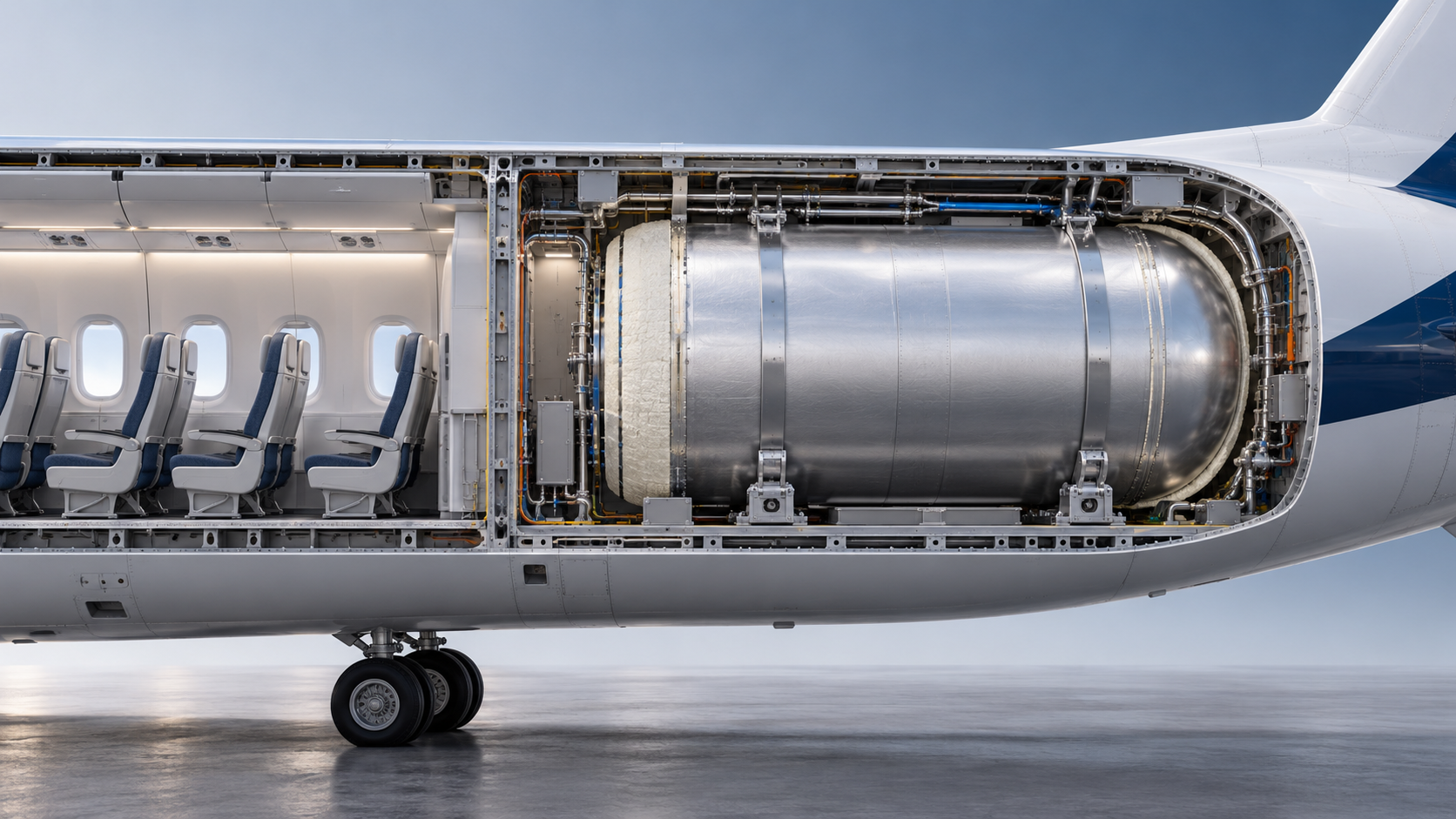
In 2026, aircraft design and airport infrastructure will become inseparable. Hydrogen tanks, battery packs, and distributed motors all influence layout decisions.
The most useful research frameworks connect technical parameters with operational outcomes, especially for procurement, funding, and policy planning.
A strong readiness review should expose dependencies early. A promising aircraft can still fail commercially if grid upgrades or hydrogen logistics lag.
Scenario fit: regional aviation, UAM, and intermodal corridors
Regional aviation may adopt battery or fuel-cell aircraft first where distances, weather reserves, and airport pairs are manageable.
Urban air mobility will test high-frequency electric operations, but vertiport energy demand and noise acceptance remain critical research variables.
On dense corridors, zero-emission aviation must be compared with high-speed rail and maglev systems, especially when public investment is limited.
Certification and Safety: What Becomes Harder to Ignore?
Certification is where many Transportation Technology for zero-emission aviation claims become testable. Regulators need evidence, not aspirational roadmaps.
FAA and EASA frameworks are evolving around new propulsion architectures, while operators still must satisfy established airworthiness and operational safety principles.
This compliance view prevents a common mistake: treating certification as a final paperwork stage rather than a design driver from day one.
Why benchmarking matters
G-AIT benchmarks propulsion, airframe, rail, UAM, and logistics systems against international standards such as FAA, EASA, ISO, and UIC references.
That multidisciplinary lens is valuable because zero-emission aviation competes for capital with other advanced mobility systems, not only with legacy aircraft.
Procurement and Research Checklist: What Should Be Verified Before Shortlisting?
Information researchers often struggle with fragmented claims. A structured checklist reduces bias when comparing aircraft developers, infrastructure suppliers, and technology partners.
- Confirm the mission profile first, including route distance, reserve requirement, payload, temperature range, turnaround target, and diversion strategy.
- Request evidence of technology readiness, including ground tests, flight tests, failure-mode analysis, and independent validation where available.
- Compare aircraft economics with airport infrastructure cost, because cheap energy per flight may still require expensive grid or hydrogen upgrades.
- Map certification assumptions against the intended market, since FAA, EASA, and local authorities may request different evidence packages.
- Evaluate supplier continuity, maintenance training, spare module availability, and software update governance before pilot deployment.
For Transportation Technology for zero-emission aviation, shortlist quality depends on asking system-level questions earlier than traditional aircraft procurement cycles.
Cost variables that can change the business case
Budget pressure is not limited to aircraft acquisition. Energy infrastructure, downtime, certification support, and staff retraining may drive project economics.
- Battery-electric operations may reduce mechanical complexity, but fast charging infrastructure and battery lifecycle planning require careful modeling.
- Hydrogen fuel cell systems may support longer missions, but hydrogen production, delivery, storage, and purity control affect operating cost.
- Hybrid systems can reduce transition risk, yet they may not satisfy strict zero-emission operation targets on all routes.
Common Misconceptions and FAQ About Transportation Technology for Zero-Emission Aviation
Search interest is rising, but several assumptions still distort decision-making. The answers below focus on practical research and procurement judgment.
Is battery-electric aviation the fastest path to zero-emission flight?
It may be fastest for short missions where range and payload limits are acceptable. Training aircraft, short regional routes, and eVTOL networks are likely candidates.
However, battery mass, charging time, and reserve requirements make larger commercial routes more difficult without major improvements in cell performance.
Does hydrogen solve the range problem completely?
Hydrogen has strong gravimetric energy advantages, but storage volume, cryogenic handling, safety zones, and fuel availability complicate implementation.
Researchers should examine complete hydrogen pathways, including production source, airport delivery, onboard integration, and emergency procedures.
What should be prioritized when comparing suppliers?
Prioritize validated performance, certification strategy, maintainability, infrastructure compatibility, and route-specific economics over headline range claims.
For Transportation Technology for zero-emission aviation, credible partners should explain assumptions clearly and provide traceable technical evidence.
Will zero-emission aviation replace high-speed rail?
Not broadly. High-speed rail and maglev systems may remain more efficient on dense land corridors with high passenger volumes and stable demand.
Zero-emission aviation is more compelling for island routes, remote regions, mountainous areas, and networks where rail construction is impractical.
Why Choose G-AIT for Zero-Emission Aviation Research and Benchmarking?
G-AIT supports researchers, R&D directors, engineering leaders, and strategic planners who need disciplined comparison across advanced mobility technologies.
Our work connects propulsion physics, next-generation airframes, airport systems, UAM flight controls, high-speed rail alternatives, and certification frameworks.
- Consult us for parameter confirmation, including range assumptions, energy storage constraints, turnaround requirements, and thermal management risks.
- Request support for technology shortlisting, supplier comparison, route feasibility analysis, and infrastructure readiness assessment.
- Discuss certification requirements, including FAA, EASA, ISO-oriented documentation logic, safety cases, and validation milestones.
- Engage G-AIT for customized benchmarking when Transportation Technology for zero-emission aviation must be compared with rail, maglev, or UAM alternatives.
If your team is evaluating fleet strategy, research direction, delivery timelines, or investment exposure, G-AIT can help convert fragmented information into a defensible decision framework.
Contact G-AIT to discuss technical assumptions, procurement criteria, certification questions, customized research scope, and the next practical step for zero-emission mobility planning.
Article Categories
SYSTEM_ALERT_URGENT
Q3 SYMPOSIUM ON ORBITAL DYNAMICS
Registration for the Orbital Aerospace technical committee is now open. Node access required.
Recent Articles
![]() Oct 27, 2026FAA Certifies Boeing 737 MAX 10 After Years of DelaysFAA Certifies Boeing 737 MAX 10 After Years of Delays
Oct 27, 2026FAA Certifies Boeing 737 MAX 10 After Years of DelaysFAA Certifies Boeing 737 MAX 10 After Years of Delays Oct 27, 2026Can an intermodal connectivity platform reduce rail handoff delays?Can an intermodal connectivity platform reduce rail handoff delays?
![]() Oct 26, 2026Chery Unveils Global Smart Mobility Strategy Targeting Robotaxis and eVTOLsChery Unveils Global Smart Mobility Strategy Targeting Robotaxis and eVTOLs
Oct 26, 2026Chery Unveils Global Smart Mobility Strategy Targeting Robotaxis and eVTOLsChery Unveils Global Smart Mobility Strategy Targeting Robotaxis and eVTOLs Oct 26, 2026How to evaluate avionics for helicopters used in IFR operationsHow to evaluate avionics for helicopters used in IFR operations
![]() Oct 25, 2026Ukraine’s Defence Minister Says SpaceX Satellite Services Restored After Speed RestrictionsUkraine’s Defence Minister Says SpaceX Satellite Services Restored After Speed Restrictions
Oct 25, 2026Ukraine’s Defence Minister Says SpaceX Satellite Services Restored After Speed RestrictionsUkraine’s Defence Minister Says SpaceX Satellite Services Restored After Speed Restrictions Oct 25, 2026How satellite infrastructure for IoT affects sensor reporting delaysHow satellite infrastructure for IoT affects sensor reporting delays
![]() Oct 24, 2026China Successfully Launches Yaogan 50-03 SatelliteChina Successfully Launches Yaogan 50-03 Satellite
Oct 24, 2026China Successfully Launches Yaogan 50-03 SatelliteChina Successfully Launches Yaogan 50-03 Satellite Oct 24, 2026How gradients affect traction power needs in high-speed rolling stockHow gradients affect traction power needs in high-speed rolling stock
![]() Oct 23, 2026FAA Proposes Checks on Nearly 2,000 Boeing 737NGs Over Loss-of-Control RiskFAA Proposes Checks on Nearly 2,000 Boeing 737NGs Over Loss-of-Control Risk
Oct 23, 2026FAA Proposes Checks on Nearly 2,000 Boeing 737NGs Over Loss-of-Control RiskFAA Proposes Checks on Nearly 2,000 Boeing 737NGs Over Loss-of-Control Risk Oct 23, 2026How fuel choice affects specific impulse in liquid oxygen propulsionHow fuel choice affects specific impulse in liquid oxygen propulsion
![]() Oct 22, 2026QuantumScape Plans 100 MWh Solid-State Battery Line Targeting Aerospace and Other MarketsQuantumScape Plans 100 MWh Solid-State Battery Line Targeting Aerospace and Other Markets
Oct 22, 2026QuantumScape Plans 100 MWh Solid-State Battery Line Targeting Aerospace and Other MarketsQuantumScape Plans 100 MWh Solid-State Battery Line Targeting Aerospace and Other Markets Oct 22, 2026How tank size limits hydrogen aircraft range on regional flightsHow tank size limits hydrogen aircraft range on regional flights
![]() Oct 21, 2026FAA Certifies Boeing 737-10, Clearing Regulatory Hurdle for DeliveriesFAA Certifies Boeing 737-10, Clearing Regulatory Hurdle for Deliveries
Oct 21, 2026FAA Certifies Boeing 737-10, Clearing Regulatory Hurdle for DeliveriesFAA Certifies Boeing 737-10, Clearing Regulatory Hurdle for Deliveries Oct 21, 2026How are electric vertical takeoff aircraft certified in the US?How are electric vertical takeoff aircraft certified in the US?
![]() Oct 20, 2026Ohio Department of Transportation Releases Three-Year Advanced Air Mobility Action PlanOhio Department of Transportation Releases Three-Year Advanced Air Mobility Action Plan
Oct 20, 2026Ohio Department of Transportation Releases Three-Year Advanced Air Mobility Action PlanOhio Department of Transportation Releases Three-Year Advanced Air Mobility Action Plan Oct 20, 2026How does magnetic flux density in tesla affect maglev lift force?How does magnetic flux density in tesla affect maglev lift force?
![]() Oct 19, 2026ZeroAvia Completes Key Ground Tests of ZA600 Hydrogen Fuel Cell PowertrainZeroAvia Completes Key Ground Tests of ZA600 Hydrogen Fuel Cell Powertrain
Oct 19, 2026ZeroAvia Completes Key Ground Tests of ZA600 Hydrogen Fuel Cell PowertrainZeroAvia Completes Key Ground Tests of ZA600 Hydrogen Fuel Cell Powertrain Oct 19, 2026How spacecraft integration affects advanced propulsion costsHow spacecraft integration affects advanced propulsion costs
 Oct 18, 2026How chilldown prevents cavitation in cryogenic engine systemsHow chilldown prevents cavitation in cryogenic engine systems
 Oct 17, 2026How explainability affects algorithmic trust in AI flight systemsHow explainability affects algorithmic trust in AI flight systems
 Oct 16, 2026How to evaluate transportation technology for Middle East heatHow to evaluate transportation technology for Middle East heat
 Oct 15, 2026How common-cause failures defeat redundancy logic in European avionicsHow common-cause failures defeat redundancy logic in European avionics
 Oct 14, 2026How DO-160 applies to aerospace technology testing for avionicsHow DO-160 applies to aerospace technology testing for avionics
 Oct 13, 2026How fuel price volatility shapes commercial aviation cost trendsHow fuel price volatility shapes commercial aviation cost trends
 Oct 12, 2026How to qualify aerospace manufacturing components for traceabilityHow to qualify aerospace manufacturing components for traceability
 Oct 11, 2026Which certification hurdles are slowing hydrogen aviation in Europe?Which certification hurdles are slowing hydrogen aviation in Europe?
 Oct 10, 2026What evidence should a magnetic gap stability supplier provide?What evidence should a magnetic gap stability supplier provide?
 Oct 09, 2026Which ISO standards matter when qualifying industrial technology suppliers?Which ISO standards matter when qualifying industrial technology suppliers?
 Oct 08, 2026When does reusability actually lower launch vehicle costs?When does reusability actually lower launch vehicle costs?
 Oct 07, 2026Where to find reliable product knowledge resources in the Middle EastWhere to find reliable product knowledge resources in the Middle East
 Oct 06, 2026What drives high-speed rail systems cost per kilometer?What drives high-speed rail systems cost per kilometer?
 Oct 05, 2026When does hydrogen propulsion for UAV extend mission range enough to justify it?When does hydrogen propulsion for UAV extend mission range enough to justify it?
 Oct 04, 2026How rail systems integration reduces commissioning delaysHow rail systems integration reduces commissioning delays
 Oct 03, 2026How to evaluate an advanced propulsion manufacturer for hydrogen systemsHow to evaluate an advanced propulsion manufacturer for hydrogen systems
 Oct 02, 2026How to qualify aircraft components for OEM production approvalHow to qualify aircraft components for OEM production approval