Emergency Evacuation Speed Benchmarks for Safer Rail Design
Lead Author
Published
Views:
For quality control and safety management teams in rail engineering, understanding emergency evacuation speed benchmarks is essential to reducing risk and improving design resilience.
As rail systems become faster, smarter, and more autonomous, evacuation performance must match strict safety expectations, operational realities, and international standards.
This article explains how emergency evacuation speed data supports safer rail design, stronger compliance, and more confident technical decisions across advanced transportation programs.
Emergency evacuation speed is becoming a leading rail safety benchmark
Rail design has shifted from static compliance toward dynamic performance measurement.
In that shift, emergency evacuation speed has become a practical benchmark, not just a test scenario.
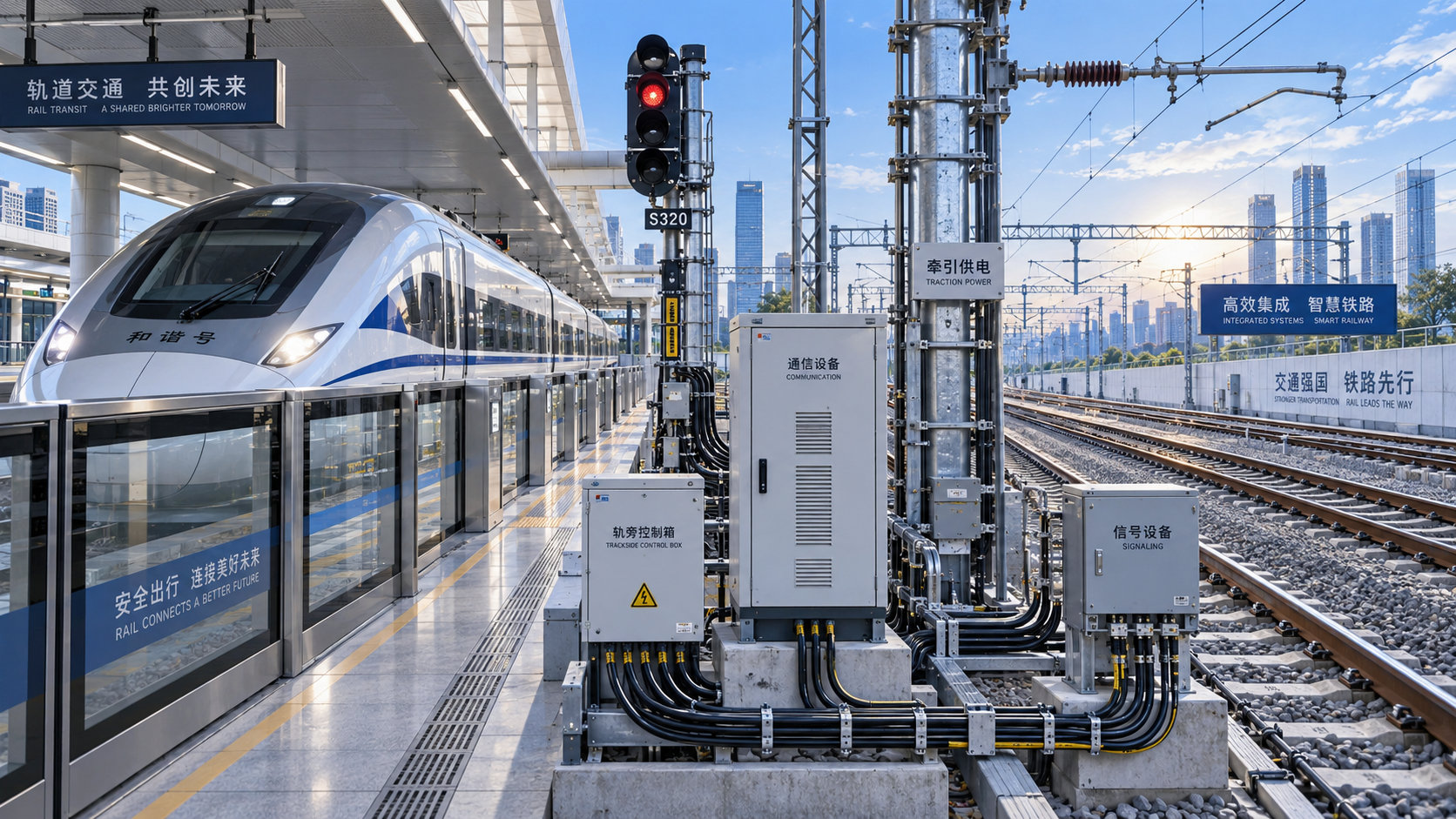
High-speed rail, metro upgrades, and autonomous train concepts all depend on rapid passenger movement under stress.
The benchmark matters because evacuation delay can quickly amplify smoke exposure, crowd pressure, and trackside hazards.
It also affects platform geometry, door configuration, aisle width, and emergency signage placement.
For advanced mobility institutions such as G-AIT, benchmark data links system performance with certification readiness.
That connection is increasingly valuable where rail projects must satisfy UIC, ISO, and national fire safety expectations.
Current trend signals show rising scrutiny of emergency evacuation speed
Several trend signals show why emergency evacuation speed is moving higher on engineering agendas.
First, trainsets are carrying more passengers per unit length, increasing congestion near doors and vestibules.
Second, lightweight interior designs may improve efficiency while unintentionally changing circulation behavior during emergencies.
Third, cross-border rail programs face tighter evidence requirements for evacuation validation, simulation fidelity, and human factors analysis.
Fourth, digital twins now allow evacuation scenarios to be tested earlier, making benchmark gaps easier to detect.
Finally, public expectations have changed.
Operators and regulators increasingly expect measurable evacuation performance, not broad safety claims.
Why this trend is accelerating across advanced rail programs
Benchmark quality depends on realistic inputs, not speed alone
A useful emergency evacuation speed benchmark is not only about meters per second.
It must reflect actual passenger behavior, train architecture, and environmental constraints.
Benchmarking should combine physical tests, simulation, and scenario-based assumptions.
If one element is weak, the benchmark becomes misleading.
Inputs that shape credible emergency evacuation speed analysis
- Door opening width, count, and opening reliability under fault conditions
- Aisle obstruction from luggage, seats, partitions, and equipment housings
- Passenger distribution across cars at peak, off-peak, and disrupted operations
- Accessibility requirements for reduced mobility, elderly, and injured passengers
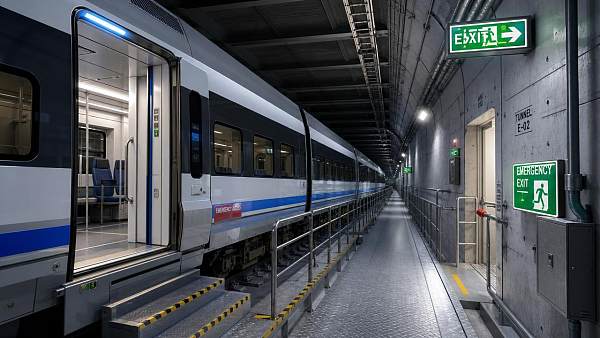
- Tunnel walkways, platform edge alignment, and vertical egress complexity
- Smoke, heat, lighting loss, and communication system degradation
These variables explain why nominal evacuation rates rarely match full-system evacuation performance.
They also show why benchmark comparisons must be normalized across conditions.
Emergency evacuation speed now influences more rail design decisions
The impact of emergency evacuation speed reaches beyond emergency procedure manuals.
It shapes how rolling stock and infrastructure are designed from the beginning.
A slow benchmark may indicate a need for wider doors, revised seating layouts, or fewer pinch points.
It may also justify changes to platform access, tunnel spacing, or train-to-ground evacuation hardware.
Key business and engineering areas affected
- Concept design: supports safer carbody and interior architecture choices
- Verification planning: improves test scope and simulation credibility
- Compliance strategy: strengthens evidence packages for approval bodies
- Operations planning: informs drills, staffing logic, and emergency messaging
- Lifecycle upgrades: reveals where retrofit investments improve risk reduction
This is especially relevant in integrated mobility portfolios that include high-speed rail, maglev, and automated transit.
Shared benchmark methods can improve consistency across diverse vehicle programs.
What deserves closer attention when setting emergency evacuation speed targets
Setting a target for emergency evacuation speed requires balance.
Targets that are too generic may satisfy documentation but fail operationally.
Targets that are too aggressive may create cost, complexity, or validation burdens without proportional safety gain.
Priority checkpoints for stronger benchmark definition
- Define the scenario clearly, including fire source, train position, and system availability.
- Separate door discharge speed from total evacuation completion time.
- Include vulnerable passenger profiles in every benchmark set.
- Test degraded conditions, not only ideal operating environments.
- Compare simulation outputs with live drills or validated historical references.
- Document assumptions so future redesigns keep benchmark continuity.
These checkpoints help transform emergency evacuation speed from a report metric into a design control parameter.
Practical judgment improves when benchmark data is organized for decisions
Benchmarking becomes valuable when it guides action.
Decision-ready data should show where evacuation time is lost and which design changes recover performance fastest.
The next step is to integrate emergency evacuation speed into early design gates
Safer rail design increasingly depends on measurable human movement performance.
Emergency evacuation speed is one of the clearest indicators of whether a system is resilient under real pressure.
The strongest programs treat it as an early-stage engineering input, a mid-stage validation metric, and a late-stage compliance proof.
That approach reduces redesign risk and improves safety confidence across the full asset lifecycle.
A practical next step is to review existing rail platforms, train interiors, and simulation assumptions against current emergency evacuation speed benchmarks.
Where gaps appear, prioritize the design variables that influence flow rate, hesitation time, and accessible egress most directly.
In advanced transportation strategy, faster evacuation is not only a safety goal.
It is a design intelligence advantage.
Article Categories
SYSTEM_ALERT_URGENT
Q3 SYMPOSIUM ON ORBITAL DYNAMICS
Registration for the Orbital Aerospace technical committee is now open. Node access required.
Recent Articles
![]() Oct 27, 2026FAA Certifies Boeing 737 MAX 10 After Years of DelaysFAA Certifies Boeing 737 MAX 10 After Years of Delays
Oct 27, 2026FAA Certifies Boeing 737 MAX 10 After Years of DelaysFAA Certifies Boeing 737 MAX 10 After Years of Delays Oct 27, 2026Can an intermodal connectivity platform reduce rail handoff delays?Can an intermodal connectivity platform reduce rail handoff delays?
![]() Oct 26, 2026Chery Unveils Global Smart Mobility Strategy Targeting Robotaxis and eVTOLsChery Unveils Global Smart Mobility Strategy Targeting Robotaxis and eVTOLs
Oct 26, 2026Chery Unveils Global Smart Mobility Strategy Targeting Robotaxis and eVTOLsChery Unveils Global Smart Mobility Strategy Targeting Robotaxis and eVTOLs Oct 26, 2026How to evaluate avionics for helicopters used in IFR operationsHow to evaluate avionics for helicopters used in IFR operations
![]() Oct 25, 2026Ukraine’s Defence Minister Says SpaceX Satellite Services Restored After Speed RestrictionsUkraine’s Defence Minister Says SpaceX Satellite Services Restored After Speed Restrictions
Oct 25, 2026Ukraine’s Defence Minister Says SpaceX Satellite Services Restored After Speed RestrictionsUkraine’s Defence Minister Says SpaceX Satellite Services Restored After Speed Restrictions Oct 25, 2026How satellite infrastructure for IoT affects sensor reporting delaysHow satellite infrastructure for IoT affects sensor reporting delays
![]() Oct 24, 2026China Successfully Launches Yaogan 50-03 SatelliteChina Successfully Launches Yaogan 50-03 Satellite
Oct 24, 2026China Successfully Launches Yaogan 50-03 SatelliteChina Successfully Launches Yaogan 50-03 Satellite Oct 24, 2026How gradients affect traction power needs in high-speed rolling stockHow gradients affect traction power needs in high-speed rolling stock
![]() Oct 23, 2026FAA Proposes Checks on Nearly 2,000 Boeing 737NGs Over Loss-of-Control RiskFAA Proposes Checks on Nearly 2,000 Boeing 737NGs Over Loss-of-Control Risk
Oct 23, 2026FAA Proposes Checks on Nearly 2,000 Boeing 737NGs Over Loss-of-Control RiskFAA Proposes Checks on Nearly 2,000 Boeing 737NGs Over Loss-of-Control Risk Oct 23, 2026How fuel choice affects specific impulse in liquid oxygen propulsionHow fuel choice affects specific impulse in liquid oxygen propulsion
![]() Oct 22, 2026QuantumScape Plans 100 MWh Solid-State Battery Line Targeting Aerospace and Other MarketsQuantumScape Plans 100 MWh Solid-State Battery Line Targeting Aerospace and Other Markets
Oct 22, 2026QuantumScape Plans 100 MWh Solid-State Battery Line Targeting Aerospace and Other MarketsQuantumScape Plans 100 MWh Solid-State Battery Line Targeting Aerospace and Other Markets Oct 22, 2026How tank size limits hydrogen aircraft range on regional flightsHow tank size limits hydrogen aircraft range on regional flights
![]() Oct 21, 2026FAA Certifies Boeing 737-10, Clearing Regulatory Hurdle for DeliveriesFAA Certifies Boeing 737-10, Clearing Regulatory Hurdle for Deliveries
Oct 21, 2026FAA Certifies Boeing 737-10, Clearing Regulatory Hurdle for DeliveriesFAA Certifies Boeing 737-10, Clearing Regulatory Hurdle for Deliveries Oct 21, 2026How are electric vertical takeoff aircraft certified in the US?How are electric vertical takeoff aircraft certified in the US?
![]() Oct 20, 2026Ohio Department of Transportation Releases Three-Year Advanced Air Mobility Action PlanOhio Department of Transportation Releases Three-Year Advanced Air Mobility Action Plan
Oct 20, 2026Ohio Department of Transportation Releases Three-Year Advanced Air Mobility Action PlanOhio Department of Transportation Releases Three-Year Advanced Air Mobility Action Plan Oct 20, 2026How does magnetic flux density in tesla affect maglev lift force?How does magnetic flux density in tesla affect maglev lift force?
![]() Oct 19, 2026ZeroAvia Completes Key Ground Tests of ZA600 Hydrogen Fuel Cell PowertrainZeroAvia Completes Key Ground Tests of ZA600 Hydrogen Fuel Cell Powertrain
Oct 19, 2026ZeroAvia Completes Key Ground Tests of ZA600 Hydrogen Fuel Cell PowertrainZeroAvia Completes Key Ground Tests of ZA600 Hydrogen Fuel Cell Powertrain Oct 19, 2026How spacecraft integration affects advanced propulsion costsHow spacecraft integration affects advanced propulsion costs
 Oct 18, 2026How chilldown prevents cavitation in cryogenic engine systemsHow chilldown prevents cavitation in cryogenic engine systems
 Oct 17, 2026How explainability affects algorithmic trust in AI flight systemsHow explainability affects algorithmic trust in AI flight systems
 Oct 16, 2026How to evaluate transportation technology for Middle East heatHow to evaluate transportation technology for Middle East heat
 Oct 15, 2026How common-cause failures defeat redundancy logic in European avionicsHow common-cause failures defeat redundancy logic in European avionics
 Oct 14, 2026How DO-160 applies to aerospace technology testing for avionicsHow DO-160 applies to aerospace technology testing for avionics
 Oct 13, 2026How fuel price volatility shapes commercial aviation cost trendsHow fuel price volatility shapes commercial aviation cost trends
 Oct 12, 2026How to qualify aerospace manufacturing components for traceabilityHow to qualify aerospace manufacturing components for traceability
 Oct 11, 2026Which certification hurdles are slowing hydrogen aviation in Europe?Which certification hurdles are slowing hydrogen aviation in Europe?
 Oct 10, 2026What evidence should a magnetic gap stability supplier provide?What evidence should a magnetic gap stability supplier provide?
 Oct 09, 2026Which ISO standards matter when qualifying industrial technology suppliers?Which ISO standards matter when qualifying industrial technology suppliers?
 Oct 08, 2026When does reusability actually lower launch vehicle costs?When does reusability actually lower launch vehicle costs?
 Oct 07, 2026Where to find reliable product knowledge resources in the Middle EastWhere to find reliable product knowledge resources in the Middle East
 Oct 06, 2026What drives high-speed rail systems cost per kilometer?What drives high-speed rail systems cost per kilometer?
 Oct 05, 2026When does hydrogen propulsion for UAV extend mission range enough to justify it?When does hydrogen propulsion for UAV extend mission range enough to justify it?
 Oct 04, 2026How rail systems integration reduces commissioning delaysHow rail systems integration reduces commissioning delays
 Oct 03, 2026How to evaluate an advanced propulsion manufacturer for hydrogen systemsHow to evaluate an advanced propulsion manufacturer for hydrogen systems
 Oct 02, 2026How to qualify aircraft components for OEM production approvalHow to qualify aircraft components for OEM production approval