Future Mobility Trends Reshaping Urban Transport Planning
Lead Author
Published
Views:
Future Mobility is moving from pilot programs to city-shaping decisions

Future Mobility is now influencing transport planning far earlier than many city roadmaps expected.
What changed is not only technology maturity, but the way infrastructure, energy, data, and safety systems now converge.
Urban transport plans once focused on roads, metro lines, and bus capacity.
Today, planners must also account for autonomous operations, zero-emission aviation, maglev corridors, and low-altitude air traffic management.
That shift matters because Future Mobility changes the definition of transport capacity itself.
Capacity is no longer just lane space or station throughput.
It increasingly includes charging access, digital coordination, certification readiness, and resilience across multiple transport layers.
For organizations tracking global infrastructure direction, this is where technical ambition meets operational discipline.
That balance is central to the work of G-AIT, where advanced aerospace and transportation systems are benchmarked against FAA, EASA, UIC, and ISO frameworks.
The clearest signals are appearing across connected transport layers
Recent market signals show that Future Mobility is not advancing as one isolated sector.
It is developing through linked investments across ground, air, energy, and control systems.
Autonomous shuttles are shaping curbside redesign.
High-speed rail and maglev discussions are changing regional access assumptions.
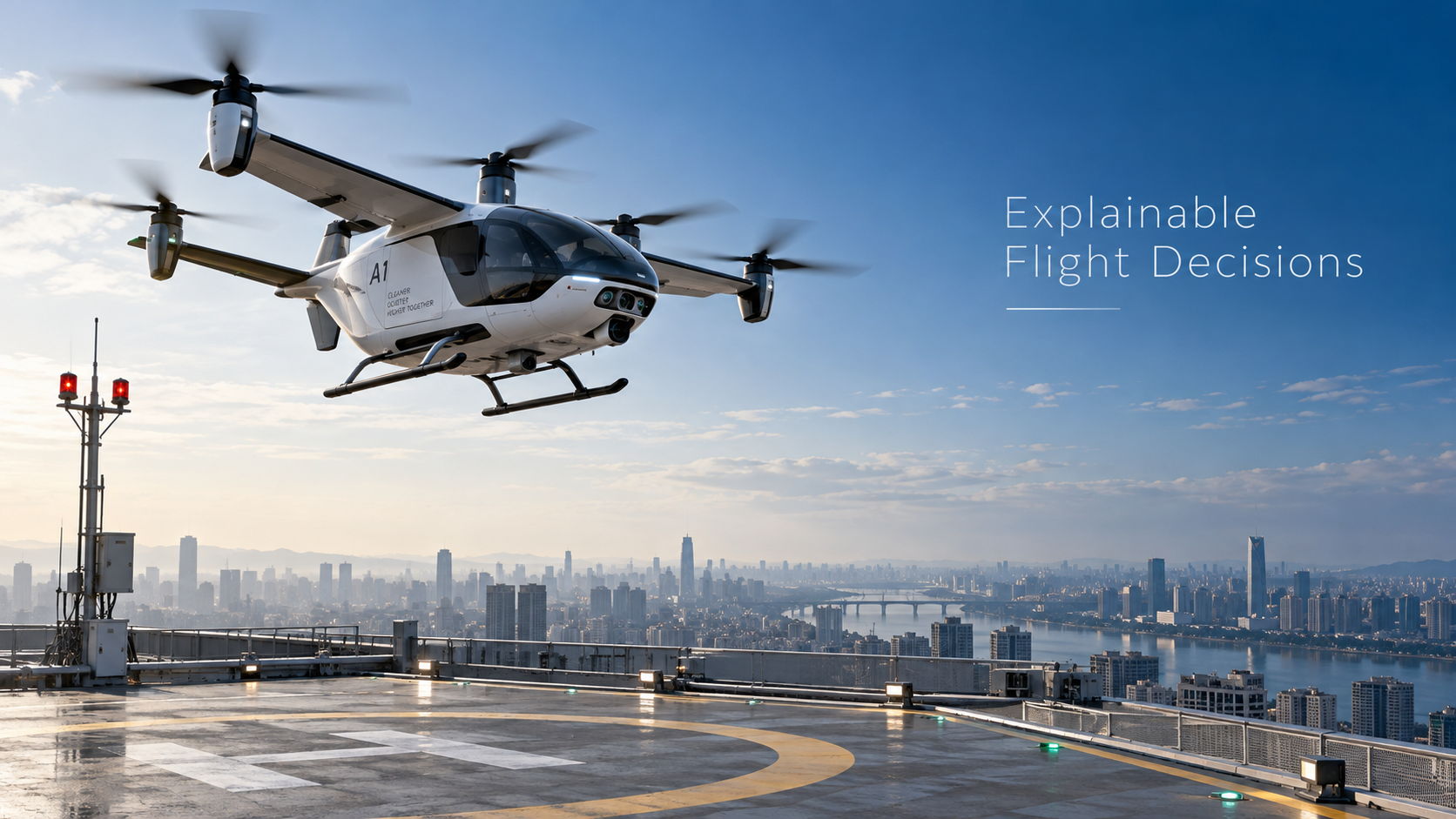
Urban air mobility is forcing new thinking around vertiports, noise envelopes, and emergency procedures.
Zero-emission aviation is pushing airports and nearby cities to rethink energy supply, maintenance footprints, and intermodal links.
More importantly, these developments no longer sit inside research departments alone.
They now affect financing logic, land-use sequencing, regulatory coordination, and public acceptance planning.
- Mobility programs are being evaluated as energy and data systems, not only transport assets.
- Certification pathways now influence project timing as much as civil works schedules.
- Interoperability has become a board-level issue, especially in multi-operator urban networks.
- Future Mobility decisions increasingly require coordination across aerospace, rail, utilities, and digital infrastructure teams.
Why this shift is accelerating now
The current pace is being driven by several forces that now reinforce each other.
Decarbonization targets remain a major factor, but they are no longer the only one.
Cities also face pressure to reduce congestion without expanding traditional road capacity.
At the same time, geopolitical competition is turning transport capability into a strategic asset.
That is especially visible in high-speed rail, advanced aviation, satellite-linked navigation, and resilient logistics planning.
From a Future Mobility perspective, the market is rewarding systems that can prove readiness across engineering, compliance, and operational integration.
The impact is spreading well beyond transport departments
A common mistake is to treat Future Mobility as a transport-mode decision.
In practice, the impact reaches procurement structures, utility planning, insurance assumptions, and urban development sequencing.
For example, an eVTOL network is not simply an aviation addition.
It requires airspace coordination, battery logistics, passenger processing design, cybersecurity, and emergency response integration.
A high-speed rail corridor has a similar multiplier effect.
It changes station-area development, freight timing, labor mobility, and cross-border technical compatibility.
This is where multidisciplinary benchmarking becomes valuable.
G-AIT’s five industrial pillars reflect the fact that advanced commercial aviation, space-linked infrastructure, maglev engineering, UAM, and extreme-environment logistics increasingly share planning dependencies.
The stronger signal is that Future Mobility is rewarding systems thinking over mode-specific optimization.
Where the pressure shows up first
- Capital planning: phased investment must account for uncertain adoption curves and certification lead times.
- Technical architecture: interfaces between rail, aviation, charging, and digital control can no longer be treated as later add-ons.
- Operational readiness: maintenance models, training, and failure-response procedures need earlier definition.
- Public legitimacy: acceptance increasingly depends on visible safety logic and service reliability.
What deserves closer attention in the next planning cycle
The next phase of Future Mobility will likely be less about headline concepts and more about execution discipline.
Several issues are becoming decisive.
One is standards alignment.
Projects that ignore FAA, EASA, UIC, or ISO implications too late will face redesign, delay, or fragmented interfaces.
Another is performance realism.
Claims around speed, autonomy, or emissions are becoming less persuasive than evidence on redundancy, lifecycle cost, and operational continuity.
There is also a growing need to compare technologies within real corridor conditions.
A 600 km/h maglev concept, for instance, should be judged differently from an urban connector or a short-haul air mobility service.
Future Mobility planning becomes stronger when each mode is assessed against mission fit, not novelty value.
Useful filters for decision quality
- Check whether infrastructure assumptions include power demand, data latency, and maintenance access.
- Test every concept against certification pathways, not just technical possibility.
- Compare network effects, not only vehicle performance.
- Model failure scenarios early, especially in mixed-mode urban environments.
- Track whether land-use, emergency services, and utilities are moving at the same pace.
A practical reading of where Future Mobility goes next
The near future will probably not be defined by one dominant transport breakthrough.
It will be defined by which cities and infrastructure programs can integrate several emerging systems without losing safety, clarity, or financial discipline.
That makes Future Mobility less of a technology race and more of an orchestration challenge.
The strongest positions will likely belong to organizations that benchmark deeply, sequence investments carefully, and build around interoperable standards.
This is also why technical intelligence platforms matter more now.
When aerospace-grade safety thinking, advanced rail engineering, and urban operations are evaluated together, blind spots become easier to detect.
A sensible next step is to map current transport plans against three questions.
- Which Future Mobility assumptions are already embedded in current infrastructure decisions?
- Where do certification, interoperability, or energy constraints create hidden schedule risk?
- Which scenarios require phased pilots, and which now justify corridor-scale planning?
Those questions provide a more durable starting point than broad enthusiasm or blanket skepticism.
Future Mobility is already reshaping urban transport planning.
The more useful response is to track the right signals, validate assumptions early, and build phased plans that remain robust as technologies mature.
Article Categories
SYSTEM_ALERT_URGENT
Q3 SYMPOSIUM ON ORBITAL DYNAMICS
Registration for the Orbital Aerospace technical committee is now open. Node access required.
Recent Articles
![]() Oct 27, 2026FAA Certifies Boeing 737 MAX 10 After Years of DelaysFAA Certifies Boeing 737 MAX 10 After Years of Delays
Oct 27, 2026FAA Certifies Boeing 737 MAX 10 After Years of DelaysFAA Certifies Boeing 737 MAX 10 After Years of Delays Oct 27, 2026Can an intermodal connectivity platform reduce rail handoff delays?Can an intermodal connectivity platform reduce rail handoff delays?
![]() Oct 26, 2026Chery Unveils Global Smart Mobility Strategy Targeting Robotaxis and eVTOLsChery Unveils Global Smart Mobility Strategy Targeting Robotaxis and eVTOLs
Oct 26, 2026Chery Unveils Global Smart Mobility Strategy Targeting Robotaxis and eVTOLsChery Unveils Global Smart Mobility Strategy Targeting Robotaxis and eVTOLs Oct 26, 2026How to evaluate avionics for helicopters used in IFR operationsHow to evaluate avionics for helicopters used in IFR operations
![]() Oct 25, 2026Ukraine’s Defence Minister Says SpaceX Satellite Services Restored After Speed RestrictionsUkraine’s Defence Minister Says SpaceX Satellite Services Restored After Speed Restrictions
Oct 25, 2026Ukraine’s Defence Minister Says SpaceX Satellite Services Restored After Speed RestrictionsUkraine’s Defence Minister Says SpaceX Satellite Services Restored After Speed Restrictions Oct 25, 2026How satellite infrastructure for IoT affects sensor reporting delaysHow satellite infrastructure for IoT affects sensor reporting delays
![]() Oct 24, 2026China Successfully Launches Yaogan 50-03 SatelliteChina Successfully Launches Yaogan 50-03 Satellite
Oct 24, 2026China Successfully Launches Yaogan 50-03 SatelliteChina Successfully Launches Yaogan 50-03 Satellite Oct 24, 2026How gradients affect traction power needs in high-speed rolling stockHow gradients affect traction power needs in high-speed rolling stock
![]() Oct 23, 2026FAA Proposes Checks on Nearly 2,000 Boeing 737NGs Over Loss-of-Control RiskFAA Proposes Checks on Nearly 2,000 Boeing 737NGs Over Loss-of-Control Risk
Oct 23, 2026FAA Proposes Checks on Nearly 2,000 Boeing 737NGs Over Loss-of-Control RiskFAA Proposes Checks on Nearly 2,000 Boeing 737NGs Over Loss-of-Control Risk Oct 23, 2026How fuel choice affects specific impulse in liquid oxygen propulsionHow fuel choice affects specific impulse in liquid oxygen propulsion
![]() Oct 22, 2026QuantumScape Plans 100 MWh Solid-State Battery Line Targeting Aerospace and Other MarketsQuantumScape Plans 100 MWh Solid-State Battery Line Targeting Aerospace and Other Markets
Oct 22, 2026QuantumScape Plans 100 MWh Solid-State Battery Line Targeting Aerospace and Other MarketsQuantumScape Plans 100 MWh Solid-State Battery Line Targeting Aerospace and Other Markets Oct 22, 2026How tank size limits hydrogen aircraft range on regional flightsHow tank size limits hydrogen aircraft range on regional flights
![]() Oct 21, 2026FAA Certifies Boeing 737-10, Clearing Regulatory Hurdle for DeliveriesFAA Certifies Boeing 737-10, Clearing Regulatory Hurdle for Deliveries
Oct 21, 2026FAA Certifies Boeing 737-10, Clearing Regulatory Hurdle for DeliveriesFAA Certifies Boeing 737-10, Clearing Regulatory Hurdle for Deliveries Oct 21, 2026How are electric vertical takeoff aircraft certified in the US?How are electric vertical takeoff aircraft certified in the US?
![]() Oct 20, 2026Ohio Department of Transportation Releases Three-Year Advanced Air Mobility Action PlanOhio Department of Transportation Releases Three-Year Advanced Air Mobility Action Plan
Oct 20, 2026Ohio Department of Transportation Releases Three-Year Advanced Air Mobility Action PlanOhio Department of Transportation Releases Three-Year Advanced Air Mobility Action Plan Oct 20, 2026How does magnetic flux density in tesla affect maglev lift force?How does magnetic flux density in tesla affect maglev lift force?
![]() Oct 19, 2026ZeroAvia Completes Key Ground Tests of ZA600 Hydrogen Fuel Cell PowertrainZeroAvia Completes Key Ground Tests of ZA600 Hydrogen Fuel Cell Powertrain
Oct 19, 2026ZeroAvia Completes Key Ground Tests of ZA600 Hydrogen Fuel Cell PowertrainZeroAvia Completes Key Ground Tests of ZA600 Hydrogen Fuel Cell Powertrain Oct 19, 2026How spacecraft integration affects advanced propulsion costsHow spacecraft integration affects advanced propulsion costs
 Oct 18, 2026How chilldown prevents cavitation in cryogenic engine systemsHow chilldown prevents cavitation in cryogenic engine systems
 Oct 17, 2026How explainability affects algorithmic trust in AI flight systemsHow explainability affects algorithmic trust in AI flight systems
 Oct 16, 2026How to evaluate transportation technology for Middle East heatHow to evaluate transportation technology for Middle East heat
 Oct 15, 2026How common-cause failures defeat redundancy logic in European avionicsHow common-cause failures defeat redundancy logic in European avionics
 Oct 14, 2026How DO-160 applies to aerospace technology testing for avionicsHow DO-160 applies to aerospace technology testing for avionics
 Oct 13, 2026How fuel price volatility shapes commercial aviation cost trendsHow fuel price volatility shapes commercial aviation cost trends
 Oct 12, 2026How to qualify aerospace manufacturing components for traceabilityHow to qualify aerospace manufacturing components for traceability
 Oct 11, 2026Which certification hurdles are slowing hydrogen aviation in Europe?Which certification hurdles are slowing hydrogen aviation in Europe?
 Oct 10, 2026What evidence should a magnetic gap stability supplier provide?What evidence should a magnetic gap stability supplier provide?
 Oct 09, 2026Which ISO standards matter when qualifying industrial technology suppliers?Which ISO standards matter when qualifying industrial technology suppliers?
 Oct 08, 2026When does reusability actually lower launch vehicle costs?When does reusability actually lower launch vehicle costs?
 Oct 07, 2026Where to find reliable product knowledge resources in the Middle EastWhere to find reliable product knowledge resources in the Middle East
 Oct 06, 2026What drives high-speed rail systems cost per kilometer?What drives high-speed rail systems cost per kilometer?
 Oct 05, 2026When does hydrogen propulsion for UAV extend mission range enough to justify it?When does hydrogen propulsion for UAV extend mission range enough to justify it?
 Oct 04, 2026How rail systems integration reduces commissioning delaysHow rail systems integration reduces commissioning delays
 Oct 03, 2026How to evaluate an advanced propulsion manufacturer for hydrogen systemsHow to evaluate an advanced propulsion manufacturer for hydrogen systems
 Oct 02, 2026How to qualify aircraft components for OEM production approvalHow to qualify aircraft components for OEM production approval