High-Speed Rolling Stock: What Impacts Lifecycle Maintenance Cost Most?
Lead Author
Published
Views:
For procurement teams evaluating high-speed rolling stock, the biggest lifecycle maintenance cost drivers are usually not the headline purchase price, but component durability, maintenance access, software and diagnostics capability, parts strategy, and the supplier’s long-term support model. In practice, fleets that look competitive at contract award can become expensive over 20 to 30 years if bogies wear faster than expected, traction systems need frequent intervention, or proprietary parts create dependence on one vendor. For buyers, the most useful comparison is not “Which train is cheapest to buy?” but “Which platform will remain reliable, supportable, and cost-efficient across its full service life?”
That shift in perspective matters because high-speed rolling stock operates in a demanding environment. High axle loads, sustained velocity, aerodynamic stress, tight timetables, and strict safety compliance all amplify maintenance consequences. A small difference in wheel wear rate, door reliability, converter failure frequency, or spare part lead time can translate into large differences in availability, depot workload, and budget exposure. Procurement therefore needs a lifecycle view that connects engineering detail to commercial risk.
What Usually Impacts High-Speed Rolling Stock Lifecycle Maintenance Cost Most?
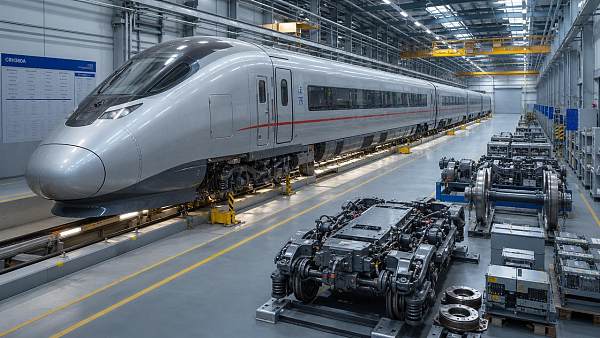
The short answer is that maintenance cost is shaped most by five linked factors: asset design maturity, wear-intensive subsystems, maintainability, digital condition monitoring, and supplier support over time. These factors influence both direct cost and operational disruption. Buyers who only compare technical brochures often miss the cost impact hidden in service intervals, tooling dependence, software access, and component replacement philosophy.
Among all subsystems, bogies, wheelsets, braking equipment, doors, HVAC units, traction converters, transformers, and onboard control electronics tend to dominate routine and corrective maintenance spending. Their cost impact rises further when they are difficult to access, require specialized tools, or rely on proprietary diagnostics. A platform with strong reliability but poor maintainability can still become expensive to support.
Procurement teams should also separate scheduled maintenance cost from unscheduled failure cost. Scheduled work is easier to forecast and negotiate. Unscheduled work creates greater financial pain because it also affects train availability, service penalties, standby fleet requirements, and emergency parts purchasing. In many cases, the most expensive maintenance event is not the repair itself, but the operational consequence of a train being unavailable when network demand is highest.
Why Bogies and Wheel-Rail Interaction Often Become Major Cost Drivers
For high-speed rolling stock, bogies and wheelsets are among the most important lifecycle maintenance cost contributors. They absorb constant dynamic loading, track-induced stress, and braking forces. Wear patterns depend not only on speed, but also on route geometry, axle load, suspension tuning, rail condition, and driving profile. A procurement decision that overlooks these route-specific interactions can underestimate long-term cost significantly.
Wheel reprofiling frequency, bearing life, suspension component replacement, gearbox performance, and brake disc wear all influence bogie-related maintenance expense. If a platform produces higher wheel wear under the operator’s real route conditions, workshop intervention frequency rises. That increases labor, parts, depot occupancy, and train downtime. Even modest differences in reprofiling intervals can have a substantial cumulative cost over decades.
Procurement teams should ask suppliers for route-relevant maintenance evidence, not just generic fleet claims. Data from comparable climatic conditions, speed profiles, and infrastructure quality is more valuable than broad references. If the train will run on mixed track quality or in harsh environments, sensitivity to wheel-rail degradation should be discussed early during technical evaluation.
Another key issue is modularity within the bogie architecture. Faster replacement of dampers, brake elements, sensors, and suspension items reduces workshop time. Ease of lifting, inspection access, and standardization of interfaces can lower both labor cost and error risk. In lifecycle terms, maintainability at the bogie level is almost as important as durability.
How Traction Systems, Power Electronics, and Thermal Management Affect Total Cost
Traction systems often attract attention during bid evaluation because they are central to performance, energy efficiency, and reliability. They are also a major maintenance cost factor. Traction motors, converters, transformers, cooling units, and associated control electronics operate under thermal and electrical stress, especially in high-duty cycles. When these systems are robust, maintenance becomes predictable. When they are not, costs escalate quickly.
One common procurement mistake is to focus heavily on rated performance while giving less attention to intervention frequency and mean time to repair. A high-efficiency traction package may still be expensive if diagnostic access is limited, cooling circuits are maintenance-intensive, or converter modules require extensive disassembly. Buyers should examine both failure rates and recovery time after failure.
Thermal management deserves specific attention. Overheating accelerates degradation across converters, batteries where applicable, auxiliary power systems, and onboard electronics. Poor thermal design can increase hidden maintenance burden long before major failures appear. Procurement teams should review cooling architecture, filtration needs, contamination tolerance, and maintenance intervals under expected ambient conditions.
Another practical issue is obsolescence. Power electronics and control hardware evolve faster than the service life of the train. If the supplier lacks a clear obsolescence management strategy, operators may face expensive redesigns, low-volume replacement sourcing, or software compatibility problems later. For high-speed rolling stock, obsolescence planning is not a secondary issue; it is a direct contributor to lifecycle maintenance cost.
Why Maintainability Design Often Matters as Much as Reliability
Reliability is essential, but procurement teams should remember that two trains with similar failure rates can have very different maintenance costs. The difference often comes from maintainability. If technicians can inspect, remove, replace, and test components quickly, the total cost of ownership improves. If access is difficult, labor hours rise and availability suffers, even when the asset is technically reliable.
Maintainability starts with layout decisions. Roof-mounted equipment may simplify some arrangements but can increase access complexity. Underfloor systems may be easier to modularize but more exposed to contamination and impact. Interior equipment cabinets may improve protection but reduce service space. Good procurement practice is to review maintenance workflow, not only equipment location.
Questions that matter include: How long does it take to replace a door actuator? Can a traction converter module be swapped without removing adjacent equipment? Are inspection points reachable without extensive disassembly? Which tasks require lifting, specialist jigs, or software authorization? These issues directly affect labor demand, training needs, and depot capacity planning.
Well-designed modular replacement strategies can reduce downtime dramatically. However, modularity should be tested for economic sense. If a supplier promotes line-replaceable units but those units are costly and repair options are limited, the operator may simply shift cost from labor to expensive component exchange. The best solution balances rapid intervention with sensible repair economics.
Spare Parts Strategy Can Quietly Determine Long-Term Cost Exposure
For procurement professionals, spare parts strategy is one of the clearest areas where contract structure shapes future maintenance cost. Even technically strong high-speed rolling stock can become expensive if critical spares have long lead times, unstable pricing, or supplier exclusivity. Parts availability determines not only inventory cost, but also the number of standby vehicles an operator must hold to protect service continuity.
Buyers should identify which components are consumables, repairables, rotable assets, and strategic long-lead items. Each category needs a different stocking logic. Brake pads, filters, and seals require routine forecasting. Bogie assemblies, converters, door systems, and control units may require pooled inventory or repair exchange planning. Without this segmentation, spare parts budgeting becomes reactive and inefficient.
Procurement contracts should also examine price escalation, minimum order quantities, repair turnaround time, and end-of-life support commitments. A low initial spare package can look attractive during tender evaluation, but the long-term cost may be much higher if replenishment pricing is not controlled. Transparent parts catalogs and indexed pricing mechanisms are often more valuable than aggressive first-year discounts.
Where possible, buyers should assess the extent of standard components versus vendor-specific proprietary items. Proprietary architecture is not always negative, especially in advanced platforms, but it increases dependence risk. If software locks, interface restrictions, or sole-source repair rights limit operator flexibility, lifecycle maintenance cost becomes harder to manage and negotiate.
How Predictive Maintenance Readiness Changes the Cost Curve
Digital monitoring and predictive maintenance are now central to evaluating high-speed rolling stock. Their value, however, depends on implementation quality. A train with many sensors but poor analytics integration may produce more data without reducing cost. By contrast, a platform that supports fault trending, condition-based intervention, and root-cause analysis can lower unscheduled failures and improve parts planning.
Procurement teams should look beyond marketing claims such as “smart fleet” or “digital twin ready.” The practical questions are more important. Which components are monitored continuously? Who owns the data? Can the operator access raw and processed data? Are alerts actionable or too frequent to trust? How well does the system integrate with the operator’s maintenance management environment?
Predictive readiness matters most where failure progression is detectable and intervention timing can be optimized. Bearings, doors, HVAC performance, traction cooling systems, braking components, and pantograph-related systems are common candidates. If the platform can identify early degradation before service disruption, maintenance becomes more planned and less disruptive. That creates value beyond simple labor savings.
There is also a contract dimension. If predictive tools depend on supplier-hosted software subscriptions, cloud access, or proprietary analytics services, buyers should calculate the recurring cost carefully. Digital maintenance support can reduce overall expenditure, but only if commercial terms remain sustainable over the platform’s service life.
Supplier Support Model Is Often the Difference Between Manageable and Escalating Cost
Many procurement teams underestimate how strongly the supplier support model affects lifecycle maintenance cost. Technical performance at entry into service is only one part of the picture. Over decades, operators need engineering updates, software patches, field technical support, parts continuity, failure analysis, documentation control, and training refresh. Weak support in any of these areas increases cost and operational uncertainty.
Buyers should evaluate whether the supplier has a stable local or regional support footprint, proven depot collaboration capability, and a realistic long-term service plan. If specialist technicians must always travel from overseas, response time and cost rise. If documentation is incomplete or revisions are slow, troubleshooting becomes inefficient. If software updates are tightly controlled, fleet optimization may be delayed.
Performance-based maintenance agreements can help align incentives, especially when availability targets, response times, and reliability thresholds are clearly defined. However, such contracts need careful design. If key assumptions about route conditions, usage intensity, climate, or operator practices are unrealistic, the support agreement may create disputes rather than savings.
For high-speed rolling stock, the strongest supplier proposition is usually not the lowest maintenance promise, but the most credible support ecosystem. Procurement teams should prioritize evidence: fleet references, parts logistics capability, engineering change management discipline, training programs, and responsiveness during earlier projects.
How Procurement Teams Should Compare Platforms More Effectively
To compare platforms well, procurement should move from a static capex mindset to a structured lifecycle maintenance model. That model should include scheduled maintenance intervals, labor-hour assumptions, expected component replacement cycles, spare parts inventory logic, software and diagnostic costs, depot tooling, training needs, and obsolescence planning. Without this structure, bidders with different support philosophies cannot be compared fairly.
A useful method is to build a cost-risk matrix by subsystem. For each major system, estimate routine maintenance demand, failure consequence, replacement cost, access complexity, parts lead time, and data visibility. This helps reveal where one supplier’s design may create hidden exposure. It also improves negotiation because questions become evidence-based rather than generic.
Scenario analysis is equally important. Procurement should test best-case, expected-case, and stress-case conditions, including harsher climate, infrastructure variation, delayed spare supply, and higher-than-planned utilization. High-speed fleets rarely operate under perfectly stable assumptions for decades. The platform that performs best under variance often delivers the stronger long-term value.
Finally, cross-functional evaluation improves decision quality. Procurement, engineering, operations, and maintenance teams should jointly review maintainability, data architecture, spare strategy, and support obligations. High-speed rolling stock decisions are too consequential to be assessed through price and performance tables alone.
Conclusion: The Lowest Purchase Price Rarely Delivers the Lowest Maintenance Cost
For buyers of high-speed rolling stock, the largest lifecycle maintenance cost drivers are usually found in subsystem durability, wheel and bogie wear behavior, traction and thermal system reliability, maintainability design, spare parts governance, digital diagnostics, and supplier support strength. These variables interact, and small technical disadvantages can become large commercial burdens over time.
The most effective procurement approach is to treat maintenance cost as a design-and-support outcome, not just a workshop issue. Ask how often components wear, how quickly they can be replaced, who controls the data, how parts will be sourced in year fifteen, and what happens when electronics become obsolete. Those answers reveal long-term value far better than purchase price alone.
In practical terms, the winning platform is usually the one that combines mature engineering, efficient maintenance workflow, transparent support, and credible long-term serviceability. For procurement teams, that is the foundation for comparing bids with confidence and reducing total ownership risk over the full life of the fleet.
Article Categories
SYSTEM_ALERT_URGENT
Q3 SYMPOSIUM ON ORBITAL DYNAMICS
Registration for the Orbital Aerospace technical committee is now open. Node access required.
Taglist:
Recent Articles
![]() Jun 19, 2026FAA Speeds Approval for Reusable Launcher Projects After US-Iran Interim DealFAA Speeds Approval for Reusable Launcher Projects After US-Iran Interim Deal
Jun 19, 2026FAA Speeds Approval for Reusable Launcher Projects After US-Iran Interim DealFAA Speeds Approval for Reusable Launcher Projects After US-Iran Interim Deal![]() Jun 19, 2026Intel-Apple Chip Tie-Up Signals Localized Avionics 2.0 SourcingIntel-Apple Chip Tie-Up Signals Localized Avionics 2.0 Sourcing
Jun 19, 2026Intel-Apple Chip Tie-Up Signals Localized Avionics 2.0 SourcingIntel-Apple Chip Tie-Up Signals Localized Avionics 2.0 Sourcing![]() Jun 19, 2026TIC Report Signals Pricing Shift in Solid-State Bat ExportsTIC Report Signals Pricing Shift in Solid-State Bat Exports
Jun 19, 2026TIC Report Signals Pricing Shift in Solid-State Bat ExportsTIC Report Signals Pricing Shift in Solid-State Bat Exports![]() Jun 19, 2026EU Keeps Iran Sanctions in Place; Steel Artery Exports Face Tighter ReviewEU Keeps Iran Sanctions in Place; Steel Artery Exports Face Tighter Review
Jun 19, 2026EU Keeps Iran Sanctions in Place; Steel Artery Exports Face Tighter ReviewEU Keeps Iran Sanctions in Place; Steel Artery Exports Face Tighter Review![]() Jun 19, 2026U.S. Lifts Maritime Blockade, Easing Cryogenic Reefer Flows via the Persian GulfU.S. Lifts Maritime Blockade, Easing Cryogenic Reefer Flows via the Persian Gulf
Jun 19, 2026U.S. Lifts Maritime Blockade, Easing Cryogenic Reefer Flows via the Persian GulfU.S. Lifts Maritime Blockade, Easing Cryogenic Reefer Flows via the Persian Gulf Jun 19, 2026Rapid Prototyping for Medical Devices: When It Cuts Time and When It FailsRapid Prototyping for Medical Devices: When It Cuts Time and When It Fails
 Jun 19, 2026Ophthalmic Equipment Buying Guide: Cost, Compliance, and UptimeOphthalmic Equipment Buying Guide: Cost, Compliance, and Uptime
 Jun 19, 2026Machine Vision Systems: Key Specs That Decide Inspection AccuracyMachine Vision Systems: Key Specs That Decide Inspection Accuracy
 Jun 19, 2026Supply Chain Shifts: How to Reduce Lead-Time Risk in 2026Supply Chain Shifts: How to Reduce Lead-Time Risk in 2026
 Jun 19, 2026Electronics Market Outlook 2026: Supply Risks and Price SignalsElectronics Market Outlook 2026: Supply Risks and Price Signals
![]() Jun 18, 2026Virgin Atlantic Brings ChatGPT Booking Into V2X ProcurementVirgin Atlantic Brings ChatGPT Booking Into V2X Procurement
Jun 18, 2026Virgin Atlantic Brings ChatGPT Booking Into V2X ProcurementVirgin Atlantic Brings ChatGPT Booking Into V2X Procurement![]() Jun 18, 2026Space Test Drives Cryogenic Reefer OrdersSpace Test Drives Cryogenic Reefer Orders
Jun 18, 2026Space Test Drives Cryogenic Reefer OrdersSpace Test Drives Cryogenic Reefer Orders![]() Jun 18, 2026Nanjing Raises Low-Altitude Logistics Push as Heavy-Lift Exports Gain PaceNanjing Raises Low-Altitude Logistics Push as Heavy-Lift Exports Gain Pace
Jun 18, 2026Nanjing Raises Low-Altitude Logistics Push as Heavy-Lift Exports Gain PaceNanjing Raises Low-Altitude Logistics Push as Heavy-Lift Exports Gain Pace![]() Jun 18, 2026Qianfan Batch 9 Expands Sat-Grid Tech to 47 MarketsQianfan Batch 9 Expands Sat-Grid Tech to 47 Markets
Jun 18, 2026Qianfan Batch 9 Expands Sat-Grid Tech to 47 MarketsQianfan Batch 9 Expands Sat-Grid Tech to 47 Markets![]() Jun 18, 2026US AI Order Raises Export Compliance for Avionics 2.0US AI Order Raises Export Compliance for Avionics 2.0
Jun 18, 2026US AI Order Raises Export Compliance for Avionics 2.0US AI Order Raises Export Compliance for Avionics 2.0 Jun 18, 2026Telemedicine Carts Trends: Features Shaping 2026 UpgradesTelemedicine Carts Trends: Features Shaping 2026 Upgrades
 Jun 18, 2026Cold Chain Logistics Failures That Lead to Product LossCold Chain Logistics Failures That Lead to Product Loss
 Jun 18, 2026Lathe Turning Tolerances: What Affects Surface Finish MostLathe Turning Tolerances: What Affects Surface Finish Most
 Jun 18, 2026Digital Freight Matching: Cost Savings vs Capacity RiskDigital Freight Matching: Cost Savings vs Capacity Risk
 Jun 18, 2026How to Choose IoT Energy Monitors for Multi-Site FacilitiesHow to Choose IoT Energy Monitors for Multi-Site Facilities
![]() Jun 17, 2026BOJ Rate Hike Pressures Maglev and HSR Signaling QuotesBOJ Rate Hike Pressures Maglev and HSR Signaling Quotes
Jun 17, 2026BOJ Rate Hike Pressures Maglev and HSR Signaling QuotesBOJ Rate Hike Pressures Maglev and HSR Signaling Quotes![]() Jun 17, 2026SpaceX Enters Top Five as Reusable Launcher Demand Lifts Launch PricesSpaceX Enters Top Five as Reusable Launcher Demand Lifts Launch Prices
Jun 17, 2026SpaceX Enters Top Five as Reusable Launcher Demand Lifts Launch PricesSpaceX Enters Top Five as Reusable Launcher Demand Lifts Launch Prices![]() Jun 17, 2026Hormuz Transit Outlook Eases Cryogenic Reefer StrainHormuz Transit Outlook Eases Cryogenic Reefer Strain
Jun 17, 2026Hormuz Transit Outlook Eases Cryogenic Reefer StrainHormuz Transit Outlook Eases Cryogenic Reefer Strain![]() Jun 17, 2026EU-US Trade Deal Clears Parliament for Sat-Grid Tariff ReliefEU-US Trade Deal Clears Parliament for Sat-Grid Tariff Relief
Jun 17, 2026EU-US Trade Deal Clears Parliament for Sat-Grid Tariff ReliefEU-US Trade Deal Clears Parliament for Sat-Grid Tariff Relief![]() Jun 17, 2026US-Iran Deal Lifts Strait Outlook for Polar/Desert LogisticsUS-Iran Deal Lifts Strait Outlook for Polar/Desert Logistics
Jun 17, 2026US-Iran Deal Lifts Strait Outlook for Polar/Desert LogisticsUS-Iran Deal Lifts Strait Outlook for Polar/Desert Logistics Jun 17, 2026Urban Air Mobility Safety Standards: What to Check Before DeploymentUrban Air Mobility Safety Standards: What to Check Before Deployment
 Jun 17, 2026Wearable Technology Trends in 2026: What Will Matter MostWearable Technology Trends in 2026: What Will Matter Most
 Jun 17, 2026IBC Totes for Food Grade Applications: Compliance ChecklistIBC Totes for Food Grade Applications: Compliance Checklist
 Jun 17, 2026How to Evaluate a Lithium Ion Batteries Manufacturer in ChinaHow to Evaluate a Lithium Ion Batteries Manufacturer in China
 Jun 17, 2026Cryogenic Propulsion: Key Design Tradeoffs and Failure RisksCryogenic Propulsion: Key Design Tradeoffs and Failure Risks
![]() Jun 16, 2026US-Iran Deal Lifts Outlook for Strait Shipping TimesUS-Iran Deal Lifts Outlook for Strait Shipping Times
Jun 16, 2026US-Iran Deal Lifts Outlook for Strait Shipping TimesUS-Iran Deal Lifts Outlook for Strait Shipping Times![]() Jun 16, 2026BOJ Rate Hike Pressures Rail Export QuotesBOJ Rate Hike Pressures Rail Export Quotes
Jun 16, 2026BOJ Rate Hike Pressures Rail Export QuotesBOJ Rate Hike Pressures Rail Export Quotes![]() Jun 16, 2026Canada Finalizes AD/CVD on Chinese Truck BodiesCanada Finalizes AD/CVD on Chinese Truck Bodies
Jun 16, 2026Canada Finalizes AD/CVD on Chinese Truck BodiesCanada Finalizes AD/CVD on Chinese Truck Bodies![]() Jun 16, 2026SpaceX IPO Signals New Compliance FocusSpaceX IPO Signals New Compliance Focus
Jun 16, 2026SpaceX IPO Signals New Compliance FocusSpaceX IPO Signals New Compliance Focus![]() Jun 16, 2026EU Starts Cryogenic Reefer Import Pre-ScreeningEU Starts Cryogenic Reefer Import Pre-Screening
Jun 16, 2026EU Starts Cryogenic Reefer Import Pre-ScreeningEU Starts Cryogenic Reefer Import Pre-Screening