How to Vet Industrial Bearing Suppliers
Lead Author
Published
Views:
How to Vet Industrial Bearing Suppliers
Choosing the right industrial bearing suppliers is a high-stakes decision for procurement teams supporting aerospace, rail, mobility, and other mission-critical systems.
Beyond price and availability, buyers must evaluate quality certifications, traceability, engineering support, lead-time reliability, and long-term risk exposure.
This guide outlines a practical vetting approach to help you compare suppliers with confidence, reduce uncertainty, and secure capable bearing partners.
Start With the Real Buying Question: Can This Supplier Reduce Operational Risk?
Procurement teams usually search this topic because a bearing decision has moved beyond routine sourcing and into performance, safety, or continuity risk.
The core question is not simply which supplier has stock, but which supplier can consistently protect uptime, compliance, and lifecycle cost.
For aerospace, high-speed rail, eVTOL, maglev, and specialized logistics programs, bearing failure can trigger expensive maintenance or certification consequences.
That is why supplier vetting should prioritize risk evidence before commercial negotiation, especially when components operate under heat, vibration, load, or contamination.
Buyers should first separate commodity purchasing from engineered sourcing. Standard bearings may tolerate broader supplier options, but critical applications require stricter validation.
A useful opening filter is simple: if the supplier cannot prove origin, quality systems, and application competence, price should not lead the decision.
Define the Application Before You Compare Suppliers
Many sourcing mistakes begin when procurement asks for quotes before engineering requirements are fully translated into purchasing criteria.
Industrial bearing suppliers need more than part numbers when applications involve high speed, low temperature, shock loads, vacuum, or extended maintenance intervals.
Before issuing an RFQ, document load ratings, rotational speed, lubrication environment, operating temperature, tolerance class, sealing requirements, and expected duty cycle.
For regulated sectors, include applicable standards, customer flow-down requirements, documentation needs, and any approved manufacturer or material restrictions.
This preparation prevents suppliers from quoting superficially equivalent bearings that fail under real operating conditions or cannot pass incoming inspection.
It also helps procurement compare responses fairly, because every supplier is answering the same technical, quality, and delivery assumptions.
Verify Certifications, But Do Not Stop There
Certifications are necessary screening tools, but they are not a complete proof of supplier capability or product suitability.
For industrial bearing suppliers, common quality indicators include ISO 9001, IATF 16949 for automotive-related systems, AS9100 for aerospace, and ISO 14001.
Procurement should confirm that certificates are current, issued by credible bodies, and cover the specific site performing manufacturing, distribution, or modification.
For aerospace and advanced transportation programs, quality flow-down controls matter as much as the certificate displayed on a website.
Ask whether the supplier maintains documented procedures for nonconformance handling, corrective actions, lot segregation, counterfeit prevention, and change notification.
A strong supplier can explain how quality requirements move from customer order to warehouse, inspection, packaging, and shipment documentation.
Demand Traceability and Counterfeit Protection
Traceability is one of the most important vetting factors when bearings enter safety-critical or high-cost equipment.
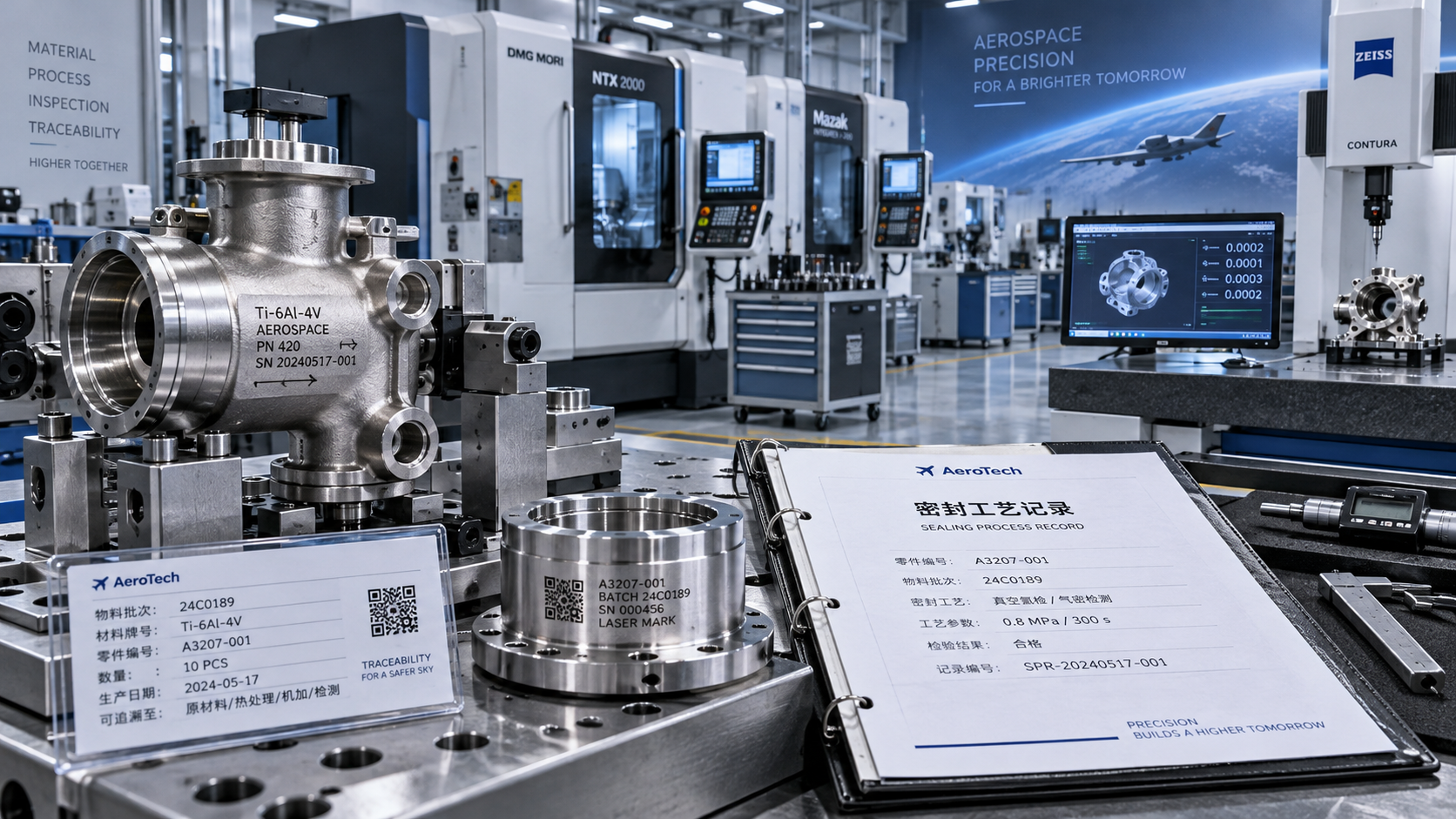
Procurement should request documentation linking the delivered bearing to the manufacturer, production lot, heat treatment batch, and inspection records when applicable.
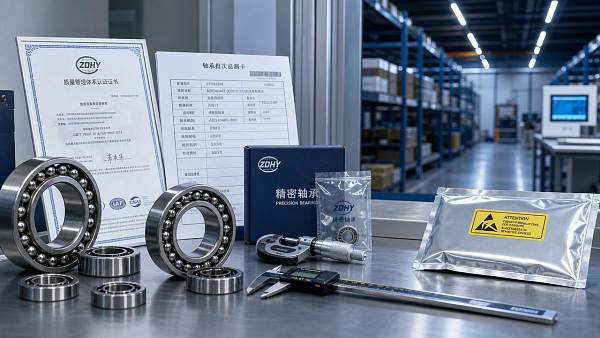
At minimum, reliable industrial bearing suppliers should provide certificates of conformity, manufacturer authorization evidence, and clear country-of-origin information.
For mission-critical applications, request material certificates, dimensional inspection reports, lubrication records, and serial or batch-level identification where available.
Counterfeit risk is not limited to unknown online sellers. Gray-market inventory can enter supply chains during shortages or urgent maintenance events.
Evaluate whether the supplier buys directly from manufacturers, authorized channels, or audited sources with documented incoming verification procedures.
If the supplier cannot explain how it prevents relabeled, mixed-lot, or improperly stored inventory, treat that as a serious risk signal.
Evaluate Technical Support, Not Just Catalog Coverage
A broad catalog is useful, but it does not prove that the supplier can help solve application-level problems.
Procurement teams should favor suppliers able to support engineering discussions about bearing selection, lubrication, cage materials, preload, fits, and failure modes.
In advanced mobility systems, even small differences in clearance, surface finish, sealing, or lubricant chemistry can affect noise, heat, and lifespan.
Ask whether the supplier has application engineers, access to manufacturer technical teams, and experience with comparable industries or operating conditions.
Request examples of how they supported root-cause analysis, substitution review, reliability improvement, or lifecycle cost reduction for previous customers.
A supplier that only forwards datasheets may be adequate for general maintenance, but not for strategic sourcing in demanding platforms.
Measure Delivery Reliability With Evidence
Lead time is often presented as a promise, but procurement needs historical evidence and realistic capacity transparency.
Ask industrial bearing suppliers for on-time delivery performance, average lead times by product class, backlog visibility, and emergency fulfillment procedures.
For critical programs, evaluate whether they hold safety stock, offer vendor-managed inventory, or support long-term supply agreements.
Do not rely only on current availability. Bearings with special materials, precision grades, or custom lubrication may have long replenishment cycles.
Supplier resilience should include multi-region sourcing options, logistics contingency plans, and clear communication when market shortages occur.
A low quote loses value quickly if delayed bearings stop production, ground vehicles, or create urgent premium freight expenses.
Review Inspection, Storage, and Handling Practices
Bearings are precision components, and poor storage can damage them before they ever reach the assembly line.
Procurement should ask how suppliers control humidity, corrosion prevention, packaging integrity, shelf life, and first-in-first-out inventory rotation.
For lubricated or sealed bearings, storage conditions and age can influence performance, especially in sensitive aerospace or high-speed applications.
Incoming inspection capability is equally important. Ask whether the supplier can perform dimensional checks, visual inspection, documentation verification, and packaging validation.
For high-value orders, consider supplier audits or remote process reviews focused on warehouse controls, segregation, labeling, and damage prevention.
A supplier that treats bearings like generic hardware may create hidden reliability risks for demanding transportation and industrial systems.
Compare Total Cost, Not Only Unit Price
Procurement teams are accountable for cost, but the lowest unit price can be misleading in bearing sourcing.
Total cost includes downtime risk, inspection burden, warranty exposure, engineering rework, urgent freight, inventory carrying cost, and supplier management time.
A slightly higher-priced supplier may create better value through documented quality, stable lead times, technical support, and fewer disruptions.
When comparing industrial bearing suppliers, build a scorecard that weights quality, delivery, traceability, engineering support, commercial terms, and risk controls.
For critical components, assign more weight to reliability evidence and documentation readiness than to small differences in purchase price.
This approach helps procurement defend sourcing decisions internally, especially when finance, engineering, and operations have different priorities.
Ask Better Questions During Supplier Qualification
A strong vetting process depends on questions that reveal behavior, not just marketing claims or generic capability statements.
Ask whether the supplier is authorized for the bearing brands offered, and request written proof when brand authenticity matters.
Ask how they handle product substitutions, because unauthorized substitutions can create fit, performance, or compliance problems.
Ask what happens when a manufacturer changes design, material, lubrication, or country of production for a bearing family.
Ask how nonconforming products are isolated, investigated, and reported, including typical corrective action timelines and customer notification practices.
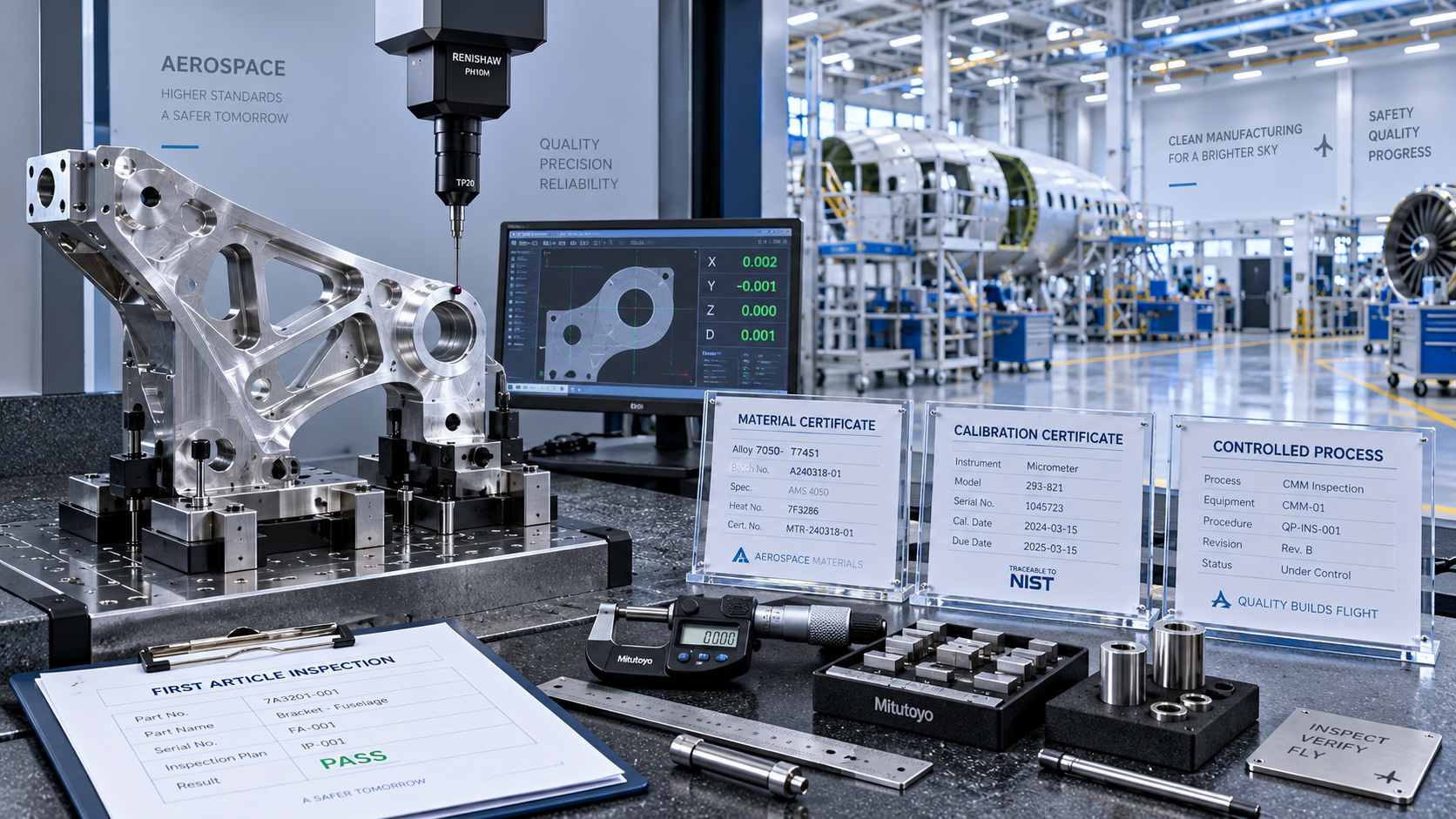
Ask whether they can support PPAP, first article inspection, FAIR documentation, or customer-specific quality packages when required.
These questions help identify suppliers that understand procurement accountability in regulated, engineered, and mission-critical environments.
Use a Practical Supplier Scorecard
A scorecard makes supplier comparison more objective and easier to communicate across procurement, engineering, quality, and operations teams.
Start with mandatory pass-fail criteria, including certification status, traceability capability, counterfeit controls, and compliance with required documentation.
Then score weighted categories such as technical support, delivery performance, inventory strategy, commercial stability, responsiveness, and application experience.
Include risk notes for single-source dependency, long lead-time items, unfamiliar brands, warranty ambiguity, or limited after-sales support.
For strategic programs, review the scorecard periodically, not only during initial qualification. Supplier performance can change with ownership, capacity, or market pressure.
The best scorecards turn subjective impressions into sourcing evidence, helping buyers justify decisions before problems occur.
Check Financial Stability and Strategic Fit
Supplier vetting should also consider whether the company can support your needs over the full program lifecycle.
Financially unstable suppliers may struggle with inventory investment, skilled staffing, quality systems, and timely communication during market disruptions.
Procurement can review business history, customer references, insurance coverage, litigation signals, and dependency on a narrow manufacturer base.
Strategic fit matters as well. A supplier serving maintenance buyers may not be prepared for aerospace documentation or platform-level sourcing commitments.
Conversely, a highly specialized supplier may be unsuitable for broad MRO coverage if it lacks catalog depth and rapid fulfillment capacity.
The goal is not to find the largest supplier, but the supplier whose operating model matches your risk profile.
Watch for Red Flags Before Awarding Business
Certain warning signs should slow or stop a sourcing decision, even when pricing and availability appear attractive.
Be cautious if the supplier avoids documentation requests, cannot identify product origin, or changes quoted brands without clear approval.
Other red flags include vague lead times, inconsistent certifications, unusually low prices, poor packaging photos, and reluctance to support audits.
Slow responses during qualification often predict worse communication after an order is placed, especially when shortages or defects arise.
Procurement should also be careful with suppliers that promise exact equivalents without engineering review or manufacturer confirmation.
In bearing sourcing, uncertainty rarely disappears after award. It usually becomes more expensive once production or maintenance depends on delivery.
When to Use Multiple Suppliers
Single-source relationships can improve consistency and commercial leverage, but they may increase exposure when supply disruptions occur.
For critical bearings, procurement should identify whether dual sourcing is technically acceptable, commercially practical, and compliant with engineering approvals.
Multiple qualified industrial bearing suppliers can protect availability, but uncontrolled switching may create variation in performance, documentation, or warranty coverage.
A balanced strategy often uses one primary supplier, one qualified backup, and clear rules for substitutions, approvals, and documentation.
For custom or highly specialized bearings, long-term agreements and forecast sharing may be more effective than frequent competitive bidding.
The right sourcing structure depends on demand volatility, qualification cost, program criticality, and the consequences of failure or delay.
Build the Supplier Relationship After Qualification
Vetting does not end when a purchase order is issued. Supplier performance should be managed through measurable expectations and regular reviews.
Track on-time delivery, documentation accuracy, defect rates, response time, pricing stability, and support quality across each order cycle.
Share forecasts when possible, especially for bearings with long manufacturing lead times or specialized materials.
Invite suppliers into early engineering discussions when new systems involve unusual loads, environments, speeds, or maintenance requirements.
Strong suppliers can help reduce obsolescence risk, recommend design alternatives, and prepare sourcing plans before shortages become urgent.
Procurement gains the most value when supplier relationships move from transactional buying to controlled technical and operational partnership.
Conclusion: Vet for Evidence, Not Promises
Selecting industrial bearing suppliers requires more than comparing price, catalog size, or short-term availability.
For procurement teams supporting advanced transportation, aerospace, rail, and other demanding sectors, supplier evidence is the foundation of sourcing confidence.
The strongest suppliers can prove traceability, quality discipline, engineering competence, delivery reliability, and readiness for compliance requirements.
Buyers should define application needs first, screen for mandatory risk controls, and use scorecards to compare suppliers objectively.
When a bearing supports mission-critical equipment, the right supplier is not merely a vendor. It is a risk-control partner.
A disciplined vetting process helps procurement reduce disruption, protect performance, and make sourcing decisions that withstand technical and commercial scrutiny.
Article Categories
SYSTEM_ALERT_URGENT
Q3 SYMPOSIUM ON ORBITAL DYNAMICS
Registration for the Orbital Aerospace technical committee is now open. Node access required.
Taglist:
Recent Articles
![]() Oct 27, 2026FAA Certifies Boeing 737 MAX 10 After Years of DelaysFAA Certifies Boeing 737 MAX 10 After Years of Delays
Oct 27, 2026FAA Certifies Boeing 737 MAX 10 After Years of DelaysFAA Certifies Boeing 737 MAX 10 After Years of Delays Oct 27, 2026Can an intermodal connectivity platform reduce rail handoff delays?Can an intermodal connectivity platform reduce rail handoff delays?
![]() Oct 26, 2026Chery Unveils Global Smart Mobility Strategy Targeting Robotaxis and eVTOLsChery Unveils Global Smart Mobility Strategy Targeting Robotaxis and eVTOLs
Oct 26, 2026Chery Unveils Global Smart Mobility Strategy Targeting Robotaxis and eVTOLsChery Unveils Global Smart Mobility Strategy Targeting Robotaxis and eVTOLs Oct 26, 2026How to evaluate avionics for helicopters used in IFR operationsHow to evaluate avionics for helicopters used in IFR operations
![]() Oct 25, 2026Ukraine’s Defence Minister Says SpaceX Satellite Services Restored After Speed RestrictionsUkraine’s Defence Minister Says SpaceX Satellite Services Restored After Speed Restrictions
Oct 25, 2026Ukraine’s Defence Minister Says SpaceX Satellite Services Restored After Speed RestrictionsUkraine’s Defence Minister Says SpaceX Satellite Services Restored After Speed Restrictions Oct 25, 2026How satellite infrastructure for IoT affects sensor reporting delaysHow satellite infrastructure for IoT affects sensor reporting delays
![]() Oct 24, 2026China Successfully Launches Yaogan 50-03 SatelliteChina Successfully Launches Yaogan 50-03 Satellite
Oct 24, 2026China Successfully Launches Yaogan 50-03 SatelliteChina Successfully Launches Yaogan 50-03 Satellite Oct 24, 2026How gradients affect traction power needs in high-speed rolling stockHow gradients affect traction power needs in high-speed rolling stock
![]() Oct 23, 2026FAA Proposes Checks on Nearly 2,000 Boeing 737NGs Over Loss-of-Control RiskFAA Proposes Checks on Nearly 2,000 Boeing 737NGs Over Loss-of-Control Risk
Oct 23, 2026FAA Proposes Checks on Nearly 2,000 Boeing 737NGs Over Loss-of-Control RiskFAA Proposes Checks on Nearly 2,000 Boeing 737NGs Over Loss-of-Control Risk Oct 23, 2026How fuel choice affects specific impulse in liquid oxygen propulsionHow fuel choice affects specific impulse in liquid oxygen propulsion
![]() Oct 22, 2026QuantumScape Plans 100 MWh Solid-State Battery Line Targeting Aerospace and Other MarketsQuantumScape Plans 100 MWh Solid-State Battery Line Targeting Aerospace and Other Markets
Oct 22, 2026QuantumScape Plans 100 MWh Solid-State Battery Line Targeting Aerospace and Other MarketsQuantumScape Plans 100 MWh Solid-State Battery Line Targeting Aerospace and Other Markets Oct 22, 2026How tank size limits hydrogen aircraft range on regional flightsHow tank size limits hydrogen aircraft range on regional flights
![]() Oct 21, 2026FAA Certifies Boeing 737-10, Clearing Regulatory Hurdle for DeliveriesFAA Certifies Boeing 737-10, Clearing Regulatory Hurdle for Deliveries
Oct 21, 2026FAA Certifies Boeing 737-10, Clearing Regulatory Hurdle for DeliveriesFAA Certifies Boeing 737-10, Clearing Regulatory Hurdle for Deliveries Oct 21, 2026How are electric vertical takeoff aircraft certified in the US?How are electric vertical takeoff aircraft certified in the US?
![]() Oct 20, 2026Ohio Department of Transportation Releases Three-Year Advanced Air Mobility Action PlanOhio Department of Transportation Releases Three-Year Advanced Air Mobility Action Plan
Oct 20, 2026Ohio Department of Transportation Releases Three-Year Advanced Air Mobility Action PlanOhio Department of Transportation Releases Three-Year Advanced Air Mobility Action Plan Oct 20, 2026How does magnetic flux density in tesla affect maglev lift force?How does magnetic flux density in tesla affect maglev lift force?
![]() Oct 19, 2026ZeroAvia Completes Key Ground Tests of ZA600 Hydrogen Fuel Cell PowertrainZeroAvia Completes Key Ground Tests of ZA600 Hydrogen Fuel Cell Powertrain
Oct 19, 2026ZeroAvia Completes Key Ground Tests of ZA600 Hydrogen Fuel Cell PowertrainZeroAvia Completes Key Ground Tests of ZA600 Hydrogen Fuel Cell Powertrain Oct 19, 2026How spacecraft integration affects advanced propulsion costsHow spacecraft integration affects advanced propulsion costs
 Oct 18, 2026How chilldown prevents cavitation in cryogenic engine systemsHow chilldown prevents cavitation in cryogenic engine systems
 Oct 17, 2026How explainability affects algorithmic trust in AI flight systemsHow explainability affects algorithmic trust in AI flight systems
 Oct 16, 2026How to evaluate transportation technology for Middle East heatHow to evaluate transportation technology for Middle East heat
 Oct 15, 2026How common-cause failures defeat redundancy logic in European avionicsHow common-cause failures defeat redundancy logic in European avionics
 Oct 14, 2026How DO-160 applies to aerospace technology testing for avionicsHow DO-160 applies to aerospace technology testing for avionics
 Oct 13, 2026How fuel price volatility shapes commercial aviation cost trendsHow fuel price volatility shapes commercial aviation cost trends
 Oct 12, 2026How to qualify aerospace manufacturing components for traceabilityHow to qualify aerospace manufacturing components for traceability
 Oct 11, 2026Which certification hurdles are slowing hydrogen aviation in Europe?Which certification hurdles are slowing hydrogen aviation in Europe?
 Oct 10, 2026What evidence should a magnetic gap stability supplier provide?What evidence should a magnetic gap stability supplier provide?
 Oct 09, 2026Which ISO standards matter when qualifying industrial technology suppliers?Which ISO standards matter when qualifying industrial technology suppliers?
 Oct 08, 2026When does reusability actually lower launch vehicle costs?When does reusability actually lower launch vehicle costs?
 Oct 07, 2026Where to find reliable product knowledge resources in the Middle EastWhere to find reliable product knowledge resources in the Middle East
 Oct 06, 2026What drives high-speed rail systems cost per kilometer?What drives high-speed rail systems cost per kilometer?
 Oct 05, 2026When does hydrogen propulsion for UAV extend mission range enough to justify it?When does hydrogen propulsion for UAV extend mission range enough to justify it?
 Oct 04, 2026How rail systems integration reduces commissioning delaysHow rail systems integration reduces commissioning delays
 Oct 03, 2026How to evaluate an advanced propulsion manufacturer for hydrogen systemsHow to evaluate an advanced propulsion manufacturer for hydrogen systems
 Oct 02, 2026How to qualify aircraft components for OEM production approvalHow to qualify aircraft components for OEM production approval