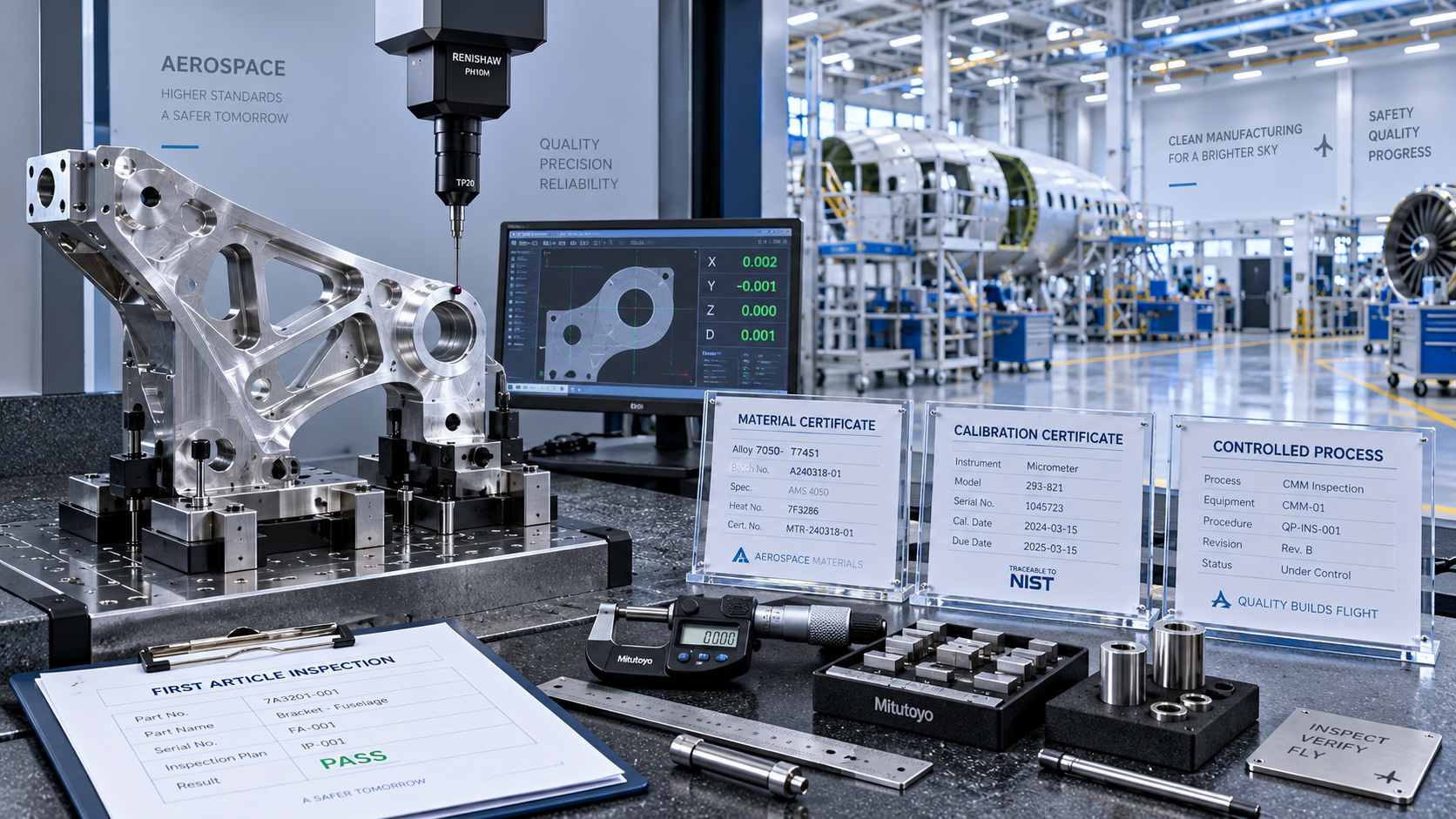
Latheturning Accuracy: What Affects Final Tolerance
Lead Author
Published
Views:
In aerospace and advanced transportation manufacturing, latheturning accuracy is more than a machining metric—it is a direct factor in component reliability, inspection efficiency, and operational safety.
For quality systems, understanding what affects final tolerance helps prevent nonconforming parts, reduce rework, and support strict certification expectations.
From machine rigidity and tool wear to material behavior and process control, each variable can influence whether a turned part meets its required dimensional limits.
Why Latheturning Accuracy Needs a Checklist Approach
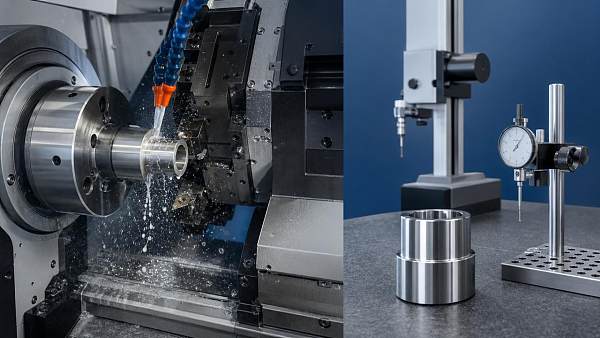
Latheturning tolerance is rarely controlled by one factor. It is the result of machine condition, cutting strategy, thermal stability, and measurement discipline.
A checklist approach makes these variables visible before production risk becomes inspection failure. It also supports repeatability across shifts, machines, and suppliers.
In high-value components, small deviations can affect bearing fits, sealing surfaces, fatigue performance, and assembly alignment.
For aerospace, rail, UAM, satellite, and advanced mobility systems, latheturning accuracy must be managed as a controlled process, not an end-stage inspection issue.
Core Latheturning Accuracy Checklist
Use the following checklist before releasing a critical turning operation. Each item links directly to final tolerance, surface integrity, or process stability.
- Verify machine geometry before latheturning, including spindle runout, turret alignment, tailstock offset, and slide straightness under realistic load conditions.
- Confirm workholding rigidity by checking chuck pressure, collet condition, jaw contact, part overhang, and whether clamping distorts thin-wall geometry.
- Select cutting tools according to material, feature tolerance, edge strength, insert radius, coating, and expected wear pattern during latheturning.
- Control tool wear by setting measurable limits for flank wear, crater wear, edge chipping, built-up edge, and sudden surface finish changes.
- Stabilize cutting parameters by validating speed, feed, depth of cut, chip control, and finishing allowance for each tolerance-critical surface.
- Manage thermal growth by warming the machine, monitoring coolant temperature, avoiding long idle gaps, and measuring after temperature stabilization.
- Check material behavior, especially residual stress, hardness variation, forged grain flow, casting skin, and spring-back after rough latheturning.
- Define inspection timing clearly, separating in-process checks, first-article confirmation, final inspection, and post-relaxation measurement when needed.
- Validate measuring tools, including calibration status, gage repeatability, contact force, probe strategy, and environmental conditions in the inspection area.
- Record process evidence, including offset changes, tool life, coolant concentration, inspection results, and any deviation from the approved latheturning plan.
Machine Rigidity and Alignment Factors
Machine rigidity is a foundation of latheturning accuracy. A weak setup allows vibration, taper, chatter, and unpredictable dimensional drift.
Spindle bearings, guideways, turret locking, and tailstock alignment should be checked under conditions similar to production loading.
A lathe may pass static checks but still lose tolerance during heavy roughing or interrupted cuts. Dynamic behavior matters more than catalog capability.
For long shafts, actuator sleeves, landing gear pins, and rail-system rotating parts, support strategy strongly affects final roundness and straightness.
Practical machine checks
- Measure spindle runout at the nose and again through a representative workholding device.
- Cut a test bar to confirm taper before critical latheturning production begins.
- Inspect turret repeatability after indexing several stations, not only at a single tool position.
- Review maintenance logs for guideway wear, ball screw backlash, and thermal compensation alarms.
Tooling, Inserts, and Cutting Parameters
Tool selection determines how the cutting edge interacts with the material. Poor selection can create heat, deflection, and unstable chip formation.
In precision latheturning, insert geometry must match the tolerance objective. A roughing insert cannot always deliver finishing stability.
A large nose radius may improve surface finish but increase radial cutting force. That force can push slender parts away from nominal size.
A sharp edge may reduce force but wear faster in abrasive aerospace alloys. Final tolerance depends on balancing edge sharpness and tool life.
Material Behavior in Critical Latheturning
Material response is a major source of tolerance variation. Heat-treated alloys, titanium, Inconel, stainless steel, and composites all machine differently.
Residual stress can move a part after rough latheturning. Thin-wall aerospace rings and sleeves are especially vulnerable to relaxation.
Forged or rolled material may show hardness variation across the cross-section. This changes cutting force and can produce taper or ovality.
For nickel alloys and titanium, heat control is critical. Poor coolant delivery can accelerate tool wear and reduce dimensional stability.
Material-focused actions
- Rough the part symmetrically when geometry allows, then allow stress relaxation before final latheturning.
- Confirm hardness and material certificate data before cutting parameters are locked.
- Use stable coolant flow aimed at the cutting zone, not only the general work area.
- Avoid excessive stock removal in one pass on thin sections or long unsupported features.
Inspection and Measurement Discipline
Latheturning accuracy cannot be confirmed by measurement alone, but poor measurement can hide or exaggerate process problems.
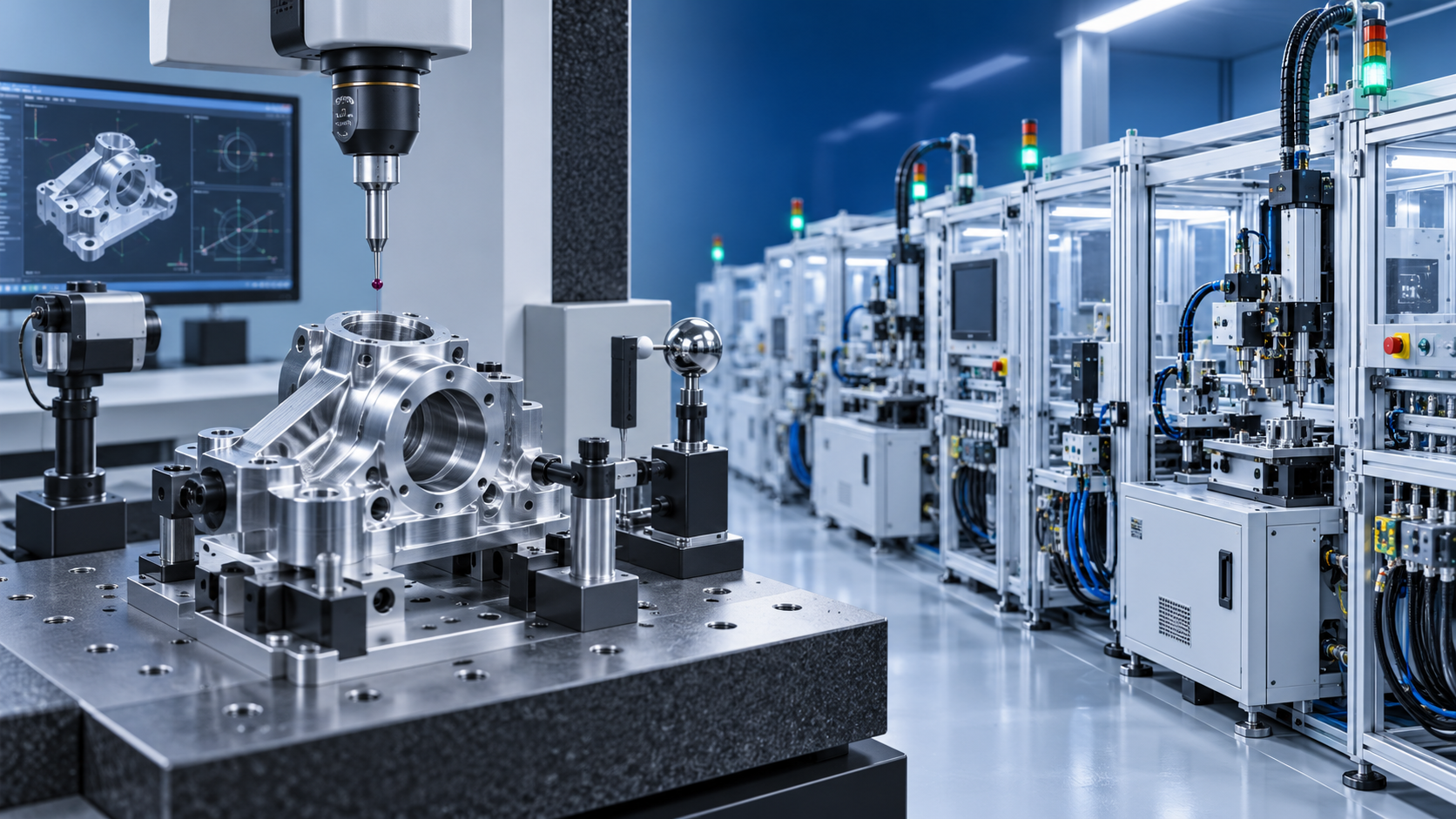
Micrometers, bore gages, CMMs, air gages, and surface instruments must be selected according to feature geometry and tolerance band.
Measurement temperature matters. A warm part removed from the spindle can appear out of tolerance or falsely acceptable.
For tight-fit rotating components, measurement strategy should include roundness, cylindricity, surface finish, and functional fit where applicable.
- Use calibrated gages with known repeatability for the required tolerance range.
- Measure at multiple axial and angular positions, not only one convenient point.
- Separate operator technique error from true latheturning process variation.
- Document measurement conditions whenever tolerance is close to the limit.
Application Notes Across Advanced Mobility Components
Aerospace rotating and structural parts
Aircraft bushings, actuator rods, landing gear pins, and engine-adjacent sleeves often require strict control of diameter, concentricity, and surface integrity.
In these parts, latheturning tolerance affects fatigue life, assembly force, lubrication behavior, and inspection acceptance under controlled quality systems.
Rail, maglev, and transportation assemblies
High-speed rail and maglev systems rely on stable rotating interfaces, precision shafts, sensor housings, and braking system components.
Latheturning variation can influence vibration, bearing load distribution, sealing performance, and long-term maintenance intervals.
Space and satellite hardware
Satellite and launch-related components often combine lightweight geometry with demanding surface and dimensional requirements.
Thin walls, exotic alloys, and thermal exposure make latheturning process control essential before final inspection and assembly.
Commonly Ignored Risks That Affect Final Tolerance
Ignoring workpiece temperature. A part measured immediately after latheturning may still be thermally expanded. This can create false acceptance or unnecessary correction.
Overcorrecting offsets. Frequent offset changes without trend analysis can turn normal variation into instability. Offset control should follow measured patterns.
Using worn workholding. Damaged jaws, dirty collets, or uneven clamping surfaces can introduce runout before the cutting tool touches the part.
Skipping first-article learning. First-piece inspection should confirm the complete latheturning route, not only the final dimension after manual adjustment.
Underestimating coolant condition. Poor concentration, contamination, or unstable temperature can affect tool wear, surface finish, and dimensional repeatability.
Execution Guide for Stable Latheturning Tolerance
- Start with a controlled setup sheet that defines tools, offsets, workholding, coolant, speeds, feeds, and inspection checkpoints.
- Run a qualification piece and inspect all tolerance-critical features before approving repeated latheturning production.
- Track tool life by feature quality, not only by cutting time or part count.
- Apply statistical monitoring when multiple parts must hold tight tolerance across a long production run.
- Review nonconforming dimensions by root cause, separating machine, tool, material, setup, and measurement issues.
A reliable latheturning plan should include both prevention and detection. Prevention reduces variation, while detection confirms whether control remains effective.
When tolerance bands are narrow, every undocumented adjustment becomes a risk. Controlled records support troubleshooting and certification evidence.
Summary and Next Actions
Final tolerance in latheturning is shaped by machine alignment, tooling condition, cutting strategy, material response, temperature, and measurement discipline.
The most effective next step is to audit current turning operations against a structured checklist and identify where variation enters the process.
Prioritize high-risk features first: bearing fits, sealing diameters, thin walls, long shafts, and surfaces tied to fatigue or assembly performance.
By treating latheturning as a controlled manufacturing system, final tolerance becomes more predictable, inspection becomes more efficient, and component reliability improves.
Article Categories
SYSTEM_ALERT_URGENT
Q3 SYMPOSIUM ON ORBITAL DYNAMICS
Registration for the Orbital Aerospace technical committee is now open. Node access required.
Taglist:
Recent Articles
![]() Oct 27, 2026FAA Certifies Boeing 737 MAX 10 After Years of DelaysFAA Certifies Boeing 737 MAX 10 After Years of Delays
Oct 27, 2026FAA Certifies Boeing 737 MAX 10 After Years of DelaysFAA Certifies Boeing 737 MAX 10 After Years of Delays Oct 27, 2026Can an intermodal connectivity platform reduce rail handoff delays?Can an intermodal connectivity platform reduce rail handoff delays?
![]() Oct 26, 2026Chery Unveils Global Smart Mobility Strategy Targeting Robotaxis and eVTOLsChery Unveils Global Smart Mobility Strategy Targeting Robotaxis and eVTOLs
Oct 26, 2026Chery Unveils Global Smart Mobility Strategy Targeting Robotaxis and eVTOLsChery Unveils Global Smart Mobility Strategy Targeting Robotaxis and eVTOLs Oct 26, 2026How to evaluate avionics for helicopters used in IFR operationsHow to evaluate avionics for helicopters used in IFR operations
![]() Oct 25, 2026Ukraine’s Defence Minister Says SpaceX Satellite Services Restored After Speed RestrictionsUkraine’s Defence Minister Says SpaceX Satellite Services Restored After Speed Restrictions
Oct 25, 2026Ukraine’s Defence Minister Says SpaceX Satellite Services Restored After Speed RestrictionsUkraine’s Defence Minister Says SpaceX Satellite Services Restored After Speed Restrictions Oct 25, 2026How satellite infrastructure for IoT affects sensor reporting delaysHow satellite infrastructure for IoT affects sensor reporting delays
![]() Oct 24, 2026China Successfully Launches Yaogan 50-03 SatelliteChina Successfully Launches Yaogan 50-03 Satellite
Oct 24, 2026China Successfully Launches Yaogan 50-03 SatelliteChina Successfully Launches Yaogan 50-03 Satellite Oct 24, 2026How gradients affect traction power needs in high-speed rolling stockHow gradients affect traction power needs in high-speed rolling stock
![]() Oct 23, 2026FAA Proposes Checks on Nearly 2,000 Boeing 737NGs Over Loss-of-Control RiskFAA Proposes Checks on Nearly 2,000 Boeing 737NGs Over Loss-of-Control Risk
Oct 23, 2026FAA Proposes Checks on Nearly 2,000 Boeing 737NGs Over Loss-of-Control RiskFAA Proposes Checks on Nearly 2,000 Boeing 737NGs Over Loss-of-Control Risk Oct 23, 2026How fuel choice affects specific impulse in liquid oxygen propulsionHow fuel choice affects specific impulse in liquid oxygen propulsion
![]() Oct 22, 2026QuantumScape Plans 100 MWh Solid-State Battery Line Targeting Aerospace and Other MarketsQuantumScape Plans 100 MWh Solid-State Battery Line Targeting Aerospace and Other Markets
Oct 22, 2026QuantumScape Plans 100 MWh Solid-State Battery Line Targeting Aerospace and Other MarketsQuantumScape Plans 100 MWh Solid-State Battery Line Targeting Aerospace and Other Markets Oct 22, 2026How tank size limits hydrogen aircraft range on regional flightsHow tank size limits hydrogen aircraft range on regional flights
![]() Oct 21, 2026FAA Certifies Boeing 737-10, Clearing Regulatory Hurdle for DeliveriesFAA Certifies Boeing 737-10, Clearing Regulatory Hurdle for Deliveries
Oct 21, 2026FAA Certifies Boeing 737-10, Clearing Regulatory Hurdle for DeliveriesFAA Certifies Boeing 737-10, Clearing Regulatory Hurdle for Deliveries Oct 21, 2026How are electric vertical takeoff aircraft certified in the US?How are electric vertical takeoff aircraft certified in the US?
![]() Oct 20, 2026Ohio Department of Transportation Releases Three-Year Advanced Air Mobility Action PlanOhio Department of Transportation Releases Three-Year Advanced Air Mobility Action Plan
Oct 20, 2026Ohio Department of Transportation Releases Three-Year Advanced Air Mobility Action PlanOhio Department of Transportation Releases Three-Year Advanced Air Mobility Action Plan Oct 20, 2026How does magnetic flux density in tesla affect maglev lift force?How does magnetic flux density in tesla affect maglev lift force?
![]() Oct 19, 2026ZeroAvia Completes Key Ground Tests of ZA600 Hydrogen Fuel Cell PowertrainZeroAvia Completes Key Ground Tests of ZA600 Hydrogen Fuel Cell Powertrain
Oct 19, 2026ZeroAvia Completes Key Ground Tests of ZA600 Hydrogen Fuel Cell PowertrainZeroAvia Completes Key Ground Tests of ZA600 Hydrogen Fuel Cell Powertrain Oct 19, 2026How spacecraft integration affects advanced propulsion costsHow spacecraft integration affects advanced propulsion costs
 Oct 18, 2026How chilldown prevents cavitation in cryogenic engine systemsHow chilldown prevents cavitation in cryogenic engine systems
 Oct 17, 2026How explainability affects algorithmic trust in AI flight systemsHow explainability affects algorithmic trust in AI flight systems
 Oct 16, 2026How to evaluate transportation technology for Middle East heatHow to evaluate transportation technology for Middle East heat
 Oct 15, 2026How common-cause failures defeat redundancy logic in European avionicsHow common-cause failures defeat redundancy logic in European avionics
 Oct 14, 2026How DO-160 applies to aerospace technology testing for avionicsHow DO-160 applies to aerospace technology testing for avionics
 Oct 13, 2026How fuel price volatility shapes commercial aviation cost trendsHow fuel price volatility shapes commercial aviation cost trends
 Oct 12, 2026How to qualify aerospace manufacturing components for traceabilityHow to qualify aerospace manufacturing components for traceability
 Oct 11, 2026Which certification hurdles are slowing hydrogen aviation in Europe?Which certification hurdles are slowing hydrogen aviation in Europe?
 Oct 10, 2026What evidence should a magnetic gap stability supplier provide?What evidence should a magnetic gap stability supplier provide?
 Oct 09, 2026Which ISO standards matter when qualifying industrial technology suppliers?Which ISO standards matter when qualifying industrial technology suppliers?
 Oct 08, 2026When does reusability actually lower launch vehicle costs?When does reusability actually lower launch vehicle costs?
 Oct 07, 2026Where to find reliable product knowledge resources in the Middle EastWhere to find reliable product knowledge resources in the Middle East
 Oct 06, 2026What drives high-speed rail systems cost per kilometer?What drives high-speed rail systems cost per kilometer?
 Oct 05, 2026When does hydrogen propulsion for UAV extend mission range enough to justify it?When does hydrogen propulsion for UAV extend mission range enough to justify it?
 Oct 04, 2026How rail systems integration reduces commissioning delaysHow rail systems integration reduces commissioning delays
 Oct 03, 2026How to evaluate an advanced propulsion manufacturer for hydrogen systemsHow to evaluate an advanced propulsion manufacturer for hydrogen systems
 Oct 02, 2026How to qualify aircraft components for OEM production approvalHow to qualify aircraft components for OEM production approval