Transportation Technology Trends Shaping 2026 Logistics
Lead Author
Published
Views:
Transportation Technology is moving from pilot projects to operating reality

Transportation Technology is no longer a side conversation in logistics planning for 2026.
It is becoming a board-level issue tied to resilience, certification, energy exposure, and route flexibility.
What changed is not just the pace of innovation.
The bigger shift is that air, rail, space-enabled tracking, and autonomous ground systems are starting to converge.
That convergence matters because logistics networks now face tighter emissions targets, more volatile trade corridors, and higher expectations for real-time control.
In this environment, Transportation Technology becomes less about isolated equipment upgrades and more about system design.
A useful way to read 2026 is through the lens of future global mobility.
That is where institutions such as G-AIT have growing relevance.
Their value lies in linking frontier engineering with operational integrity across aviation, maglev, urban air mobility, and extreme-environment logistics.
For logistics strategy, this means the market is rewarding technologies that can scale within real safety and compliance frameworks.
Why the signal looks stronger heading into 2026
Recent demand patterns show a clear change in how transport investment is evaluated.
Speed still matters, but predictability now matters just as much.
That is pushing Transportation Technology toward platforms that combine automation, digital visibility, and energy efficiency.
The pressure is coming from several directions at once.
More importantly, these drivers reinforce each other.
Autonomous systems without trusted data are hard to scale.
Zero-emission vehicles without route intelligence can create new bottlenecks.
That is why Transportation Technology investment is shifting toward integrated architectures instead of isolated pilots.
The next wave is defined by connected modes, not single-mode breakthroughs
One of the most important market signals is the fading boundary between transport modes.
Logistics planning used to separate aviation, rail, road, and specialized delivery into different decision tracks.
That separation is becoming less useful.
High-speed rail and maglev influence inland freight timing.
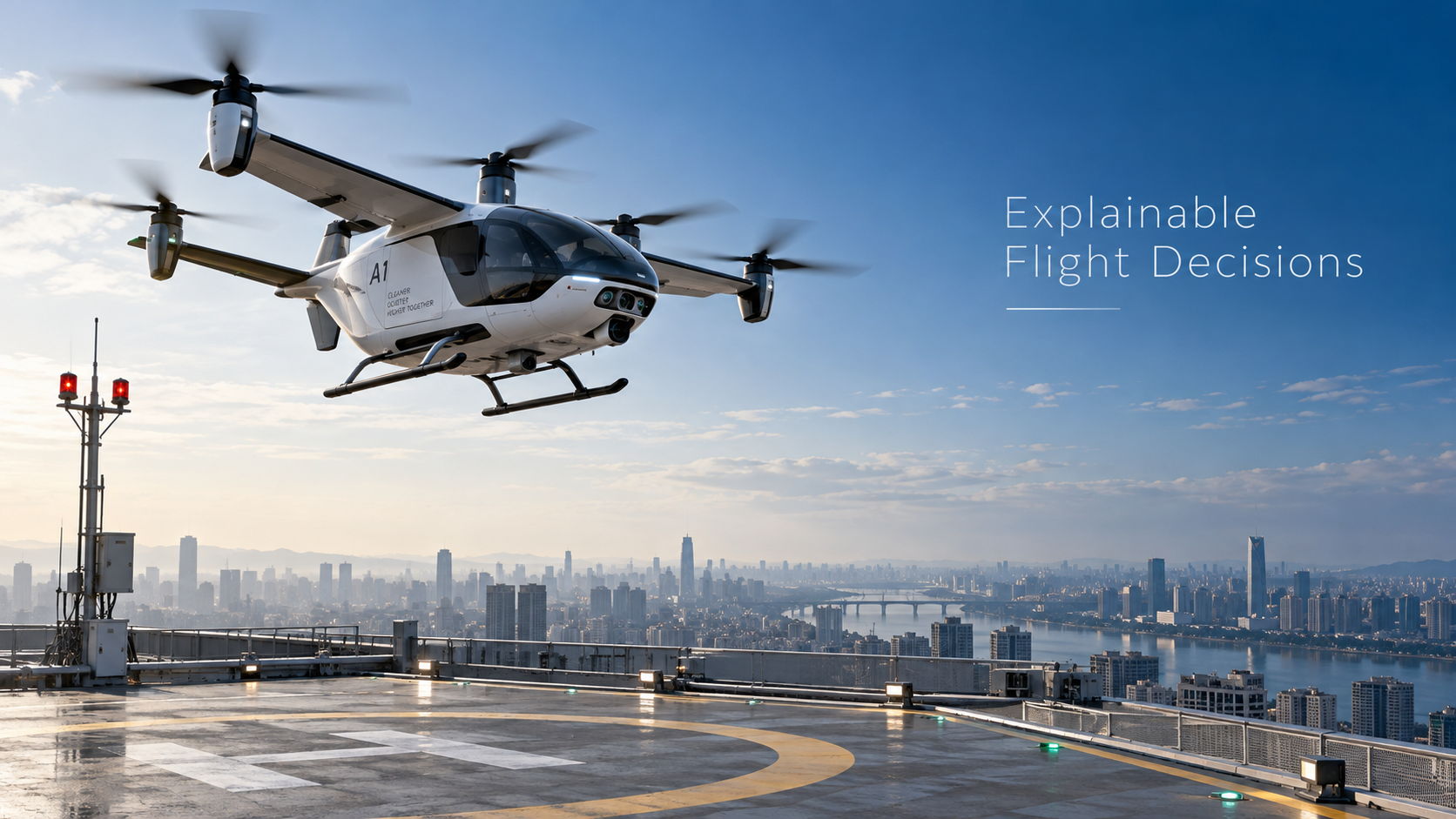
Urban air mobility changes assumptions about critical last-mile delivery.
Satellite infrastructure improves cross-border asset visibility.
Advanced commercial aviation reshapes premium cargo economics through lighter materials and cleaner propulsion pathways.
This is exactly why benchmarking matters.
G-AIT’s cross-domain approach reflects a wider market truth.
The strongest Transportation Technology strategies are being built around interoperability, certification readiness, and engineering transfer across sectors.
- Composite airframe advances reduce payload penalties in cleaner aviation logistics.
- Autonomous flight-control logic informs safer eVTOL corridor management.
- Maglev signaling principles strengthen thinking around high-speed terrestrial coordination.
- Space-based monitoring supports remote and extreme-environment logistics continuity.
The practical consequence is simple.
Technology roadmaps must now be evaluated as network capabilities, not as procurement line items.
Where Transportation Technology will change logistics operations first
The first visible impact will not be universal autonomy everywhere.
It will be selective transformation in routes and assets where variability is expensive.
From recent deployment patterns, several scenarios stand out.
Time-critical corridors
Air-rail coordination, predictive dispatch, and autonomous yard operations will reduce buffer inventory.
This matters where delay costs exceed transport cost.
Remote and extreme environments
Specialized Transportation Technology will gain value in harsh climates, low-infrastructure zones, and strategic supply routes.
In these settings, reliability and telemetry outrank raw speed.
Urban logistics under emissions pressure
Zero-emission fleets, smart charging logic, and constrained-zone automation will reshape service economics.
The operational question becomes grid coordination as much as vehicle capability.
Premium cargo and regulated supply chains
Sensor-rich Transportation Technology supports stronger chain-of-custody, route assurance, and compliance evidence.
That creates value beyond faster delivery alone.
Across all four areas, the same pattern appears.
The winning technologies are those that reduce operational uncertainty, not just manual labor.
The harder question is no longer innovation, but readiness
A common mistake is to treat Transportation Technology as a future option instead of a readiness challenge.
By 2026, the gap between leaders and laggards may come less from invention and more from integration discipline.
Actual deployment depends on three filters that are often underestimated.
- Certification alignment across FAA, EASA, UIC, ISO, and local operating requirements.
- Digital interoperability between vehicles, control platforms, maintenance systems, and external infrastructure.
- Risk governance that links engineering performance to operational accountability.
This is where many promising programs slow down.
The technology may work, yet the certification path, data structure, or maintenance regime may still be immature.
That does not weaken the case for adoption.
It changes the order of work.
Transportation Technology planning now needs engineering validation, infrastructure mapping, and policy tracking from the beginning.
What deserves closer attention over the next planning cycle
Several signals are worth watching more closely than headline announcements.
They reveal whether Transportation Technology is becoming commercially durable or remaining experimental.
- Route-level economics after factoring charging time, energy sourcing, and asset utilization.
- Certification milestones that move vehicles and control systems closer to regular operations.
- Infrastructure bottlenecks around power, hydrogen, signaling, airspace access, and maintenance capacity.
- Data governance rules affecting cross-border visibility, autonomous decisions, and fleet cybersecurity.
- Intermodal performance metrics showing whether handoff points are improving or simply shifting delays.
More subtle signals matter too.
When engineering teams start using the same performance language across aviation, rail, and digital logistics, market maturity is rising.
That shared language is essential for future global mobility, because complex logistics networks fail at interfaces before they fail at endpoints.
A practical way to respond before 2026 arrives
The smartest response is not to chase every new platform.
It is to build a structured view of which Transportation Technology shifts are becoming unavoidable in your operating environment.
A practical planning sequence can start with four moves.
- Map where cost, delay, emissions, or compliance exposure is concentrated in the current network.
- Compare those pressure points with technologies already nearing certification or infrastructure support.
- Test intermodal scenarios instead of evaluating road, rail, air, and autonomous assets separately.
- Create phased readiness plans covering data, maintenance, safety, and external standards.
That approach keeps the discussion grounded.
It also reflects the reality that Transportation Technology in 2026 will reward disciplined adopters more than early experimenters alone.
The broad direction is now clear.
Logistics is entering a period where autonomous freight, zero-emission mobility, advanced aviation, high-speed rail intelligence, and satellite-enabled oversight are increasingly connected.
The next step is to watch the interfaces, benchmark against credible standards, and decide which capabilities need to be ready before market conditions force the timing.
Article Categories
SYSTEM_ALERT_URGENT
Q3 SYMPOSIUM ON ORBITAL DYNAMICS
Registration for the Orbital Aerospace technical committee is now open. Node access required.
Recent Articles
![]() Oct 27, 2026FAA Certifies Boeing 737 MAX 10 After Years of DelaysFAA Certifies Boeing 737 MAX 10 After Years of Delays
Oct 27, 2026FAA Certifies Boeing 737 MAX 10 After Years of DelaysFAA Certifies Boeing 737 MAX 10 After Years of Delays Oct 27, 2026Can an intermodal connectivity platform reduce rail handoff delays?Can an intermodal connectivity platform reduce rail handoff delays?
![]() Oct 26, 2026Chery Unveils Global Smart Mobility Strategy Targeting Robotaxis and eVTOLsChery Unveils Global Smart Mobility Strategy Targeting Robotaxis and eVTOLs
Oct 26, 2026Chery Unveils Global Smart Mobility Strategy Targeting Robotaxis and eVTOLsChery Unveils Global Smart Mobility Strategy Targeting Robotaxis and eVTOLs Oct 26, 2026How to evaluate avionics for helicopters used in IFR operationsHow to evaluate avionics for helicopters used in IFR operations
![]() Oct 25, 2026Ukraine’s Defence Minister Says SpaceX Satellite Services Restored After Speed RestrictionsUkraine’s Defence Minister Says SpaceX Satellite Services Restored After Speed Restrictions
Oct 25, 2026Ukraine’s Defence Minister Says SpaceX Satellite Services Restored After Speed RestrictionsUkraine’s Defence Minister Says SpaceX Satellite Services Restored After Speed Restrictions Oct 25, 2026How satellite infrastructure for IoT affects sensor reporting delaysHow satellite infrastructure for IoT affects sensor reporting delays
![]() Oct 24, 2026China Successfully Launches Yaogan 50-03 SatelliteChina Successfully Launches Yaogan 50-03 Satellite
Oct 24, 2026China Successfully Launches Yaogan 50-03 SatelliteChina Successfully Launches Yaogan 50-03 Satellite Oct 24, 2026How gradients affect traction power needs in high-speed rolling stockHow gradients affect traction power needs in high-speed rolling stock
![]() Oct 23, 2026FAA Proposes Checks on Nearly 2,000 Boeing 737NGs Over Loss-of-Control RiskFAA Proposes Checks on Nearly 2,000 Boeing 737NGs Over Loss-of-Control Risk
Oct 23, 2026FAA Proposes Checks on Nearly 2,000 Boeing 737NGs Over Loss-of-Control RiskFAA Proposes Checks on Nearly 2,000 Boeing 737NGs Over Loss-of-Control Risk Oct 23, 2026How fuel choice affects specific impulse in liquid oxygen propulsionHow fuel choice affects specific impulse in liquid oxygen propulsion
![]() Oct 22, 2026QuantumScape Plans 100 MWh Solid-State Battery Line Targeting Aerospace and Other MarketsQuantumScape Plans 100 MWh Solid-State Battery Line Targeting Aerospace and Other Markets
Oct 22, 2026QuantumScape Plans 100 MWh Solid-State Battery Line Targeting Aerospace and Other MarketsQuantumScape Plans 100 MWh Solid-State Battery Line Targeting Aerospace and Other Markets Oct 22, 2026How tank size limits hydrogen aircraft range on regional flightsHow tank size limits hydrogen aircraft range on regional flights
![]() Oct 21, 2026FAA Certifies Boeing 737-10, Clearing Regulatory Hurdle for DeliveriesFAA Certifies Boeing 737-10, Clearing Regulatory Hurdle for Deliveries
Oct 21, 2026FAA Certifies Boeing 737-10, Clearing Regulatory Hurdle for DeliveriesFAA Certifies Boeing 737-10, Clearing Regulatory Hurdle for Deliveries Oct 21, 2026How are electric vertical takeoff aircraft certified in the US?How are electric vertical takeoff aircraft certified in the US?
![]() Oct 20, 2026Ohio Department of Transportation Releases Three-Year Advanced Air Mobility Action PlanOhio Department of Transportation Releases Three-Year Advanced Air Mobility Action Plan
Oct 20, 2026Ohio Department of Transportation Releases Three-Year Advanced Air Mobility Action PlanOhio Department of Transportation Releases Three-Year Advanced Air Mobility Action Plan Oct 20, 2026How does magnetic flux density in tesla affect maglev lift force?How does magnetic flux density in tesla affect maglev lift force?
![]() Oct 19, 2026ZeroAvia Completes Key Ground Tests of ZA600 Hydrogen Fuel Cell PowertrainZeroAvia Completes Key Ground Tests of ZA600 Hydrogen Fuel Cell Powertrain
Oct 19, 2026ZeroAvia Completes Key Ground Tests of ZA600 Hydrogen Fuel Cell PowertrainZeroAvia Completes Key Ground Tests of ZA600 Hydrogen Fuel Cell Powertrain Oct 19, 2026How spacecraft integration affects advanced propulsion costsHow spacecraft integration affects advanced propulsion costs
 Oct 18, 2026How chilldown prevents cavitation in cryogenic engine systemsHow chilldown prevents cavitation in cryogenic engine systems
 Oct 17, 2026How explainability affects algorithmic trust in AI flight systemsHow explainability affects algorithmic trust in AI flight systems
 Oct 16, 2026How to evaluate transportation technology for Middle East heatHow to evaluate transportation technology for Middle East heat
 Oct 15, 2026How common-cause failures defeat redundancy logic in European avionicsHow common-cause failures defeat redundancy logic in European avionics
 Oct 14, 2026How DO-160 applies to aerospace technology testing for avionicsHow DO-160 applies to aerospace technology testing for avionics
 Oct 13, 2026How fuel price volatility shapes commercial aviation cost trendsHow fuel price volatility shapes commercial aviation cost trends
 Oct 12, 2026How to qualify aerospace manufacturing components for traceabilityHow to qualify aerospace manufacturing components for traceability
 Oct 11, 2026Which certification hurdles are slowing hydrogen aviation in Europe?Which certification hurdles are slowing hydrogen aviation in Europe?
 Oct 10, 2026What evidence should a magnetic gap stability supplier provide?What evidence should a magnetic gap stability supplier provide?
 Oct 09, 2026Which ISO standards matter when qualifying industrial technology suppliers?Which ISO standards matter when qualifying industrial technology suppliers?
 Oct 08, 2026When does reusability actually lower launch vehicle costs?When does reusability actually lower launch vehicle costs?
 Oct 07, 2026Where to find reliable product knowledge resources in the Middle EastWhere to find reliable product knowledge resources in the Middle East
 Oct 06, 2026What drives high-speed rail systems cost per kilometer?What drives high-speed rail systems cost per kilometer?
 Oct 05, 2026When does hydrogen propulsion for UAV extend mission range enough to justify it?When does hydrogen propulsion for UAV extend mission range enough to justify it?
 Oct 04, 2026How rail systems integration reduces commissioning delaysHow rail systems integration reduces commissioning delays
 Oct 03, 2026How to evaluate an advanced propulsion manufacturer for hydrogen systemsHow to evaluate an advanced propulsion manufacturer for hydrogen systems
 Oct 02, 2026How to qualify aircraft components for OEM production approvalHow to qualify aircraft components for OEM production approval