Norway Joins French 'Forward Deterrence' Initiative
Lead Author
Published
Views:
Norway’s accession to France’s 'Forward Deterrence' initiative on May 27, 2026 — announced during Prime Minister Jonas Gahr Støre’s visit to Paris — marks the first extension of a non-NATO nuclear deterrence framework to a Nordic country. This development directly affects export compliance pathways for high-reliability avionics systems, orbital mission logic software, and air traffic coordination architectures — particularly those subject to dual certification under EASA and France’s Direction des Systèmes de Navigation (DSN).
Event Overview
On May 27, 2026, Norwegian Prime Minister Jonas Gahr Støre confirmed during an official visit to France that Norway would join the French 'Forward Deterrence' initiative. Under this arrangement, France is permitted to conduct nuclear deterrence exercises and deploy strategic nuclear-capable assets on Norwegian territory under defined circumstances. The agreement represents the first formal inclusion of a non-nuclear NATO member in a French-led nuclear deterrence cooperation framework.
Industries Affected
Avionics Exporters & Systems Integrators
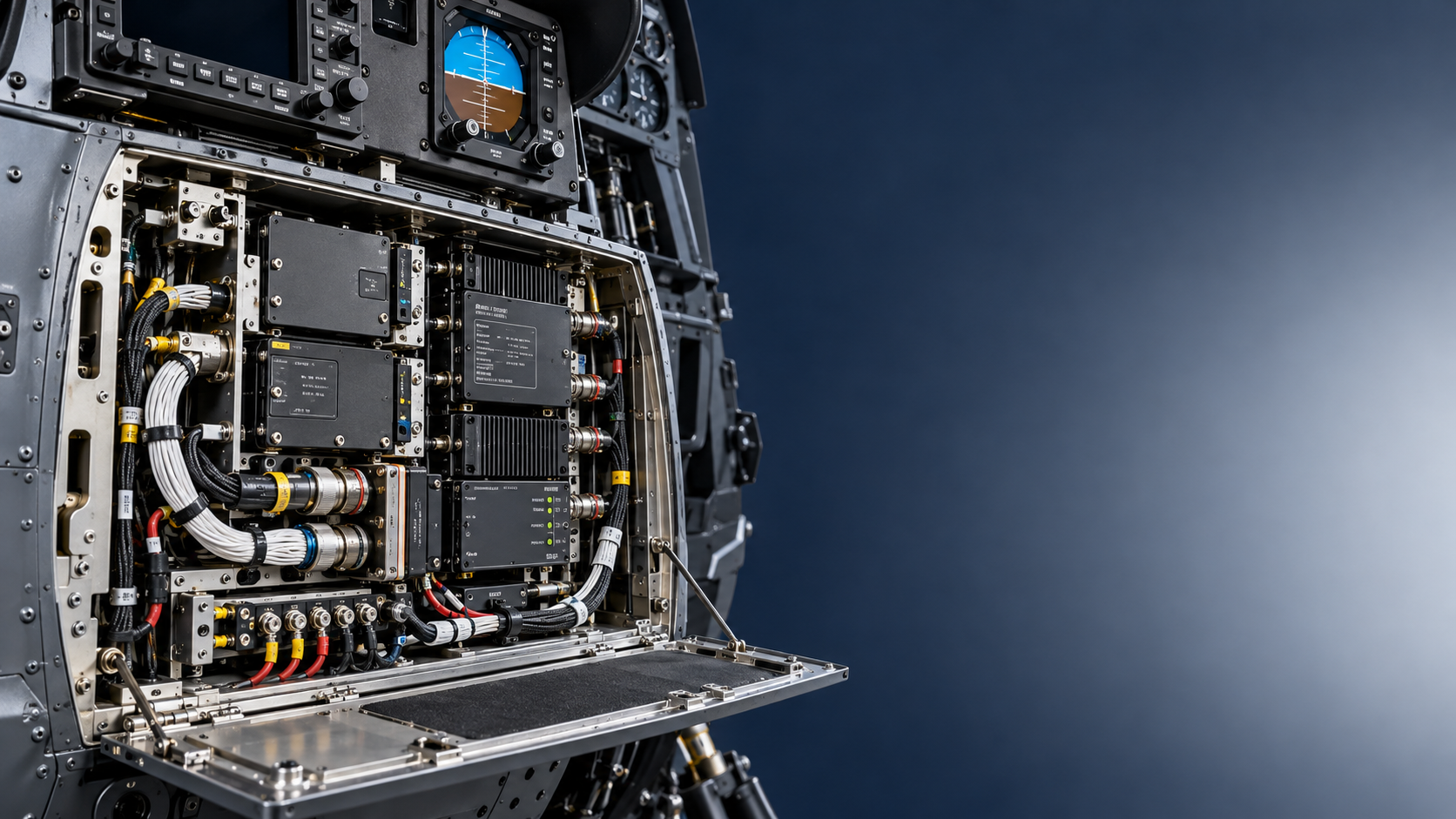
Why affected: The initiative triggers updated export control alignment for platforms operating in or transiting Norwegian airspace during joint deterrence activities. High-reliability avionics systems — such as those developed by Avionics Watch — now face dual regulatory scrutiny under both EASA civil aviation safety rules and France’s DSN requirements for defense-related airborne systems.
Impact areas: Certification timelines, technical documentation scope (e.g., radiation-hardened flight control logic), and end-use verification protocols for exports destined to Norway or integrated into Franco-Norwegian joint operations.
Orbital Mission Software Providers
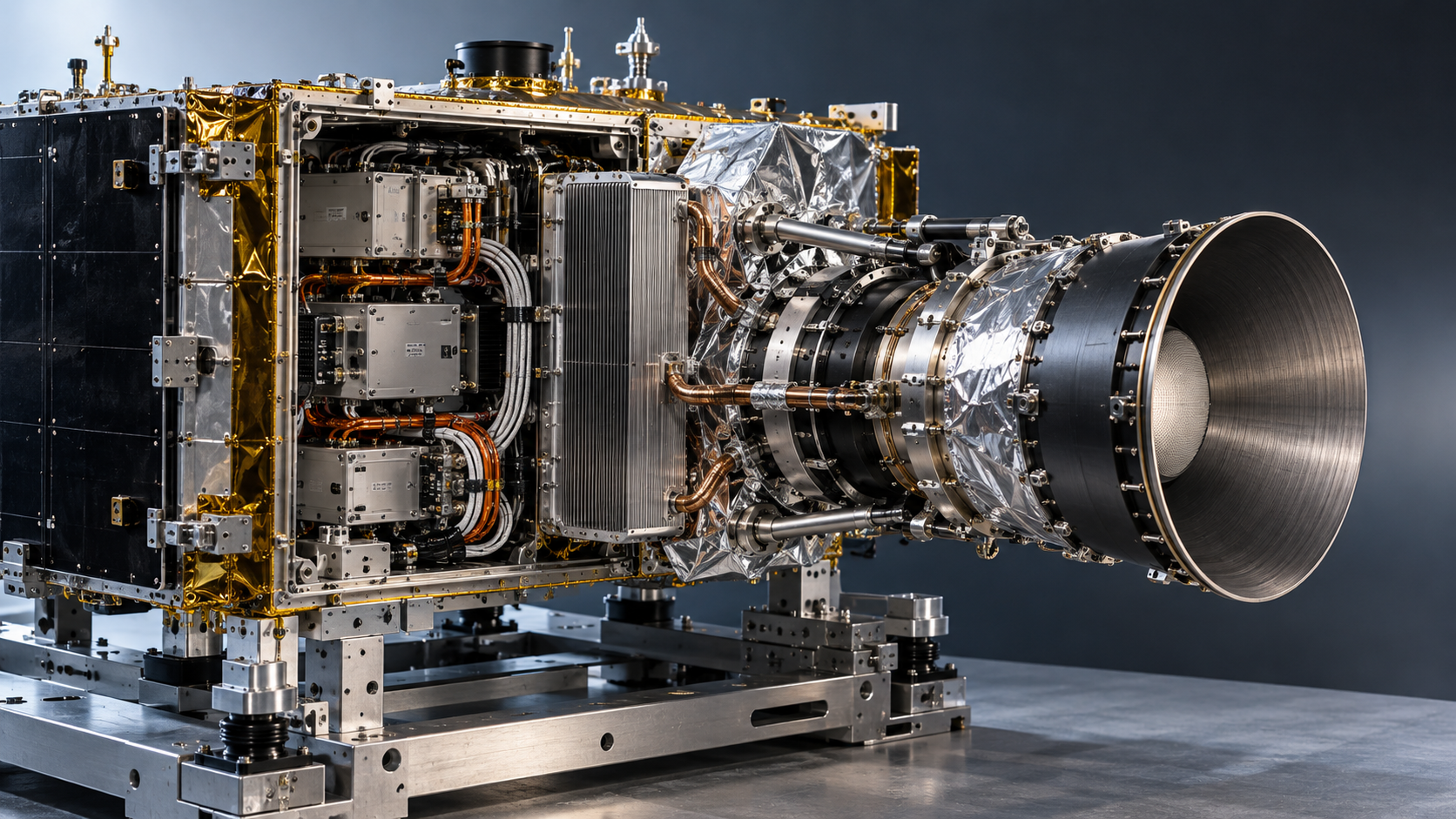
Why affected: Orbital Logic’s satellite-based command, navigation, and timing (CNAV) software may be deployed in support of coordinated surveillance or early-warning functions tied to the initiative. Such use cases fall under strengthened dual-use export controls when linked to nuclear deterrence infrastructure.
Impact areas: Licensing requirements for software distribution in Norway; classification status under EU Dual-Use Regulation Annex I; and audit readiness for end-user assurance documentation.
Airspace Management Infrastructure Vendors
Why affected: Sky Grid’s air traffic coordination architecture — designed for dynamic, multi-jurisdictional airspace integration — may be adapted for real-time coordination between French strategic assets and Norwegian national air defense systems. This increases exposure to national security-related compliance obligations.
Impact areas: Data residency and processing jurisdiction clauses in supply contracts; cybersecurity certification alignment with French ANSSI and Norwegian NSM standards; and traceability of system updates deployed in operational environments.
What Enterprises and Practitioners Should Monitor and Do Now
Track official guidance from EASA and DSN on dual-certification interpretation
The current announcement does not specify how EASA and DSN will harmonize technical acceptance criteria for avionics or airspace systems. Enterprises should monitor forthcoming DSN circulars and EASA Safety Directives issued after June 2026 — especially those referencing ‘joint deterrence support systems’ or ‘Nordic interoperability frameworks’.
Review existing export licenses and contractual commitments involving Norway
Companies supplying avionics, orbital software, or airspace coordination tools to Norwegian entities must verify whether current licenses permit re-export, technical assistance, or cloud-based deployment in scenarios tied to the Forward Deterrence framework. Contracts referencing ‘civil use only’ or ‘non-defense applications’ may require amendment.
Distinguish policy signal from operational implementation
Analysis shows the agreement establishes a political and legal basis for future collaboration but does not yet mandate new deployments or system integrations. Current impact remains procedural — focused on certification eligibility and licensing scope — rather than immediate technical modification requirements.
Update internal compliance checklists for Norwegian-bound shipments and services
Export control officers should add two new checkpoints: (1) whether the consignee is engaged in Forward Deterrence–related activities (per publicly listed MoUs or national defense white papers), and (2) whether software or hardware includes functionalities referenced in DSN’s 2025 ‘Critical Airborne Systems’ classification annex.
Editorial Perspective / Industry Observation
Observably, this development functions primarily as a geopolitical signal — affirming deepening European strategic autonomy beyond NATO’s nuclear umbrella — rather than an immediate technical or regulatory overhaul. From an industry perspective, it is better understood as a trigger for enhanced due diligence, not a wholesale revision of certification pathways. The more consequential implications will emerge only if and when joint exercises commence or dedicated infrastructure (e.g., hardened data links, shared C4ISR nodes) enters procurement planning — both of which remain unconfirmed as of May 2026. Continued monitoring of French and Norwegian defense ministry publications — particularly those referencing ‘interoperability roadmaps’ or ‘dual-use certification pilots’ — is warranted.
Conclusion
This initiative does not alter existing export control regimes outright, but introduces a new context in which previously civilian-focused systems may acquire defense-relevant application profiles. Its primary industry significance lies in heightened scrutiny at the intersection of civil aviation regulation and national security compliance — especially where Norwegian territory or infrastructure becomes operationally integrated into French strategic deterrence planning. Currently, it is more appropriately understood as a compliance horizon event than an active regulatory change.
Source Attribution
Primary source: Official joint statement issued by the Government of Norway and the French Ministry of the Armed Forces, dated May 27, 2026. Additional context drawn from publicly available briefings by EASA and France’s DSN regarding dual-certification procedures for airborne systems. Note: Implementation timelines, exercise schedules, and detailed technical annexes remain pending publication and are subject to ongoing observation.
Article Categories
SYSTEM_ALERT_URGENT
Q3 SYMPOSIUM ON ORBITAL DYNAMICS
Registration for the Orbital Aerospace technical committee is now open. Node access required.
Taglist:
Recent Articles
![]() Oct 27, 2026FAA Certifies Boeing 737 MAX 10 After Years of DelaysFAA Certifies Boeing 737 MAX 10 After Years of Delays
Oct 27, 2026FAA Certifies Boeing 737 MAX 10 After Years of DelaysFAA Certifies Boeing 737 MAX 10 After Years of Delays Oct 27, 2026Can an intermodal connectivity platform reduce rail handoff delays?Can an intermodal connectivity platform reduce rail handoff delays?
![]() Oct 26, 2026Chery Unveils Global Smart Mobility Strategy Targeting Robotaxis and eVTOLsChery Unveils Global Smart Mobility Strategy Targeting Robotaxis and eVTOLs
Oct 26, 2026Chery Unveils Global Smart Mobility Strategy Targeting Robotaxis and eVTOLsChery Unveils Global Smart Mobility Strategy Targeting Robotaxis and eVTOLs Oct 26, 2026How to evaluate avionics for helicopters used in IFR operationsHow to evaluate avionics for helicopters used in IFR operations
![]() Oct 25, 2026Ukraine’s Defence Minister Says SpaceX Satellite Services Restored After Speed RestrictionsUkraine’s Defence Minister Says SpaceX Satellite Services Restored After Speed Restrictions
Oct 25, 2026Ukraine’s Defence Minister Says SpaceX Satellite Services Restored After Speed RestrictionsUkraine’s Defence Minister Says SpaceX Satellite Services Restored After Speed Restrictions Oct 25, 2026How satellite infrastructure for IoT affects sensor reporting delaysHow satellite infrastructure for IoT affects sensor reporting delays
![]() Oct 24, 2026China Successfully Launches Yaogan 50-03 SatelliteChina Successfully Launches Yaogan 50-03 Satellite
Oct 24, 2026China Successfully Launches Yaogan 50-03 SatelliteChina Successfully Launches Yaogan 50-03 Satellite Oct 24, 2026How gradients affect traction power needs in high-speed rolling stockHow gradients affect traction power needs in high-speed rolling stock
![]() Oct 23, 2026FAA Proposes Checks on Nearly 2,000 Boeing 737NGs Over Loss-of-Control RiskFAA Proposes Checks on Nearly 2,000 Boeing 737NGs Over Loss-of-Control Risk
Oct 23, 2026FAA Proposes Checks on Nearly 2,000 Boeing 737NGs Over Loss-of-Control RiskFAA Proposes Checks on Nearly 2,000 Boeing 737NGs Over Loss-of-Control Risk Oct 23, 2026How fuel choice affects specific impulse in liquid oxygen propulsionHow fuel choice affects specific impulse in liquid oxygen propulsion
![]() Oct 22, 2026QuantumScape Plans 100 MWh Solid-State Battery Line Targeting Aerospace and Other MarketsQuantumScape Plans 100 MWh Solid-State Battery Line Targeting Aerospace and Other Markets
Oct 22, 2026QuantumScape Plans 100 MWh Solid-State Battery Line Targeting Aerospace and Other MarketsQuantumScape Plans 100 MWh Solid-State Battery Line Targeting Aerospace and Other Markets Oct 22, 2026How tank size limits hydrogen aircraft range on regional flightsHow tank size limits hydrogen aircraft range on regional flights
![]() Oct 21, 2026FAA Certifies Boeing 737-10, Clearing Regulatory Hurdle for DeliveriesFAA Certifies Boeing 737-10, Clearing Regulatory Hurdle for Deliveries
Oct 21, 2026FAA Certifies Boeing 737-10, Clearing Regulatory Hurdle for DeliveriesFAA Certifies Boeing 737-10, Clearing Regulatory Hurdle for Deliveries Oct 21, 2026How are electric vertical takeoff aircraft certified in the US?How are electric vertical takeoff aircraft certified in the US?
![]() Oct 20, 2026Ohio Department of Transportation Releases Three-Year Advanced Air Mobility Action PlanOhio Department of Transportation Releases Three-Year Advanced Air Mobility Action Plan
Oct 20, 2026Ohio Department of Transportation Releases Three-Year Advanced Air Mobility Action PlanOhio Department of Transportation Releases Three-Year Advanced Air Mobility Action Plan Oct 20, 2026How does magnetic flux density in tesla affect maglev lift force?How does magnetic flux density in tesla affect maglev lift force?
![]() Oct 19, 2026ZeroAvia Completes Key Ground Tests of ZA600 Hydrogen Fuel Cell PowertrainZeroAvia Completes Key Ground Tests of ZA600 Hydrogen Fuel Cell Powertrain
Oct 19, 2026ZeroAvia Completes Key Ground Tests of ZA600 Hydrogen Fuel Cell PowertrainZeroAvia Completes Key Ground Tests of ZA600 Hydrogen Fuel Cell Powertrain Oct 19, 2026How spacecraft integration affects advanced propulsion costsHow spacecraft integration affects advanced propulsion costs
 Oct 18, 2026How chilldown prevents cavitation in cryogenic engine systemsHow chilldown prevents cavitation in cryogenic engine systems
 Oct 17, 2026How explainability affects algorithmic trust in AI flight systemsHow explainability affects algorithmic trust in AI flight systems
 Oct 16, 2026How to evaluate transportation technology for Middle East heatHow to evaluate transportation technology for Middle East heat
 Oct 15, 2026How common-cause failures defeat redundancy logic in European avionicsHow common-cause failures defeat redundancy logic in European avionics
 Oct 14, 2026How DO-160 applies to aerospace technology testing for avionicsHow DO-160 applies to aerospace technology testing for avionics
 Oct 13, 2026How fuel price volatility shapes commercial aviation cost trendsHow fuel price volatility shapes commercial aviation cost trends
 Oct 12, 2026How to qualify aerospace manufacturing components for traceabilityHow to qualify aerospace manufacturing components for traceability
 Oct 11, 2026Which certification hurdles are slowing hydrogen aviation in Europe?Which certification hurdles are slowing hydrogen aviation in Europe?
 Oct 10, 2026What evidence should a magnetic gap stability supplier provide?What evidence should a magnetic gap stability supplier provide?
 Oct 09, 2026Which ISO standards matter when qualifying industrial technology suppliers?Which ISO standards matter when qualifying industrial technology suppliers?
 Oct 08, 2026When does reusability actually lower launch vehicle costs?When does reusability actually lower launch vehicle costs?
 Oct 07, 2026Where to find reliable product knowledge resources in the Middle EastWhere to find reliable product knowledge resources in the Middle East
 Oct 06, 2026What drives high-speed rail systems cost per kilometer?What drives high-speed rail systems cost per kilometer?
 Oct 05, 2026When does hydrogen propulsion for UAV extend mission range enough to justify it?When does hydrogen propulsion for UAV extend mission range enough to justify it?
 Oct 04, 2026How rail systems integration reduces commissioning delaysHow rail systems integration reduces commissioning delays
 Oct 03, 2026How to evaluate an advanced propulsion manufacturer for hydrogen systemsHow to evaluate an advanced propulsion manufacturer for hydrogen systems
 Oct 02, 2026How to qualify aircraft components for OEM production approvalHow to qualify aircraft components for OEM production approval