Qianfan Constellation Completes 10th Network Batch
Lead Author
Published
Views:
On June 5, 2026, the completion of the tenth network deployment batch for the Qianfan constellation signaled a shift from launch progress to commercial execution. With 327 satellites now in orbit, Sat-Grid Tech has entered a scaled delivery phase, while the release of the SSAPI v2.1 global ground-station access standard puts ground infrastructure operators, remote-sensing distributors, service providers, and downstream users on notice that interface readiness and localized service deployment may become more immediate business considerations.
What the June 5 milestone confirms
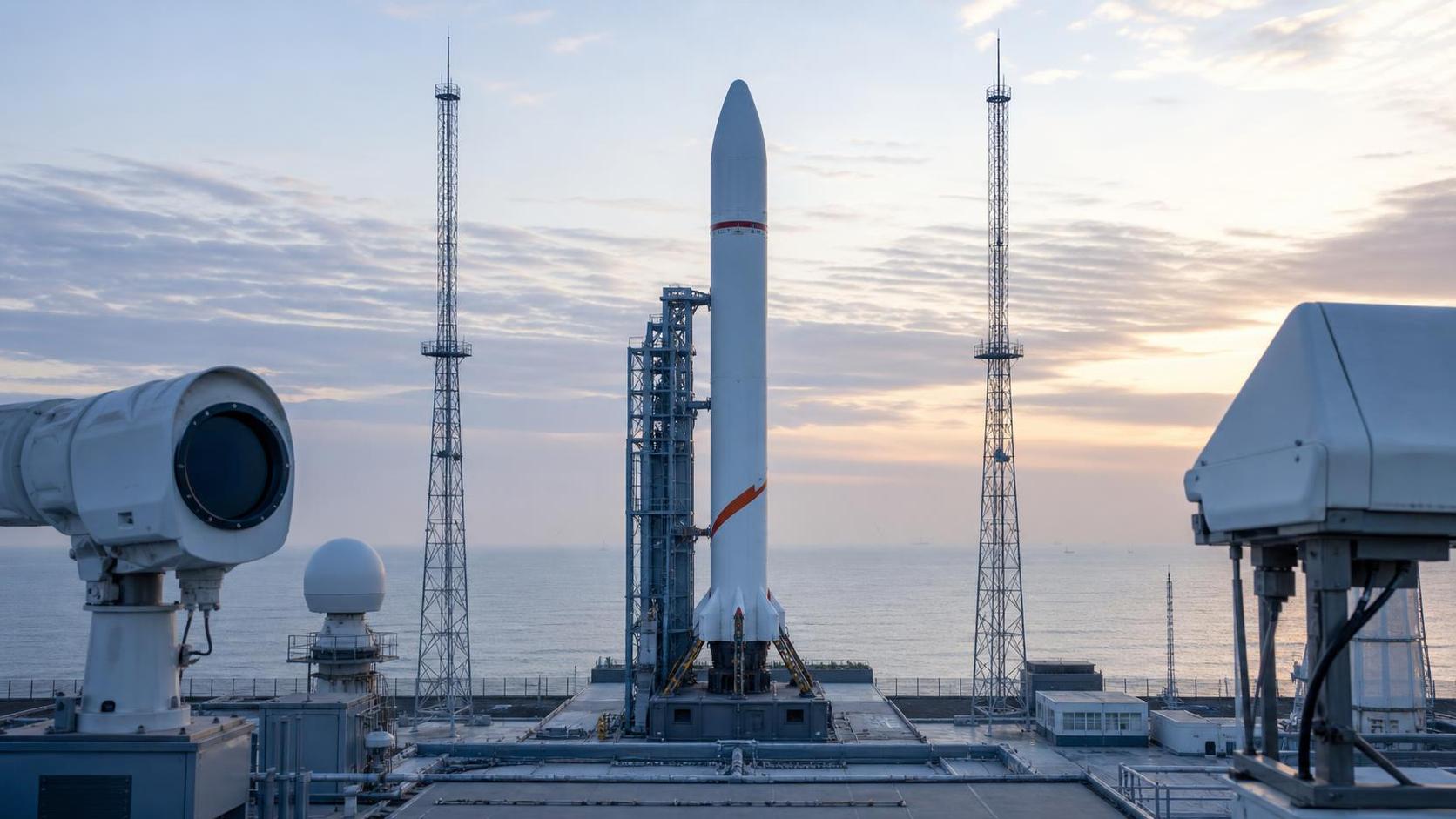
According to the provided information, a new polar-orbit satellite group for the Qianfan constellation was successfully launched from the Wenchang launch site in Hainan on June 5, 2026 and placed into its planned orbit. This marked the successful completion of the constellation’s tenth network deployment mission. The total number of satellites in orbit reached 327, and Sat-Grid Tech, defined here as satellite grid-based infrastructure, formally entered a stage of scaled commercial delivery. The constellation has also opened its global ground-station access interface standard, SSAPI v2.1, to support distributors in multiple countries that want to deploy localized remote-sensing data service nodes.
Where the business impact may emerge first
Ground-station and infrastructure operators
From an industry perspective, these participants may be among the first to feel the practical effect of the update because the opening of SSAPI v2.1 directly relates to access and interoperability. The immediate point to watch is not only technical compatibility, but also how quickly operators can align their systems with the published interface standard if they intend to participate in service delivery.
Distributors building localized data nodes
Analysis shows that multi-country distributors are specifically named in the update, which makes localized remote-sensing service deployment a notable area of attention. For this group, the likely impact centers on node deployment planning, local service packaging, and the timing of commercial rollout tied to access standards rather than only to satellite launch milestones.
Remote-sensing service providers and downstream users
Observably, the move into scaled commercial delivery matters for service providers and application-side buyers because it suggests that infrastructure availability is becoming more operationally relevant. What deserves closer attention is whether service design, procurement discussions, and delivery expectations begin shifting from pilot-style engagement toward standardized service access and repeatable fulfillment.
Channel and cross-border service participants
For channel partners and service intermediaries, the update may matter less as a launch event and more as an interface and distribution event. The business impact is likely to appear in partner onboarding, localization workflows, and customer communication around what can be delivered locally versus what still depends on further validation.
What companies should monitor now
Changes in official wording and technical rules
Companies should track whether future official communications add detail around SSAPI v2.1 usage, access conditions, implementation scope, or deployment requirements. The current update confirms the opening of the interface standard, but businesses still need to distinguish between a published access standard and the practical conditions for commercial integration.
Readiness for localized service delivery
For distributors and service providers, a key operational issue is whether their local node plans, service workflows, and customer-facing commitments can match the standardized access framework now referenced in the update. This is especially relevant for teams that need to align technical preparation with sales or delivery timelines.
Contracting and fulfillment communication
What deserves closer attention is how companies describe capability to customers and partners during this transition period. Entering scaled delivery is a meaningful step, but firms should be careful to separate confirmed availability, planned deployment, and market-facing expectations in procurement, contracting, and implementation discussions.
Documentation and partner qualification
Businesses involved in integration or redistribution should also watch for document requirements, interface-related materials, and partner qualification expectations linked to node deployment. Even where the commercial opportunity appears clearer, execution may still depend on documentation completeness and procedural alignment.
How this development is best interpreted
Analysis shows that this update is more than a simple launch success, because the wording ties orbital deployment, infrastructure commercialization, and interface openness together in one milestone. At the same time, it is more appropriate to understand this as a transitional industry signal rather than as proof that all downstream commercial outcomes are already fixed. The confirmed facts point to a new delivery phase and broader access architecture, but the pace and depth of market adoption still require observation.
A milestone with operational meaning, not a final conclusion
For the industry, the main significance of this development lies in the combination of constellation scale, formal entry into scaled commercial delivery, and the opening of a standard interface for global ground-station access. A neutral reading is that the event marks a concrete operational step for Sat-Grid Tech and related remote-sensing service models, while the broader commercial effect should still be assessed through subsequent implementation details, partner uptake, and execution progress. It is more appropriate to understand this as a meaningful medium-term signal with immediate practical implications for relevant market participants.
Basis of this article and what still needs verification
This article is based on the user-provided news title, event date, and event summary. For this type of industry update, commonly relevant source categories may include official announcements, company statements, industry association materials, authoritative media coverage, and standard-related documents. A specific official source link was not provided in the input, so further verification remains necessary. Continued monitoring should focus on subsequent official disclosures related to SSAPI v2.1, commercial delivery progress, and the practical rollout of localized remote-sensing data service nodes.
Article Categories
SYSTEM_ALERT_URGENT
Q3 SYMPOSIUM ON ORBITAL DYNAMICS
Registration for the Orbital Aerospace technical committee is now open. Node access required.
Taglist:
Recent Articles
 Sep 13, 2026How rail signaling systems improve freight corridor capacityHow rail signaling systems improve freight corridor capacity
 Sep 12, 2026What GoA4 autonomous rail requires for safe unattended operationWhat GoA4 autonomous rail requires for safe unattended operation
 Sep 11, 2026What drives orbital data analytics pricing for satellite operators?What drives orbital data analytics pricing for satellite operators?
 Sep 10, 2026How cross-border standards shape high-speed rail infrastructure in EuropeHow cross-border standards shape high-speed rail infrastructure in Europe
 Sep 09, 2026How propulsion physics shapes an aircraft’s fuel efficiencyHow propulsion physics shapes an aircraft’s fuel efficiency
 Sep 08, 2026When does a railway digital twin platform justify its cost?When does a railway digital twin platform justify its cost?
 Sep 07, 2026How fail operational systems maintain aircraft control after a faultHow fail operational systems maintain aircraft control after a fault
 Sep 07, 2026How to evaluate a power electronics price quote for avionics systemsHow to evaluate a power electronics price quote for avionics systems
 Sep 05, 2026What evidence is needed to support aircraft certification?What evidence is needed to support aircraft certification?
 Sep 04, 2026Do cryogenic propulsion systems suit satellite infrastructure?Do cryogenic propulsion systems suit satellite infrastructure?
 Sep 03, 2026When should an Urban Air Mobility OEM pursue FAA type certification?When should an Urban Air Mobility OEM pursue FAA type certification?
 Sep 02, 2026How aerospace manufacturing in Europe is adapting to supply chain riskHow aerospace manufacturing in Europe is adapting to supply chain risk
 Sep 01, 2026When does a B2B product knowledge base reduce sales support delays?When does a B2B product knowledge base reduce sales support delays?
 Aug 31, 2026Can zero emission flight in the Middle East withstand extreme heat?Can zero emission flight in the Middle East withstand extreme heat?
 Aug 30, 2026When does an aerospace conglomerate strategy reduce program risk?When does an aerospace conglomerate strategy reduce program risk?
 Aug 29, 2026How to assess a high-speed rail supplier's signaling reliabilityHow to assess a high-speed rail supplier's signaling reliability
 Aug 28, 2026How to assess the safety case for an autonomous flight system for cargoHow to assess the safety case for an autonomous flight system for cargo
 Aug 27, 2026How thermal control prevents equipment overheating on the lunar surfaceHow thermal control prevents equipment overheating on the lunar surface
 Aug 26, 2026How to evaluate an aerospace R&D reference in Southeast AsiaHow to evaluate an aerospace R&D reference in Southeast Asia
 Aug 25, 2026When train control systems integration fails, where do delays usually start?When train control systems integration fails, where do delays usually start?
 Aug 24, 2026What sets an Urban Air Mobility OEM apart in certification readinessWhat sets an Urban Air Mobility OEM apart in certification readiness
 Aug 23, 2026What makes an aerospace intelligence provider reliable for fleet risk monitoringWhat makes an aerospace intelligence provider reliable for fleet risk monitoring
 Aug 22, 2026How to verify surgicalinstruments meet sterilization standardsHow to verify surgicalinstruments meet sterilization standards
 Aug 21, 2026What to compare when evaluating autonomous rail systems vendorsWhat to compare when evaluating autonomous rail systems vendors
 Aug 20, 2026Do GaN chargers run too hot when charging laptops at full power?Do GaN chargers run too hot when charging laptops at full power?
 Aug 19, 2026What is slowing the decarbonization of rail in North AmericaWhat is slowing the decarbonization of rail in North America
 Aug 18, 2026When does intermodal connectivity for ports become a bottleneckWhen does intermodal connectivity for ports become a bottleneck
 Aug 17, 2026When can clean hydrogen aircraft compete with SAF on operating cost?When can clean hydrogen aircraft compete with SAF on operating cost?
 Aug 16, 2026China Tightens Case-by-Case Review of Drone Exports to the U.S.China Tightens Case-by-Case Review of Drone Exports to the U.S.
 Aug 16, 2026What drives low vacuum tube transport energy consumption per kilometerWhat drives low vacuum tube transport energy consumption per kilometer
 Aug 15, 2026China Expands Cross-Border Cash Pooling Nationwide for MultinationalsChina Expands Cross-Border Cash Pooling Nationwide for Multinationals
 Aug 15, 2026Are solar panels wholesale Europe prices lower for large orders?Are solar panels wholesale Europe prices lower for large orders?
 Aug 14, 2026China Imposes Temporary Export Ban on Helium, Squeezing Cryogenic and Medical Supply ChainsChina Imposes Temporary Export Ban on Helium, Squeezing Cryogenic and Medical Supply Chains
 Aug 14, 2026UIC Safety Standards Guide: What to Check Before Certifying Rail SystemsUIC Safety Standards Guide: What to Check Before Certifying Rail Systems
 Aug 13, 2026The 12th launch of Jielong-3 drives remote sensing cooperation and re-evaluation of procurement optionsThe 12th launch of Jielong-3 drives remote sensing cooperation and re-evaluation of procurement options