Future Mobility Innovation Trends to Watch in 2026
Lead Author
Published
Views:
Future Mobility innovation trends are set to reshape aerospace, rail, and urban transport in 2026, creating new benchmarks for safety, efficiency, and strategic value. For business evaluators, understanding where autonomous systems, zero-emission propulsion, and high-speed connectivity converge is essential to assessing competitive advantage, investment potential, and long-term operational resilience.
For institutions such as G-AIT and for enterprise assessment teams across aerospace and advanced transportation, the challenge is no longer identifying whether change is coming. The real task is determining which innovations will move from pilot stage to certified deployment within the next 12 to 36 months, and which will remain technically promising but commercially immature.
In 2026, evaluation frameworks will increasingly connect propulsion efficiency, digital control integrity, infrastructure readiness, and certification pathways. Business evaluators need a practical lens that links engineering maturity with procurement timing, risk exposure, operating economics, and long-range strategic fit across aviation, space infrastructure, high-speed rail, UAM, and extreme-environment logistics.
Why 2026 Is a Decision Year for Future Mobility Innovation Trends
2026 is emerging as a pivotal year because several mobility technologies are reaching the same commercial threshold at once. Battery energy systems are improving incrementally, hydrogen aviation programs are entering more serious validation phases, autonomous rail controls are moving closer to network-level adoption, and satellite-linked operational intelligence is becoming more affordable for fleet and corridor management.
For business evaluators, this means capital planning cannot be isolated by mode. A 15-year fleet decision in aviation may depend on 3-year infrastructure upgrades, 24-month software assurance cycles, and compliance alignment with FAA, EASA, UIC, or ISO-oriented operating requirements. Future Mobility innovation trends should therefore be assessed as an integrated industrial system rather than a collection of disconnected technology bets.
The convergence of three investment drivers
Three drivers stand out in 2026. First, decarbonization pressure is no longer limited to public commitments; it is affecting route economics, airport access, financing terms, and supplier selection. Second, automation is shifting from labor-substitution narratives to safety and throughput performance. Third, strategic sovereignty concerns are pushing governments and large industrial groups to localize high-value mobility capabilities in propulsion, control systems, and resilient logistics.
What evaluators should quantify
- Technology readiness over the next 12, 24, and 36 months
- Certification complexity across 3 layers: hardware, software, and operations
- Infrastructure dependency, including power, cryogenic handling, signaling, or vertiport support
- Total cost impact over 5 to 15 years, not just acquisition pricing
- Operational resilience under adverse weather, network disruption, or supply chain delays
The table below summarizes how major future mobility domains differ in maturity, infrastructure dependency, and evaluation complexity. This comparison is useful for screening where near-term deployment is realistic and where portfolio exposure should remain selective.
The key conclusion is that not all Future Mobility innovation trends should be scored on the same timeline. Rail automation may produce measurable returns within 2 to 4 years, while hydrogen-based aviation transitions may require longer investment patience but offer significant strategic differentiation if infrastructure and certification milestones are met.
How G-AIT-style benchmarking changes business evaluation
A technical benchmarking institution adds value by connecting frontier engineering claims with operational proof points. For example, a propulsion concept may look compelling on energy density or speed metrics, yet fail under maintenance interval assumptions, materials qualification, software assurance, or cross-border operating rules. Business evaluators should request benchmark evidence across at least 4 dimensions: performance, compliance, lifecycle support, and scalability.
This approach is especially important in advanced mobility because headline performance numbers can be misleading. A system capable of 600 km/h, autonomous operation, or zero-emission flight is only commercially valuable if it can also sustain dispatch reliability, inspection access, spare parts predictability, and acceptable downtime thresholds.
The Core Future Mobility Innovation Trends to Watch Across Modes
The most significant Future Mobility innovation trends in 2026 are not isolated inventions but cross-domain capabilities. The same digital assurance logic influencing autonomous air-taxi controls can inform autonomous rail operations. The same lightweight material strategy used in advanced airframes can reshape thermal and structural performance in extreme logistics platforms.
1. Autonomous operations with auditable control logic
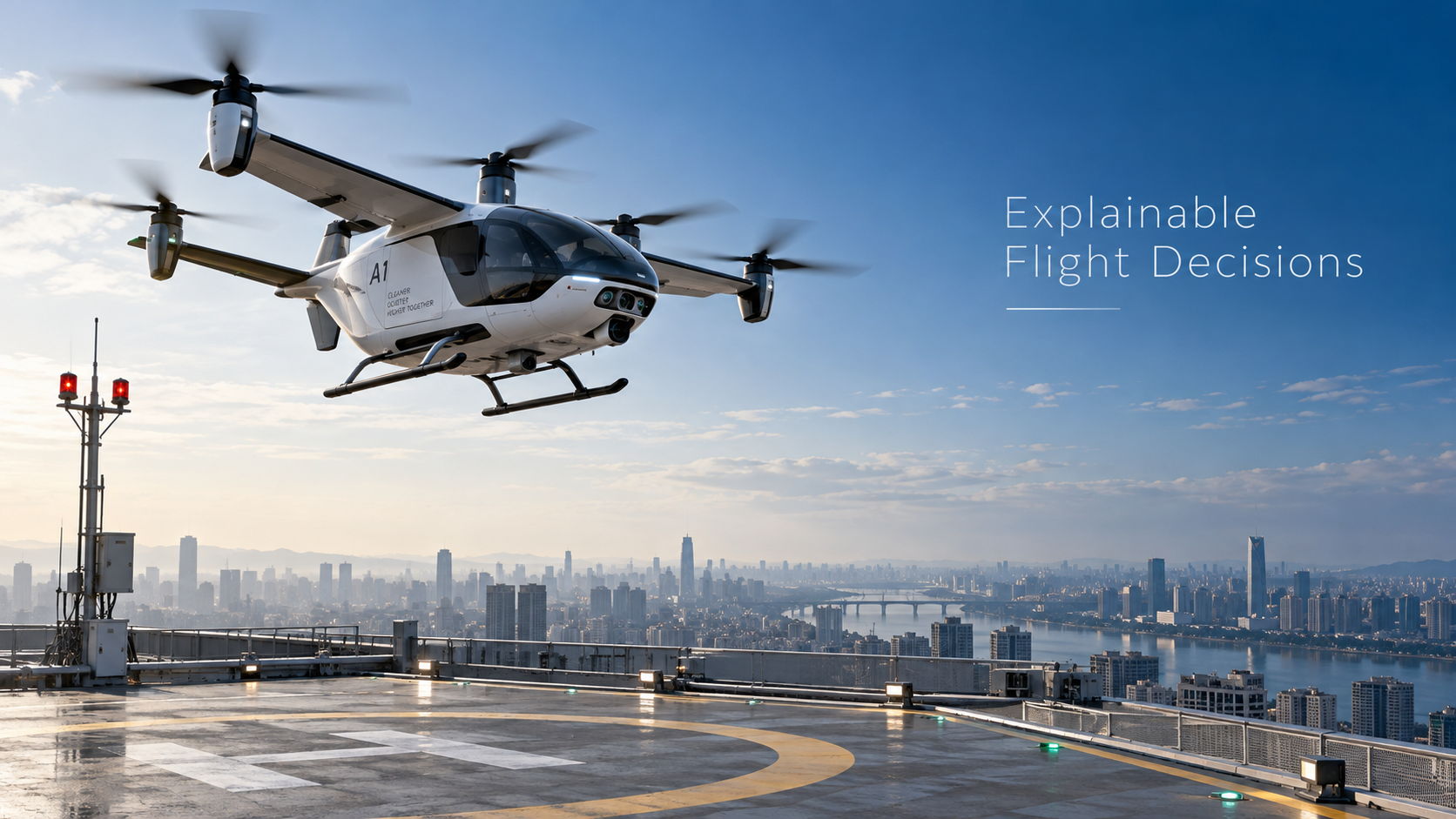
Autonomy is advancing from assisted operation to supervised mission execution. In rail, this may involve automatic train operation with tighter signaling integration and reduced headway intervals. In aviation and UAM, the focus is on fly-by-wire enhancement, sensor fusion, route deconfliction, and contingency logic. Evaluators should look beyond autonomy claims and examine fail-operational behavior, redundancy architecture, and human override procedures.
A practical threshold is to assess whether the system can maintain safe degraded performance after 1 major sensor loss or after 2 simultaneous data anomalies. If it cannot, deployment risk remains high regardless of its peak automation capabilities.
2. Zero-emission propulsion with infrastructure realism
Zero-emission pathways remain central to Future Mobility innovation trends, but the business case differs sharply by application. Battery-electric systems are more suited to shorter-range and lower-payload missions where charging windows of 20 to 60 minutes are acceptable. Hydrogen or hybrid architectures may better support longer-range and higher-duty operations, but they demand new storage, handling, and safety regimes.
For evaluators, the correct question is not which propulsion concept is most advanced in theory, but which one aligns with route length, turnaround time, facility readiness, and maintenance skill availability. A propulsion option that reduces direct emissions but adds 30% to ground complexity may not be attractive unless network economics justify the transition.
3. High-speed connectivity and mobility intelligence
Satellite-enabled communications, digital twins, and predictive monitoring are becoming operating essentials. These systems support route optimization, maintenance planning, fleet visibility, and disruption response. In aerospace and high-speed rail, a 1% to 3% improvement in asset utilization can materially affect profitability because fixed capital intensity is high.
The strongest programs combine onboard sensing, edge processing, and centralized analytics. Evaluators should verify whether data latency, cybersecurity controls, and interoperability standards are mature enough for multi-site or multinational rollout.
4. Lightweight, high-performance materials under certification constraints
Composite structures, thermal-resistant assemblies, and advanced joining methods continue to influence efficiency and payload economics. Yet material innovation is only commercially meaningful when inspection methods, repair protocols, and fatigue models are understood. In regulated sectors, qualification delays can stretch adoption timelines by 18 to 36 months.
Business evaluators should ask whether a material upgrade reduces mass by 8% to 15% while preserving maintainability, or whether it introduces a hidden support burden through specialized tooling, technician training, or supply concentration risk.
How Business Evaluators Should Assess Commercial Viability
The best evaluation models for future mobility balance technology enthusiasm with disciplined screening. In practice, a procurement or strategic review should score each opportunity across technical, regulatory, financial, and operational criteria. This avoids overvaluing headline innovation while underestimating deployment friction.
A four-part evaluation framework
- Technical maturity: validate subsystem integration, redundancy, and test evidence.
- Certification pathway: estimate approval complexity, likely documentation burden, and cross-jurisdiction constraints.
- Infrastructure fit: map dependencies on charging, hydrogen, signaling, launch, or vertiport support.
- Business impact: calculate lifecycle economics, scalability, and resilience under realistic operating conditions.
The table below provides a procurement-oriented scoring structure that business evaluators can use during early-stage benchmarking. It is particularly relevant when comparing programs across aviation, rail, and urban air mobility without forcing identical technical assumptions.
This framework helps separate attractive prototypes from scalable programs. A strong candidate usually performs consistently across all 4 dimensions, even if one area remains at a moderate maturity level. A weak candidate often excels in one metric, such as speed or emissions, but creates unacceptable risk elsewhere.
Common evaluation mistakes in 2026
One common mistake is treating pilot success as evidence of network readiness. A demonstration with 1 corridor, 1 aircraft type, or 1 urban zone does not guarantee performance across multiple sites, climates, or regulatory environments. Another mistake is ignoring maintenance and workforce adaptation. Even a high-performing platform can underdeliver if technician certification, diagnostic tooling, or spare component lead times exceed acceptable limits.
A third mistake is underpricing software assurance. In autonomous and highly connected systems, verification effort can account for a major share of deployment time. Evaluators should budget for staged validation, cybersecurity hardening, and update governance over a 5-year operating horizon.
Deployment Priorities by Sector: Aviation, Rail, UAM, and Extreme Logistics
Future Mobility innovation trends do not create value in the same way across sectors. Business evaluators should prioritize sector-specific triggers, because return on investment depends on mission profile, regulatory pace, utilization pattern, and infrastructure ownership model.
Advanced commercial aviation
In commercial aviation, the most investable areas for 2026 are fuel-burn reduction, digital maintenance intelligence, and selective propulsion transition planning. Airframe and systems improvements that deliver even 5% to 10% efficiency gains can matter at fleet scale. Evaluators should focus on retrofit feasibility, maintenance downtime impact, and alignment with medium-term fleet renewal cycles.
High-speed rail and maglev engineering
Rail and maglev programs are likely to show some of the clearest near-term value among Future Mobility innovation trends. Autonomous control upgrades, predictive track monitoring, and energy optimization can improve punctuality and corridor throughput without requiring an entirely new operating model. In dense networks, a reduction of just 2 to 5 minutes in average disruption recovery time can produce meaningful service and revenue benefits.
Urban air mobility and eVTOL
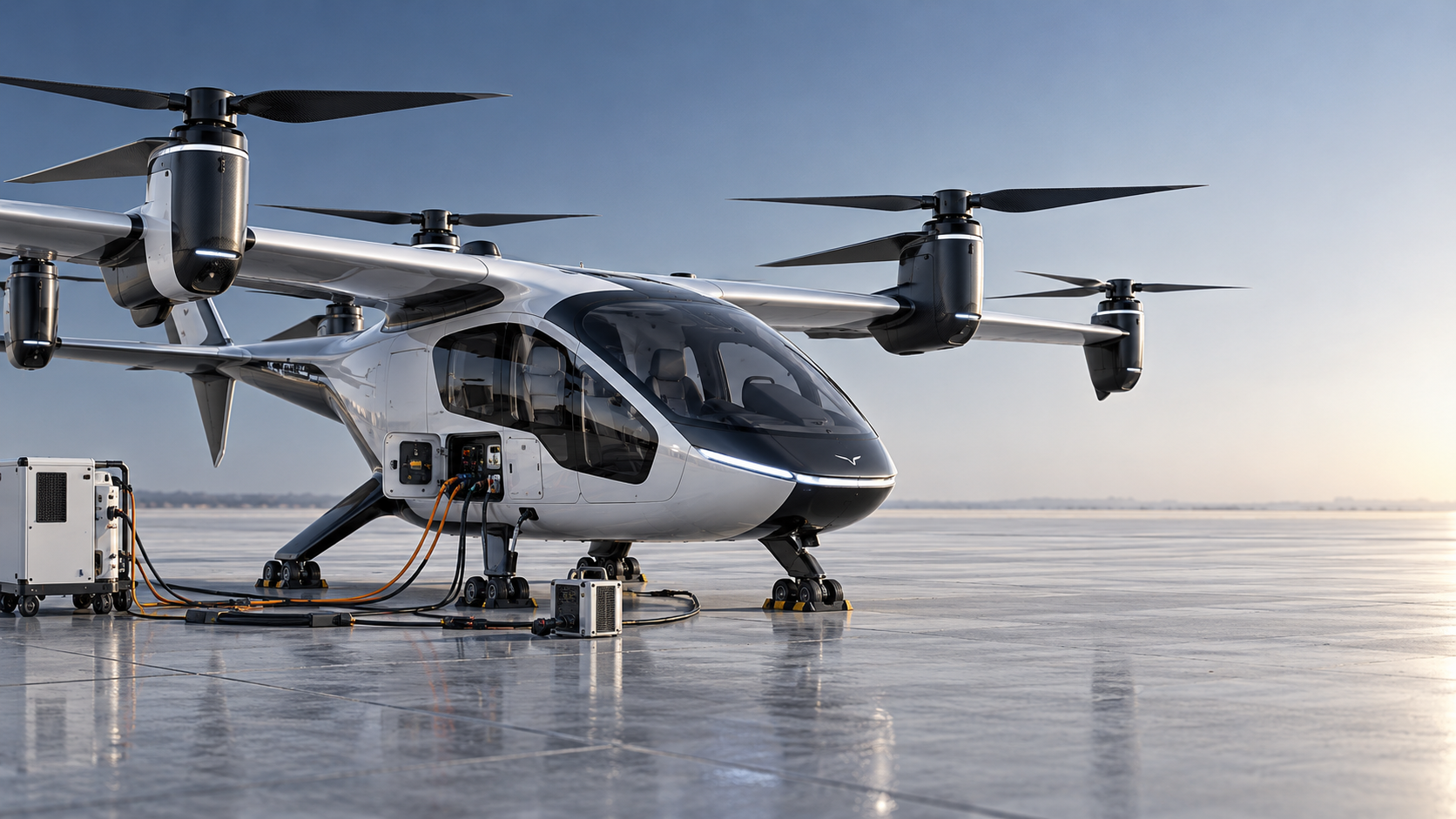
UAM remains strategically important, but evaluators should apply disciplined assumptions. The strongest near-term use cases are likely to be premium shuttle routes, medical logistics, inspection support, and constrained urban connections rather than mass-market commuting. Key thresholds include battery replacement economics, vertiport turnaround efficiency, and community noise compliance.
Specialized extreme-environment logistics
Extreme-environment logistics, including remote, polar, offshore, or disaster-response contexts, often justifies advanced mobility investment earlier than mainstream markets. In these settings, resilience and mission assurance can outweigh simple cost-per-kilometer calculations. Evaluators should examine thermal performance, autonomous fallback capability, and communications continuity under low-visibility or degraded-infrastructure conditions.
What to Do Next: From Trend Monitoring to Actionable Mobility Strategy
The most valuable response to Future Mobility innovation trends in 2026 is not passive observation. It is structured preparation. Business evaluators should build a rolling 3-step process: benchmark technology maturity, map infrastructure dependencies, and define phased procurement or partnership options. This turns innovation scanning into a decision tool rather than a reporting exercise.
Recommended next steps for enterprise evaluation teams
- Create a 12–24 month watchlist of platforms, suppliers, and regulatory milestones by sector.
- Use scenario analysis for best-case, base-case, and constrained deployment conditions.
- Score opportunities with shared metrics across safety, economics, infrastructure, and resilience.
- Engage technical benchmarking partners early when comparing cross-mode investments.
For organizations operating in the G-AIT ecosystem, the strategic advantage lies in connecting frontier engineering insight with operational evidence and certification realism. That is where future mobility decisions become commercially intelligent, not just technologically ambitious.
If your team is assessing aerospace, high-speed rail, UAM, satellite-linked mobility, or extreme-environment logistics programs for 2026 and beyond, now is the time to build a sharper evaluation framework. Contact us to discuss your priorities, request a tailored benchmarking approach, or explore more solutions for future mobility investment and procurement planning.
Article Categories
SYSTEM_ALERT_URGENT
Q3 SYMPOSIUM ON ORBITAL DYNAMICS
Registration for the Orbital Aerospace technical committee is now open. Node access required.
Recent Articles
![]() Oct 27, 2026FAA Certifies Boeing 737 MAX 10 After Years of DelaysFAA Certifies Boeing 737 MAX 10 After Years of Delays
Oct 27, 2026FAA Certifies Boeing 737 MAX 10 After Years of DelaysFAA Certifies Boeing 737 MAX 10 After Years of Delays Oct 27, 2026Can an intermodal connectivity platform reduce rail handoff delays?Can an intermodal connectivity platform reduce rail handoff delays?
![]() Oct 26, 2026Chery Unveils Global Smart Mobility Strategy Targeting Robotaxis and eVTOLsChery Unveils Global Smart Mobility Strategy Targeting Robotaxis and eVTOLs
Oct 26, 2026Chery Unveils Global Smart Mobility Strategy Targeting Robotaxis and eVTOLsChery Unveils Global Smart Mobility Strategy Targeting Robotaxis and eVTOLs Oct 26, 2026How to evaluate avionics for helicopters used in IFR operationsHow to evaluate avionics for helicopters used in IFR operations
![]() Oct 25, 2026Ukraine’s Defence Minister Says SpaceX Satellite Services Restored After Speed RestrictionsUkraine’s Defence Minister Says SpaceX Satellite Services Restored After Speed Restrictions
Oct 25, 2026Ukraine’s Defence Minister Says SpaceX Satellite Services Restored After Speed RestrictionsUkraine’s Defence Minister Says SpaceX Satellite Services Restored After Speed Restrictions Oct 25, 2026How satellite infrastructure for IoT affects sensor reporting delaysHow satellite infrastructure for IoT affects sensor reporting delays
![]() Oct 24, 2026China Successfully Launches Yaogan 50-03 SatelliteChina Successfully Launches Yaogan 50-03 Satellite
Oct 24, 2026China Successfully Launches Yaogan 50-03 SatelliteChina Successfully Launches Yaogan 50-03 Satellite Oct 24, 2026How gradients affect traction power needs in high-speed rolling stockHow gradients affect traction power needs in high-speed rolling stock
![]() Oct 23, 2026FAA Proposes Checks on Nearly 2,000 Boeing 737NGs Over Loss-of-Control RiskFAA Proposes Checks on Nearly 2,000 Boeing 737NGs Over Loss-of-Control Risk
Oct 23, 2026FAA Proposes Checks on Nearly 2,000 Boeing 737NGs Over Loss-of-Control RiskFAA Proposes Checks on Nearly 2,000 Boeing 737NGs Over Loss-of-Control Risk Oct 23, 2026How fuel choice affects specific impulse in liquid oxygen propulsionHow fuel choice affects specific impulse in liquid oxygen propulsion
![]() Oct 22, 2026QuantumScape Plans 100 MWh Solid-State Battery Line Targeting Aerospace and Other MarketsQuantumScape Plans 100 MWh Solid-State Battery Line Targeting Aerospace and Other Markets
Oct 22, 2026QuantumScape Plans 100 MWh Solid-State Battery Line Targeting Aerospace and Other MarketsQuantumScape Plans 100 MWh Solid-State Battery Line Targeting Aerospace and Other Markets Oct 22, 2026How tank size limits hydrogen aircraft range on regional flightsHow tank size limits hydrogen aircraft range on regional flights
![]() Oct 21, 2026FAA Certifies Boeing 737-10, Clearing Regulatory Hurdle for DeliveriesFAA Certifies Boeing 737-10, Clearing Regulatory Hurdle for Deliveries
Oct 21, 2026FAA Certifies Boeing 737-10, Clearing Regulatory Hurdle for DeliveriesFAA Certifies Boeing 737-10, Clearing Regulatory Hurdle for Deliveries Oct 21, 2026How are electric vertical takeoff aircraft certified in the US?How are electric vertical takeoff aircraft certified in the US?
![]() Oct 20, 2026Ohio Department of Transportation Releases Three-Year Advanced Air Mobility Action PlanOhio Department of Transportation Releases Three-Year Advanced Air Mobility Action Plan
Oct 20, 2026Ohio Department of Transportation Releases Three-Year Advanced Air Mobility Action PlanOhio Department of Transportation Releases Three-Year Advanced Air Mobility Action Plan Oct 20, 2026How does magnetic flux density in tesla affect maglev lift force?How does magnetic flux density in tesla affect maglev lift force?
![]() Oct 19, 2026ZeroAvia Completes Key Ground Tests of ZA600 Hydrogen Fuel Cell PowertrainZeroAvia Completes Key Ground Tests of ZA600 Hydrogen Fuel Cell Powertrain
Oct 19, 2026ZeroAvia Completes Key Ground Tests of ZA600 Hydrogen Fuel Cell PowertrainZeroAvia Completes Key Ground Tests of ZA600 Hydrogen Fuel Cell Powertrain Oct 19, 2026How spacecraft integration affects advanced propulsion costsHow spacecraft integration affects advanced propulsion costs
 Oct 18, 2026How chilldown prevents cavitation in cryogenic engine systemsHow chilldown prevents cavitation in cryogenic engine systems
 Oct 17, 2026How explainability affects algorithmic trust in AI flight systemsHow explainability affects algorithmic trust in AI flight systems
 Oct 16, 2026How to evaluate transportation technology for Middle East heatHow to evaluate transportation technology for Middle East heat
 Oct 15, 2026How common-cause failures defeat redundancy logic in European avionicsHow common-cause failures defeat redundancy logic in European avionics
 Oct 14, 2026How DO-160 applies to aerospace technology testing for avionicsHow DO-160 applies to aerospace technology testing for avionics
 Oct 13, 2026How fuel price volatility shapes commercial aviation cost trendsHow fuel price volatility shapes commercial aviation cost trends
 Oct 12, 2026How to qualify aerospace manufacturing components for traceabilityHow to qualify aerospace manufacturing components for traceability
 Oct 11, 2026Which certification hurdles are slowing hydrogen aviation in Europe?Which certification hurdles are slowing hydrogen aviation in Europe?
 Oct 10, 2026What evidence should a magnetic gap stability supplier provide?What evidence should a magnetic gap stability supplier provide?
 Oct 09, 2026Which ISO standards matter when qualifying industrial technology suppliers?Which ISO standards matter when qualifying industrial technology suppliers?
 Oct 08, 2026When does reusability actually lower launch vehicle costs?When does reusability actually lower launch vehicle costs?
 Oct 07, 2026Where to find reliable product knowledge resources in the Middle EastWhere to find reliable product knowledge resources in the Middle East
 Oct 06, 2026What drives high-speed rail systems cost per kilometer?What drives high-speed rail systems cost per kilometer?
 Oct 05, 2026When does hydrogen propulsion for UAV extend mission range enough to justify it?When does hydrogen propulsion for UAV extend mission range enough to justify it?
 Oct 04, 2026How rail systems integration reduces commissioning delaysHow rail systems integration reduces commissioning delays
 Oct 03, 2026How to evaluate an advanced propulsion manufacturer for hydrogen systemsHow to evaluate an advanced propulsion manufacturer for hydrogen systems
 Oct 02, 2026How to qualify aircraft components for OEM production approvalHow to qualify aircraft components for OEM production approval