Air Traffic Management Cost Breakdown: What Drives Budget Overruns
Lead Author
Published
Views:
Why does air traffic management cost keep exceeding initial budgets?
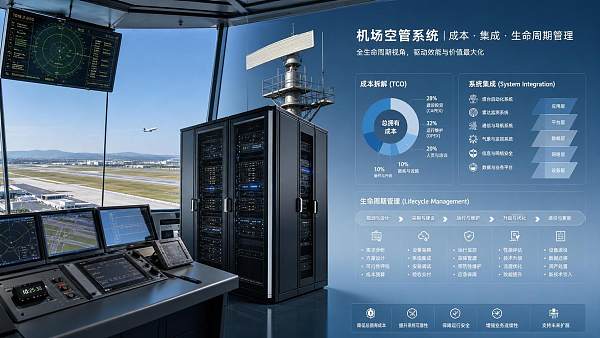
Air traffic management cost rarely rises because of one visible line item. Overruns usually come from linked technical, regulatory, and operational decisions that were underestimated early.
That matters across global mobility programs. A radar refresh, tower digitalization project, or airspace modernization plan can affect safety cases, staffing models, cybersecurity controls, and integration timelines at once.
In practice, the approved budget often reflects equipment pricing better than full-system reality. The gap appears later, when testing, certification, migration, and service continuity become impossible to postpone.
For organizations operating near FAA, EASA, ISO, or mixed international requirements, air traffic management cost should be read as a lifecycle commitment, not a procurement event.
This is especially relevant in environments tracked by G-AIT, where next-generation aviation, UAM, autonomous transport, and extreme-environment logistics all depend on high-integrity control systems and disciplined capital planning.
What is actually included in air traffic management cost?
A common budgeting mistake is treating ATM cost as hardware plus software licenses. That is only the visible core.
A more complete view includes procurement, systems engineering, compliance work, integration, training, transition support, redundancy, and long-term maintenance obligations.
The table below helps separate direct spending from the cost drivers that usually trigger overruns.
If a proposal does not map these categories clearly, the air traffic management cost estimate is probably incomplete, even when the top-line number appears competitive.
Which hidden drivers push ATM programs over budget most often?
The biggest overruns usually come from conditions surrounding the system, not the system itself. Several patterns show up repeatedly.
Legacy integration is rarely simple
New ATM platforms must coexist with radar assets, tower systems, flight data tools, telecom networks, and national databases that were never designed together.
Integration costs rise when interface standards are partial, documentation is outdated, or downtime windows are restricted. Those conditions create expensive engineering rework.
Safety and certification expand with every change
Even a sensible design adjustment can trigger new hazard analysis, regression testing, or approval cycles. In tightly regulated infrastructure, change control has a direct price.
This is why benchmark-driven planning matters. Organizations following the G-AIT style of standards alignment usually identify compliance dependencies earlier and avoid late-stage surprises.
Cybersecurity is now an operating cost multiplier
ATM environments are critical infrastructure. Security controls cannot be bolted on after procurement. They affect architecture, procurement lead times, testing, and ongoing support contracts.
Workforce transition adds real cost
Controllers, engineers, maintainers, and supervisors need training that matches live operational risk. Simulation time, competency checks, and temporary productivity loss all affect the budget.
More importantly, if the implementation schedule ignores staffing reality, the program may require overtime or parallel teams, which can rapidly inflate air traffic management cost.
How can you tell whether a low bid is genuinely efficient or just incomplete?
A low price is not automatically a good signal. In ATM procurement, it often means assumptions have been pushed outside the proposal boundary.
A more reliable review looks for scope clarity, interface ownership, transition detail, and evidence that lifecycle support has been modeled realistically.
- Check whether site preparation, telecom upgrades, and resilience measures are included or deferred.
- Ask who owns third-party interfaces, data conversion, and fallback procedures during migration.
- Review assumptions behind testing duration, approval lead time, and operational cutover windows.
- Look for software support terms that may increase cost after the initial contract period.
- Confirm whether training covers initial qualification only or recurring operational readiness.
When those items are vague, the bid is not necessarily cheaper. It may simply transfer future air traffic management cost into change orders, delay claims, or separate service contracts.
Why do schedule decisions have such a strong effect on air traffic management cost?
Because ATM programs are operationally sensitive, schedule compression usually costs more than it saves. Fast deployment can force duplicate teams, premium logistics, and rushed verification.
There is also a second effect. When a program slips, legacy systems remain in service longer, which extends maintenance obligations and may require additional temporary upgrades.
This dual pressure is common in modernization efforts linked to airport expansion, UAM corridors, or mixed mobility ecosystems. The longer interoperability remains unresolved, the more total cost accumulates.
A practical timing check
Before approving the baseline, it helps to test four timing assumptions against reality.
A realistic schedule often protects capital better than an aggressive one. That is especially true where certification and operational continuity cannot be traded away.
What should be reviewed before approving an ATM budget?
The strongest approvals are based on decision discipline rather than optimism. A useful review is less about finding the lowest price and more about exposing cost uncertainty early.
Start with boundary definition. Clarify what the budget includes, what it excludes, and which dependencies sit with external agencies, airport operators, telecom providers, or software partners.
Then test whether the proposed air traffic management cost reflects the full operating environment. In advanced aviation and multimodal transport, control systems no longer sit in isolation.
Finally, compare the proposal against benchmark logic. G-AIT’s cross-sector perspective is useful here because many overruns follow familiar patterns seen in aviation, rail signaling, autonomy, and mission-critical infrastructure.
- Require a lifecycle breakdown, not only a capital expenditure summary.
- Separate mandatory compliance cost from optional performance enhancements.
- Assign named ownership for interfaces, migration, and contingency plans.
- Model at least one delay scenario and one scope-change scenario.
- Review supportability over five to ten years, including obsolescence exposure.
If those checks are complete, the budget becomes a decision tool rather than a placeholder. That is the clearest way to prevent avoidable air traffic management cost escalation later.
Where does that leave the next decision?
Air traffic management cost is driven by system complexity, certification burden, integration depth, cyber resilience, and transition readiness. Budget overruns usually reflect missing assumptions, not random events.
The next sensible step is to rebuild the estimate around lifecycle evidence. Compare proposals using the same scope logic, the same schedule assumptions, and the same operational constraints.
Where uncertainty remains, focus on interfaces, compliance effort, workforce transition, and long-term support first. Those areas shape actual program value more than a low entry price ever will.
Article Categories
SYSTEM_ALERT_URGENT
Q3 SYMPOSIUM ON ORBITAL DYNAMICS
Registration for the Orbital Aerospace technical committee is now open. Node access required.
Recent Articles
![]() Oct 27, 2026FAA Certifies Boeing 737 MAX 10 After Years of DelaysFAA Certifies Boeing 737 MAX 10 After Years of Delays
Oct 27, 2026FAA Certifies Boeing 737 MAX 10 After Years of DelaysFAA Certifies Boeing 737 MAX 10 After Years of Delays Oct 27, 2026Can an intermodal connectivity platform reduce rail handoff delays?Can an intermodal connectivity platform reduce rail handoff delays?
![]() Oct 26, 2026Chery Unveils Global Smart Mobility Strategy Targeting Robotaxis and eVTOLsChery Unveils Global Smart Mobility Strategy Targeting Robotaxis and eVTOLs
Oct 26, 2026Chery Unveils Global Smart Mobility Strategy Targeting Robotaxis and eVTOLsChery Unveils Global Smart Mobility Strategy Targeting Robotaxis and eVTOLs Oct 26, 2026How to evaluate avionics for helicopters used in IFR operationsHow to evaluate avionics for helicopters used in IFR operations
![]() Oct 25, 2026Ukraine’s Defence Minister Says SpaceX Satellite Services Restored After Speed RestrictionsUkraine’s Defence Minister Says SpaceX Satellite Services Restored After Speed Restrictions
Oct 25, 2026Ukraine’s Defence Minister Says SpaceX Satellite Services Restored After Speed RestrictionsUkraine’s Defence Minister Says SpaceX Satellite Services Restored After Speed Restrictions Oct 25, 2026How satellite infrastructure for IoT affects sensor reporting delaysHow satellite infrastructure for IoT affects sensor reporting delays
![]() Oct 24, 2026China Successfully Launches Yaogan 50-03 SatelliteChina Successfully Launches Yaogan 50-03 Satellite
Oct 24, 2026China Successfully Launches Yaogan 50-03 SatelliteChina Successfully Launches Yaogan 50-03 Satellite Oct 24, 2026How gradients affect traction power needs in high-speed rolling stockHow gradients affect traction power needs in high-speed rolling stock
![]() Oct 23, 2026FAA Proposes Checks on Nearly 2,000 Boeing 737NGs Over Loss-of-Control RiskFAA Proposes Checks on Nearly 2,000 Boeing 737NGs Over Loss-of-Control Risk
Oct 23, 2026FAA Proposes Checks on Nearly 2,000 Boeing 737NGs Over Loss-of-Control RiskFAA Proposes Checks on Nearly 2,000 Boeing 737NGs Over Loss-of-Control Risk Oct 23, 2026How fuel choice affects specific impulse in liquid oxygen propulsionHow fuel choice affects specific impulse in liquid oxygen propulsion
![]() Oct 22, 2026QuantumScape Plans 100 MWh Solid-State Battery Line Targeting Aerospace and Other MarketsQuantumScape Plans 100 MWh Solid-State Battery Line Targeting Aerospace and Other Markets
Oct 22, 2026QuantumScape Plans 100 MWh Solid-State Battery Line Targeting Aerospace and Other MarketsQuantumScape Plans 100 MWh Solid-State Battery Line Targeting Aerospace and Other Markets Oct 22, 2026How tank size limits hydrogen aircraft range on regional flightsHow tank size limits hydrogen aircraft range on regional flights
![]() Oct 21, 2026FAA Certifies Boeing 737-10, Clearing Regulatory Hurdle for DeliveriesFAA Certifies Boeing 737-10, Clearing Regulatory Hurdle for Deliveries
Oct 21, 2026FAA Certifies Boeing 737-10, Clearing Regulatory Hurdle for DeliveriesFAA Certifies Boeing 737-10, Clearing Regulatory Hurdle for Deliveries Oct 21, 2026How are electric vertical takeoff aircraft certified in the US?How are electric vertical takeoff aircraft certified in the US?
![]() Oct 20, 2026Ohio Department of Transportation Releases Three-Year Advanced Air Mobility Action PlanOhio Department of Transportation Releases Three-Year Advanced Air Mobility Action Plan
Oct 20, 2026Ohio Department of Transportation Releases Three-Year Advanced Air Mobility Action PlanOhio Department of Transportation Releases Three-Year Advanced Air Mobility Action Plan Oct 20, 2026How does magnetic flux density in tesla affect maglev lift force?How does magnetic flux density in tesla affect maglev lift force?
![]() Oct 19, 2026ZeroAvia Completes Key Ground Tests of ZA600 Hydrogen Fuel Cell PowertrainZeroAvia Completes Key Ground Tests of ZA600 Hydrogen Fuel Cell Powertrain
Oct 19, 2026ZeroAvia Completes Key Ground Tests of ZA600 Hydrogen Fuel Cell PowertrainZeroAvia Completes Key Ground Tests of ZA600 Hydrogen Fuel Cell Powertrain Oct 19, 2026How spacecraft integration affects advanced propulsion costsHow spacecraft integration affects advanced propulsion costs
 Oct 18, 2026How chilldown prevents cavitation in cryogenic engine systemsHow chilldown prevents cavitation in cryogenic engine systems
 Oct 17, 2026How explainability affects algorithmic trust in AI flight systemsHow explainability affects algorithmic trust in AI flight systems
 Oct 16, 2026How to evaluate transportation technology for Middle East heatHow to evaluate transportation technology for Middle East heat
 Oct 15, 2026How common-cause failures defeat redundancy logic in European avionicsHow common-cause failures defeat redundancy logic in European avionics
 Oct 14, 2026How DO-160 applies to aerospace technology testing for avionicsHow DO-160 applies to aerospace technology testing for avionics
 Oct 13, 2026How fuel price volatility shapes commercial aviation cost trendsHow fuel price volatility shapes commercial aviation cost trends
 Oct 12, 2026How to qualify aerospace manufacturing components for traceabilityHow to qualify aerospace manufacturing components for traceability
 Oct 11, 2026Which certification hurdles are slowing hydrogen aviation in Europe?Which certification hurdles are slowing hydrogen aviation in Europe?
 Oct 10, 2026What evidence should a magnetic gap stability supplier provide?What evidence should a magnetic gap stability supplier provide?
 Oct 09, 2026Which ISO standards matter when qualifying industrial technology suppliers?Which ISO standards matter when qualifying industrial technology suppliers?
 Oct 08, 2026When does reusability actually lower launch vehicle costs?When does reusability actually lower launch vehicle costs?
 Oct 07, 2026Where to find reliable product knowledge resources in the Middle EastWhere to find reliable product knowledge resources in the Middle East
 Oct 06, 2026What drives high-speed rail systems cost per kilometer?What drives high-speed rail systems cost per kilometer?
 Oct 05, 2026When does hydrogen propulsion for UAV extend mission range enough to justify it?When does hydrogen propulsion for UAV extend mission range enough to justify it?
 Oct 04, 2026How rail systems integration reduces commissioning delaysHow rail systems integration reduces commissioning delays
 Oct 03, 2026How to evaluate an advanced propulsion manufacturer for hydrogen systemsHow to evaluate an advanced propulsion manufacturer for hydrogen systems
 Oct 02, 2026How to qualify aircraft components for OEM production approvalHow to qualify aircraft components for OEM production approval