How to Evaluate an Aerospace Engineering Manufacturer in 2026
Lead Author
Published
Views:
Choosing an Aerospace Engineering manufacturer in 2026 is no longer a simple check of plant size, certificates, or quoted lead time.
The stronger assessment looks at engineering depth, certification discipline, digital traceability, and the ability to support programs through volatility.
That matters across commercial aviation, space systems, urban air mobility, and adjacent transport sectors where reliability and compliance now shape commercial value as much as unit cost.
For organizations working with benchmark-driven platforms such as G-AIT, the question is not who can build a part.
It is who can build, document, validate, and sustain a critical system under evolving global standards.
What Evaluation Means in 2026

An Aerospace Engineering manufacturer may produce structures, propulsion elements, avionics housings, thermal systems, precision machined parts, or integrated assemblies.
In 2026, the label covers more than traditional airframe suppliers.
It increasingly includes companies serving launch infrastructure, satellite platforms, eVTOL programs, and high-performance mobility systems with aerospace-grade requirements.
That broader landscape changes how evaluation should be handled.
A manufacturer may appear qualified on paper, yet still fall short in systems engineering maturity, change control, materials governance, or certification support.
The practical review therefore needs to test both manufacturing competence and institutional discipline.
Why the Market Is Paying Closer Attention
The pressure on supplier evaluation has increased because aerospace programs now operate inside tighter regulatory, geopolitical, and technical constraints.
Advanced materials are harder to source consistently.
Certification pathways are becoming more data-intensive.
Program schedules are exposed to export controls, dual-use scrutiny, cyber risk, and energy transition targets.
G-AIT’s cross-sector view is useful here because many signals now travel across industries.
A supplier capable of meeting FAA or EASA expectations may also be stronger in adjacent mobility sectors where traceability and safety cases are equally strict.
Likewise, methods proven in space propulsion or maglev control systems often reveal a company’s real discipline around failure prevention.
The Core Signals Behind a Strong Aerospace Engineering Manufacturer
A credible Aerospace Engineering manufacturer usually shows strength across five connected dimensions.
Engineering capability
Look beyond equipment lists.
The better indicator is whether the manufacturer can explain design assumptions, tolerance strategies, qualification logic, and test methods without relying on generic claims.
This becomes especially important for composites, cryogenic systems, lightweight structures, and high-temperature applications.
Compliance readiness
Certifications still matter, but they are only the surface layer.
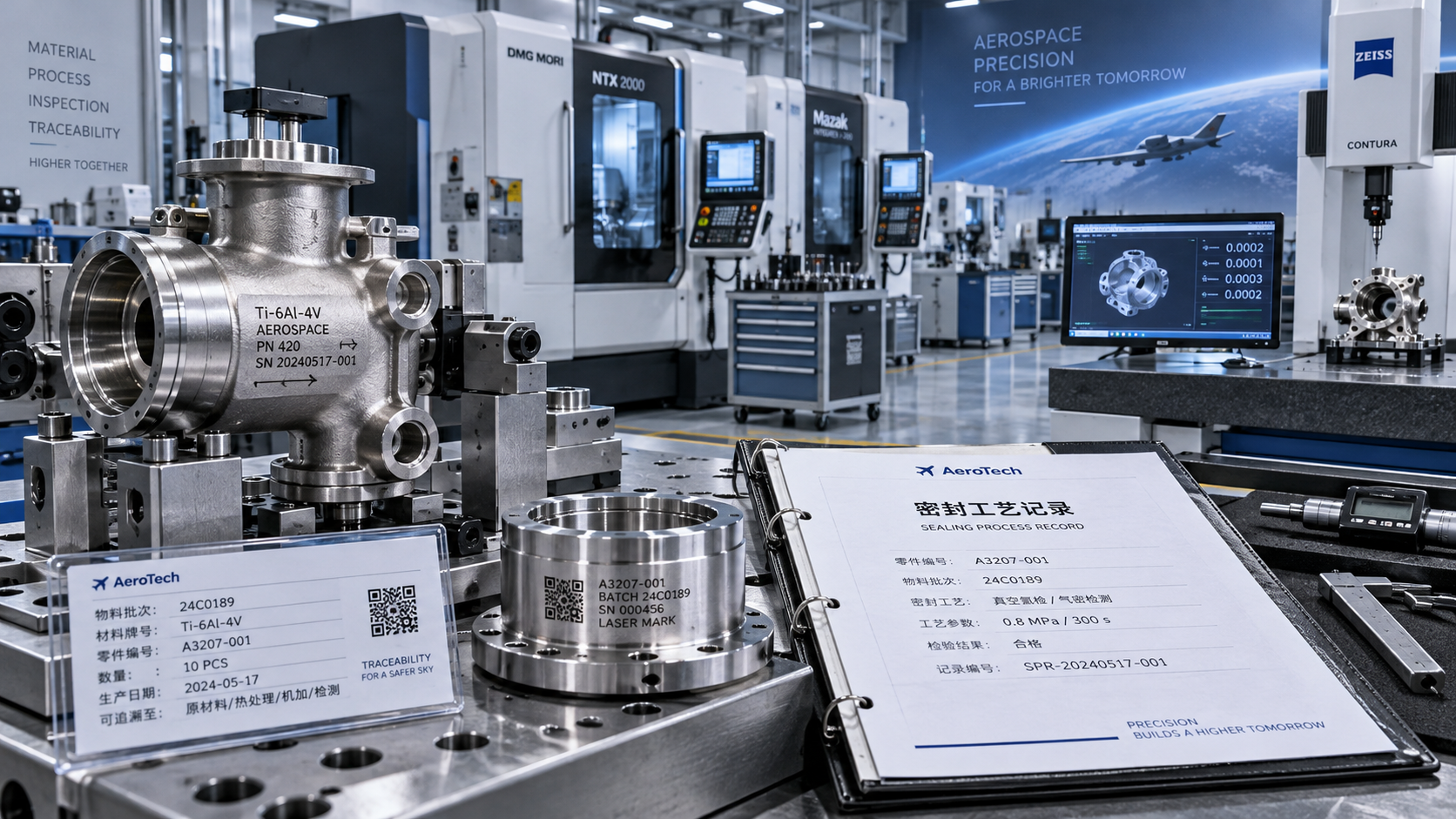
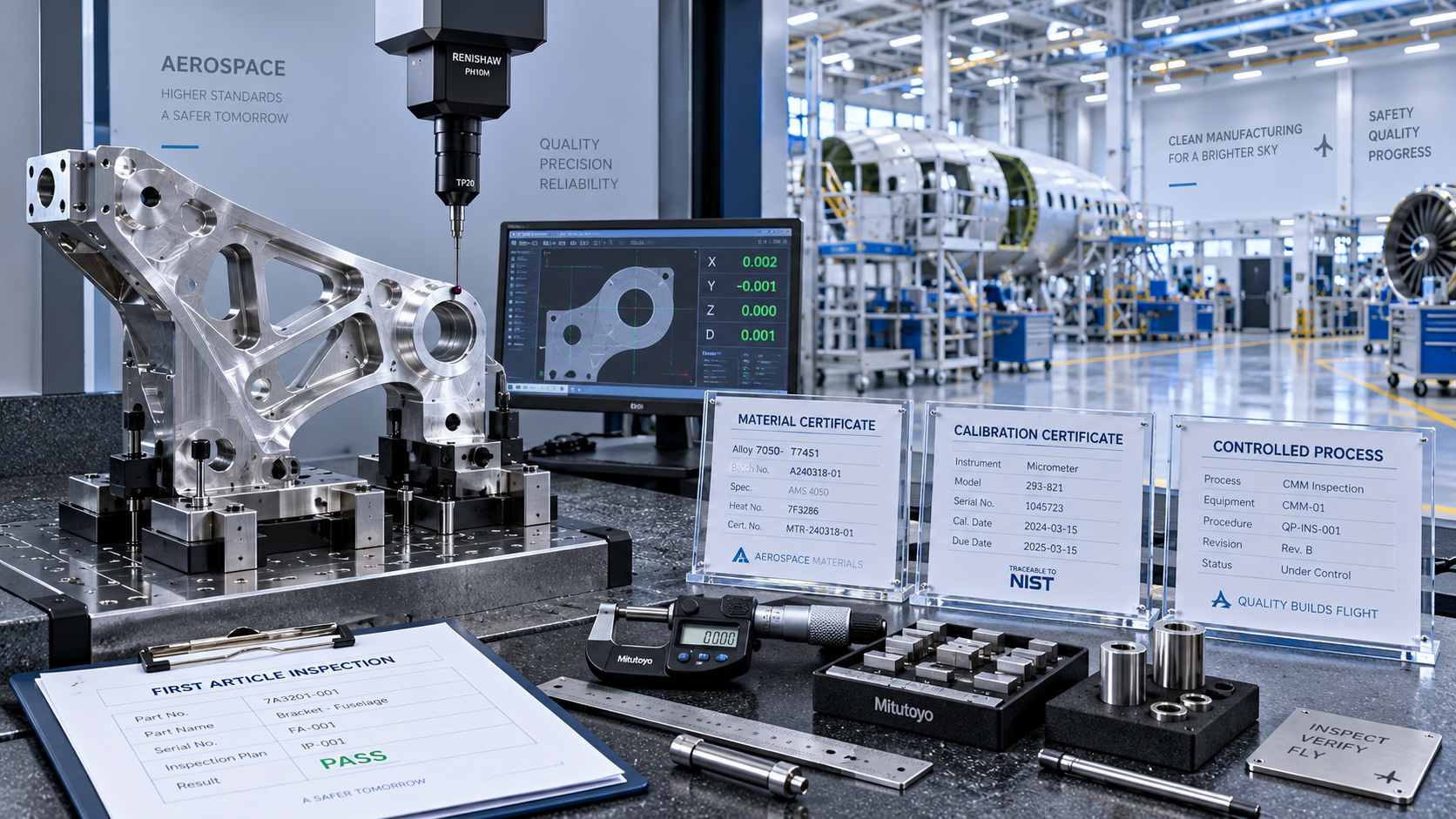
The deeper question is whether the manufacturer can support audits, maintain configuration control, and produce evidence fast enough for customer and regulatory review.
Supply chain resilience
A modern Aerospace Engineering manufacturer should know where critical alloys, electronic components, prepregs, and treatment services come from.
It should also have qualified alternatives, realistic stocking policies, and visibility into lower-tier risk.
Production repeatability
Prototype success does not guarantee serial stability.
Repeatability depends on process control, operator training, inspection integrity, and the ability to contain variation before it reaches final assembly.
Lifecycle support
The strongest suppliers remain useful after shipment.
They can support root-cause analysis, field modifications, obsolescence planning, and documentation updates over the life of a program.
How to Separate Surface Compliance From Real Readiness
Many evaluations fail because they reward presentation quality instead of operational proof.
A polished audit package may hide weak execution.
A smaller Aerospace Engineering manufacturer may look less impressive, yet outperform on responsiveness, traceability, and technical transparency.
The most useful approach is to review evidence in context.
This kind of review shows whether a manufacturer can survive real program pressure, not just pass a scheduled visit.
Context Matters Across Aerospace and Advanced Mobility
An Aerospace Engineering manufacturer should also be judged against the mission profile it supports.
The right supplier for a satellite thermal enclosure may be wrong for a next-generation commercial airframe bracket.
A company optimized for low-volume space hardware may struggle with recurring aviation production.
G-AIT’s five-pillar perspective is useful because it frames evaluation by system context rather than by category label alone.
- Advanced commercial aviation requires high repeatability, strict documentation, and stable long-run quality.
- Space exploration programs often prioritize extreme-environment performance, test rigor, and configuration lock.
- Urban air mobility programs need rapid iteration without losing safety case discipline.
- Specialized logistics platforms place unusual demands on ruggedization, remote maintainability, and operational resilience.
Evaluation improves when those use cases are explicit from the start.
Questions That Reveal Real Capability
Good assessments usually depend on the quality of the questions, not the size of the checklist.
Several lines of inquiry tend to expose whether an Aerospace Engineering manufacturer is truly prepared.
- How are special processes qualified, requalified, and monitored between audits?
- What happened in the last major nonconformance, and how was recurrence prevented?
- Which inputs rely on single-source suppliers, and what is the fallback path?
- How is digital manufacturing data secured, versioned, and shared with customers?
- What percentage of delivery performance depends on overtime, expediting, or management intervention?
- Can the company support both qualification builds and scaled production without changing its control discipline?
Answers should be specific, evidenced, and internally consistent.
Vague confidence is usually a warning sign.
Where Commercial Value Really Appears
Selecting the right Aerospace Engineering manufacturer protects far more than manufacturing continuity.
It influences certification timing, insurance exposure, aftermarket support, redesign frequency, and the ability to defend program decisions under scrutiny.
In other words, technical quality becomes financial quality.
That is especially true in cross-border programs where one supplier weakness can affect customs clearance, export approval, or downstream integration milestones.
A well-chosen manufacturer reduces hidden friction across the whole operating model.
A Practical Next Step
A useful evaluation framework starts with the program’s technical risk, certification pathway, and supply exposure.
From there, compare each Aerospace Engineering manufacturer against the same evidence-based criteria.
Separate brochure claims from demonstrated control.
Test whether the supplier can perform under the standards that actually govern the mission.
For organizations using G-AIT-style benchmarking, the most reliable decisions come from linking frontier performance expectations with certification reality, lifecycle support, and resilience under change.
That creates a clearer basis for shortlisting, site review, and long-term program alignment in 2026.
Article Categories
SYSTEM_ALERT_URGENT
Q3 SYMPOSIUM ON ORBITAL DYNAMICS
Registration for the Orbital Aerospace technical committee is now open. Node access required.
Recent Articles
![]() Oct 27, 2026FAA Certifies Boeing 737 MAX 10 After Years of DelaysFAA Certifies Boeing 737 MAX 10 After Years of Delays
Oct 27, 2026FAA Certifies Boeing 737 MAX 10 After Years of DelaysFAA Certifies Boeing 737 MAX 10 After Years of Delays Oct 27, 2026Can an intermodal connectivity platform reduce rail handoff delays?Can an intermodal connectivity platform reduce rail handoff delays?
![]() Oct 26, 2026Chery Unveils Global Smart Mobility Strategy Targeting Robotaxis and eVTOLsChery Unveils Global Smart Mobility Strategy Targeting Robotaxis and eVTOLs
Oct 26, 2026Chery Unveils Global Smart Mobility Strategy Targeting Robotaxis and eVTOLsChery Unveils Global Smart Mobility Strategy Targeting Robotaxis and eVTOLs Oct 26, 2026How to evaluate avionics for helicopters used in IFR operationsHow to evaluate avionics for helicopters used in IFR operations
![]() Oct 25, 2026Ukraine’s Defence Minister Says SpaceX Satellite Services Restored After Speed RestrictionsUkraine’s Defence Minister Says SpaceX Satellite Services Restored After Speed Restrictions
Oct 25, 2026Ukraine’s Defence Minister Says SpaceX Satellite Services Restored After Speed RestrictionsUkraine’s Defence Minister Says SpaceX Satellite Services Restored After Speed Restrictions Oct 25, 2026How satellite infrastructure for IoT affects sensor reporting delaysHow satellite infrastructure for IoT affects sensor reporting delays
![]() Oct 24, 2026China Successfully Launches Yaogan 50-03 SatelliteChina Successfully Launches Yaogan 50-03 Satellite
Oct 24, 2026China Successfully Launches Yaogan 50-03 SatelliteChina Successfully Launches Yaogan 50-03 Satellite Oct 24, 2026How gradients affect traction power needs in high-speed rolling stockHow gradients affect traction power needs in high-speed rolling stock
![]() Oct 23, 2026FAA Proposes Checks on Nearly 2,000 Boeing 737NGs Over Loss-of-Control RiskFAA Proposes Checks on Nearly 2,000 Boeing 737NGs Over Loss-of-Control Risk
Oct 23, 2026FAA Proposes Checks on Nearly 2,000 Boeing 737NGs Over Loss-of-Control RiskFAA Proposes Checks on Nearly 2,000 Boeing 737NGs Over Loss-of-Control Risk Oct 23, 2026How fuel choice affects specific impulse in liquid oxygen propulsionHow fuel choice affects specific impulse in liquid oxygen propulsion
![]() Oct 22, 2026QuantumScape Plans 100 MWh Solid-State Battery Line Targeting Aerospace and Other MarketsQuantumScape Plans 100 MWh Solid-State Battery Line Targeting Aerospace and Other Markets
Oct 22, 2026QuantumScape Plans 100 MWh Solid-State Battery Line Targeting Aerospace and Other MarketsQuantumScape Plans 100 MWh Solid-State Battery Line Targeting Aerospace and Other Markets Oct 22, 2026How tank size limits hydrogen aircraft range on regional flightsHow tank size limits hydrogen aircraft range on regional flights
![]() Oct 21, 2026FAA Certifies Boeing 737-10, Clearing Regulatory Hurdle for DeliveriesFAA Certifies Boeing 737-10, Clearing Regulatory Hurdle for Deliveries
Oct 21, 2026FAA Certifies Boeing 737-10, Clearing Regulatory Hurdle for DeliveriesFAA Certifies Boeing 737-10, Clearing Regulatory Hurdle for Deliveries Oct 21, 2026How are electric vertical takeoff aircraft certified in the US?How are electric vertical takeoff aircraft certified in the US?
![]() Oct 20, 2026Ohio Department of Transportation Releases Three-Year Advanced Air Mobility Action PlanOhio Department of Transportation Releases Three-Year Advanced Air Mobility Action Plan
Oct 20, 2026Ohio Department of Transportation Releases Three-Year Advanced Air Mobility Action PlanOhio Department of Transportation Releases Three-Year Advanced Air Mobility Action Plan Oct 20, 2026How does magnetic flux density in tesla affect maglev lift force?How does magnetic flux density in tesla affect maglev lift force?
![]() Oct 19, 2026ZeroAvia Completes Key Ground Tests of ZA600 Hydrogen Fuel Cell PowertrainZeroAvia Completes Key Ground Tests of ZA600 Hydrogen Fuel Cell Powertrain
Oct 19, 2026ZeroAvia Completes Key Ground Tests of ZA600 Hydrogen Fuel Cell PowertrainZeroAvia Completes Key Ground Tests of ZA600 Hydrogen Fuel Cell Powertrain Oct 19, 2026How spacecraft integration affects advanced propulsion costsHow spacecraft integration affects advanced propulsion costs
 Oct 18, 2026How chilldown prevents cavitation in cryogenic engine systemsHow chilldown prevents cavitation in cryogenic engine systems
 Oct 17, 2026How explainability affects algorithmic trust in AI flight systemsHow explainability affects algorithmic trust in AI flight systems
 Oct 16, 2026How to evaluate transportation technology for Middle East heatHow to evaluate transportation technology for Middle East heat
 Oct 15, 2026How common-cause failures defeat redundancy logic in European avionicsHow common-cause failures defeat redundancy logic in European avionics
 Oct 14, 2026How DO-160 applies to aerospace technology testing for avionicsHow DO-160 applies to aerospace technology testing for avionics
 Oct 13, 2026How fuel price volatility shapes commercial aviation cost trendsHow fuel price volatility shapes commercial aviation cost trends
 Oct 12, 2026How to qualify aerospace manufacturing components for traceabilityHow to qualify aerospace manufacturing components for traceability
 Oct 11, 2026Which certification hurdles are slowing hydrogen aviation in Europe?Which certification hurdles are slowing hydrogen aviation in Europe?
 Oct 10, 2026What evidence should a magnetic gap stability supplier provide?What evidence should a magnetic gap stability supplier provide?
 Oct 09, 2026Which ISO standards matter when qualifying industrial technology suppliers?Which ISO standards matter when qualifying industrial technology suppliers?
 Oct 08, 2026When does reusability actually lower launch vehicle costs?When does reusability actually lower launch vehicle costs?
 Oct 07, 2026Where to find reliable product knowledge resources in the Middle EastWhere to find reliable product knowledge resources in the Middle East
 Oct 06, 2026What drives high-speed rail systems cost per kilometer?What drives high-speed rail systems cost per kilometer?
 Oct 05, 2026When does hydrogen propulsion for UAV extend mission range enough to justify it?When does hydrogen propulsion for UAV extend mission range enough to justify it?
 Oct 04, 2026How rail systems integration reduces commissioning delaysHow rail systems integration reduces commissioning delays
 Oct 03, 2026How to evaluate an advanced propulsion manufacturer for hydrogen systemsHow to evaluate an advanced propulsion manufacturer for hydrogen systems
 Oct 02, 2026How to qualify aircraft components for OEM production approvalHow to qualify aircraft components for OEM production approval