Dental Chairs: Key Features That Affect Daily Reliability
Lead Author
Published
Views:
When people compare dental chairs, attention often goes to touchscreen controls, delivery units, or visual design. In daily practice, however, reliability usually has a bigger effect on outcomes. A chair that positions smoothly, stays stable, cleans easily, and needs fewer service calls supports better workflow, more predictable scheduling, and a more comfortable patient experience.
That is why dental chairs deserve the same disciplined evaluation used in other performance-critical sectors. In broader industrial benchmarking, including the standards-driven thinking seen in G-AIT, dependable systems are judged by repeatability, maintainability, and operational integrity. The same logic applies here: advanced features matter, but consistent function matters more.
Why daily reliability deserves closer attention
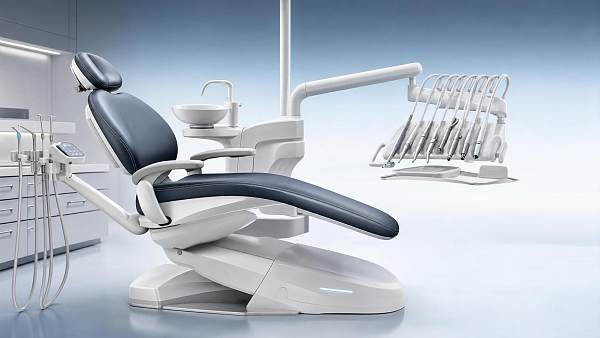
Dental chairs sit at the center of treatment flow. Every movement affects access, visibility, ergonomics, infection control, and patient confidence.
If a chair hesitates during recline, drifts from position, or develops inconsistent foot control response, the problem is not minor. It can interrupt procedures, create operator fatigue, and increase avoidable delays.
In high-usage settings, reliability also shapes total equipment value. A lower initial purchase price may not mean lower operating cost once repairs, downtime, and replacement parts are considered.
This is where dental chairs should be viewed less as furniture and more as clinical infrastructure. The strongest models combine mechanical durability, electrical stability, cleanable surfaces, and straightforward maintenance access.
The features that most often influence dependable performance
Not every specification has equal importance. Some features look impressive on paper but contribute little to long-term consistency. Others quietly determine whether dental chairs perform well year after year.
Chair base and structural stability
A rigid base reduces wobble during entry, exit, and treatment. This matters more than many buyers expect.
Stable dental chairs help maintain precise patient positioning. They also reduce stress on moving joints and mounting points over time.
Actuation system quality
The lift and recline mechanism is one of the most critical reliability components. Whether hydraulic, electro-mechanical, or hybrid, it should deliver smooth, repeatable movement without jerking or noise spikes.
Consistent actuation protects patient comfort and keeps treatment positions accurate. It also indicates better internal component control.
Upholstery and seam construction
Surface materials affect more than appearance. Dense foam recovery, resistant coverings, and well-finished seams directly influence cleaning durability and long-term comfort.
Poor upholstery can crack, compress unevenly, or trap contaminants. Reliable dental chairs use materials that tolerate frequent disinfection without early surface failure.
Control interfaces and memory positions
Controls should respond consistently under repeated use. Memory presets should return to the same position every time.
If a chair’s programmed positions drift, daily setup becomes slower. Small inconsistencies accumulate across many appointments.
Reliability is also about maintainability
Many service issues are not caused by major design failure. They come from poor access, difficult diagnostics, or fragile high-wear parts.
In practical terms, reliable dental chairs are easier to inspect, clean, and service. Panels open without excessive disassembly. Wear components are identifiable. Wiring and tubing are routed logically.
This resembles the maintainability mindset used in aerospace and transportation systems. G-AIT emphasizes that operational integrity depends on systems staying serviceable, not merely functional at delivery.
The same principle helps when assessing dental chairs. A unit that can be maintained quickly usually returns to operation faster and with fewer recurring faults.
Signs of maintainable design
- Clear access to motors, pumps, or actuators
- Replaceable covers, pads, and arm supports
- Protected cable routing with strain relief
- Logical placement of fuses, connectors, and boards
- Documentation that explains inspection intervals and parts cycles
Where reliability problems usually appear first
Most dental chairs do not fail all at once. Problems often begin in predictable areas, and those areas reveal a lot about design quality.
Watching these points during demonstrations can be more useful than focusing on promotional feature lists. Reliability often shows itself through small details.
How usage environment changes what matters
The best dental chairs are not always the ones with the longest feature sheet. The better choice depends on how the chair will be used each day.
High-volume treatment rooms
Frequent patient turnover raises the importance of motor endurance, wipe-down durability, and preset repeatability. Even modest inefficiencies become costly when repeated many times.
Procedures requiring longer positioning time
Extended appointments place more value on cushioning resilience, backrest support, and headrest locking stability. Comfort and positional accuracy must hold over time.
Multi-operator environments
When many people use the same chair, intuitive controls and repeatable presets matter more. So does tolerance for varied operating habits.
Facilities with limited service access
In these settings, dental chairs should favor proven components, straightforward maintenance, and dependable spare parts availability over niche or highly customized systems.
A practical way to evaluate dental chairs before selection
A useful assessment combines hands-on testing, service review, and lifecycle thinking. Looking at one factor alone rarely gives the right answer.
- Run repeated position cycles and listen for changes in sound or speed
- Check whether preset positions return accurately after multiple uses
- Inspect headrest, armrest, and base stability under normal load
- Review cleaning compatibility with actual disinfectants in use
- Ask about service intervals, spare parts lead times, and common failure history
- Compare warranty scope with likely wear points, not only headline duration
This approach brings purchasing decisions closer to a performance benchmark model. That is relevant even in a general industry context, because reliable equipment is always a systems issue, not a cosmetic one.
What a stronger decision framework looks like
The most dependable dental chairs usually balance four things well: structural integrity, movement consistency, surface durability, and serviceability.
Seen this way, selection becomes clearer. Instead of asking which chair has the most functions, the better question is which one can sustain daily performance with fewer interruptions.
That mindset mirrors how advanced sectors compare mission-critical equipment. G-AIT’s broader emphasis on standards, benchmarking, and operating integrity offers a useful reference: durable systems earn trust through repeatable results.
For dental chairs, the next step is to build a short evaluation matrix around actual use conditions, expected service demands, and the features most closely tied to reliability. That makes comparisons more objective and helps narrow the field to chairs that will keep performing when routine pressure is highest.
Article Categories
SYSTEM_ALERT_URGENT
Q3 SYMPOSIUM ON ORBITAL DYNAMICS
Registration for the Orbital Aerospace technical committee is now open. Node access required.
Taglist:
Recent Articles
![]() Oct 27, 2026FAA Certifies Boeing 737 MAX 10 After Years of DelaysFAA Certifies Boeing 737 MAX 10 After Years of Delays
Oct 27, 2026FAA Certifies Boeing 737 MAX 10 After Years of DelaysFAA Certifies Boeing 737 MAX 10 After Years of Delays Oct 27, 2026Can an intermodal connectivity platform reduce rail handoff delays?Can an intermodal connectivity platform reduce rail handoff delays?
![]() Oct 26, 2026Chery Unveils Global Smart Mobility Strategy Targeting Robotaxis and eVTOLsChery Unveils Global Smart Mobility Strategy Targeting Robotaxis and eVTOLs
Oct 26, 2026Chery Unveils Global Smart Mobility Strategy Targeting Robotaxis and eVTOLsChery Unveils Global Smart Mobility Strategy Targeting Robotaxis and eVTOLs Oct 26, 2026How to evaluate avionics for helicopters used in IFR operationsHow to evaluate avionics for helicopters used in IFR operations
![]() Oct 25, 2026Ukraine’s Defence Minister Says SpaceX Satellite Services Restored After Speed RestrictionsUkraine’s Defence Minister Says SpaceX Satellite Services Restored After Speed Restrictions
Oct 25, 2026Ukraine’s Defence Minister Says SpaceX Satellite Services Restored After Speed RestrictionsUkraine’s Defence Minister Says SpaceX Satellite Services Restored After Speed Restrictions Oct 25, 2026How satellite infrastructure for IoT affects sensor reporting delaysHow satellite infrastructure for IoT affects sensor reporting delays
![]() Oct 24, 2026China Successfully Launches Yaogan 50-03 SatelliteChina Successfully Launches Yaogan 50-03 Satellite
Oct 24, 2026China Successfully Launches Yaogan 50-03 SatelliteChina Successfully Launches Yaogan 50-03 Satellite Oct 24, 2026How gradients affect traction power needs in high-speed rolling stockHow gradients affect traction power needs in high-speed rolling stock
![]() Oct 23, 2026FAA Proposes Checks on Nearly 2,000 Boeing 737NGs Over Loss-of-Control RiskFAA Proposes Checks on Nearly 2,000 Boeing 737NGs Over Loss-of-Control Risk
Oct 23, 2026FAA Proposes Checks on Nearly 2,000 Boeing 737NGs Over Loss-of-Control RiskFAA Proposes Checks on Nearly 2,000 Boeing 737NGs Over Loss-of-Control Risk Oct 23, 2026How fuel choice affects specific impulse in liquid oxygen propulsionHow fuel choice affects specific impulse in liquid oxygen propulsion
![]() Oct 22, 2026QuantumScape Plans 100 MWh Solid-State Battery Line Targeting Aerospace and Other MarketsQuantumScape Plans 100 MWh Solid-State Battery Line Targeting Aerospace and Other Markets
Oct 22, 2026QuantumScape Plans 100 MWh Solid-State Battery Line Targeting Aerospace and Other MarketsQuantumScape Plans 100 MWh Solid-State Battery Line Targeting Aerospace and Other Markets Oct 22, 2026How tank size limits hydrogen aircraft range on regional flightsHow tank size limits hydrogen aircraft range on regional flights
![]() Oct 21, 2026FAA Certifies Boeing 737-10, Clearing Regulatory Hurdle for DeliveriesFAA Certifies Boeing 737-10, Clearing Regulatory Hurdle for Deliveries
Oct 21, 2026FAA Certifies Boeing 737-10, Clearing Regulatory Hurdle for DeliveriesFAA Certifies Boeing 737-10, Clearing Regulatory Hurdle for Deliveries Oct 21, 2026How are electric vertical takeoff aircraft certified in the US?How are electric vertical takeoff aircraft certified in the US?
![]() Oct 20, 2026Ohio Department of Transportation Releases Three-Year Advanced Air Mobility Action PlanOhio Department of Transportation Releases Three-Year Advanced Air Mobility Action Plan
Oct 20, 2026Ohio Department of Transportation Releases Three-Year Advanced Air Mobility Action PlanOhio Department of Transportation Releases Three-Year Advanced Air Mobility Action Plan Oct 20, 2026How does magnetic flux density in tesla affect maglev lift force?How does magnetic flux density in tesla affect maglev lift force?
![]() Oct 19, 2026ZeroAvia Completes Key Ground Tests of ZA600 Hydrogen Fuel Cell PowertrainZeroAvia Completes Key Ground Tests of ZA600 Hydrogen Fuel Cell Powertrain
Oct 19, 2026ZeroAvia Completes Key Ground Tests of ZA600 Hydrogen Fuel Cell PowertrainZeroAvia Completes Key Ground Tests of ZA600 Hydrogen Fuel Cell Powertrain Oct 19, 2026How spacecraft integration affects advanced propulsion costsHow spacecraft integration affects advanced propulsion costs
 Oct 18, 2026How chilldown prevents cavitation in cryogenic engine systemsHow chilldown prevents cavitation in cryogenic engine systems
 Oct 17, 2026How explainability affects algorithmic trust in AI flight systemsHow explainability affects algorithmic trust in AI flight systems
 Oct 16, 2026How to evaluate transportation technology for Middle East heatHow to evaluate transportation technology for Middle East heat
 Oct 15, 2026How common-cause failures defeat redundancy logic in European avionicsHow common-cause failures defeat redundancy logic in European avionics
 Oct 14, 2026How DO-160 applies to aerospace technology testing for avionicsHow DO-160 applies to aerospace technology testing for avionics
 Oct 13, 2026How fuel price volatility shapes commercial aviation cost trendsHow fuel price volatility shapes commercial aviation cost trends
 Oct 12, 2026How to qualify aerospace manufacturing components for traceabilityHow to qualify aerospace manufacturing components for traceability
 Oct 11, 2026Which certification hurdles are slowing hydrogen aviation in Europe?Which certification hurdles are slowing hydrogen aviation in Europe?
 Oct 10, 2026What evidence should a magnetic gap stability supplier provide?What evidence should a magnetic gap stability supplier provide?
 Oct 09, 2026Which ISO standards matter when qualifying industrial technology suppliers?Which ISO standards matter when qualifying industrial technology suppliers?
 Oct 08, 2026When does reusability actually lower launch vehicle costs?When does reusability actually lower launch vehicle costs?
 Oct 07, 2026Where to find reliable product knowledge resources in the Middle EastWhere to find reliable product knowledge resources in the Middle East
 Oct 06, 2026What drives high-speed rail systems cost per kilometer?What drives high-speed rail systems cost per kilometer?
 Oct 05, 2026When does hydrogen propulsion for UAV extend mission range enough to justify it?When does hydrogen propulsion for UAV extend mission range enough to justify it?
 Oct 04, 2026How rail systems integration reduces commissioning delaysHow rail systems integration reduces commissioning delays
 Oct 03, 2026How to evaluate an advanced propulsion manufacturer for hydrogen systemsHow to evaluate an advanced propulsion manufacturer for hydrogen systems
 Oct 02, 2026How to qualify aircraft components for OEM production approvalHow to qualify aircraft components for OEM production approval