Factory Automation Robotics Integration: Common Failure Points
Lead Author
Published
Views:
Where factory automation robotics integration usually breaks down first
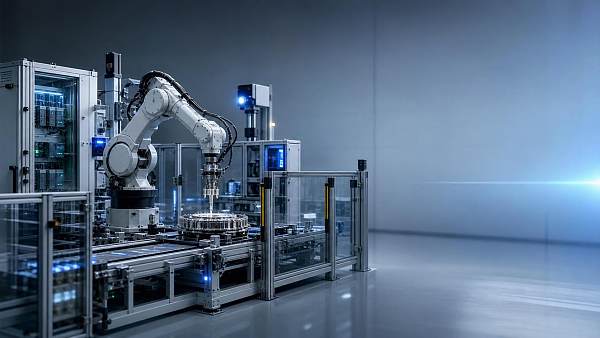
In complex production systems, failure rarely begins with one dramatic fault. It usually starts at the interfaces between robots, controls, safety, data, and commissioning decisions.
That is why factory automation robotics integration deserves closer attention in mobility sectors where tolerance windows are narrow and traceability is mandatory.
Across aerospace structures, rail signaling equipment, eVTOL subsystems, and extreme-environment logistics hardware, the same robot can behave very differently under different production conditions.
A cell that performs well in pilot runs may become unstable when upstream timing changes, safety zones overlap, or quality data must feed certification records.
Within the broader G-AIT context, this matters because advanced mobility programs are judged not only by throughput, but by operational integrity under FAA, EASA, UIC, and ISO expectations.
The practical question is not whether factory automation robotics integration is valuable. The real question is where integration risk hides before it becomes downtime, scrap, or delayed validation.
Different production environments create different integration risks
Similar automation layouts can fail for different reasons because the production objective changes the integration burden.
In composite airframe assembly, motion accuracy and process consistency often dominate. In rail equipment lines, system handshakes and functional test sequencing may matter more.
Urban air mobility programs often face fast design iteration, which means interfaces must tolerate change without destabilizing the whole line.
Cryogenic propulsion or rugged logistics hardware adds environmental stress, maintenance access limits, and stricter alarm interpretation.
A common mistake is treating all robotic cells as equipment deployment projects. In reality, factory automation robotics integration is a system coordination problem shaped by product criticality, validation depth, and change frequency.
A quick comparison of what changes by scenario
This is where factory automation robotics integration needs scenario-based judgment rather than a single rollout checklist.
When precision assembly looks stable but controls logic is still fragile
In high-precision assembly, teams often focus on robot reach, payload, and nominal repeatability. Those metrics matter, but they are not enough.
The harder issue is whether robot paths, fixtures, vision, torque tools, and MES events remain synchronized through every production state.
A robotic drilling or bonding cell may pass offline simulation yet fail during shift changes, recipe swaps, or rework routing.
More often, the fault sits in state logic. The robot is waiting for a clamp confirmation that the PLC believes already expired.
In these conditions, factory automation robotics integration should be judged by transition reliability, not only by cycle speed.
Useful checks include timestamp consistency, exception recovery paths, and whether quality data stays linked to the exact operation instance.
What tends to be missed here
- Fixture wear is tracked mechanically, but not tied to robot compensation rules.
- Vision offsets are updated locally, but not reflected in downstream traceability records.
- Rework loops exist operationally, yet the automation sequence assumes first-pass success.
In transport electronics and signaling, the weak point is often the handshake chain
For transport control modules and signaling assemblies, robotic motion is only one layer of the problem.
The line also depends on test benches, barcode systems, reject routing, safety interlocks, and deterministic communication between stations.
A frequent failure point in factory automation robotics integration appears when each supplier validates its own equipment, but nobody validates the full transactional sequence.
That gap shows up as duplicate part IDs, stations that release parts before data commit, or alarms that clear physically but stay latched in software.
In rail and advanced transportation systems, this is serious because downstream acceptance often depends on auditable process history, not just a passed end-of-line test.
The better approach is to map every handshake against a production consequence: hold, retry, scrap, bypass, or safe stop.
Fast-changing programs expose version and data flow failures
Emerging mobility platforms usually change faster than their automation systems. That creates a different class of integration risk.
When end effectors, part geometry, process limits, or inspection criteria shift, factory automation robotics integration can drift out of alignment even if no hardware breaks.
This is common in UAM, prototype-to-preproduction transitions, and mixed-model lines where engineering revisions arrive faster than commissioning discipline.
One team updates robot programs. Another updates test logic. A third changes ERP or MES routing. The line still runs, but not against the same product definition.
That mismatch can remain hidden until inspection escapes, false failures, or certification evidence gaps appear.
In practice, robust factory automation robotics integration here depends on change governance more than equipment capability.
Adaptation steps that matter more than they seem
- Lock robot, PLC, HMI, vision, and MES revisions into one controlled release baseline.
- Revalidate exception handling after every recipe or geometry update.
- Keep digital work instructions aligned with automation states, not only with engineering drawings.
Safety logic failures are rarely obvious during normal production
Many lines appear safe because guarding, scanners, and emergency stops are present. Integration risk remains when safety functions are not tested across real operating modes.
Manual intervention, maintenance access, jam recovery, and partial restart conditions expose the real quality of safety design.
In factory automation robotics integration, the failure point is often the logic linking safety state to process state.
A robot may stop correctly, yet the line may restart into an invalid sequence. Or a safety reset may restore motion without restoring material position certainty.
For sectors benchmarked against strict compliance frameworks, that is not a minor nuisance. It affects both operational continuity and defensible validation.
The useful test is not only whether safety trips work, but whether every recovery path returns the cell to a known, documented state.
Common misjudgments before commissioning and scale-up
Several errors repeat across industries, especially when schedules compress and supplier packages arrive separately.
- Assuming a successful FAT proves full factory automation robotics integration under plant timing and network conditions.
- Choosing components by specification sheet without checking contamination, vibration, thermal range, or service access.
- Treating data collection as a reporting task instead of a control dependency.
- Comparing capital cost while ignoring debug time, recovery complexity, and spare part strategy.
- Assuming similar cells across sites can share one logic model without local adaptation.
These misjudgments usually emerge after ramp-up, when change is harder and accountability becomes fragmented.
A practical way to evaluate factory automation robotics integration before problems compound
A useful review starts with the real production path, not the equipment list.
Map every state change from part arrival to release, including holds, retries, manual touches, and abnormal recovery.
Then check where factory automation robotics integration depends on assumptions that are not actively verified.
Priority should go to interface ownership, safety-state recovery, data continuity, version discipline, and maintainability under actual plant conditions.
In advanced mobility manufacturing, those checks are more valuable than generic automation maturity claims because they reflect how the line will behave under pressure.
The next sensible step is to define scenario-specific acceptance criteria, compare them across product families, and test the line against change, not only against nominal production.
That is usually where hidden failure points become visible early enough to fix without disrupting compliance, output, or long-term system performance.
Article Categories
SYSTEM_ALERT_URGENT
Q3 SYMPOSIUM ON ORBITAL DYNAMICS
Registration for the Orbital Aerospace technical committee is now open. Node access required.
Recent Articles
![]() Oct 27, 2026FAA Certifies Boeing 737 MAX 10 After Years of DelaysFAA Certifies Boeing 737 MAX 10 After Years of Delays
Oct 27, 2026FAA Certifies Boeing 737 MAX 10 After Years of DelaysFAA Certifies Boeing 737 MAX 10 After Years of Delays Oct 27, 2026Can an intermodal connectivity platform reduce rail handoff delays?Can an intermodal connectivity platform reduce rail handoff delays?
![]() Oct 26, 2026Chery Unveils Global Smart Mobility Strategy Targeting Robotaxis and eVTOLsChery Unveils Global Smart Mobility Strategy Targeting Robotaxis and eVTOLs
Oct 26, 2026Chery Unveils Global Smart Mobility Strategy Targeting Robotaxis and eVTOLsChery Unveils Global Smart Mobility Strategy Targeting Robotaxis and eVTOLs Oct 26, 2026How to evaluate avionics for helicopters used in IFR operationsHow to evaluate avionics for helicopters used in IFR operations
![]() Oct 25, 2026Ukraine’s Defence Minister Says SpaceX Satellite Services Restored After Speed RestrictionsUkraine’s Defence Minister Says SpaceX Satellite Services Restored After Speed Restrictions
Oct 25, 2026Ukraine’s Defence Minister Says SpaceX Satellite Services Restored After Speed RestrictionsUkraine’s Defence Minister Says SpaceX Satellite Services Restored After Speed Restrictions Oct 25, 2026How satellite infrastructure for IoT affects sensor reporting delaysHow satellite infrastructure for IoT affects sensor reporting delays
![]() Oct 24, 2026China Successfully Launches Yaogan 50-03 SatelliteChina Successfully Launches Yaogan 50-03 Satellite
Oct 24, 2026China Successfully Launches Yaogan 50-03 SatelliteChina Successfully Launches Yaogan 50-03 Satellite Oct 24, 2026How gradients affect traction power needs in high-speed rolling stockHow gradients affect traction power needs in high-speed rolling stock
![]() Oct 23, 2026FAA Proposes Checks on Nearly 2,000 Boeing 737NGs Over Loss-of-Control RiskFAA Proposes Checks on Nearly 2,000 Boeing 737NGs Over Loss-of-Control Risk
Oct 23, 2026FAA Proposes Checks on Nearly 2,000 Boeing 737NGs Over Loss-of-Control RiskFAA Proposes Checks on Nearly 2,000 Boeing 737NGs Over Loss-of-Control Risk Oct 23, 2026How fuel choice affects specific impulse in liquid oxygen propulsionHow fuel choice affects specific impulse in liquid oxygen propulsion
![]() Oct 22, 2026QuantumScape Plans 100 MWh Solid-State Battery Line Targeting Aerospace and Other MarketsQuantumScape Plans 100 MWh Solid-State Battery Line Targeting Aerospace and Other Markets
Oct 22, 2026QuantumScape Plans 100 MWh Solid-State Battery Line Targeting Aerospace and Other MarketsQuantumScape Plans 100 MWh Solid-State Battery Line Targeting Aerospace and Other Markets Oct 22, 2026How tank size limits hydrogen aircraft range on regional flightsHow tank size limits hydrogen aircraft range on regional flights
![]() Oct 21, 2026FAA Certifies Boeing 737-10, Clearing Regulatory Hurdle for DeliveriesFAA Certifies Boeing 737-10, Clearing Regulatory Hurdle for Deliveries
Oct 21, 2026FAA Certifies Boeing 737-10, Clearing Regulatory Hurdle for DeliveriesFAA Certifies Boeing 737-10, Clearing Regulatory Hurdle for Deliveries Oct 21, 2026How are electric vertical takeoff aircraft certified in the US?How are electric vertical takeoff aircraft certified in the US?
![]() Oct 20, 2026Ohio Department of Transportation Releases Three-Year Advanced Air Mobility Action PlanOhio Department of Transportation Releases Three-Year Advanced Air Mobility Action Plan
Oct 20, 2026Ohio Department of Transportation Releases Three-Year Advanced Air Mobility Action PlanOhio Department of Transportation Releases Three-Year Advanced Air Mobility Action Plan Oct 20, 2026How does magnetic flux density in tesla affect maglev lift force?How does magnetic flux density in tesla affect maglev lift force?
![]() Oct 19, 2026ZeroAvia Completes Key Ground Tests of ZA600 Hydrogen Fuel Cell PowertrainZeroAvia Completes Key Ground Tests of ZA600 Hydrogen Fuel Cell Powertrain
Oct 19, 2026ZeroAvia Completes Key Ground Tests of ZA600 Hydrogen Fuel Cell PowertrainZeroAvia Completes Key Ground Tests of ZA600 Hydrogen Fuel Cell Powertrain Oct 19, 2026How spacecraft integration affects advanced propulsion costsHow spacecraft integration affects advanced propulsion costs
 Oct 18, 2026How chilldown prevents cavitation in cryogenic engine systemsHow chilldown prevents cavitation in cryogenic engine systems
 Oct 17, 2026How explainability affects algorithmic trust in AI flight systemsHow explainability affects algorithmic trust in AI flight systems
 Oct 16, 2026How to evaluate transportation technology for Middle East heatHow to evaluate transportation technology for Middle East heat
 Oct 15, 2026How common-cause failures defeat redundancy logic in European avionicsHow common-cause failures defeat redundancy logic in European avionics
 Oct 14, 2026How DO-160 applies to aerospace technology testing for avionicsHow DO-160 applies to aerospace technology testing for avionics
 Oct 13, 2026How fuel price volatility shapes commercial aviation cost trendsHow fuel price volatility shapes commercial aviation cost trends
 Oct 12, 2026How to qualify aerospace manufacturing components for traceabilityHow to qualify aerospace manufacturing components for traceability
 Oct 11, 2026Which certification hurdles are slowing hydrogen aviation in Europe?Which certification hurdles are slowing hydrogen aviation in Europe?
 Oct 10, 2026What evidence should a magnetic gap stability supplier provide?What evidence should a magnetic gap stability supplier provide?
 Oct 09, 2026Which ISO standards matter when qualifying industrial technology suppliers?Which ISO standards matter when qualifying industrial technology suppliers?
 Oct 08, 2026When does reusability actually lower launch vehicle costs?When does reusability actually lower launch vehicle costs?
 Oct 07, 2026Where to find reliable product knowledge resources in the Middle EastWhere to find reliable product knowledge resources in the Middle East
 Oct 06, 2026What drives high-speed rail systems cost per kilometer?What drives high-speed rail systems cost per kilometer?
 Oct 05, 2026When does hydrogen propulsion for UAV extend mission range enough to justify it?When does hydrogen propulsion for UAV extend mission range enough to justify it?
 Oct 04, 2026How rail systems integration reduces commissioning delaysHow rail systems integration reduces commissioning delays
 Oct 03, 2026How to evaluate an advanced propulsion manufacturer for hydrogen systemsHow to evaluate an advanced propulsion manufacturer for hydrogen systems
 Oct 02, 2026How to qualify aircraft components for OEM production approvalHow to qualify aircraft components for OEM production approval