Advanced Propulsion Options Compared: Efficiency, Range, and Maintenance Impact
Lead Author
Published
Views:
Advanced Propulsion systems are transforming aircraft, rail, and emerging mobility platforms—but for aftersales maintenance teams, performance gains mean little without predictable service demands. This comparison examines how different propulsion options affect efficiency, operating range, and long-term maintenance impact, helping technicians and support specialists understand where reliability, inspection cycles, and lifecycle costs truly diverge.
For organizations operating across advanced commercial aviation, urban air mobility, high-speed rail, maglev engineering, and extreme-environment logistics, propulsion is no longer just a design decision. It is a serviceability decision. A propulsion architecture that improves energy conversion by 8% to 15% may still create heavy aftermarket pressure if inspection intervals shorten, thermal loads rise, or specialist tooling becomes mandatory.
That is why aftersales maintenance personnel need a practical view of Advanced Propulsion beyond laboratory efficiency claims. In field conditions, the real differentiators are often mean time between unscheduled events, replacement lead times, calibration frequency, contamination sensitivity, and the number of labor hours required per 1,000 operating hours or per 100,000 km.
Within G-AIT-aligned mobility sectors, support teams are increasingly asked to maintain mixed fleets and hybridized platforms under FAA, EASA, UIC, and ISO-driven compliance environments. The result is a new maintenance reality: propulsion comparisons must include energy efficiency, usable range, and lifecycle service impact in one decision framework.
Why Advanced Propulsion Comparison Matters in Aftersales Operations
Aftersales teams rarely control the initial propulsion choice, but they absorb its consequences for 10 to 30 years. In aerospace and advanced transportation, a propulsion system affects not only fuel or energy use, but also maintenance windows, fault isolation methods, spare parts stocking, technician certification needs, and fleet availability targets. A platform with 98% dispatch reliability can quickly fall below 94% if propulsion-related inspections are not aligned with actual duty cycles.
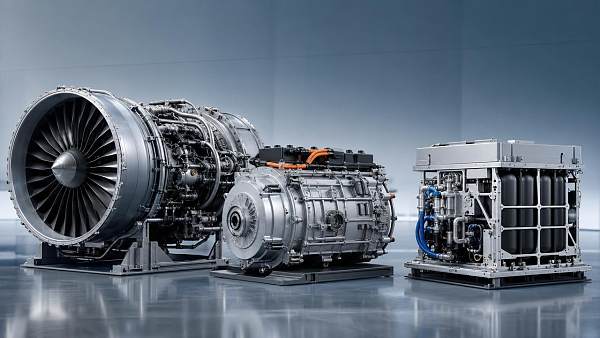
In practical terms, maintenance personnel should compare at least four dimensions: conversion efficiency, operating range under load, inspection intensity, and failure mode complexity. These dimensions vary sharply between conventional turbine systems, battery-electric drives, hydrogen fuel-cell configurations, and hybrid-electric architectures. The differences are especially important when the platform must operate in high-frequency service, such as 6 to 12 daily UAM rotations or continuous rail service over 16 to 20 hours per day.
The service variables that change with propulsion type
Maintenance impact does not come from one component alone. It comes from the full propulsion chain: energy storage, thermal management, power conversion, drivetrain mechanics, control software, and containment or ventilation systems. For example, an electric propulsion unit may have fewer moving parts than a gas turbine, but battery packs or power electronics can introduce stricter thermal thresholds, isolation testing, and periodic state-of-health diagnostics.
- Inspection interval length: 250-hour, 500-hour, or condition-based schedules
- Consumable dependency: lubricants, filters, seals, coolant, or deionized fluid
- Special tooling requirement: borescope kits, high-voltage PPE, cryogenic handling tools
- Software dependency: firmware validation, control logic updates, fault code interpretation
- Downtime pattern: short frequent interventions versus long major overhauls
A practical comparison baseline
The table below gives a field-oriented comparison of common Advanced Propulsion options. It is designed for aftersales teams that need to estimate not only performance but also support burden across multi-modal fleets.
For maintenance planning, the key insight is simple: fewer moving parts do not automatically mean lower total service burden. In Advanced Propulsion, support complexity often migrates from mechanical wear to thermal management, electrical safety, software diagnostics, and condition monitoring. Aftersales teams must therefore evaluate where the maintenance workload shifts, not merely whether it disappears.
Efficiency Versus Maintenance: Where the Trade-Offs Really Appear
Efficiency claims can be misleading when they are divorced from service realities. A propulsion system that converts stored energy efficiently may still generate costly downtime if support intervals are short or specialist intervention is needed at high frequency. In mixed fleets, the maintenance manager must ask a more operational question: how much labor, training, and spare inventory is required to preserve that efficiency over 5,000, 10,000, or 20,000 operating hours?
Turbines: mature support ecosystems, heavier periodic work
Gas turbines remain strong in applications where long range, rapid refueling, and established field support matter most. Their maintenance model is familiar: line checks, borescope inspections, oil system monitoring, compressor cleaning, and major scheduled events tied to cycles and operating environment. In dusty, coastal, or high-temperature conditions, inspection frequency can increase by 20% to 40% compared with baseline assumptions.
For aftersales teams, the advantage is predictability. Failure modes are well understood, technical documentation is mature, and parts supply networks are often better established than for newer architectures. The drawback is that major events can be labor intensive and expensive, especially when hot-section wear, foreign object damage, or thermal fatigue accelerates component replacement timelines.
When turbines still win
- Routes or missions requiring long endurance with minimal charging dwell time
- Operators needing globally available maintenance capability within 24 to 72 hours
- Platforms where dispatch reliability is more critical than lowest energy cost per trip
Battery-electric systems: fewer mechanics, more thermal and diagnostic discipline
Battery-electric Advanced Propulsion often reduces mechanical complexity. Electric motors can operate with comparatively low vibration and fewer wear components, which may reduce certain scheduled interventions. However, service teams inherit a different maintenance profile centered on battery state-of-health tracking, charging cycle management, thermal runaway prevention, connector inspection, and software-driven fault interpretation.
Battery performance can decline gradually with temperature exposure, fast-charging frequency, and deep discharge behavior. In field service, that means maintenance is not only physical but analytical. Teams need to monitor degradation trends over hundreds or thousands of cycles, identify module imbalance, and plan replacement before usable range falls below mission thresholds. A 10% to 15% drop in pack health can materially affect route planning in UAM or short-haul logistics.
Common battery-electric service burdens
- High-voltage isolation checks at scheduled intervals
- Cooling loop inspection for leaks, conductivity, or pump performance
- Charging hardware verification after repeated high-current use
- Cell balancing review and pack-level diagnostic logging
Hydrogen fuel-cell systems: range potential with new support disciplines
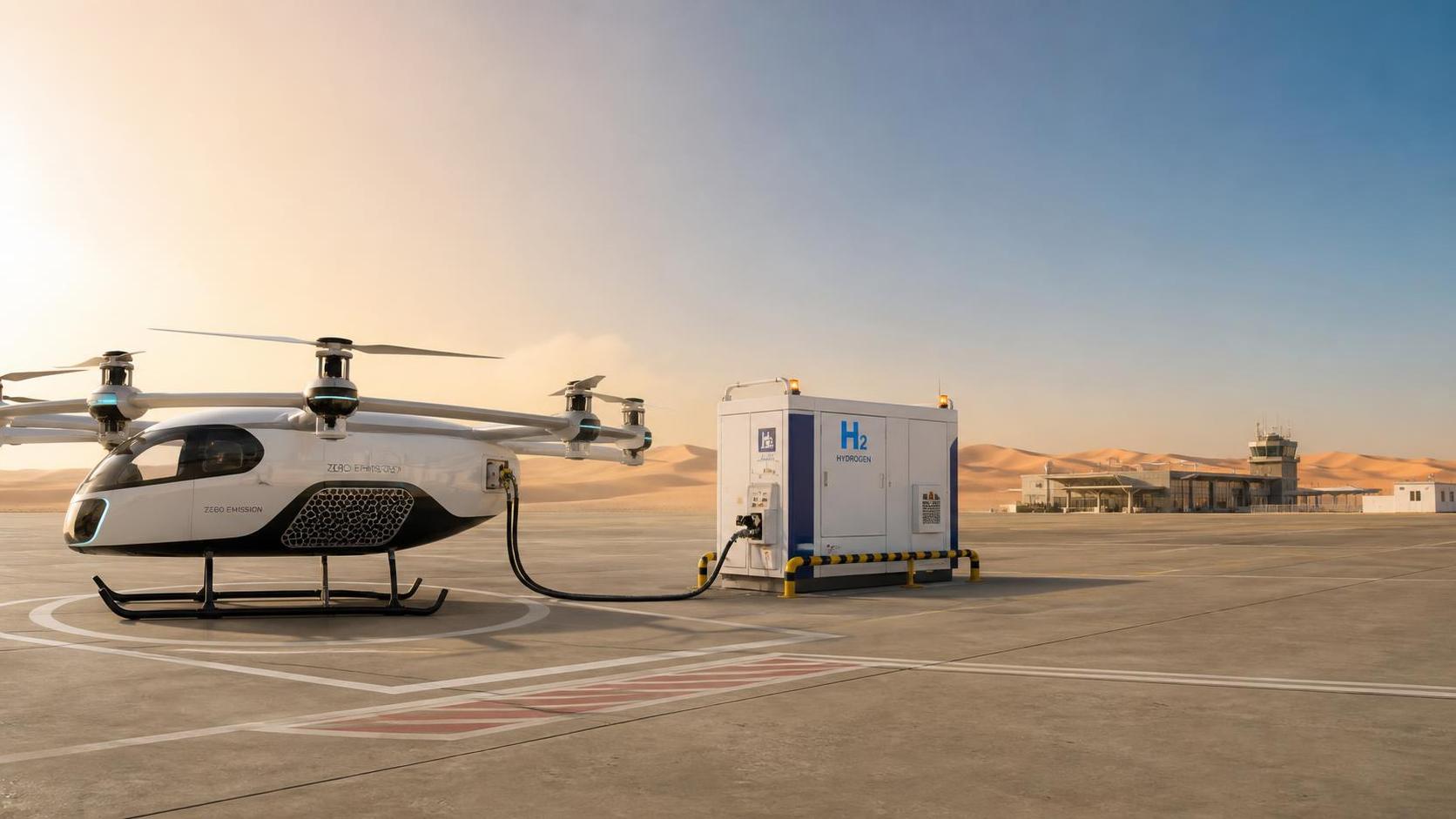
Hydrogen fuel-cell propulsion attracts attention because it can extend range beyond many battery-only designs while supporting zero-emission operation at point of use. For maintenance teams, however, the benefit comes with a more sensitive support environment. Stack health, humidification control, pressure regulation, compressor reliability, and leak monitoring all require disciplined inspection processes.
Unlike mature turbine ecosystems, fuel-cell support capabilities are still uneven across regions. This can increase mean time to repair if trained personnel, replacement stacks, or certified hydrogen-handling procedures are not available locally. Aftersales planners should model not just normal servicing, but also response readiness for low-frequency, high-consequence events such as seal failure or sensor drift in gas handling lines.
Range Implications Across Aviation, Rail, and Emerging Mobility
Range is not a single number. It changes with payload, climate, route profile, reserve requirements, speed, and infrastructure access. For aftersales personnel, range matters because it determines the stress pattern imposed on propulsion assets. Short-range operations may mean frequent charging or repeated high-power acceleration cycles. Long-range operations may reduce turnaround interventions but increase thermal exposure and endurance-related wear.
How mission profile changes maintenance demand
In high-speed rail and maglev applications, propulsion components may operate under long daily duty periods with frequent control commands but relatively predictable routes. In aircraft and eVTOL operations, the same propulsion family can face highly variable takeoff loads, altitude transitions, and reserve obligations. A maintenance team should therefore compare propulsion range together with duty severity, not as a stand-alone performance headline.
The table below shows how mission profile can reshape aftersales workload even when the propulsion technology remains the same.
The practical lesson is that range advantage only creates business value when the support model can protect it. A platform with nominally longer range may still underperform operationally if environmental conditions, charging limitations, or parts lead times force conservative dispatch practices.
Why aftersales teams should track usable range, not brochure range
Usable range is the figure that remains after accounting for reserve margin, aging, temperature loss, and routing constraints. For maintenance teams, usable range is a diagnostic metric. If actual in-service range drops 8% in one season, the cause may not be driver behavior alone. It can indicate battery aging, cooling system inefficiency, stack degradation, miscalibrated controls, or excessive drivetrain drag.
That is why propulsion service programs should include regular performance baselining every 3 to 6 months, especially in first-generation fleets. Small efficiency losses often appear before obvious failures. Early detection helps avoid mission cancellations, protects warranty budgets, and improves lifecycle planning accuracy.
Maintenance Planning Framework for Aftersales Teams
A strong Advanced Propulsion support strategy should combine mechanical maintenance, electrical safety, digital diagnostics, and compliance documentation. This is particularly important in sectors covered by rigorous certification and interoperability expectations. Whether the platform is an electric aircraft, a hydrogen-powered logistics vehicle, or a high-speed rail traction subsystem, aftersales teams need a repeatable framework that reduces unscheduled downtime without overservicing.
Five-point evaluation model before adopting a propulsion support plan
- Map maintenance intervals by component family, not only by total system hours.
- Separate predictable wear items from condition-based diagnostic items.
- Confirm technician skill coverage for high-voltage, cryogenic, or fuel-handling tasks.
- Model spare parts exposure across 30-day, 90-day, and 180-day replenishment windows.
- Review software and data access rights needed for fault tracing and remote support.
Typical warning signs of an underprepared support model
- Unscheduled downtime repeatedly exceeds 5% of planned fleet availability
- Battery or stack replacements are triggered without trend-based prediction
- Fault isolation depends on OEM escalation for more than 50% of events
- Safety procedures exist, but tool availability and technician recurrency are inconsistent
Documentation, training, and inventory should evolve together
One of the most common mistakes in Advanced Propulsion support is upgrading hardware without upgrading the aftersales system around it. A propulsion transition from turbine to hybrid-electric, or from legacy traction motors to newer high-efficiency inverters, should trigger updates in at least three areas within the first 60 to 120 days: maintenance manuals, technician training matrices, and spare inventory logic.
Documentation should include clearer fault trees, isolation procedures, and threshold values for intervention. Training should cover both routine service and incident response. Inventory models should distinguish between high-failure consumables, long-lead modules, and mandatory safety stock. Without this alignment, the theoretical efficiency gain of a new propulsion system is often diluted by support delays and avoidable operational disruption.
How to Choose the Right Advanced Propulsion Path for Long-Term Serviceability
For buyers, operators, and support managers, the best propulsion option is rarely the one with the highest headline efficiency alone. It is the one that matches route structure, maintenance capability, energy infrastructure, compliance obligations, and lifecycle budget. In some cases, a slightly less efficient system with mature global support will outperform a newer architecture whose uptime depends on scarce parts or specialist intervention.
Questions aftersales teams should ask before procurement or fleet transition
- What is the realistic service interval under our actual ambient and duty conditions?
- How many labor hours are required for routine inspection every 100 hours or equivalent duty cycle?
- Can our current facilities support high-voltage, hydrogen, or advanced thermal management procedures?
- What is the expected lead time for propulsion-critical spare assemblies?
- How much usable range degradation is acceptable before mission economics change?
Decision guidance by operating priority
If the priority is maximum range with proven field support, turbine-based systems still hold a strong position. If the priority is lower local emissions and reduced mechanical wear in short-cycle operations, battery-electric systems may be attractive, provided thermal and charging management are mature. If range and zero-emission goals must coexist, hydrogen fuel-cell systems deserve attention, but only when safety processes, infrastructure, and trained support resources are credible. Hybrid-electric solutions can offer a transitional balance, though they often require the broadest maintenance competence.
Across all categories, the most resilient decision process is to compare not only energy efficiency and nominal range, but also four service indicators: inspection frequency, fault isolation speed, spare availability, and technician readiness. Those factors determine whether Advanced Propulsion delivers lifecycle value in real operations.
For aftersales maintenance teams working across aerospace, rail, and advanced mobility, propulsion selection should be judged by what happens after deployment: how often assets need intervention, how quickly issues can be diagnosed, and how reliably performance can be sustained over years of service. Advanced Propulsion can unlock major gains in efficiency and mission flexibility, but only when maintenance planning is built into the decision from day one.
G-AIT supports organizations that need a sharper benchmark between frontier propulsion performance and operational integrity across certified, safety-critical environments. If you are evaluating propulsion alternatives, updating service programs, or preparing an aftermarket strategy for mixed fleets, contact us to discuss a tailored comparison framework, request a customized support analysis, or explore broader mobility intelligence solutions.
Article Categories
SYSTEM_ALERT_URGENT
Q3 SYMPOSIUM ON ORBITAL DYNAMICS
Registration for the Orbital Aerospace technical committee is now open. Node access required.
Recent Articles
 Sep 13, 2026How rail signaling systems improve freight corridor capacityHow rail signaling systems improve freight corridor capacity
 Sep 12, 2026What GoA4 autonomous rail requires for safe unattended operationWhat GoA4 autonomous rail requires for safe unattended operation
 Sep 11, 2026What drives orbital data analytics pricing for satellite operators?What drives orbital data analytics pricing for satellite operators?
 Sep 10, 2026How cross-border standards shape high-speed rail infrastructure in EuropeHow cross-border standards shape high-speed rail infrastructure in Europe
 Sep 09, 2026How propulsion physics shapes an aircraft’s fuel efficiencyHow propulsion physics shapes an aircraft’s fuel efficiency
 Sep 08, 2026When does a railway digital twin platform justify its cost?When does a railway digital twin platform justify its cost?
 Sep 07, 2026How fail operational systems maintain aircraft control after a faultHow fail operational systems maintain aircraft control after a fault
 Sep 07, 2026How to evaluate a power electronics price quote for avionics systemsHow to evaluate a power electronics price quote for avionics systems
 Sep 05, 2026What evidence is needed to support aircraft certification?What evidence is needed to support aircraft certification?
 Sep 04, 2026Do cryogenic propulsion systems suit satellite infrastructure?Do cryogenic propulsion systems suit satellite infrastructure?
 Sep 03, 2026When should an Urban Air Mobility OEM pursue FAA type certification?When should an Urban Air Mobility OEM pursue FAA type certification?
 Sep 02, 2026How aerospace manufacturing in Europe is adapting to supply chain riskHow aerospace manufacturing in Europe is adapting to supply chain risk
 Sep 01, 2026When does a B2B product knowledge base reduce sales support delays?When does a B2B product knowledge base reduce sales support delays?
 Aug 31, 2026Can zero emission flight in the Middle East withstand extreme heat?Can zero emission flight in the Middle East withstand extreme heat?
 Aug 30, 2026When does an aerospace conglomerate strategy reduce program risk?When does an aerospace conglomerate strategy reduce program risk?
 Aug 29, 2026How to assess a high-speed rail supplier's signaling reliabilityHow to assess a high-speed rail supplier's signaling reliability
 Aug 28, 2026How to assess the safety case for an autonomous flight system for cargoHow to assess the safety case for an autonomous flight system for cargo
 Aug 27, 2026How thermal control prevents equipment overheating on the lunar surfaceHow thermal control prevents equipment overheating on the lunar surface
 Aug 26, 2026How to evaluate an aerospace R&D reference in Southeast AsiaHow to evaluate an aerospace R&D reference in Southeast Asia
 Aug 25, 2026When train control systems integration fails, where do delays usually start?When train control systems integration fails, where do delays usually start?
 Aug 24, 2026What sets an Urban Air Mobility OEM apart in certification readinessWhat sets an Urban Air Mobility OEM apart in certification readiness
 Aug 23, 2026What makes an aerospace intelligence provider reliable for fleet risk monitoringWhat makes an aerospace intelligence provider reliable for fleet risk monitoring
 Aug 22, 2026How to verify surgicalinstruments meet sterilization standardsHow to verify surgicalinstruments meet sterilization standards
 Aug 21, 2026What to compare when evaluating autonomous rail systems vendorsWhat to compare when evaluating autonomous rail systems vendors
 Aug 20, 2026Do GaN chargers run too hot when charging laptops at full power?Do GaN chargers run too hot when charging laptops at full power?
 Aug 19, 2026What is slowing the decarbonization of rail in North AmericaWhat is slowing the decarbonization of rail in North America
 Aug 18, 2026When does intermodal connectivity for ports become a bottleneckWhen does intermodal connectivity for ports become a bottleneck
 Aug 17, 2026When can clean hydrogen aircraft compete with SAF on operating cost?When can clean hydrogen aircraft compete with SAF on operating cost?
 Aug 16, 2026China Tightens Case-by-Case Review of Drone Exports to the U.S.China Tightens Case-by-Case Review of Drone Exports to the U.S.
 Aug 16, 2026What drives low vacuum tube transport energy consumption per kilometerWhat drives low vacuum tube transport energy consumption per kilometer
 Aug 15, 2026China Expands Cross-Border Cash Pooling Nationwide for MultinationalsChina Expands Cross-Border Cash Pooling Nationwide for Multinationals
 Aug 15, 2026Are solar panels wholesale Europe prices lower for large orders?Are solar panels wholesale Europe prices lower for large orders?
 Aug 14, 2026China Imposes Temporary Export Ban on Helium, Squeezing Cryogenic and Medical Supply ChainsChina Imposes Temporary Export Ban on Helium, Squeezing Cryogenic and Medical Supply Chains
 Aug 14, 2026UIC Safety Standards Guide: What to Check Before Certifying Rail SystemsUIC Safety Standards Guide: What to Check Before Certifying Rail Systems
 Aug 13, 2026The 12th launch of Jielong-3 drives remote sensing cooperation and re-evaluation of procurement optionsThe 12th launch of Jielong-3 drives remote sensing cooperation and re-evaluation of procurement options