How does aircraft certification differ across the Middle East?
Lead Author
Published
Views:
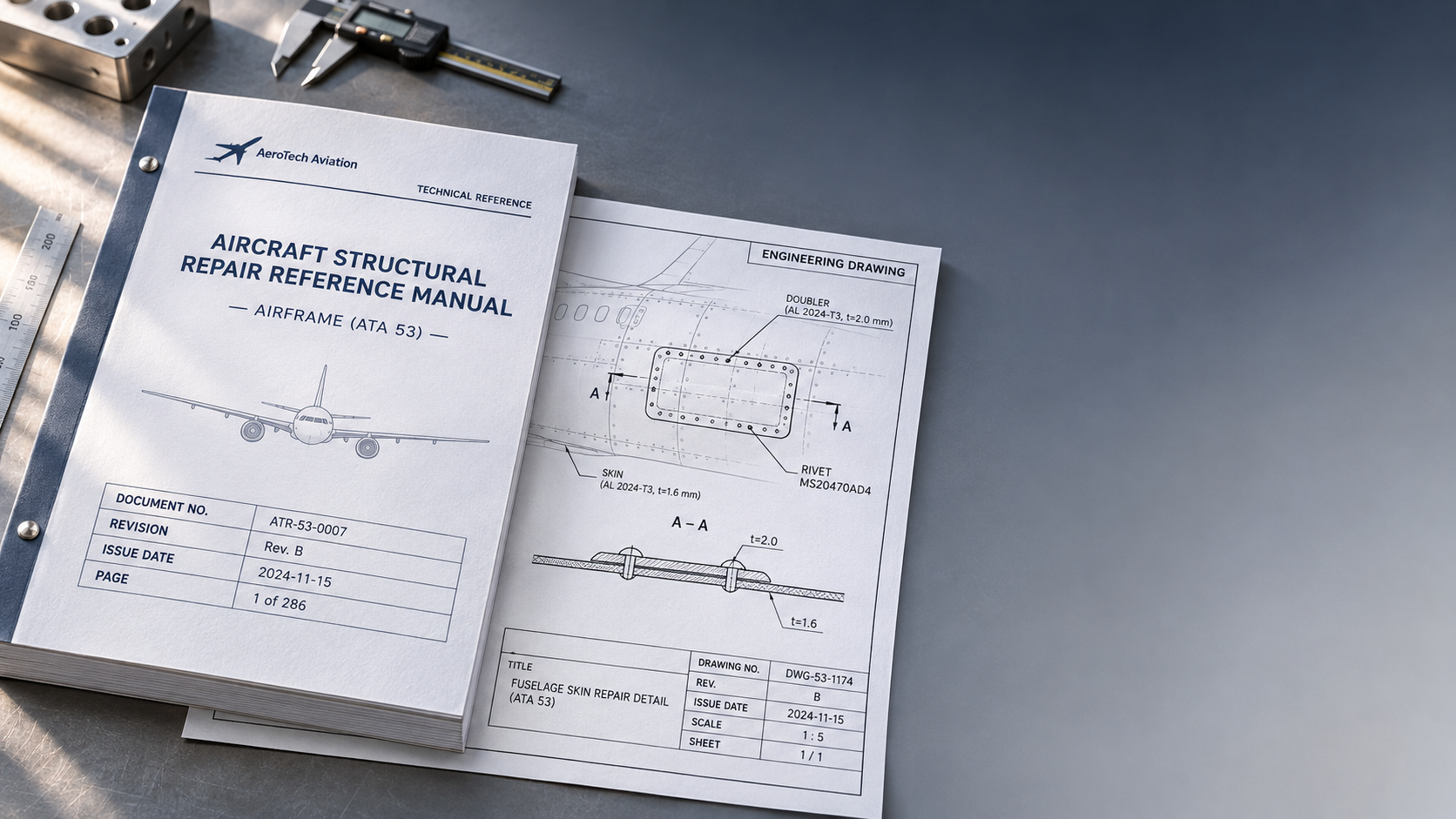
Aircraft certification across the Middle East is governed by individual national aviation authorities, not by a single regional approval. A type certificate issued by the original certifying authority can form the technical foundation for entry into another jurisdiction, but it does not automatically establish that an aircraft is eligible for registration or operation there. The receiving authority determines the applicable validation or acceptance route, any local conditions, and the evidence needed for the particular aircraft and intended operation.
The practical differences in Aerospace Certification Middle East assessments often appear at the interfaces: whether a foreign type certificate has been accepted, which design changes are covered, how an individual aircraft’s configuration is demonstrated, and whether the proposed operation introduces requirements beyond basic airworthiness. A comparison based solely on the aircraft model or the origin of its certificate can therefore produce an incomplete result.
One aircraft, several distinct approvals
A type certificate addresses an aircraft design against an established certification basis. It is distinct from the airworthiness certificate or equivalent authorization associated with an individual aircraft. The latter concerns a particular airframe, its conformity to an approved design, its condition, and the records supporting its continued airworthiness.
Operational approval is a further question. Approval to conduct commercial air transport, for example, involves the operator and its systems as well as the aircraft. Equipment, maintenance arrangements, crew procedures, and the intended routes can affect whether the aircraft is suitable for a proposed operation even after its type has been accepted.
A foreign-registered aircraft operating into a Middle Eastern state also presents a different question from an aircraft being placed on that state’s register. The state of registry retains major continuing-airworthiness responsibilities, while the state of the operator and the state overflown or served can impose applicable operational conditions. The relevant authority and approval pathway must be identified before treating a foreign certificate as sufficient evidence.
Where national pathways diverge
National authorities throughout the region operate within the international civil aviation framework, including standards established by the International Civil Aviation Organization. That framework does not make national implementation identical. States retain their own regulations, administrative procedures, and oversight arrangements, and the scope of any recognition of foreign approvals must be established for the specific transaction.
For example, the United Arab Emirates, Saudi Arabia, and Qatar each have their own civil aviation authority and national regulatory framework. A documented acceptance route in one jurisdiction should not be assumed to apply in another. Even where two authorities rely on the same original type certificate, they can differ in the formal application, the design changes included in the review, and the evidence requested for an individual aircraft.
The original certifying authority also matters. An aircraft design approved under one foreign system is not necessarily handled through the same administrative route as a design approved under another. Bilateral arrangements or published procedures can define the extent of reliance on a foreign authority, but their scope must be read carefully: coverage for a type certificate does not automatically establish coverage for every subsequent modification, repair, or production-related approval.

Validation is a defined scope, not a second type certificate
Where validation is required, the receiving authority reviews a foreign design approval for use under its own system. The extent of that review depends on the applicable arrangement and the authority’s assessment. It can rely substantially on the original certification work while retaining the ability to address particular technical issues or national requirements.
The certification basis identifies the airworthiness standards, amendments, special conditions, exemptions, or equivalent findings applicable to a design approval. Two documents stating that an aircraft meets broadly similar standards do not necessarily describe identical certification bases. Differences become significant when a novel system, an unusual operating envelope, or a later design change introduces a condition that was not addressed in the original assessment.
For a conventional aircraft already established on a national register, the design pathway may be well documented. A new variant with different engines, increased operating limits, or substantially revised flight-control functions should not be treated as identical merely because it shares a family designation. The exact model designation and the status of the relevant variant determine which approval records are applicable.
Acceptance is also not necessarily permanent in every respect. Continued eligibility can be affected by later mandatory corrective action, a revised approval, or an authority decision concerning a particular configuration. The current status of the approval matters more than an undated statement that the type was accepted previously.
Modifications often determine the real workload
An individual aircraft can accumulate cabin changes, avionics upgrades, connectivity installations, repairs, and equipment removals over its service life. Each change needs an appropriate approval basis and an installation record that identifies its applicability. A valid original type certificate does not, on its own, establish acceptance of all subsequent changes in the receiving jurisdiction.
A supplemental type certificate issued by a foreign authority is a design approval for a defined change. Its relevance to a particular aircraft depends on the approved model, effectivity, installation instructions, and compatibility with other installed modifications. Its acceptance by the receiving authority is a separate question. If two modifications affect the same wiring, structural area, power supply, or emergency equipment, each may have an approval while their combined installation still needs a documented compatibility assessment.
Cabin reconfiguration illustrates the distinction. Changing seat layout can affect emergency evacuation assumptions, access to exits, placards, restraint systems, weight and balance, and the location of safety equipment. The technical package must describe the installed arrangement, not simply provide an approval for seats of the same model. A leased aircraft moving between registers is especially sensitive to missing installation records because the physical configuration can differ from the last complete document set.
Repair approval deserves the same attention. Structural damage records, approved repair instructions, inspections, and any recurring limitations must be traceable to the airframe. An acceptable repair document for one location or damage extent cannot automatically be applied to another.
Individual aircraft records and export evidence
Before an aircraft enters a new register, the receiving authority needs a basis for establishing identity, configuration, and airworthiness. An export certificate of airworthiness, where applicable, provides information from the exporting authority, but its precise role and any additional receiving-state requirements must be established in advance. It should not be confused with the airworthiness certificate ultimately issued by the state of registry.
The records need to connect the aircraft’s serial number to its engines, propellers where fitted, major life-limited components, installed modifications, and maintenance status. Gaps in component traceability or inconsistent modification records can delay a transfer even when the aircraft is physically serviceable. The issue is not simply the volume of paperwork: evidence must show that the correct approved configuration exists on the specific aircraft.
Airworthiness directives require particular care. A directive issued by the state responsible for the type design can form part of the continuing-airworthiness obligations, but the applicable directives and any additional national requirements must be identified under the receiving state’s rules. A status report is useful only when it identifies applicability, method of compliance, and any recurring action or limitation still in force.
Maintenance program alignment also affects entry into service. The approved program must reflect the aircraft’s utilization, installed equipment, applicable instructions for continued airworthiness, and the requirements of the state of registry. Transferring a program from another register without reconciling intervals, completed tasks, and outstanding requirements can leave uncertainty about when the next inspection is due.
Operating environment changes the evidence needed
High ambient temperatures, airborne sand, dust, and coastal exposure are relevant because they affect performance assumptions and maintenance planning. They do not, by themselves, create a uniform regional certification standard. The question is whether the approved aircraft limitations, operating data, and maintenance instructions cover the actual conditions and intended use.
For takeoff performance, temperature and pressure altitude affect the available performance margins, while runway length, slope, obstacles, aircraft mass, and engine condition complete the assessment. A temperature limit in an aircraft manual cannot be interpreted in isolation as proof that a proposed departure is permissible. The applicable approved performance data and operational rules must be used together.
Sand and dust exposure can influence engine deterioration, filtration, sensors, seals, and inspection findings. Existing maintenance instructions may already address these effects; additional monitoring or revised maintenance tasks require an appropriate technical and regulatory basis. Similarly, a coastal operating environment raises corrosion-control questions, but the response depends on exposure, materials, protective treatments, and the aircraft’s approved maintenance documentation.
Separate aircraft capability from permission to use it
Installed equipment can be airworthy without the aircraft or operation having every associated authorization. Navigation, surveillance, communications, and approach capabilities depend on the approved installation and software configuration, applicable flight-manual limitations, maintenance provisions, and operational approval where required. A feature shown in an equipment specification is not sufficient evidence that it is installed, enabled, approved, and usable on the relevant aircraft.
This distinction also applies to emerging aircraft configurations. An electric or highly automated aircraft may require special conditions or other tailored certification criteria where existing standards do not fully address its design features. The original approval’s treatment of energy storage, flight controls, system safety, and emergency procedures would need to be understood alongside the receiving authority’s own acceptance process. A conventional aircraft’s established validation route is not proof that the same scope of review will apply.
The most reliable comparison is therefore made against a defined aircraft serial number, configuration, register, and intended operation. Once those are fixed, differences between national requirements become identifiable approval questions rather than assumptions based on geography or a foreign certificate alone.
Article Categories
SYSTEM_ALERT_URGENT
Q3 SYMPOSIUM ON ORBITAL DYNAMICS
Registration for the Orbital Aerospace technical committee is now open. Node access required.
Recent Articles
 Nov 22, 2026How does redundancy handle component failures in rail signaling?How does redundancy handle component failures in rail signaling?
![]() Nov 21, 2026Middle Eastern Countries Oppose EU Aviation Emissions Proposal at ICAOMiddle Eastern Countries Oppose EU Aviation Emissions Proposal at ICAO
 Nov 21, 2026How are reference aircraft used in unmanned aircraft R&D?How are reference aircraft used in unmanned aircraft R&D?
![]() Nov 20, 2026Helios Horizon Completes Solid-State Battery Test Flight, Sets Three World RecordsHelios Horizon Completes Solid-State Battery Test Flight, Sets Three World Records
 Nov 20, 2026How does battery weight affect electric aircraft range?How does battery weight affect electric aircraft range?
![]() Nov 19, 2026ICEYE's €2 Billion Avio Bid Meets Italian Government ResistanceICEYE's €2 Billion Avio Bid Meets Italian Government Resistance
 Nov 19, 2026Is EN 9100 certification mandatory for aerospace suppliers in Europe?Is EN 9100 certification mandatory for aerospace suppliers in Europe?
![]() Nov 18, 2026ULA Says Vulcan Failure Began at Liftoff; 40 Amazon Satellites LostULA Says Vulcan Failure Began at Liftoff; 40 Amazon Satellites Lost
 Nov 18, 2026How to verify load ratings from an industrial rigging equipment factoryHow to verify load ratings from an industrial rigging equipment factory
![]() Nov 17, 2026Collins Aerospace Breaks Ground on Propeller MRO Facility in IndiaCollins Aerospace Breaks Ground on Propeller MRO Facility in India
 Nov 17, 2026How to use a transportation benchmarking database to compare freight costsHow to use a transportation benchmarking database to compare freight costs
![]() Nov 16, 2026Beijing Drone Rules Ban Flight, Possession and Storage Across the CityBeijing Drone Rules Ban Flight, Possession and Storage Across the City
 Nov 16, 2026How does redundancy support safe autonomous aviation?How does redundancy support safe autonomous aviation?
![]() Nov 15, 2026SpaceX Catches Orbital-Class Starship on Flight 15SpaceX Catches Orbital-Class Starship on Flight 15
 Nov 15, 2026How does system integration affect smart railway station costs?How does system integration affect smart railway station costs?
![]() Nov 14, 2026SpaceX Starship Flight 15 Reaches Orbit as Booster Diverts to SplashdownSpaceX Starship Flight 15 Reaches Orbit as Booster Diverts to Splashdown
 Nov 14, 2026How to verify a technical compliance reference for avionicsHow to verify a technical compliance reference for avionics
![]() Nov 13, 2026Hydrogen Aviation Startups Seek Near-Term Revenue in Defense and Data CentersHydrogen Aviation Startups Seek Near-Term Revenue in Defense and Data Centers
 Nov 13, 2026How to use procurement planning resources to set lead timesHow to use procurement planning resources to set lead times
![]() Nov 12, 2026Hydrogen Aviation Startups Turn to Defense and Data Centers for RevenueHydrogen Aviation Startups Turn to Defense and Data Centers for Revenue
 Nov 12, 2026How does a multimodal logistics hub warehouse connect rail and road freight?How does a multimodal logistics hub warehouse connect rail and road freight?
![]() Nov 11, 2026FAA Rolls Out SMART AI Traffic Management System Across 22 CentersFAA Rolls Out SMART AI Traffic Management System Across 22 Centers
 Nov 11, 2026How does runway traffic management prevent runway incursions?How does runway traffic management prevent runway incursions?
![]() Nov 10, 2026FAA Starts Air Traffic Control Upgrade, Phasing Out 8-Inch Floppy DisksFAA Starts Air Traffic Control Upgrade, Phasing Out 8-Inch Floppy Disks
 Nov 10, 2026How to assess data comparability in industrial technology benchmarking softwareHow to assess data comparability in industrial technology benchmarking software
![]() Nov 09, 2026Marble Imaging Raises €6 Million for German VHR Satellite ConstellationMarble Imaging Raises €6 Million for German VHR Satellite Constellation
 Nov 09, 2026How does cryogenic propulsion for upper stages affect payload capacity?How does cryogenic propulsion for upper stages affect payload capacity?
![]() Nov 08, 2026SpaceX Plans Starship Flight 15 on November 13 With Two-Stage Catch AttemptSpaceX Plans Starship Flight 15 on November 13 With Two-Stage Catch Attempt
 Nov 08, 2026How to verify an aerospace technical reference is currentHow to verify an aerospace technical reference is current
![]() Nov 07, 2026NTSB: Southwest 737 MAX Flew 44 Times After Missed Storm Check, Leading to Dutch RollNTSB: Southwest 737 MAX Flew 44 Times After Missed Storm Check, Leading to Dutch Roll
 Nov 07, 2026How to reduce springback when bending automotive sheet metalHow to reduce springback when bending automotive sheet metal
![]() Nov 06, 2026AutoFlight Completes First Autonomous Formation Flight With Five Mixed-Weight eVTOLsAutoFlight Completes First Autonomous Formation Flight With Five Mixed-Weight eVTOLs
 Nov 06, 2026How to find current avionics standards in global aerospace technical referencesHow to find current avionics standards in global aerospace technical references
 Nov 05, 2026How does aircraft certification differ across the Middle East?How does aircraft certification differ across the Middle East?
![]() Nov 04, 2026Spain’s Transport Minister Resigns After Fatal High-Speed Rail CollisionSpain’s Transport Minister Resigns After Fatal High-Speed Rail Collision