How does runway traffic management prevent runway incursions?
Lead Author
Published
Views:
Runway traffic management prevents incursions by controlling who can enter a runway, confirming that each movement is understood, and detecting conflicts before aircraft or vehicles occupy the same protected space. It works through several connected safeguards: air traffic control clearances, pilot and driver communication, runway markings and lights, surface surveillance, and procedures for unusual conditions.
No single safeguard is enough. A controller may issue the correct instruction, but a pilot can misunderstand the runway designation. A vehicle driver may know the route but miss a holding position in poor visibility. Effective management anticipates these failures and gives other people or systems a chance to catch them before a conflict develops.
A runway incursion occurs when an aircraft, vehicle, or person is incorrectly present on the protected area of a surface designated for aircraft landing and takeoff. An incursion does not require a collision or even an immediate evasive maneuver. That distinction matters when reviewing events: an unauthorized entry is a control failure even if the runway happened to be empty.
How the safeguards work together
The central task is to keep a reliable picture of runway occupancy and prevent incompatible movements from being authorized at the same time. At a controlled airport, air traffic control coordinates aircraft and vehicle movements using applicable procedures, visual observation, radio communication, and available surveillance tools. Pilots and vehicle operators remain responsible for following their clearances and stopping when unsure.
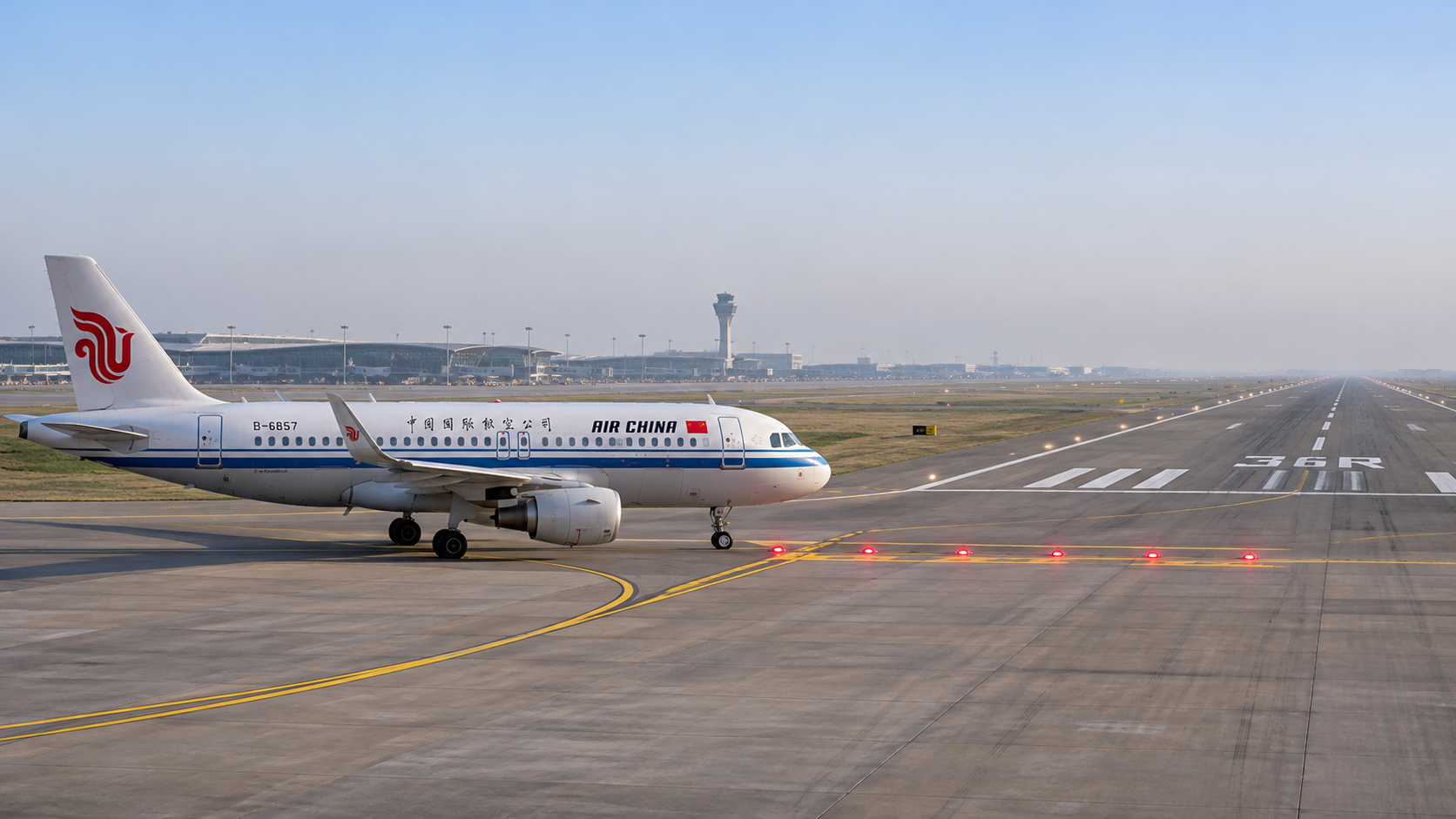
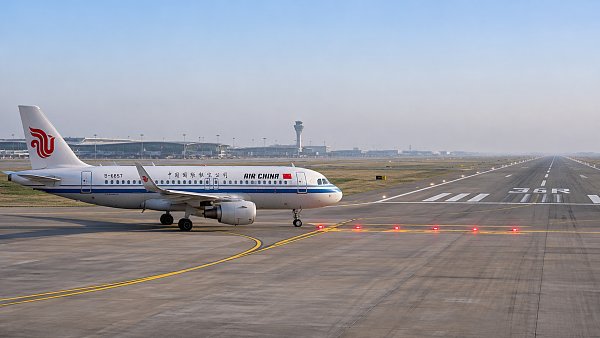
Consider a taxiing aircraft approaching a runway while another aircraft is preparing to depart. The taxi route may lead toward the runway, but permission to taxi does not automatically authorize the crew to enter or cross it. The crew must observe the applicable holding position and receive the required clearance before proceeding. The controller must account for that crossing when managing departures, arrivals, and other surface movements.
If the crossing aircraft approaches the runway without authorization, several defenses may still interrupt the sequence: a pilot notices the holding position marking, another crew questions an instruction, the controller sees the movement, or an available alerting system warns of a potential conflict. Each defense has limits, so the safety of the operation depends on how they are combined.
Clearances and readbacks control access to the runway
A runway clearance establishes what movement is authorized and, where applicable, on which runway. Clear, standard phraseology helps distinguish a clearance to cross from an instruction to hold short or an authorization related to takeoff or landing. The exact wording and readback requirements depend on the applicable procedures, but the operational purpose is consistent: both sides need the same understanding of the movement.
Readback and hearback are a shared control. The pilot or vehicle operator repeats the required elements; the controller listens for errors and corrects them. A readback that is technically transmitted but not heard, or a controller correction that is not acknowledged, can leave a misunderstanding unresolved.
Risk rises when instructions contain several route changes, similar-sounding runway designations, or multiple aircraft call signs. A clearance issued during a busy taxi phase may compete with checklist duties and cockpit conversations. Breaking complicated instructions into manageable parts and resolving uncertainty immediately can reduce the chance that an incorrect assumption becomes a runway entry.
For a safety review, the question is not simply whether communication occurred. Examine whether the instruction identified the intended movement clearly, whether the relevant elements were read back, and whether a discrepancy was detected and corrected before the aircraft or vehicle moved.
Holding positions, signs, and lights make the boundary visible
Runway holding position markings, signs, and lighting give crews and drivers a physical reference for where to stop. They support radio instructions by making the boundary visible on the pavement and in the surrounding environment. Their value depends on whether operators can identify them in time and understand which runway or taxiway they are approaching.
Problems can arise when a taxiway intersects more than one runway, when a route turns shortly before a holding position, or when construction changes familiar access points. Faded markings, obstructed signs, glare, snow, and poor visibility can make a correct instruction harder to execute. A recent chart or briefing helps, but it does not replace checking the actual signs and markings along the route.
Stop bars provide an additional visual control at equipped locations. An illuminated stop bar signals that traffic must stop; operation is governed by local procedures. A safety assessment should consider whether the bars are visible, used consistently under the applicable conditions, and integrated with controller and operator procedures. Installing lights alone does not resolve uncertainty about who may authorize movement or how a system failure is handled.
The protected area is also more than the visible pavement edge. Holding positions are placed to protect runway operations, so an aircraft that stops past the marking may create a hazard even if its nose has not reached the runway surface.
Surveillance and alerts add a chance to intervene
Surface surveillance can help controllers track aircraft and vehicles, particularly when darkness, weather, or airport layout makes direct observation difficult. Depending on the airport, the system may combine information from sources such as surface radar, position broadcasts, and vehicle tracking equipment. Some systems also provide alerts when the available data indicates a potential runway conflict.
These tools strengthen situational awareness, but their effectiveness depends on coverage, target identification, equipment status, and the time available to react. A displayed target may be delayed, incorrectly associated, or absent if the relevant equipment is not operating as expected. An alert can also arrive when the remaining options are limited. Controllers and operators therefore need clear procedures for responding to alerts and for operating when surveillance is degraded.
Runway status lights, where installed and operating, provide a separate visual warning to pilots and vehicle operators based on surveillance data. They do not themselves grant permission to enter or cross a runway. Their relationship with clearances must be understood in advance: a clearance and an unexpected warning create a situation that requires stopping when safe and resolving the conflict through the applicable procedure.
When evaluating a technology investment, look beyond whether a system can generate an alert. Ask which conflict scenarios it covers, which aircraft and vehicles it can detect, how warnings reach the people who can act, and how the operation changes during an outage. Review nuisance alerts as well: frequent alerts that require no action can make meaningful warnings harder to recognize.
Where runway incursion risk changes
Controls that work during routine operations can become less reliable when the operating environment changes. A useful assessment follows the movement from its starting point to the runway and looks for places where the operator must interpret, remember, or act on new information.
- Low visibility: Signs, markings, and other traffic may be difficult to see. Increased separation between movements, controlled access, surveillance, and specific low-visibility procedures can reduce reliance on visual cues, where those measures are available and applicable.
- Construction or temporary closures: Familiar routes may be blocked or redirected. Temporary signs, published information, controller instructions, and driver briefings need to describe the same route and access restrictions.
- Vehicle access: Maintenance, inspection, emergency, and contractor vehicles can all encounter runway boundaries. Authorization, radio capability, driver training, escort arrangements, and vehicle identification should match the access required.
- Intersecting runways: A movement on one runway can affect another. Controllers need to account for the intersection and the protected areas involved, while crews and drivers need clear instructions about their intended runway.
- Unfamiliar or complex layouts: Similar taxiway names, closely spaced intersections, and unexpected route changes increase navigation workload. A route briefing before movement and a decision to stop when uncertain are particularly useful safeguards.
Temporary conditions deserve special attention because they can invalidate habits without changing the underlying safety objective. For example, a driver who normally reaches a work area by crossing a particular runway may need a different route during works. The risk is controlled only when the revised route is communicated, understood, and supported by the signs and access arrangements in use.
Turn occurrence reviews into practical control improvements
Counting runway incursions is necessary, but a count alone rarely explains where the system is vulnerable. Review the sequence leading to each event: the planned route, the clearance, the readback, the position of other traffic, the visibility of the holding point, and any alert or intervention. Include reports of confusion and corrected errors, because they can reveal a weak control before it results in an incursion.
Separate the immediate action from the conditions that made it likely. If a vehicle crossed a holding position, retraining the driver may be appropriate, but the review should also consider whether the route was clear, the marking was visible, the radio instruction was understood, and the access process placed unnecessary demands on the driver. The aim is to identify which defenses failed and which, if any, prevented escalation.
For recurring risks, assign an owner to each corrective action and define how its effect will be checked. A revised briefing can be assessed by observing whether operators can identify the new route; a marking improvement can be checked under the lighting and weather conditions in which it must be used. If a change introduces new workload or shifts risk to another location, the assessment should capture that effect too.
Local runway safety teams can bring together air traffic services, airport operations, aircraft operators, and vehicle users to review these findings. Their shared view is valuable because no single group sees the entire movement. A controller may identify a confusing clearance pattern, while a driver can explain why a holding position is difficult to see from a particular approach.
What to check before changing the operation
Start with the runway access points and movements that create the greatest opportunity for conflict. Map the normal routes, crossing points, holding positions, and responsibilities for aircraft and vehicles. Then compare that map with occurrence reports, observations, temporary operating arrangements, and the actual capabilities of surveillance and alerting systems.
For each proposed change, ask who must act, what information they will receive, and how much time they have to respond. Test the procedure against foreseeable variations: a missed radio call, an unavailable surveillance feed, a closed taxiway, or a driver unfamiliar with the route. A control is stronger when it remains understandable under those conditions and when its failure can be detected by another part of the operation.
The most useful next step is often a joint review of one high-risk crossing or access point. Follow an aircraft or vehicle through the complete sequence, from the initial instruction to confirmation that the runway is clear. That focused review can expose mismatches between procedures, equipment, and the physical layout while the people responsible for correcting them are in the same discussion.
Article Categories
SYSTEM_ALERT_URGENT
Q3 SYMPOSIUM ON ORBITAL DYNAMICS
Registration for the Orbital Aerospace technical committee is now open. Node access required.
Taglist:
Recent Articles
 Nov 22, 2026How does redundancy handle component failures in rail signaling?How does redundancy handle component failures in rail signaling?
![]() Nov 21, 2026Middle Eastern Countries Oppose EU Aviation Emissions Proposal at ICAOMiddle Eastern Countries Oppose EU Aviation Emissions Proposal at ICAO
 Nov 21, 2026How are reference aircraft used in unmanned aircraft R&D?How are reference aircraft used in unmanned aircraft R&D?
![]() Nov 20, 2026Helios Horizon Completes Solid-State Battery Test Flight, Sets Three World RecordsHelios Horizon Completes Solid-State Battery Test Flight, Sets Three World Records
 Nov 20, 2026How does battery weight affect electric aircraft range?How does battery weight affect electric aircraft range?
![]() Nov 19, 2026ICEYE's €2 Billion Avio Bid Meets Italian Government ResistanceICEYE's €2 Billion Avio Bid Meets Italian Government Resistance
 Nov 19, 2026Is EN 9100 certification mandatory for aerospace suppliers in Europe?Is EN 9100 certification mandatory for aerospace suppliers in Europe?
![]() Nov 18, 2026ULA Says Vulcan Failure Began at Liftoff; 40 Amazon Satellites LostULA Says Vulcan Failure Began at Liftoff; 40 Amazon Satellites Lost
 Nov 18, 2026How to verify load ratings from an industrial rigging equipment factoryHow to verify load ratings from an industrial rigging equipment factory
![]() Nov 17, 2026Collins Aerospace Breaks Ground on Propeller MRO Facility in IndiaCollins Aerospace Breaks Ground on Propeller MRO Facility in India
 Nov 17, 2026How to use a transportation benchmarking database to compare freight costsHow to use a transportation benchmarking database to compare freight costs
![]() Nov 16, 2026Beijing Drone Rules Ban Flight, Possession and Storage Across the CityBeijing Drone Rules Ban Flight, Possession and Storage Across the City
 Nov 16, 2026How does redundancy support safe autonomous aviation?How does redundancy support safe autonomous aviation?
![]() Nov 15, 2026SpaceX Catches Orbital-Class Starship on Flight 15SpaceX Catches Orbital-Class Starship on Flight 15
 Nov 15, 2026How does system integration affect smart railway station costs?How does system integration affect smart railway station costs?
![]() Nov 14, 2026SpaceX Starship Flight 15 Reaches Orbit as Booster Diverts to SplashdownSpaceX Starship Flight 15 Reaches Orbit as Booster Diverts to Splashdown
 Nov 14, 2026How to verify a technical compliance reference for avionicsHow to verify a technical compliance reference for avionics
![]() Nov 13, 2026Hydrogen Aviation Startups Seek Near-Term Revenue in Defense and Data CentersHydrogen Aviation Startups Seek Near-Term Revenue in Defense and Data Centers
 Nov 13, 2026How to use procurement planning resources to set lead timesHow to use procurement planning resources to set lead times
![]() Nov 12, 2026Hydrogen Aviation Startups Turn to Defense and Data Centers for RevenueHydrogen Aviation Startups Turn to Defense and Data Centers for Revenue
 Nov 12, 2026How does a multimodal logistics hub warehouse connect rail and road freight?How does a multimodal logistics hub warehouse connect rail and road freight?
![]() Nov 11, 2026FAA Rolls Out SMART AI Traffic Management System Across 22 CentersFAA Rolls Out SMART AI Traffic Management System Across 22 Centers
 Nov 11, 2026How does runway traffic management prevent runway incursions?How does runway traffic management prevent runway incursions?
![]() Nov 10, 2026FAA Starts Air Traffic Control Upgrade, Phasing Out 8-Inch Floppy DisksFAA Starts Air Traffic Control Upgrade, Phasing Out 8-Inch Floppy Disks
 Nov 10, 2026How to assess data comparability in industrial technology benchmarking softwareHow to assess data comparability in industrial technology benchmarking software
![]() Nov 09, 2026Marble Imaging Raises €6 Million for German VHR Satellite ConstellationMarble Imaging Raises €6 Million for German VHR Satellite Constellation
 Nov 09, 2026How does cryogenic propulsion for upper stages affect payload capacity?How does cryogenic propulsion for upper stages affect payload capacity?
![]() Nov 08, 2026SpaceX Plans Starship Flight 15 on November 13 With Two-Stage Catch AttemptSpaceX Plans Starship Flight 15 on November 13 With Two-Stage Catch Attempt
 Nov 08, 2026How to verify an aerospace technical reference is currentHow to verify an aerospace technical reference is current
![]() Nov 07, 2026NTSB: Southwest 737 MAX Flew 44 Times After Missed Storm Check, Leading to Dutch RollNTSB: Southwest 737 MAX Flew 44 Times After Missed Storm Check, Leading to Dutch Roll
 Nov 07, 2026How to reduce springback when bending automotive sheet metalHow to reduce springback when bending automotive sheet metal
![]() Nov 06, 2026AutoFlight Completes First Autonomous Formation Flight With Five Mixed-Weight eVTOLsAutoFlight Completes First Autonomous Formation Flight With Five Mixed-Weight eVTOLs
 Nov 06, 2026How to find current avionics standards in global aerospace technical referencesHow to find current avionics standards in global aerospace technical references
 Nov 05, 2026How does aircraft certification differ across the Middle East?How does aircraft certification differ across the Middle East?
![]() Nov 04, 2026Spain’s Transport Minister Resigns After Fatal High-Speed Rail CollisionSpain’s Transport Minister Resigns After Fatal High-Speed Rail Collision