How to verify an aerospace technical reference is current
Lead Author
Published
Views:
An outdated Aerospace Technical Reference can undermine a design review, introduce compliance gaps, or lead evaluators to rely on superseded requirements.
Before using a document to support a technical assessment, verify its revision status, publication date, applicability, and issuing authority against official sources.
This guide provides a practical approach to checking aerospace standards, regulatory guidance, and manufacturer documentation, helping evaluators build a reliable evidence base.
The key judgment is whether the reference is correct for the specific assessment. The newest publication is not automatically the revision that applies.
Start with the document’s identity and intended use
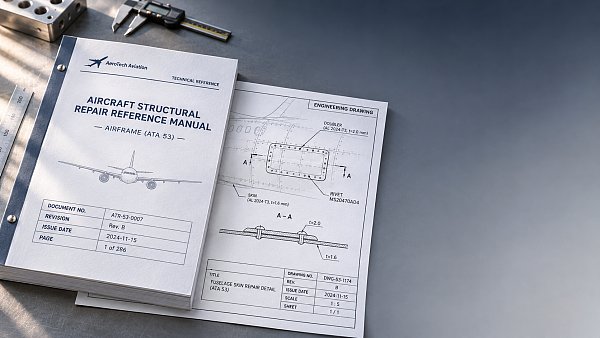
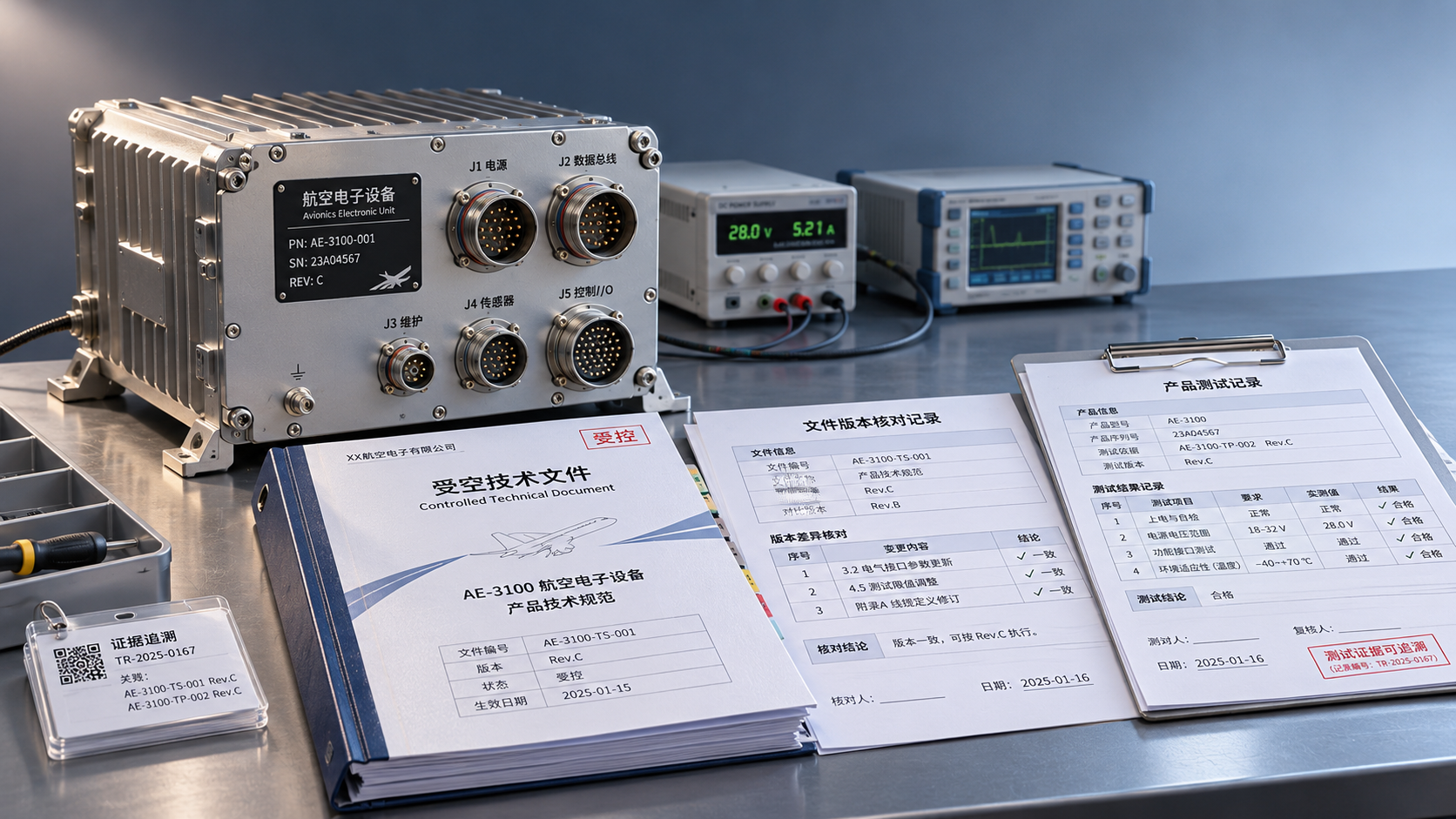
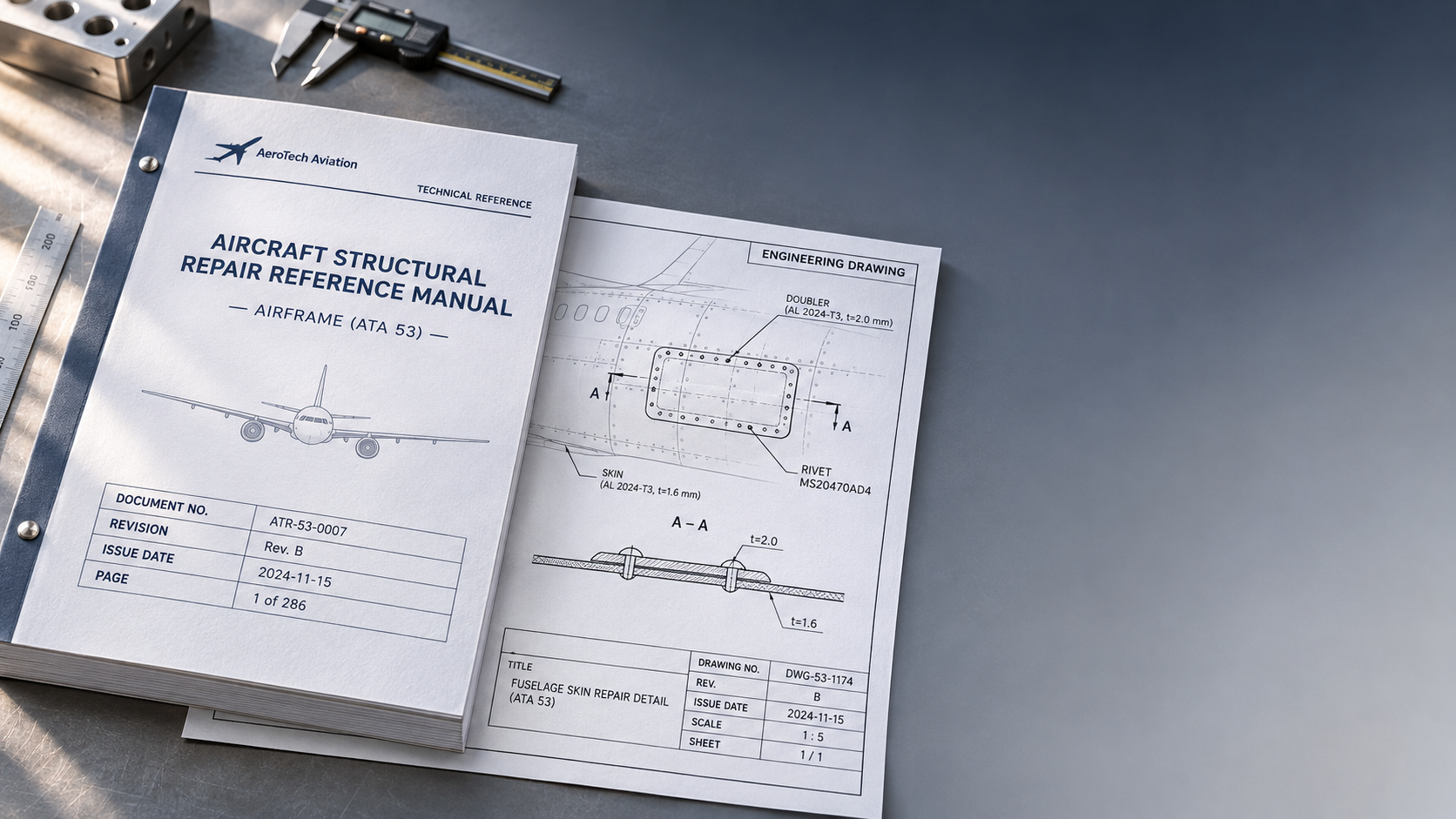
Record the document title, issuing organization, identifier, revision or edition, publication date, and any amendment or supplement shown on the copy.
Capture the relevant clause, page, figure, or table as well. A reference to an entire standard may conceal a change to the provision being assessed.
Next, define how the document will be used: as a legal requirement, an accepted means of compliance, a contractual obligation, or technical background.
These uses demand different checks. A manufacturer’s service instruction may control a maintenance task, while a research paper may only support an engineering assumption.
Also identify the product, configuration, jurisdiction, program phase, and assessment date. These details determine which revision and associated material are applicable.
Check revision status with the issuing authority
Use the original publisher’s official catalog, regulatory database, or controlled manufacturer portal to locate the document by its exact identifier and title.
Compare the revision, issue date, and status shown there with your copy. Look for terms such as current, amended, withdrawn, canceled, or superseded.
A publication date alone is insufficient. An older document can remain current, while a recently downloaded file may contain an obsolete edition.
Check for amendments, corrigenda, supplements, and official interpretations. A document marked current may still require additional material to represent its complete content.
If the catalog lists a successor, record its identifier and effective date. Review the publisher’s change information before assuming it replaces every earlier requirement.
Search results, supplier websites, and document-sharing platforms can help locate a reference, but their status information should be corroborated with the issuing authority.
For subscription standards, the public catalog may confirm status without providing the full text. Obtain an authorized copy before assessing detailed requirements.
If the official listing is unclear, contact the publisher or document owner. Record the response, including its date and the exact question answered.
Determine which revision actually applies
Once you know the latest published status, check the revision required by the applicable regulation, certification basis, contract, approved data, or project baseline.
A certification program can legitimately use an earlier edition when its established basis or approved compliance approach specifies that edition. Confirm this with program records.
Likewise, a contract may incorporate a standard by a dated reference. An undated reference may operate differently, depending on the contract and governing rules.
Do not assume that a newer standard automatically amends an approved design basis or an existing agreement. Verify the applicable change-control process.
Consider timing carefully: distinguish publication date, regulatory effective date, contract incorporation date, and the date relevant to the assessment or approval.
For an assessment of historical compliance, establish what applied at the relevant historical date, not merely what the publisher lists as current today.
When revisions conflict, document the discrepancy and refer it to the responsible certification, engineering, legal, or contractual authority for resolution.
How to verify regulatory requirements and guidance
Start with the applicable aviation authority and jurisdiction. For example, FAA and EASA materials may address similar subjects but have different legal effects.
For United States federal regulations, consult the electronic Code of Federal Regulations and check the provision’s current text and effective-date information.
For European Union rules, use EUR-Lex for the applicable legal text and amendments. Check EASA’s official publications for related guidance and certification material.
Separate binding regulations from advisory material. An FAA advisory circular or EASA guidance document can describe an acceptable approach without itself being a regulation.
Confirm whether an advisory publication is active, canceled, or replaced, and whether its scope covers the product and activity under review.
Airworthiness directives require particular attention. Check the official authority’s directive, applicability, effective date, compliance requirements, and any later superseding action.
A directive may apply only to specified models, serial numbers, modifications, or operating conditions. Match those details against the actual configuration.
Where a directive incorporates manufacturer instructions or another document by reference, verify the specified revision and the rules governing its use.
How to verify standards and referenced documents
Search the issuing organization’s catalog for the exact standard number, including prefixes and suffixes. Similar identifiers can refer to different documents or editions.
Depending on the subject, the publisher may be SAE International, ISO, ASTM International, RTCA, EUROCAE, or another recognized standards organization.
Review the listed edition, amendments, and status, then compare them with the specific edition called up by the controlling program or agreement.
Pay attention to references inside the standard. A normative reference may be necessary to apply a requirement, while an informative reference generally provides context.
For dated normative references, check the edition specified and any applicable amendments. For undated references, follow the referencing document’s rules and program baseline.
Do not independently substitute the latest edition of a referenced standard without checking whether the substitution is accepted for the assessment.
When a standard has been withdrawn, investigate whether a successor exists and why the status changed. Withdrawal alone does not resolve contractual applicability.
Maintain a linked record of significant references. A current top-level document can rely on an older supporting edition that remains relevant to the task.
How to verify manufacturer and supplier documentation
Use the manufacturer’s authorized technical publication system or another controlled channel. Confirm that your organization has access to the relevant product documentation.
Check the manual identifier, revision, revision date, temporary revisions, and list of effective pages or equivalent digital status information.
Then match the document’s effectivity to the aircraft, engine, component, software version, serial number, and modification state being evaluated.
A current manual for a different configuration can be as misleading as an obsolete manual for the correct one. Record the configuration evidence.
For service bulletins and service letters, check the latest applicable revision and related attachments. Determine whether compliance is mandatory through a directive or agreement.
For supplier data, verify the document owner, approval status, and distribution channel. Confirm that any delegated approval or acceptance is appropriate to its use.
If access is unavailable, request the controlled document through the owner or program administrator. Do not infer detailed instructions from an incomplete excerpt.
What to do when sources disagree
First, determine whether the sources are answering the same question. A publisher’s latest edition and a contract’s required edition can both be correct.
Check identifiers, revision dates, jurisdiction, product effectivity, and the assessment date. Many apparent conflicts arise from differences in scope or timing.
If a copied document disagrees with the issuing authority’s listing, treat the copy’s status as unverified until the owner clarifies the discrepancy.
If a requirement conflicts with guidance or manufacturer instructions, escalate through the responsible engineering and regulatory channels. Preserve the competing evidence for review.
Do not silently replace a baselined document. Record the proposed change, assess its technical and compliance effects, and obtain the approvals required by the program.
When a decision cannot wait, identify the unresolved issue, affected assessment, decision owner, and deadline. Follow the organization’s process for managing open issues.
Build an audit-ready verification record
A useful record allows another evaluator to reproduce the check and understand why the selected revision was appropriate for the specific assessment.
Capture these details in the assessment file or a controlled reference register:
- Document title, identifier, issuing organization, revision, publication date, and relevant clause.
- Official source consulted, its URL or portal location, access date, and observed status.
- Applicable amendments, supplements, corrections, interpretations, or superseding documents.
- Product configuration, jurisdiction, program phase, and date relevant to the assessment.
- Authority for the selected revision, such as a certification basis, contract, or approved baseline.
- Outstanding discrepancies, responsible owner, resolution, and approval where required.
Where permitted, retain a catalog extract or other evidence of the status check. Respect access restrictions and the publisher’s document-use terms.
Assign an owner to each important reference and set a review trigger, such as a design gate, regulatory update, contract change, or new configuration.
A status check is a dated observation. Recheck critical references before major decisions and whenever a change could affect their applicability.
Example: checking a standard during a design review
An evaluator finds that a design assessment cites an earlier edition of an aerospace standard. The publisher’s catalog shows a newer edition is available.
The evaluator records both editions, checks amendments, and identifies the clauses used in the assessment. The newer edition’s existence triggers investigation, not automatic substitution.
The program’s approved compliance records specify the earlier edition for this assessment. The evaluator confirms that no applicable change has altered that baseline.
The record therefore identifies the earlier edition as applicable, cites the supporting program evidence, and flags the newer edition for change-impact review.
If the baseline is unclear or a regulator has imposed a different requirement, the evaluator escalates the question before relying on either edition.
Final assessment: current, applicable, and traceable
A reliable Aerospace Technical Reference passes three checks: its status is confirmed, its revision applies to the task, and the decision is traceable.
Use the issuing authority to establish publication status, then use regulatory, contractual, certification, and configuration evidence to establish which version governs.
When those answers differ or remain uncertain, document the issue and involve the responsible authority before using the reference to support a decision.
Article Categories
SYSTEM_ALERT_URGENT
Q3 SYMPOSIUM ON ORBITAL DYNAMICS
Registration for the Orbital Aerospace technical committee is now open. Node access required.
Recent Articles
 Nov 22, 2026How does redundancy handle component failures in rail signaling?How does redundancy handle component failures in rail signaling?
![]() Nov 21, 2026Middle Eastern Countries Oppose EU Aviation Emissions Proposal at ICAOMiddle Eastern Countries Oppose EU Aviation Emissions Proposal at ICAO
 Nov 21, 2026How are reference aircraft used in unmanned aircraft R&D?How are reference aircraft used in unmanned aircraft R&D?
![]() Nov 20, 2026Helios Horizon Completes Solid-State Battery Test Flight, Sets Three World RecordsHelios Horizon Completes Solid-State Battery Test Flight, Sets Three World Records
 Nov 20, 2026How does battery weight affect electric aircraft range?How does battery weight affect electric aircraft range?
![]() Nov 19, 2026ICEYE's €2 Billion Avio Bid Meets Italian Government ResistanceICEYE's €2 Billion Avio Bid Meets Italian Government Resistance
 Nov 19, 2026Is EN 9100 certification mandatory for aerospace suppliers in Europe?Is EN 9100 certification mandatory for aerospace suppliers in Europe?
![]() Nov 18, 2026ULA Says Vulcan Failure Began at Liftoff; 40 Amazon Satellites LostULA Says Vulcan Failure Began at Liftoff; 40 Amazon Satellites Lost
 Nov 18, 2026How to verify load ratings from an industrial rigging equipment factoryHow to verify load ratings from an industrial rigging equipment factory
![]() Nov 17, 2026Collins Aerospace Breaks Ground on Propeller MRO Facility in IndiaCollins Aerospace Breaks Ground on Propeller MRO Facility in India
 Nov 17, 2026How to use a transportation benchmarking database to compare freight costsHow to use a transportation benchmarking database to compare freight costs
![]() Nov 16, 2026Beijing Drone Rules Ban Flight, Possession and Storage Across the CityBeijing Drone Rules Ban Flight, Possession and Storage Across the City
 Nov 16, 2026How does redundancy support safe autonomous aviation?How does redundancy support safe autonomous aviation?
![]() Nov 15, 2026SpaceX Catches Orbital-Class Starship on Flight 15SpaceX Catches Orbital-Class Starship on Flight 15
 Nov 15, 2026How does system integration affect smart railway station costs?How does system integration affect smart railway station costs?
![]() Nov 14, 2026SpaceX Starship Flight 15 Reaches Orbit as Booster Diverts to SplashdownSpaceX Starship Flight 15 Reaches Orbit as Booster Diverts to Splashdown
 Nov 14, 2026How to verify a technical compliance reference for avionicsHow to verify a technical compliance reference for avionics
![]() Nov 13, 2026Hydrogen Aviation Startups Seek Near-Term Revenue in Defense and Data CentersHydrogen Aviation Startups Seek Near-Term Revenue in Defense and Data Centers
 Nov 13, 2026How to use procurement planning resources to set lead timesHow to use procurement planning resources to set lead times
![]() Nov 12, 2026Hydrogen Aviation Startups Turn to Defense and Data Centers for RevenueHydrogen Aviation Startups Turn to Defense and Data Centers for Revenue
 Nov 12, 2026How does a multimodal logistics hub warehouse connect rail and road freight?How does a multimodal logistics hub warehouse connect rail and road freight?
![]() Nov 11, 2026FAA Rolls Out SMART AI Traffic Management System Across 22 CentersFAA Rolls Out SMART AI Traffic Management System Across 22 Centers
 Nov 11, 2026How does runway traffic management prevent runway incursions?How does runway traffic management prevent runway incursions?
![]() Nov 10, 2026FAA Starts Air Traffic Control Upgrade, Phasing Out 8-Inch Floppy DisksFAA Starts Air Traffic Control Upgrade, Phasing Out 8-Inch Floppy Disks
 Nov 10, 2026How to assess data comparability in industrial technology benchmarking softwareHow to assess data comparability in industrial technology benchmarking software
![]() Nov 09, 2026Marble Imaging Raises €6 Million for German VHR Satellite ConstellationMarble Imaging Raises €6 Million for German VHR Satellite Constellation
 Nov 09, 2026How does cryogenic propulsion for upper stages affect payload capacity?How does cryogenic propulsion for upper stages affect payload capacity?
![]() Nov 08, 2026SpaceX Plans Starship Flight 15 on November 13 With Two-Stage Catch AttemptSpaceX Plans Starship Flight 15 on November 13 With Two-Stage Catch Attempt
 Nov 08, 2026How to verify an aerospace technical reference is currentHow to verify an aerospace technical reference is current
![]() Nov 07, 2026NTSB: Southwest 737 MAX Flew 44 Times After Missed Storm Check, Leading to Dutch RollNTSB: Southwest 737 MAX Flew 44 Times After Missed Storm Check, Leading to Dutch Roll
 Nov 07, 2026How to reduce springback when bending automotive sheet metalHow to reduce springback when bending automotive sheet metal
![]() Nov 06, 2026AutoFlight Completes First Autonomous Formation Flight With Five Mixed-Weight eVTOLsAutoFlight Completes First Autonomous Formation Flight With Five Mixed-Weight eVTOLs
 Nov 06, 2026How to find current avionics standards in global aerospace technical referencesHow to find current avionics standards in global aerospace technical references
 Nov 05, 2026How does aircraft certification differ across the Middle East?How does aircraft certification differ across the Middle East?
![]() Nov 04, 2026Spain’s Transport Minister Resigns After Fatal High-Speed Rail CollisionSpain’s Transport Minister Resigns After Fatal High-Speed Rail Collision