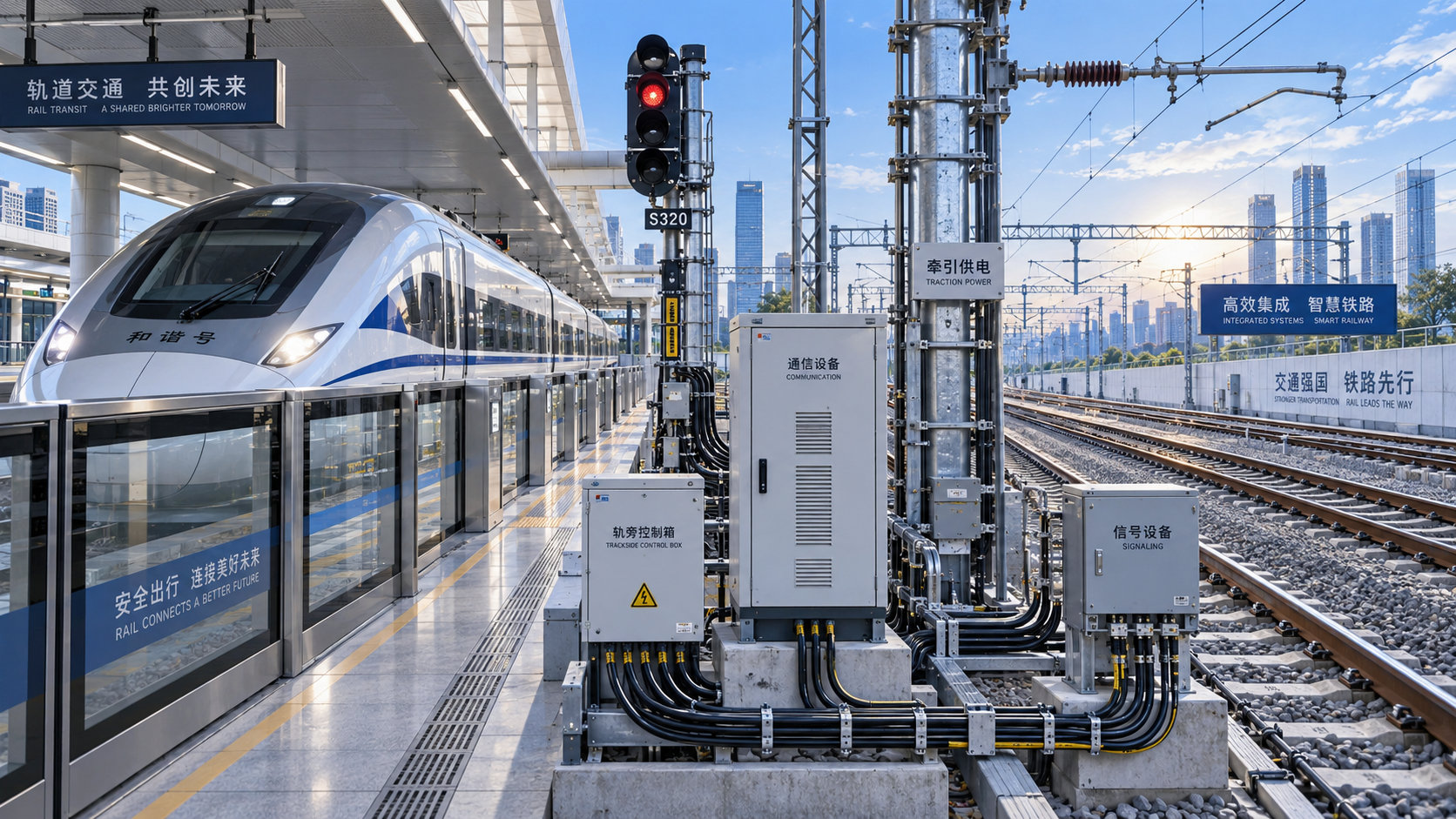
Railway Cybersecurity Controls That Reduce Signaling Downtime
Lead Author
Published
Views:
As digital interlocking, remote diagnostics, and networked control systems become standard across modern rail operations, railway cybersecurity is now inseparable from safety, availability, and compliance. Strong controls do more than block attacks. They reduce signaling downtime, limit fault propagation, protect operational integrity, and support resilient performance across high-speed, metro, freight, and cross-border rail networks.
What does railway cybersecurity really protect in signaling environments?
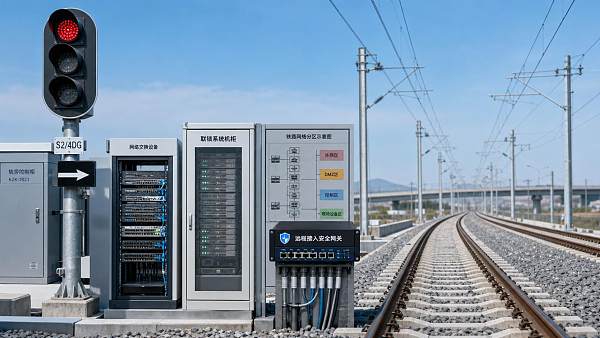
Railway cybersecurity protects the digital systems that keep trains separated, routes aligned, and operations visible. In signaling, the priority is not only data confidentiality. It is safe availability.
Key assets include interlockings, wayside controllers, RBC platforms, SCADA links, axle counter interfaces, maintenance laptops, and remote access gateways. Each connection can affect uptime.
In modern architecture, one vulnerable support system may impact dispatching, diagnostics, or failover functions. That is why railway cybersecurity must extend beyond the data center.
For advanced transportation programs, this also aligns with broader resilience expectations seen in aerospace-grade engineering. Critical systems need traceability, segregation, controlled change, and recovery discipline.
Why signaling downtime is a cybersecurity issue
Not every outage is a cyberattack. Yet weak cyber controls often turn small faults into major service disruption. A compromised workstation, misconfigured firewall, or unverified software update can halt signaling functions.
- Loss of visibility between control center and field devices
- Delayed route setting or train movement authority
- Extended recovery because logs and backups are incomplete
- Service restrictions caused by uncertain system state
Which railway cybersecurity controls reduce signaling downtime most effectively?
The most effective controls are the ones that reduce blast radius, speed fault isolation, and preserve safe fallback. Technical depth matters, but operational fit matters more.
1. Network segmentation by safety and function
Separate signaling, maintenance, corporate IT, and third-party service domains. Use tightly defined conduits, allowlists, and one-way data paths where practical.
Segmentation limits lateral movement. It also simplifies troubleshooting because teams can isolate an affected zone without freezing the whole network.
2. Secure remote access with strict session control
Remote support is common in railway cybersecurity programs, but unmanaged access raises outage risk. Require multifactor authentication, approval workflows, session recording, and time-limited credentials.
Access should be brokered, not direct. Vendors and engineers should never land inside critical signaling zones without inspection and logging.
3. Asset inventory and configuration baselines
You cannot defend what you cannot identify. Maintain a live inventory of devices, firmware, operating systems, ports, dependencies, and approved configurations.
When downtime occurs, accurate baselines shorten mean time to recovery. Teams can compare a failed state against the approved state immediately.
4. Patch governance and compensating controls
Rail systems cannot always patch quickly. Validation windows, certification impact, and service constraints are real. Railway cybersecurity therefore depends on governance, not patching alone.
Where patches are delayed, use compensating controls such as application allowlisting, jump hosts, protocol filtering, removable media control, and tighter monitoring.
5. Backup, restore, and offline recovery testing
A backup is useful only if restore works under pressure. Test images, logic files, configuration sets, and historian recovery in realistic outage scenarios.
For railway cybersecurity, offline and immutable copies are especially important. They help recover from ransomware and corrupted engineering files.
Where do rail organizations usually get railway cybersecurity wrong?
Many programs focus on compliance paperwork first and operational behavior later. That creates a false sense of maturity. Signaling uptime depends on controls that function during real incidents.
Common mistakes that increase downtime
- Flat networks connecting diagnostics and safety-adjacent systems
- Shared accounts on engineering workstations
- Uncontrolled USB devices and portable tools
- No tested recovery plan for signaling configuration loss
- Monitoring tuned for IT malware, not OT protocol anomalies
- Supplier access retained after project completion
Another frequent error is treating legacy equipment as untouchable. Older devices may be hard to modify, but they can still be shielded through zoning, gateways, and procedural control.
In high-speed rail and maglev environments, the tolerance for delayed recovery is even lower. Small cyber weaknesses can trigger broad timetable and safety consequences.
How should railway cybersecurity controls be prioritized across different rail applications?
Prioritization should follow operational criticality, architecture complexity, and recovery consequences. The right sequence is rarely identical across metro, freight, intercity, and high-speed lines.
This is where institutional benchmarking becomes useful. Comparing architecture and control maturity against standards-led transport sectors reveals where resilience gaps are hidden.
A practical prioritization sequence
- Map critical signaling assets and dependencies.
- Separate networks and remove unnecessary trust paths.
- Control remote access and third-party activity.
- Establish monitoring for OT-specific anomalies.
- Test restore and fallback procedures repeatedly.
How do cost, implementation time, and compliance affect railway cybersecurity decisions?
Cost should be measured against avoided disruption, not tool price alone. A short signaling outage can trigger delay penalties, maintenance overruns, passenger impact, and reputational damage.
The best railway cybersecurity roadmap balances fast wins with engineered upgrades. Some controls are procedural and can start quickly. Others require design review and staged validation.
Typical implementation view
Compliance remains important. Frameworks and sector standards support governance, evidence, and repeatability. Still, compliance should prove resilience, not replace it.
Railway cybersecurity decisions are strongest when they align engineering assurance, operational safety, supplier accountability, and maintainability over the full lifecycle.
What questions should be asked before approving a railway cybersecurity improvement plan?
A useful plan answers operational questions clearly. It should not stop at technology selection.
- Which signaling functions are most time-critical during disruption?
- What single failure or compromise could spread furthest?
- How is third-party access approved, monitored, and revoked?
- Can teams rebuild core configurations within the required recovery window?
- Which controls are validated against live operational constraints?
These questions help separate cosmetic programs from practical railway cybersecurity improvements that truly reduce signaling downtime.
In advanced transportation sectors, resilience comes from disciplined integration. Security controls must fit certified systems, operational rhythms, and long asset lifecycles.
FAQ summary: which railway cybersecurity actions matter first?
Railway cybersecurity is most effective when it is engineered as part of operational continuity, not added as a separate IT layer. The goal is stable signaling, predictable recovery, and controlled system behavior under stress.
The next practical step is to assess critical signaling dependencies, verify access pathways, and test recovery against realistic outage scenarios. That is where measurable downtime reduction begins.
Article Categories
SYSTEM_ALERT_URGENT
Q3 SYMPOSIUM ON ORBITAL DYNAMICS
Registration for the Orbital Aerospace technical committee is now open. Node access required.
Taglist:
Recent Articles
![]() Oct 27, 2026FAA Certifies Boeing 737 MAX 10 After Years of DelaysFAA Certifies Boeing 737 MAX 10 After Years of Delays
Oct 27, 2026FAA Certifies Boeing 737 MAX 10 After Years of DelaysFAA Certifies Boeing 737 MAX 10 After Years of Delays Oct 27, 2026Can an intermodal connectivity platform reduce rail handoff delays?Can an intermodal connectivity platform reduce rail handoff delays?
![]() Oct 26, 2026Chery Unveils Global Smart Mobility Strategy Targeting Robotaxis and eVTOLsChery Unveils Global Smart Mobility Strategy Targeting Robotaxis and eVTOLs
Oct 26, 2026Chery Unveils Global Smart Mobility Strategy Targeting Robotaxis and eVTOLsChery Unveils Global Smart Mobility Strategy Targeting Robotaxis and eVTOLs Oct 26, 2026How to evaluate avionics for helicopters used in IFR operationsHow to evaluate avionics for helicopters used in IFR operations
![]() Oct 25, 2026Ukraine’s Defence Minister Says SpaceX Satellite Services Restored After Speed RestrictionsUkraine’s Defence Minister Says SpaceX Satellite Services Restored After Speed Restrictions
Oct 25, 2026Ukraine’s Defence Minister Says SpaceX Satellite Services Restored After Speed RestrictionsUkraine’s Defence Minister Says SpaceX Satellite Services Restored After Speed Restrictions Oct 25, 2026How satellite infrastructure for IoT affects sensor reporting delaysHow satellite infrastructure for IoT affects sensor reporting delays
![]() Oct 24, 2026China Successfully Launches Yaogan 50-03 SatelliteChina Successfully Launches Yaogan 50-03 Satellite
Oct 24, 2026China Successfully Launches Yaogan 50-03 SatelliteChina Successfully Launches Yaogan 50-03 Satellite Oct 24, 2026How gradients affect traction power needs in high-speed rolling stockHow gradients affect traction power needs in high-speed rolling stock
![]() Oct 23, 2026FAA Proposes Checks on Nearly 2,000 Boeing 737NGs Over Loss-of-Control RiskFAA Proposes Checks on Nearly 2,000 Boeing 737NGs Over Loss-of-Control Risk
Oct 23, 2026FAA Proposes Checks on Nearly 2,000 Boeing 737NGs Over Loss-of-Control RiskFAA Proposes Checks on Nearly 2,000 Boeing 737NGs Over Loss-of-Control Risk Oct 23, 2026How fuel choice affects specific impulse in liquid oxygen propulsionHow fuel choice affects specific impulse in liquid oxygen propulsion
![]() Oct 22, 2026QuantumScape Plans 100 MWh Solid-State Battery Line Targeting Aerospace and Other MarketsQuantumScape Plans 100 MWh Solid-State Battery Line Targeting Aerospace and Other Markets
Oct 22, 2026QuantumScape Plans 100 MWh Solid-State Battery Line Targeting Aerospace and Other MarketsQuantumScape Plans 100 MWh Solid-State Battery Line Targeting Aerospace and Other Markets Oct 22, 2026How tank size limits hydrogen aircraft range on regional flightsHow tank size limits hydrogen aircraft range on regional flights
![]() Oct 21, 2026FAA Certifies Boeing 737-10, Clearing Regulatory Hurdle for DeliveriesFAA Certifies Boeing 737-10, Clearing Regulatory Hurdle for Deliveries
Oct 21, 2026FAA Certifies Boeing 737-10, Clearing Regulatory Hurdle for DeliveriesFAA Certifies Boeing 737-10, Clearing Regulatory Hurdle for Deliveries Oct 21, 2026How are electric vertical takeoff aircraft certified in the US?How are electric vertical takeoff aircraft certified in the US?
![]() Oct 20, 2026Ohio Department of Transportation Releases Three-Year Advanced Air Mobility Action PlanOhio Department of Transportation Releases Three-Year Advanced Air Mobility Action Plan
Oct 20, 2026Ohio Department of Transportation Releases Three-Year Advanced Air Mobility Action PlanOhio Department of Transportation Releases Three-Year Advanced Air Mobility Action Plan Oct 20, 2026How does magnetic flux density in tesla affect maglev lift force?How does magnetic flux density in tesla affect maglev lift force?
![]() Oct 19, 2026ZeroAvia Completes Key Ground Tests of ZA600 Hydrogen Fuel Cell PowertrainZeroAvia Completes Key Ground Tests of ZA600 Hydrogen Fuel Cell Powertrain
Oct 19, 2026ZeroAvia Completes Key Ground Tests of ZA600 Hydrogen Fuel Cell PowertrainZeroAvia Completes Key Ground Tests of ZA600 Hydrogen Fuel Cell Powertrain Oct 19, 2026How spacecraft integration affects advanced propulsion costsHow spacecraft integration affects advanced propulsion costs
 Oct 18, 2026How chilldown prevents cavitation in cryogenic engine systemsHow chilldown prevents cavitation in cryogenic engine systems
 Oct 17, 2026How explainability affects algorithmic trust in AI flight systemsHow explainability affects algorithmic trust in AI flight systems
 Oct 16, 2026How to evaluate transportation technology for Middle East heatHow to evaluate transportation technology for Middle East heat
 Oct 15, 2026How common-cause failures defeat redundancy logic in European avionicsHow common-cause failures defeat redundancy logic in European avionics
 Oct 14, 2026How DO-160 applies to aerospace technology testing for avionicsHow DO-160 applies to aerospace technology testing for avionics
 Oct 13, 2026How fuel price volatility shapes commercial aviation cost trendsHow fuel price volatility shapes commercial aviation cost trends
 Oct 12, 2026How to qualify aerospace manufacturing components for traceabilityHow to qualify aerospace manufacturing components for traceability
 Oct 11, 2026Which certification hurdles are slowing hydrogen aviation in Europe?Which certification hurdles are slowing hydrogen aviation in Europe?
 Oct 10, 2026What evidence should a magnetic gap stability supplier provide?What evidence should a magnetic gap stability supplier provide?
 Oct 09, 2026Which ISO standards matter when qualifying industrial technology suppliers?Which ISO standards matter when qualifying industrial technology suppliers?
 Oct 08, 2026When does reusability actually lower launch vehicle costs?When does reusability actually lower launch vehicle costs?
 Oct 07, 2026Where to find reliable product knowledge resources in the Middle EastWhere to find reliable product knowledge resources in the Middle East
 Oct 06, 2026What drives high-speed rail systems cost per kilometer?What drives high-speed rail systems cost per kilometer?
 Oct 05, 2026When does hydrogen propulsion for UAV extend mission range enough to justify it?When does hydrogen propulsion for UAV extend mission range enough to justify it?
 Oct 04, 2026How rail systems integration reduces commissioning delaysHow rail systems integration reduces commissioning delays
 Oct 03, 2026How to evaluate an advanced propulsion manufacturer for hydrogen systemsHow to evaluate an advanced propulsion manufacturer for hydrogen systems
 Oct 02, 2026How to qualify aircraft components for OEM production approvalHow to qualify aircraft components for OEM production approval