Railway Cybersecurity Risks Shaping Rail Upgrades in 2026
Lead Author
Published
Views:
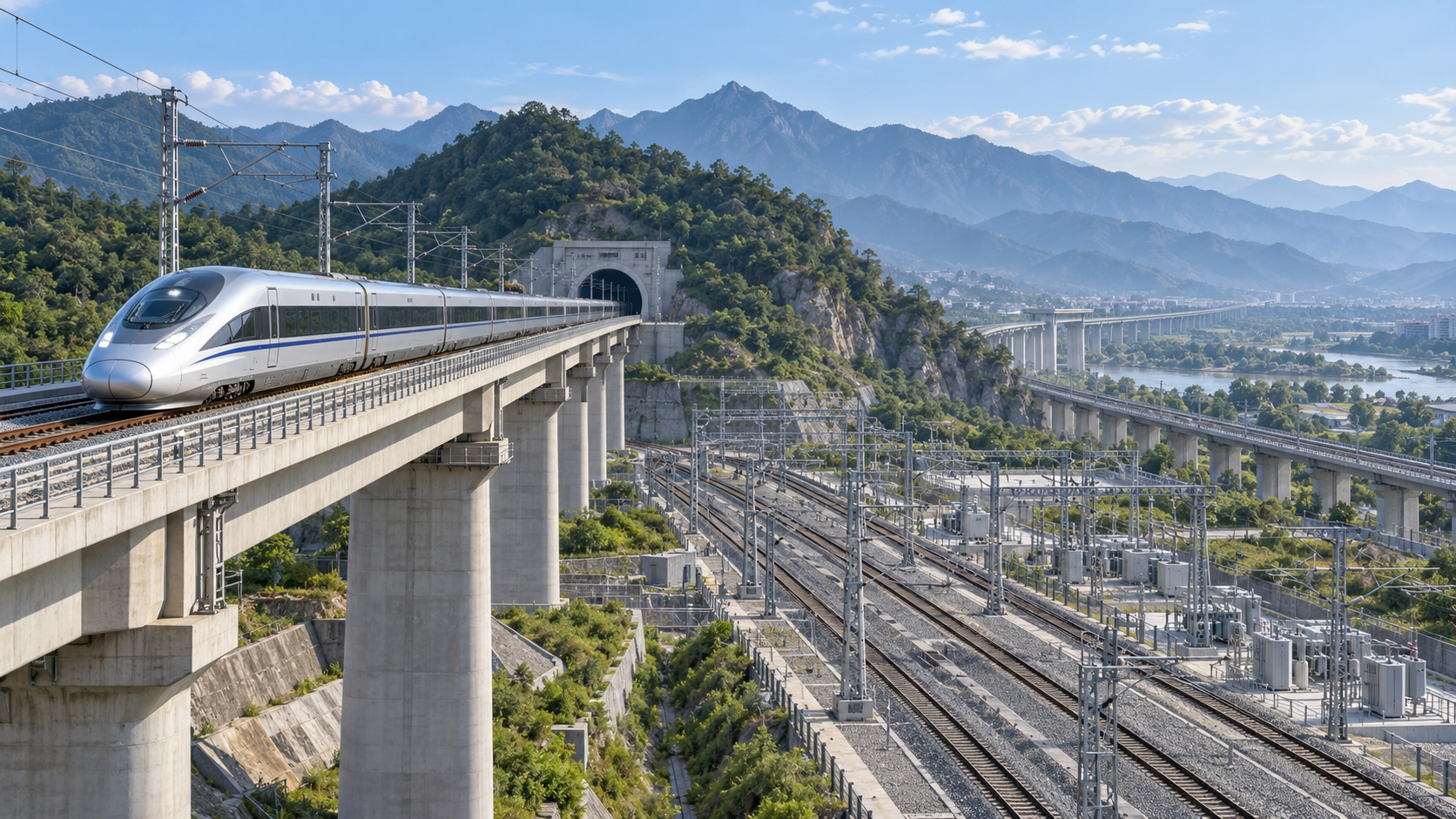
As rail networks become more connected, railway cybersecurity is becoming central to upgrade planning for 2026. Digital signaling, predictive maintenance, edge analytics, and autonomous control improve capacity, but they also widen the attack surface.
For infrastructure programs tied to high-speed rail, maglev, and cross-border mobility, cyber risk now influences safety cases, procurement strategy, and lifecycle cost. Stronger railway cybersecurity supports resilience, compliance, and investment confidence.
Why is railway cybersecurity shaping rail upgrades in 2026?
Rail upgrades no longer focus only on tracks, power, and rolling stock. They increasingly depend on software-defined operations, connected sensors, cloud-linked diagnostics, and remote maintenance capabilities.

That shift makes railway cybersecurity a board-level engineering issue. A cyber incident can disrupt signaling logic, passenger information systems, dispatching workflows, and freight scheduling at the same time.
In 2026, upgrade decisions are also shaped by geopolitical tension, supply chain digitization, and stricter assurance demands. Rail operators must prove that innovation does not weaken safety or business continuity.
This is especially relevant for advanced transportation ecosystems benchmarked against UIC, ISO, and broader critical infrastructure security expectations. Integrated mobility requires trusted data, authenticated devices, and reliable fallback modes.
- More IP-based signaling and interlocking interfaces
- Greater use of remote monitoring platforms
- Autonomous and semi-autonomous train functions
- Cross-network data exchange with external partners
- Growing dependence on software updates across assets
In practical terms, railway cybersecurity is shaping which upgrades get approved first, which vendors qualify, and how digital transformation roadmaps are sequenced over multiple investment cycles.
Which railway cybersecurity risks matter most for modern rail systems?
The highest-impact risks are those that connect digital compromise with operational disruption. Not every cyber issue creates the same level of safety, revenue, or reputation exposure.
1. Signaling and control system compromise
If attackers manipulate signaling data, route logic, or interlocking communications, operators may need to slow traffic, suspend sections, or switch to restrictive manual procedures.
2. Ransomware affecting operations technology
Ransomware no longer stays within office IT. Poor segmentation can let it affect maintenance servers, depot systems, and interfaces supporting train availability and dispatch readiness.
3. Supply chain and third-party access risk
Rail programs rely on specialist vendors for onboard electronics, telecoms, SCADA, and software support. Weak vendor credentials or insecure remote access can open hidden pathways.
4. Data integrity attacks
Not every attack aims to stop trains. Some alter maintenance records, condition monitoring outputs, or digital twins, leading to poor planning and unsafe asset assumptions.
5. GNSS, wireless, and edge device exposure
As rail systems use more wireless links and location services, spoofing, jamming, and insecure field devices become growing railway cybersecurity concerns for 2026 programs.
How do these risks affect high-speed rail, maglev, and autonomous operations?
The faster and more automated the network, the smaller the tolerance for uncertainty. That is why railway cybersecurity is especially critical in advanced transportation environments.
High-speed rail depends on precise timing, deterministic communications, and safe degradation modes. A cyber disruption may not cause immediate failure, but it can force large operational buffers.
Maglev systems add further complexity through tightly integrated propulsion, guideway monitoring, and centralized control. These architectures require cybersecurity controls aligned with both availability and safety assurance.
Autonomous or driver-assist rail systems rely on sensor fusion, digital maps, software validation, and secure command channels. Any integrity problem can reduce confidence in machine decision-making.
Cross-border corridors face another layer of difficulty. Interoperability between national systems creates exposure around identity management, telecom handoffs, and incident coordination across legal jurisdictions.
- High-speed networks need strong fail-safe communication design
- Maglev programs require secure system-of-systems integration
- Autonomous rail needs trusted software and sensor integrity
- International corridors need harmonized cyber governance
For institutions focused on future mobility, railway cybersecurity is no longer separate from technical benchmarking. It is part of validating whether next-generation transport can scale safely.
How should organizations judge railway cybersecurity readiness before investing?
A useful starting point is to assess readiness across architecture, governance, supply chain, and recovery capability. Many projects overinvest in tools while underinvesting in engineering discipline.
What to check first
- Map critical assets and safety-linked digital dependencies.
- Separate IT, OT, and safety domains with enforceable controls.
- Review remote access, privileged accounts, and vendor pathways.
- Test backup integrity and operational recovery timelines.
- Align security evidence with certification and assurance needs.
The most mature programs embed railway cybersecurity into procurement specifications, digital engineering models, and acceptance testing. Security should not appear only at commissioning.
Another strong indicator is whether cybersecurity requirements are traceable from concept design to maintenance support. Traceability reduces the gap between policy intent and operational practice.
Decision quality improves when cyber scenarios are tied to business outcomes. Instead of generic scorecards, compare likely disruption hours, safety impact, and cost of degraded operations.
What are the most common mistakes in railway cybersecurity planning?
One common mistake is treating railway cybersecurity as an IT compliance exercise. Rail systems combine legacy equipment, safety functions, and real-time operations that require a different approach.
Another error is assuming isolated systems are automatically secure. Many supposedly isolated assets still receive updates, diagnostics, or contractor access through overlooked connections.
Programs also fail when they ignore asset lifecycle realities. A secure design can weaken over time if patching, configuration control, and spare-part substitution are poorly managed.
Some upgrades focus on detection without recovery planning. In rail, resilience means restoring safe service quickly, with predefined fallback procedures and verified recovery sequences.
What practical actions should guide 2026 rail upgrade strategies?
The best next step is to tie railway cybersecurity directly to upgrade sequencing. Prioritize systems where digital dependence and operational criticality intersect most strongly.
Start with signaling interfaces, operations control centers, remote maintenance channels, and rolling stock software management. These areas often create the greatest network-wide exposure.
Then define measurable requirements for resilience. Examples include recovery time objectives, secure update processes, vendor assurance gates, and evidence for safety-integrated cyber testing.
For complex portfolios, phased deployment is often stronger than full replacement. It reduces disruption while allowing architecture hardening, training, and operational validation in realistic conditions.
In 2026, railway cybersecurity will increasingly determine whether advanced rail investments deliver long-term value. Secure upgrades support performance, protect public trust, and strengthen future mobility readiness.
A practical roadmap should combine engineering review, vendor scrutiny, incident rehearsal, and lifecycle governance. That approach helps rail programs move faster without accepting hidden digital risk.
Article Categories
SYSTEM_ALERT_URGENT
Q3 SYMPOSIUM ON ORBITAL DYNAMICS
Registration for the Orbital Aerospace technical committee is now open. Node access required.
Recent Articles
![]() Oct 27, 2026FAA Certifies Boeing 737 MAX 10 After Years of DelaysFAA Certifies Boeing 737 MAX 10 After Years of Delays
Oct 27, 2026FAA Certifies Boeing 737 MAX 10 After Years of DelaysFAA Certifies Boeing 737 MAX 10 After Years of Delays Oct 27, 2026Can an intermodal connectivity platform reduce rail handoff delays?Can an intermodal connectivity platform reduce rail handoff delays?
![]() Oct 26, 2026Chery Unveils Global Smart Mobility Strategy Targeting Robotaxis and eVTOLsChery Unveils Global Smart Mobility Strategy Targeting Robotaxis and eVTOLs
Oct 26, 2026Chery Unveils Global Smart Mobility Strategy Targeting Robotaxis and eVTOLsChery Unveils Global Smart Mobility Strategy Targeting Robotaxis and eVTOLs Oct 26, 2026How to evaluate avionics for helicopters used in IFR operationsHow to evaluate avionics for helicopters used in IFR operations
![]() Oct 25, 2026Ukraine’s Defence Minister Says SpaceX Satellite Services Restored After Speed RestrictionsUkraine’s Defence Minister Says SpaceX Satellite Services Restored After Speed Restrictions
Oct 25, 2026Ukraine’s Defence Minister Says SpaceX Satellite Services Restored After Speed RestrictionsUkraine’s Defence Minister Says SpaceX Satellite Services Restored After Speed Restrictions Oct 25, 2026How satellite infrastructure for IoT affects sensor reporting delaysHow satellite infrastructure for IoT affects sensor reporting delays
![]() Oct 24, 2026China Successfully Launches Yaogan 50-03 SatelliteChina Successfully Launches Yaogan 50-03 Satellite
Oct 24, 2026China Successfully Launches Yaogan 50-03 SatelliteChina Successfully Launches Yaogan 50-03 Satellite Oct 24, 2026How gradients affect traction power needs in high-speed rolling stockHow gradients affect traction power needs in high-speed rolling stock
![]() Oct 23, 2026FAA Proposes Checks on Nearly 2,000 Boeing 737NGs Over Loss-of-Control RiskFAA Proposes Checks on Nearly 2,000 Boeing 737NGs Over Loss-of-Control Risk
Oct 23, 2026FAA Proposes Checks on Nearly 2,000 Boeing 737NGs Over Loss-of-Control RiskFAA Proposes Checks on Nearly 2,000 Boeing 737NGs Over Loss-of-Control Risk Oct 23, 2026How fuel choice affects specific impulse in liquid oxygen propulsionHow fuel choice affects specific impulse in liquid oxygen propulsion
![]() Oct 22, 2026QuantumScape Plans 100 MWh Solid-State Battery Line Targeting Aerospace and Other MarketsQuantumScape Plans 100 MWh Solid-State Battery Line Targeting Aerospace and Other Markets
Oct 22, 2026QuantumScape Plans 100 MWh Solid-State Battery Line Targeting Aerospace and Other MarketsQuantumScape Plans 100 MWh Solid-State Battery Line Targeting Aerospace and Other Markets Oct 22, 2026How tank size limits hydrogen aircraft range on regional flightsHow tank size limits hydrogen aircraft range on regional flights
![]() Oct 21, 2026FAA Certifies Boeing 737-10, Clearing Regulatory Hurdle for DeliveriesFAA Certifies Boeing 737-10, Clearing Regulatory Hurdle for Deliveries
Oct 21, 2026FAA Certifies Boeing 737-10, Clearing Regulatory Hurdle for DeliveriesFAA Certifies Boeing 737-10, Clearing Regulatory Hurdle for Deliveries Oct 21, 2026How are electric vertical takeoff aircraft certified in the US?How are electric vertical takeoff aircraft certified in the US?
![]() Oct 20, 2026Ohio Department of Transportation Releases Three-Year Advanced Air Mobility Action PlanOhio Department of Transportation Releases Three-Year Advanced Air Mobility Action Plan
Oct 20, 2026Ohio Department of Transportation Releases Three-Year Advanced Air Mobility Action PlanOhio Department of Transportation Releases Three-Year Advanced Air Mobility Action Plan Oct 20, 2026How does magnetic flux density in tesla affect maglev lift force?How does magnetic flux density in tesla affect maglev lift force?
![]() Oct 19, 2026ZeroAvia Completes Key Ground Tests of ZA600 Hydrogen Fuel Cell PowertrainZeroAvia Completes Key Ground Tests of ZA600 Hydrogen Fuel Cell Powertrain
Oct 19, 2026ZeroAvia Completes Key Ground Tests of ZA600 Hydrogen Fuel Cell PowertrainZeroAvia Completes Key Ground Tests of ZA600 Hydrogen Fuel Cell Powertrain Oct 19, 2026How spacecraft integration affects advanced propulsion costsHow spacecraft integration affects advanced propulsion costs
 Oct 18, 2026How chilldown prevents cavitation in cryogenic engine systemsHow chilldown prevents cavitation in cryogenic engine systems
 Oct 17, 2026How explainability affects algorithmic trust in AI flight systemsHow explainability affects algorithmic trust in AI flight systems
 Oct 16, 2026How to evaluate transportation technology for Middle East heatHow to evaluate transportation technology for Middle East heat
 Oct 15, 2026How common-cause failures defeat redundancy logic in European avionicsHow common-cause failures defeat redundancy logic in European avionics
 Oct 14, 2026How DO-160 applies to aerospace technology testing for avionicsHow DO-160 applies to aerospace technology testing for avionics
 Oct 13, 2026How fuel price volatility shapes commercial aviation cost trendsHow fuel price volatility shapes commercial aviation cost trends
 Oct 12, 2026How to qualify aerospace manufacturing components for traceabilityHow to qualify aerospace manufacturing components for traceability
 Oct 11, 2026Which certification hurdles are slowing hydrogen aviation in Europe?Which certification hurdles are slowing hydrogen aviation in Europe?
 Oct 10, 2026What evidence should a magnetic gap stability supplier provide?What evidence should a magnetic gap stability supplier provide?
 Oct 09, 2026Which ISO standards matter when qualifying industrial technology suppliers?Which ISO standards matter when qualifying industrial technology suppliers?
 Oct 08, 2026When does reusability actually lower launch vehicle costs?When does reusability actually lower launch vehicle costs?
 Oct 07, 2026Where to find reliable product knowledge resources in the Middle EastWhere to find reliable product knowledge resources in the Middle East
 Oct 06, 2026What drives high-speed rail systems cost per kilometer?What drives high-speed rail systems cost per kilometer?
 Oct 05, 2026When does hydrogen propulsion for UAV extend mission range enough to justify it?When does hydrogen propulsion for UAV extend mission range enough to justify it?
 Oct 04, 2026How rail systems integration reduces commissioning delaysHow rail systems integration reduces commissioning delays
 Oct 03, 2026How to evaluate an advanced propulsion manufacturer for hydrogen systemsHow to evaluate an advanced propulsion manufacturer for hydrogen systems
 Oct 02, 2026How to qualify aircraft components for OEM production approvalHow to qualify aircraft components for OEM production approval