Magnetic Levitation Guidance: Key Design Tradeoffs to Know
Lead Author
Published
Views:
Magnetic levitation guidance sits at the core of high-speed maglev performance, shaping stability, energy efficiency, ride comfort, and certification readiness. For technical evaluation teams, understanding the key design tradeoffs—from guideway precision and control response to electromagnetic configuration and lifecycle cost—is essential to benchmarking systems that must balance extreme speed with uncompromising operational safety.
For G-AIT stakeholders working across high-speed rail, advanced transportation, and safety-critical mobility systems, magnetic levitation guidance is not a narrow subsystem issue. It is a system architecture decision that affects propulsion integration, guideway design, redundancy strategy, maintenance intervals, and regulatory acceptance over a 20–40 year operating life.
Technical evaluation personnel typically need more than a theoretical comparison of EMS, EDS, or hybrid layouts. They need a practical framework for comparing dynamic stability margins, tolerance sensitivity, capital intensity, and failure management under real deployment constraints such as 500–600 km/h operation, tight civil alignment tolerances, and multi-phase commissioning schedules.
Why Magnetic Levitation Guidance Becomes a Primary Evaluation Variable

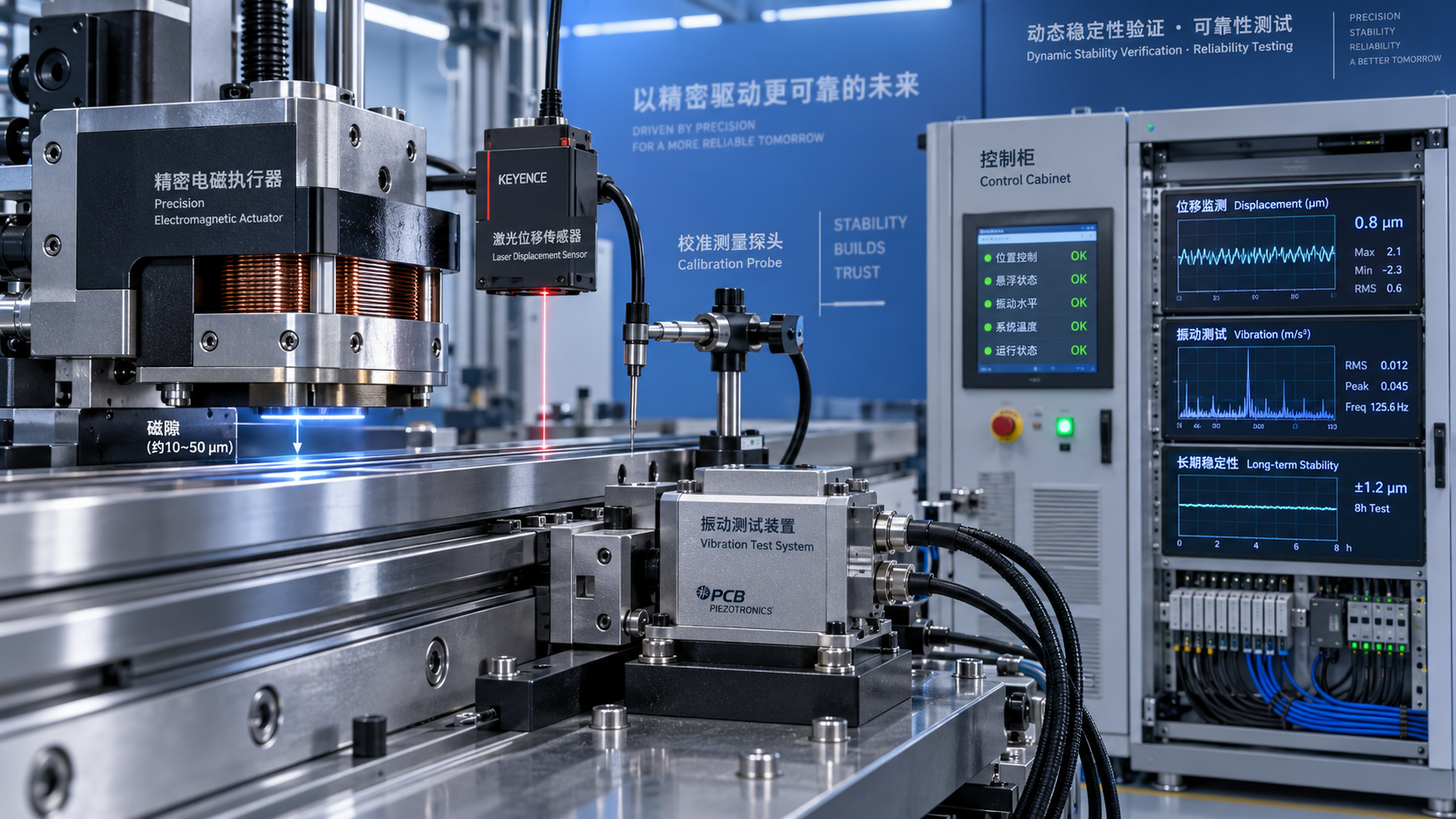
In conventional rail, wheel-rail contact absorbs many small geometric imperfections through mechanical compliance. In magnetic levitation guidance, contact is removed, so guidance performance depends on electromagnetic force control, structural precision, and high-speed dynamic response. That shifts the evaluation focus from wear surfaces to control accuracy, sensor reliability, and gap stability.
At operating speeds above 350 km/h, even small lateral deviations can amplify into comfort, energy, and safety issues. In many benchmark studies, air-gap control and lateral clearance management are reviewed in the millimeter range, often with target tolerances around ±0.5 mm to ±2.0 mm depending on architecture, vehicle mass, and guideway stiffness.
Core functions of the guidance subsystem
A magnetic levitation guidance system usually performs at least four tightly linked functions: maintaining levitation gap, constraining lateral motion, supporting roll stability, and coordinating with propulsion and braking controls. Evaluation teams should not isolate these functions because a gain increase that improves lateral centering may also raise power demand or induce oscillation under crosswind or turnout transitions.
What changes at higher speed bands
- Below 200 km/h, control margins may be relatively forgiving during low-speed commissioning and depot movement.
- From 200–400 km/h, guideway precision, vibration filtering, and switching transition behavior become more critical.
- Above 400 km/h, aerodynamic disturbance, control latency, and structural resonance screening move into first-order design review.
- Near 600 km/h, certification teams often require tighter evidence on fail-safe response times, redundancy pathways, and degraded-mode handling.
The table below outlines how technical teams can compare the main performance dimensions of magnetic levitation guidance when screening candidate concepts for future mobility corridors.
The key takeaway is that magnetic levitation guidance must be judged as a multidisciplinary system. A design that looks efficient in isolated electromagnetic simulation may still struggle if civil tolerances, switch complexity, or lifecycle maintenance are not matched to the same performance envelope.
The Main Design Tradeoffs Technical Teams Should Benchmark
Most procurement or strategic review programs compare at least five tradeoff areas: electromagnetic architecture, guideway precision, control bandwidth, redundancy philosophy, and lifecycle economics. These tradeoffs do not produce a universal winner. They define which concept is best suited for a specific corridor, speed target, budget profile, and regulatory path.
EMS versus EDS versus hybrid approaches
Electromagnetic suspension systems usually offer tighter low-speed control and simpler station operation, but they can demand continuous active regulation of small levitation gaps. Electrodynamic suspension systems may deliver favorable high-speed stability characteristics, yet they often introduce low-speed support complexity, higher magnetic field management requirements, or different infrastructure implications.
Hybrid approaches seek to reduce the weaknesses of each architecture, but they add integration burden. For technical evaluation teams, the question is not which label is more advanced. The question is whether the architecture reduces total system risk over a 3-stage lifecycle: prototype validation, commercial commissioning, and long-term fleet operation.
Guideway precision versus civil cost
Magnetic levitation guidance is highly sensitive to the quality of the guideway. If alignment, stiffness, and thermal behavior are tightly controlled, levitation forces can remain efficient and predictable. However, tighter tolerances raise fabrication, surveying, and maintenance cost. In some corridors, pushing precision too far can shift 10%–20% of project cost into civil works without equivalent operational gain.
This is why mature evaluations test tolerance sensitivity rather than only nominal performance. A system that works well at ±0.5 mm but degrades sharply at ±1.5 mm may be less bankable than a system with slightly lower peak efficiency but broader tolerance resilience.
Fast control response versus robustness
High control bandwidth can improve disturbance rejection and gap regulation, especially during speed transitions, switch passages, or wind loading events. Yet faster control loops can also increase sensitivity to sensor noise, EMI, and model mismatch. In safety-critical transport, response speed measured in milliseconds must be balanced with diagnostic confidence and stable degraded-mode logic.
Typical benchmark questions
- How much air-gap variation is acceptable during steady cruise and crosswind events?
- What fault response time is required: 10 ms, 50 ms, or 200 ms depending on subsystem criticality?
- How does the controller behave during sensor dropout, power fluctuation, or switch transition?
- Can the system maintain acceptable ride quality over a 25–35 year infrastructure life?
The comparison matrix below helps evaluation teams structure these design tradeoffs in practical decision terms rather than abstract engineering preference.
For many buyers, the strongest concept is not the one with the most aggressive technical figures. It is the one that meets route requirements with manageable commissioning risk, credible maintainability, and a certifiable safety case.
System Integration Risks That Often Get Underestimated
Magnetic levitation guidance cannot be validated only at subsystem level. Many high-impact issues emerge at interfaces: guideway-to-vehicle alignment, propulsion-to-guidance control coupling, switch geometry, emergency braking transitions, and maintenance access. In early concept reviews, these interfaces are often responsible for the largest schedule slips during the next 12–24 months.
Turnouts, transitions, and special structures
Straight track performance is rarely the true discriminator. Turnouts, viaduct transitions, tunnels, and thermal expansion zones create the conditions where magnetic levitation guidance must prove robustness. Evaluators should request data or simulation evidence for transient force peaks, control saturation margins, and guidance performance during geometry changes rather than cruise operation alone.
Electromagnetic compatibility and sensor confidence
Because the system relies on continuous measurement and active control, sensor quality is central. Noise, drift, EMI, and calibration loss can push incorrect control actions into the guidance loop. A technically strong package should define sensor redundancy, diagnostic voting logic, and calibration intervals, such as quarterly checks for selected channels and annual deep validation during major maintenance windows.
Common evaluation blind spots
- Assuming laboratory guideway precision will be maintained across a 50 km or 200 km commercial corridor.
- Reviewing nominal ride comfort but not degraded comfort during one-channel sensor loss.
- Comparing levitation energy demand without including cooling, diagnostics, and standby operation loads.
- Underestimating the impact of maintenance access time on fleet availability targets above 98%.
For G-AIT-style benchmarking, the most reliable assessments treat magnetic levitation guidance as a corridor-scale operational system. Vehicle physics, infrastructure behavior, software assurance, and maintenance doctrine must all align before the design can support premium-speed, safety-critical service.
A Practical Evaluation Framework for Procurement and Technical Due Diligence
Technical evaluation teams benefit from a repeatable review structure. In practice, a 5-step framework often improves decision quality: define route envelope, map subsystem interfaces, quantify tolerance sensitivity, stress-test fault cases, and model lifecycle cost. This approach reduces the risk of selecting a concept that excels in one metric while creating hidden exposure elsewhere.
Five-step review sequence
- Set operational targets, including top speed, passenger comfort threshold, climate range, and maintenance window assumptions.
- Review magnetic levitation guidance architecture against guideway, propulsion, switch, and braking interfaces.
- Test sensitivity to civil tolerance, thermal movement, and vibration conditions across best-case and worst-case scenarios.
- Verify fault management logic, degraded operation behavior, and recovery time after partial subsystem failure.
- Compare 20-year or 30-year ownership cost, not just initial infrastructure and vehicle procurement value.
Selection criteria that support better decisions
A sound selection model should weight at least four categories: performance, safety assurance, maintainability, and expansion readiness. If the line may later extend to higher throughput, mixed climate operation, or more demanding switch density, magnetic levitation guidance should be chosen for scalability rather than only first-phase optimization.
Decision teams also benefit from asking whether the proposed design can be inspected and recalibrated with realistic field resources. A system that requires unusually frequent adjustment, highly specialized tooling, or extended track possession every few weeks may undermine commercial reliability even if test-track performance appears impressive.
What a strong supplier discussion should include
Useful supplier conversations go beyond brochure claims. Buyers should request guidance force maps, tolerance envelopes, fault-tree assumptions, maintenance task intervals, switch transition behavior, and evidence of how the magnetic levitation guidance strategy supports certification planning. These details help convert technical ambition into investable program confidence.
For organizations assessing future-ready mobility assets, the best outcomes come from early alignment between engineering, operations, safety, and procurement. If you are comparing maglev concepts, reviewing guideway requirements, or building a transport technology benchmark, G-AIT can support a more rigorous evaluation pathway. Contact us to discuss your technical criteria, request a tailored assessment framework, or explore broader advanced transportation solutions.
Article Categories
SYSTEM_ALERT_URGENT
Q3 SYMPOSIUM ON ORBITAL DYNAMICS
Registration for the Orbital Aerospace technical committee is now open. Node access required.
Recent Articles
![]() Oct 27, 2026FAA Certifies Boeing 737 MAX 10 After Years of DelaysFAA Certifies Boeing 737 MAX 10 After Years of Delays
Oct 27, 2026FAA Certifies Boeing 737 MAX 10 After Years of DelaysFAA Certifies Boeing 737 MAX 10 After Years of Delays Oct 27, 2026Can an intermodal connectivity platform reduce rail handoff delays?Can an intermodal connectivity platform reduce rail handoff delays?
![]() Oct 26, 2026Chery Unveils Global Smart Mobility Strategy Targeting Robotaxis and eVTOLsChery Unveils Global Smart Mobility Strategy Targeting Robotaxis and eVTOLs
Oct 26, 2026Chery Unveils Global Smart Mobility Strategy Targeting Robotaxis and eVTOLsChery Unveils Global Smart Mobility Strategy Targeting Robotaxis and eVTOLs Oct 26, 2026How to evaluate avionics for helicopters used in IFR operationsHow to evaluate avionics for helicopters used in IFR operations
![]() Oct 25, 2026Ukraine’s Defence Minister Says SpaceX Satellite Services Restored After Speed RestrictionsUkraine’s Defence Minister Says SpaceX Satellite Services Restored After Speed Restrictions
Oct 25, 2026Ukraine’s Defence Minister Says SpaceX Satellite Services Restored After Speed RestrictionsUkraine’s Defence Minister Says SpaceX Satellite Services Restored After Speed Restrictions Oct 25, 2026How satellite infrastructure for IoT affects sensor reporting delaysHow satellite infrastructure for IoT affects sensor reporting delays
![]() Oct 24, 2026China Successfully Launches Yaogan 50-03 SatelliteChina Successfully Launches Yaogan 50-03 Satellite
Oct 24, 2026China Successfully Launches Yaogan 50-03 SatelliteChina Successfully Launches Yaogan 50-03 Satellite Oct 24, 2026How gradients affect traction power needs in high-speed rolling stockHow gradients affect traction power needs in high-speed rolling stock
![]() Oct 23, 2026FAA Proposes Checks on Nearly 2,000 Boeing 737NGs Over Loss-of-Control RiskFAA Proposes Checks on Nearly 2,000 Boeing 737NGs Over Loss-of-Control Risk
Oct 23, 2026FAA Proposes Checks on Nearly 2,000 Boeing 737NGs Over Loss-of-Control RiskFAA Proposes Checks on Nearly 2,000 Boeing 737NGs Over Loss-of-Control Risk Oct 23, 2026How fuel choice affects specific impulse in liquid oxygen propulsionHow fuel choice affects specific impulse in liquid oxygen propulsion
![]() Oct 22, 2026QuantumScape Plans 100 MWh Solid-State Battery Line Targeting Aerospace and Other MarketsQuantumScape Plans 100 MWh Solid-State Battery Line Targeting Aerospace and Other Markets
Oct 22, 2026QuantumScape Plans 100 MWh Solid-State Battery Line Targeting Aerospace and Other MarketsQuantumScape Plans 100 MWh Solid-State Battery Line Targeting Aerospace and Other Markets Oct 22, 2026How tank size limits hydrogen aircraft range on regional flightsHow tank size limits hydrogen aircraft range on regional flights
![]() Oct 21, 2026FAA Certifies Boeing 737-10, Clearing Regulatory Hurdle for DeliveriesFAA Certifies Boeing 737-10, Clearing Regulatory Hurdle for Deliveries
Oct 21, 2026FAA Certifies Boeing 737-10, Clearing Regulatory Hurdle for DeliveriesFAA Certifies Boeing 737-10, Clearing Regulatory Hurdle for Deliveries Oct 21, 2026How are electric vertical takeoff aircraft certified in the US?How are electric vertical takeoff aircraft certified in the US?
![]() Oct 20, 2026Ohio Department of Transportation Releases Three-Year Advanced Air Mobility Action PlanOhio Department of Transportation Releases Three-Year Advanced Air Mobility Action Plan
Oct 20, 2026Ohio Department of Transportation Releases Three-Year Advanced Air Mobility Action PlanOhio Department of Transportation Releases Three-Year Advanced Air Mobility Action Plan Oct 20, 2026How does magnetic flux density in tesla affect maglev lift force?How does magnetic flux density in tesla affect maglev lift force?
![]() Oct 19, 2026ZeroAvia Completes Key Ground Tests of ZA600 Hydrogen Fuel Cell PowertrainZeroAvia Completes Key Ground Tests of ZA600 Hydrogen Fuel Cell Powertrain
Oct 19, 2026ZeroAvia Completes Key Ground Tests of ZA600 Hydrogen Fuel Cell PowertrainZeroAvia Completes Key Ground Tests of ZA600 Hydrogen Fuel Cell Powertrain Oct 19, 2026How spacecraft integration affects advanced propulsion costsHow spacecraft integration affects advanced propulsion costs
 Oct 18, 2026How chilldown prevents cavitation in cryogenic engine systemsHow chilldown prevents cavitation in cryogenic engine systems
 Oct 17, 2026How explainability affects algorithmic trust in AI flight systemsHow explainability affects algorithmic trust in AI flight systems
 Oct 16, 2026How to evaluate transportation technology for Middle East heatHow to evaluate transportation technology for Middle East heat
 Oct 15, 2026How common-cause failures defeat redundancy logic in European avionicsHow common-cause failures defeat redundancy logic in European avionics
 Oct 14, 2026How DO-160 applies to aerospace technology testing for avionicsHow DO-160 applies to aerospace technology testing for avionics
 Oct 13, 2026How fuel price volatility shapes commercial aviation cost trendsHow fuel price volatility shapes commercial aviation cost trends
 Oct 12, 2026How to qualify aerospace manufacturing components for traceabilityHow to qualify aerospace manufacturing components for traceability
 Oct 11, 2026Which certification hurdles are slowing hydrogen aviation in Europe?Which certification hurdles are slowing hydrogen aviation in Europe?
 Oct 10, 2026What evidence should a magnetic gap stability supplier provide?What evidence should a magnetic gap stability supplier provide?
 Oct 09, 2026Which ISO standards matter when qualifying industrial technology suppliers?Which ISO standards matter when qualifying industrial technology suppliers?
 Oct 08, 2026When does reusability actually lower launch vehicle costs?When does reusability actually lower launch vehicle costs?
 Oct 07, 2026Where to find reliable product knowledge resources in the Middle EastWhere to find reliable product knowledge resources in the Middle East
 Oct 06, 2026What drives high-speed rail systems cost per kilometer?What drives high-speed rail systems cost per kilometer?
 Oct 05, 2026When does hydrogen propulsion for UAV extend mission range enough to justify it?When does hydrogen propulsion for UAV extend mission range enough to justify it?
 Oct 04, 2026How rail systems integration reduces commissioning delaysHow rail systems integration reduces commissioning delays
 Oct 03, 2026How to evaluate an advanced propulsion manufacturer for hydrogen systemsHow to evaluate an advanced propulsion manufacturer for hydrogen systems
 Oct 02, 2026How to qualify aircraft components for OEM production approvalHow to qualify aircraft components for OEM production approval