Which ISO standards matter when qualifying industrial technology suppliers?
Lead Author
Published
Views:
When qualifying an industrial technology supplier, the most relevant ISO standards are those that reveal control over the specific failure modes of the supplied product or service. A certificate is useful evidence, but its value depends on scope, audit status, site coverage, and the connection between the management system and the work being purchased.
ISO 9001 is the broad starting point. It indicates that a quality management system exists for controlling documented processes, nonconforming output, corrective action, internal audits, competence, and management review. For machined components, composite structures, electrical harnesses, control electronics, test equipment, or field-maintenance services, ISO 9001 provides a common language for reviewing how requirements are transferred from contract to production and how deviations are handled.
Its limitation is equally important: ISO 9001 does not certify a product, a material grade, a special process, or a particular engineering capability. A supplier can hold a valid ISO 9001 certificate while lacking the machine envelope, clean-room discipline, thermal-vacuum test capacity, software assurance process, or traceability depth required for a specific programme. Qualification should therefore begin with ISO 9001, then move quickly to the standards and technical evidence linked to the actual supply.
Start with the quality system, then test its scope
A certificate should identify the legal entity, physical site, certification body, applicable standard revision, and scope statement. “Design and manufacture of industrial products” is materially different from a scope covering the design, manufacture, assembly, inspection, and repair of the relevant technology. A holding company certificate does not automatically extend to a subcontract machining site or a separately managed test laboratory.
Scope wording also needs comparison with the proposed work. A facility certified for cable assembly may not have controlled capability for high-voltage insulation testing, radiation-tolerant electronics, flight-critical harness routing, or rail signalling interfaces. Similarly, a precision machining scope does not establish competence in welding, heat treatment, anodising, non-destructive testing, or bonded composite repair. These activities introduce process-specific variables that ISO 9001 treats at a general system level.
Ask for the current certificate and the certification schedule, but review operational records as well: the latest audit summary where available, corrective-action status, internal audit coverage, calibration records, supplier-control procedures, and examples of change-control documentation. The useful question is whether the system identifies and contains a process escape before it reaches the next integration stage.
Standards with direct relevance to high-consequence technology
ISO 14001 and ISO 45001 are often treated as secondary credentials. They become central when delivery includes on-site installation, infrastructure works, hazardous materials, propulsion test operations, battery systems, pressure equipment, or maintenance under constrained operating conditions. A generic safety policy is weak evidence for a job involving overhead lifting near installed rolling stock, high-voltage commissioning, fuel handling, or cryogenic transfer. The task risk assessment, permit process, emergency arrangements, and subcontractor controls carry more weight than the certificate alone.
ISO/IEC 27001 deserves close attention when the supply includes embedded software, telemetry, digital twins, maintenance databases, remote diagnostics, design models, or connected control systems. Certification should not be interpreted as proof that an individual product is secure. It indicates that the organization manages information-security risks within a defined management-system scope. A review should establish whether the covered boundary includes the engineering network, software repositories, production-programming stations, cloud services, and incident-response process relevant to the supplied technology.
A narrower issue arises with data segregation. A supplier may have an ISO/IEC 27001-certified corporate office while product-development data is handled by an affiliate, external engineering house, or cloud tenant outside the certified scope. Access logs, role definitions, data-retention rules, secure transfer methods, and handling of controlled technical data provide the practical evidence.
Where aerospace and transportation requirements go beyond ISO
In aerospace supply chains, AS9100 is frequently more informative than ISO 9001 because it builds on the ISO 9001 quality-management foundation and adds aerospace-specific expectations. These include configuration management, product safety, prevention of counterfeit parts, risk management, control of externally provided processes, and stronger attention to special requirements and critical items. The exact required certification depends on the contractual and regulatory environment, but an aerospace-related scope should not be assessed as equivalent to a generic ISO 9001 certificate without examining these added controls.
For maintenance and repair work, the relevant approval framework may be aviation-authority specific rather than ISO-based. ISO certification can support management-system confidence, yet it does not substitute for approvals required to release aircraft articles or perform regulated maintenance. The same distinction applies to design organizations, production approvals, and specialized test activities. A management-system certificate is evidence about organizational control; it is not an operating authorization.
Rail, maglev, and advanced ground-transportation projects may similarly depend on project specifications, national rail rules, infrastructure-manager requirements, signalling assurance obligations, welding qualifications, or asset-specific acceptance criteria. ISO 9001 and ISO 45001 remain useful indicators, but they cannot establish compatibility with a particular signalling architecture, braking interface, electromagnetic environment, or trackside installation condition.
For suppliers of medical or health-related technology, ISO 13485 is the quality-management standard commonly associated with medical devices. It has a stronger regulatory focus than ISO 9001, including traceability and control of certain device-related processes. Its relevance is limited when the supplied item is not part of a medical-device supply chain. Holding ISO 13485 should not be used as a general proxy for excellence in unrelated aerospace, rail, space, or industrial control work.
Traceability is often where qualification becomes credible
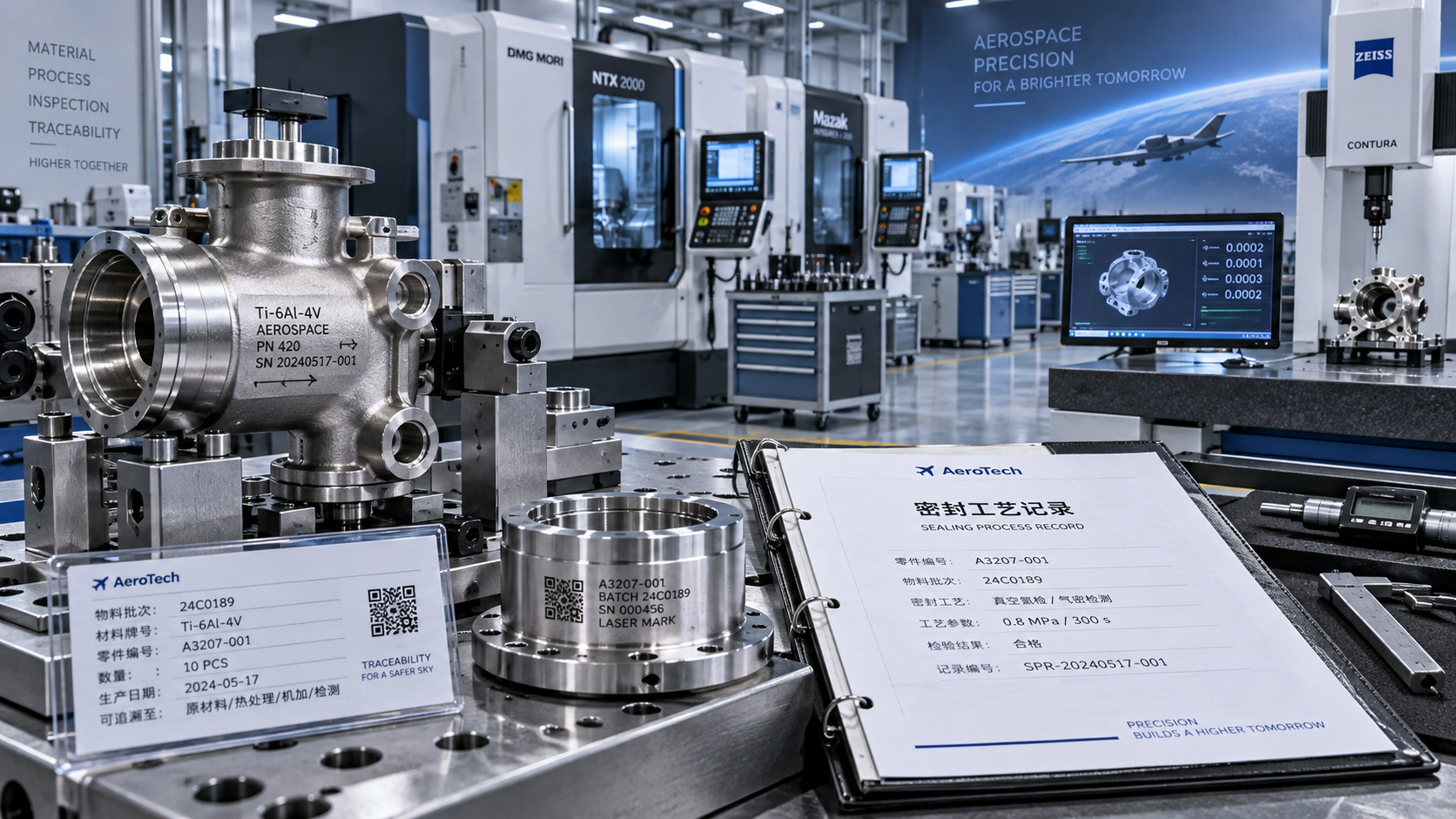
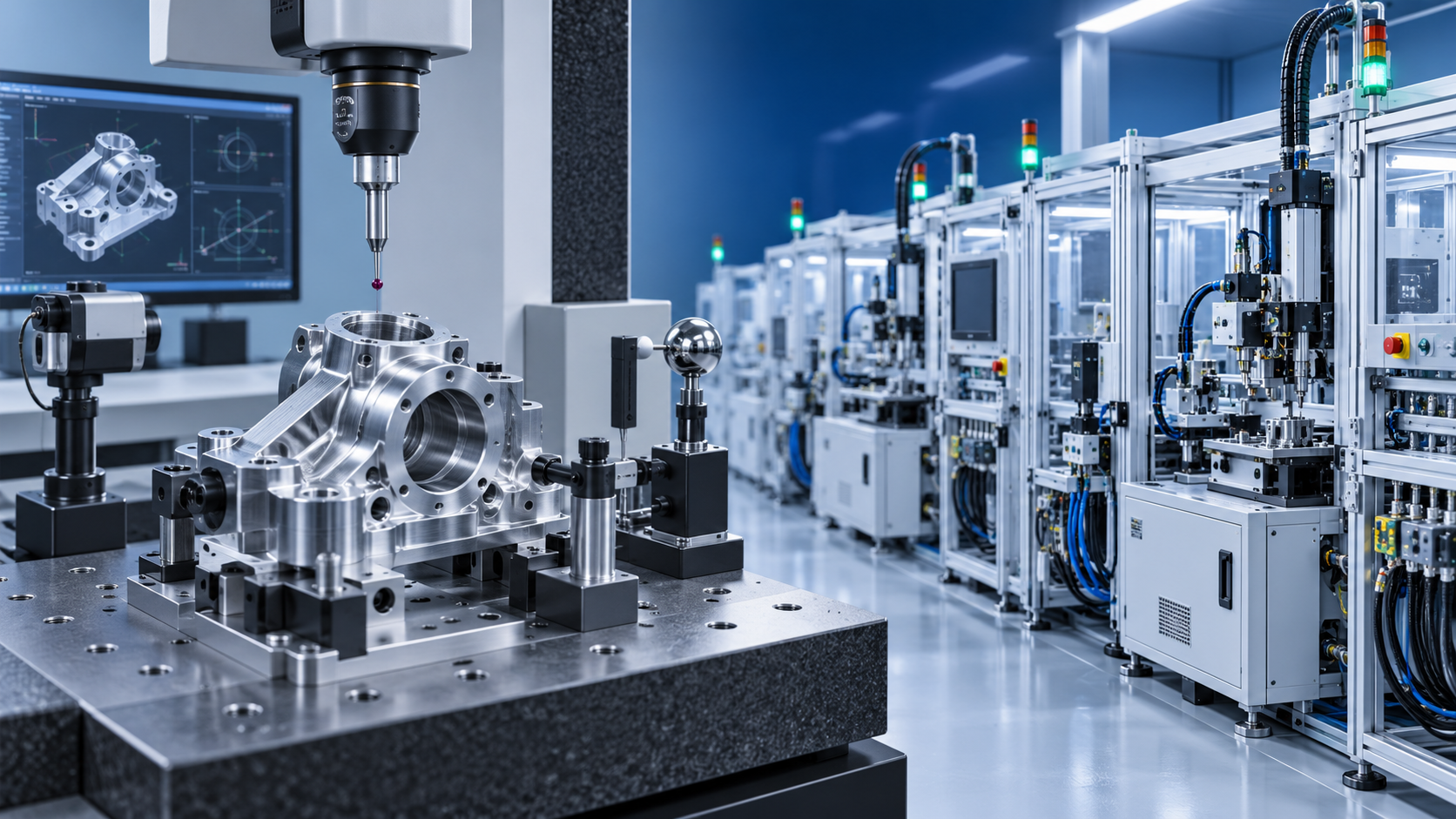
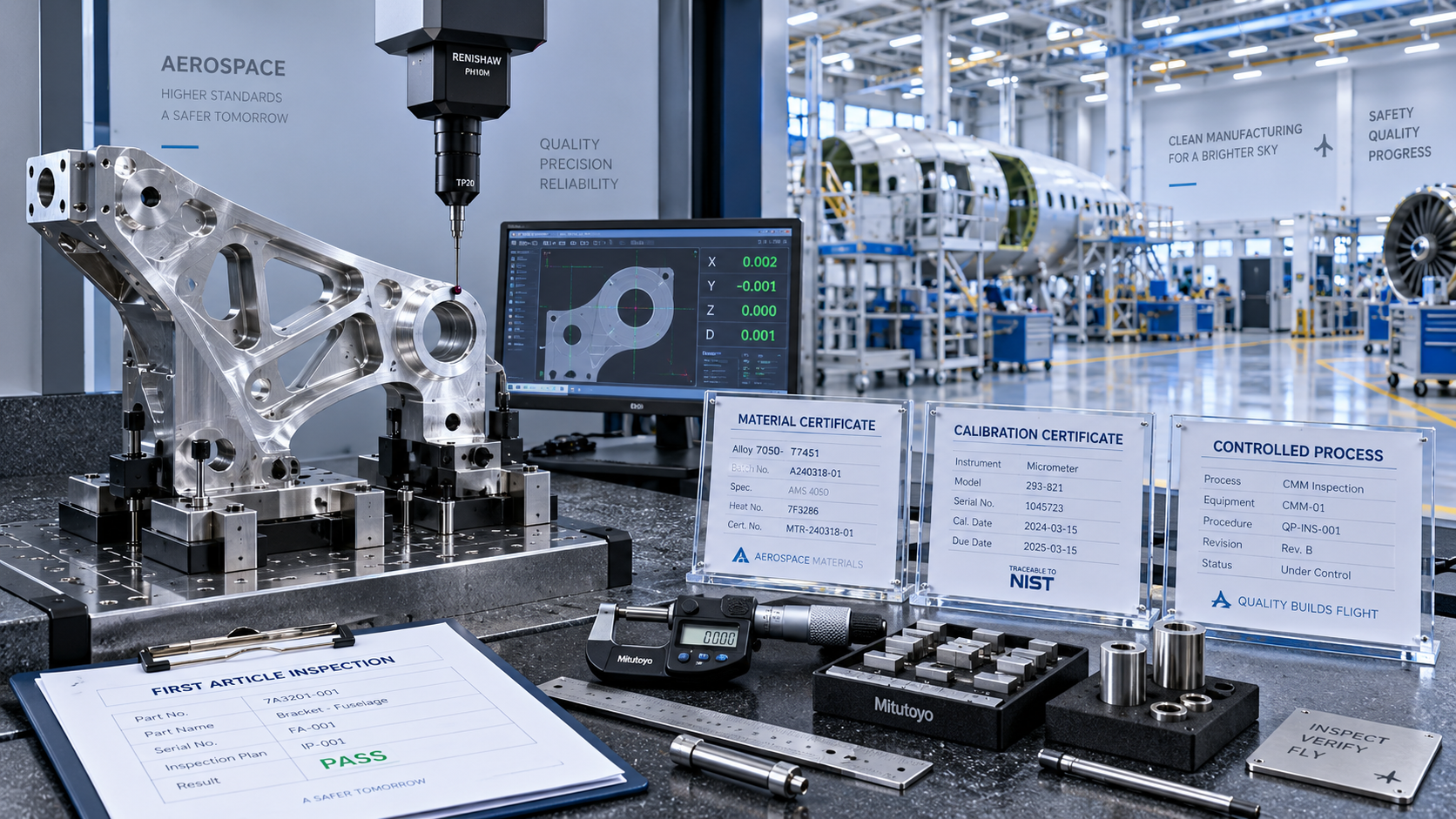
Traceability claims need to be traced backward and forward. For a forged fitting, machined actuator housing, pressure vessel component, composite laminate, or electronic assembly, the required chain may include material certificates, heat or batch identity, incoming inspection, process route, machine or workstation records, special-process approvals, inspection results, nonconformance records, and final release documentation. The necessary depth depends on the criticality of the item and the ability to detect failure later.
Lot traceability is not automatically sufficient. A serialized safety-critical unit may require controlled linkage between its serial number and the firmware version, calibrated test equipment used, torque records, repair history, and component serial numbers. By contrast, a standard bracket may be appropriately controlled by material lot and production batch. Requiring the deepest possible traceability for every item can add administrative burden without improving failure detection; accepting only a certificate of conformity for a critical assembly leaves too much unverified.
Traceability also weakens during rework. If a nonconformance is closed by re-machining, weld repair, component substitution, software reload, or dimensional concession, the original inspection record may no longer represent the delivered configuration. Review how rework is authorized, whether repeated repair is limited, and how revised acceptance evidence is connected to the final part number and revision level.
Calibration and laboratory competence are different questions
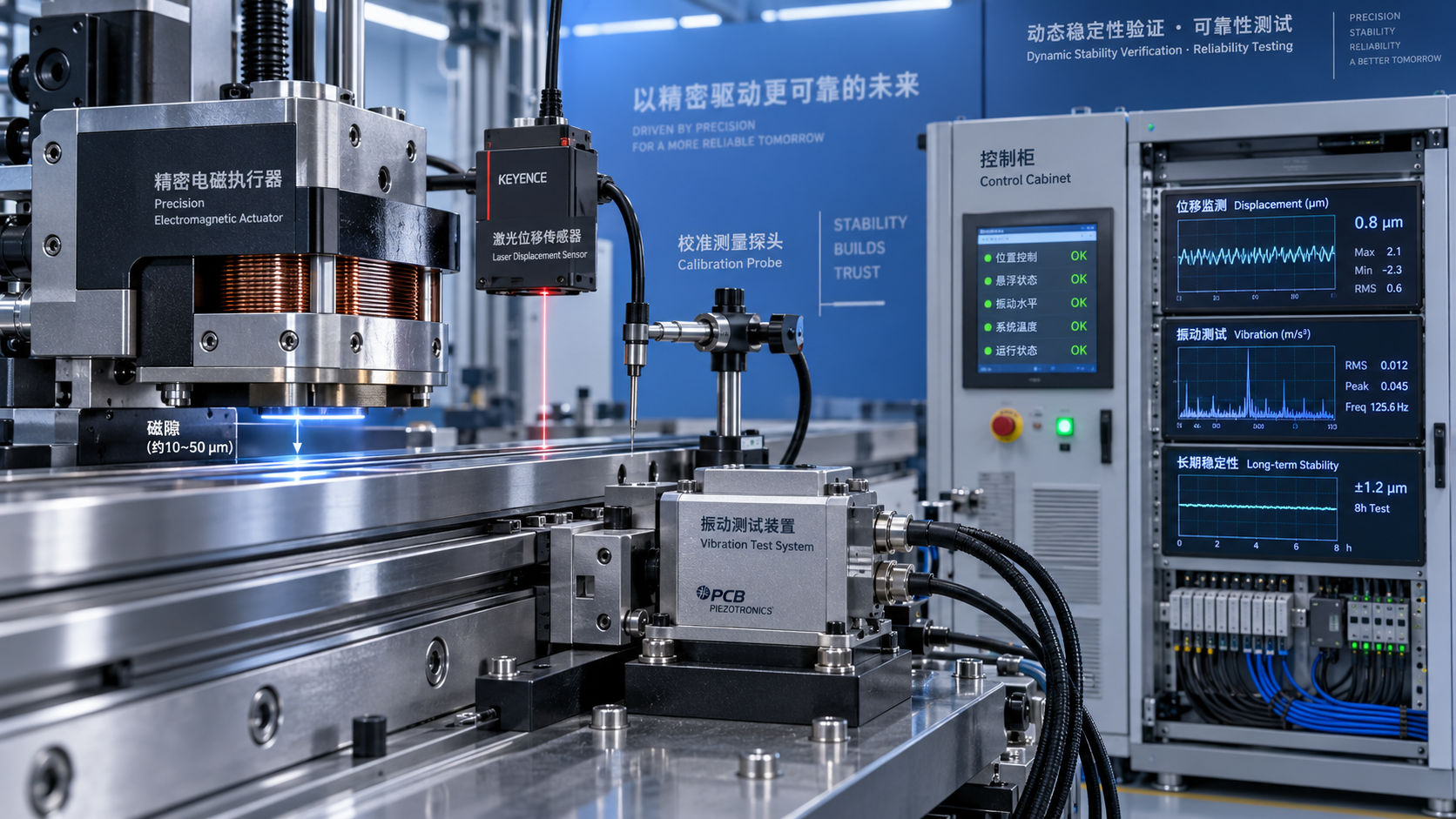
Measurement control affects acceptance decisions directly. ISO 10012 provides a useful framework for managing measuring processes, but calibration certificates alone need interpretation. A calibration result is relevant only when the instrument’s range, accuracy, uncertainty, environmental conditions, and calibration interval suit the measurement being made.
For example, a calliper calibrated within its stated tolerance does not validate a tight geometric measurement on a complex machined surface if the measurement method, fixture, temperature control, and datum setup are inadequate. A torque tool with a current certificate may still be unsuitable for a low-torque fastener where resolution and angle control matter. Temperature, humidity, vibration, cleanliness, electromagnetic interference, and operator method can change the reliability of a measurement even with a properly calibrated instrument.
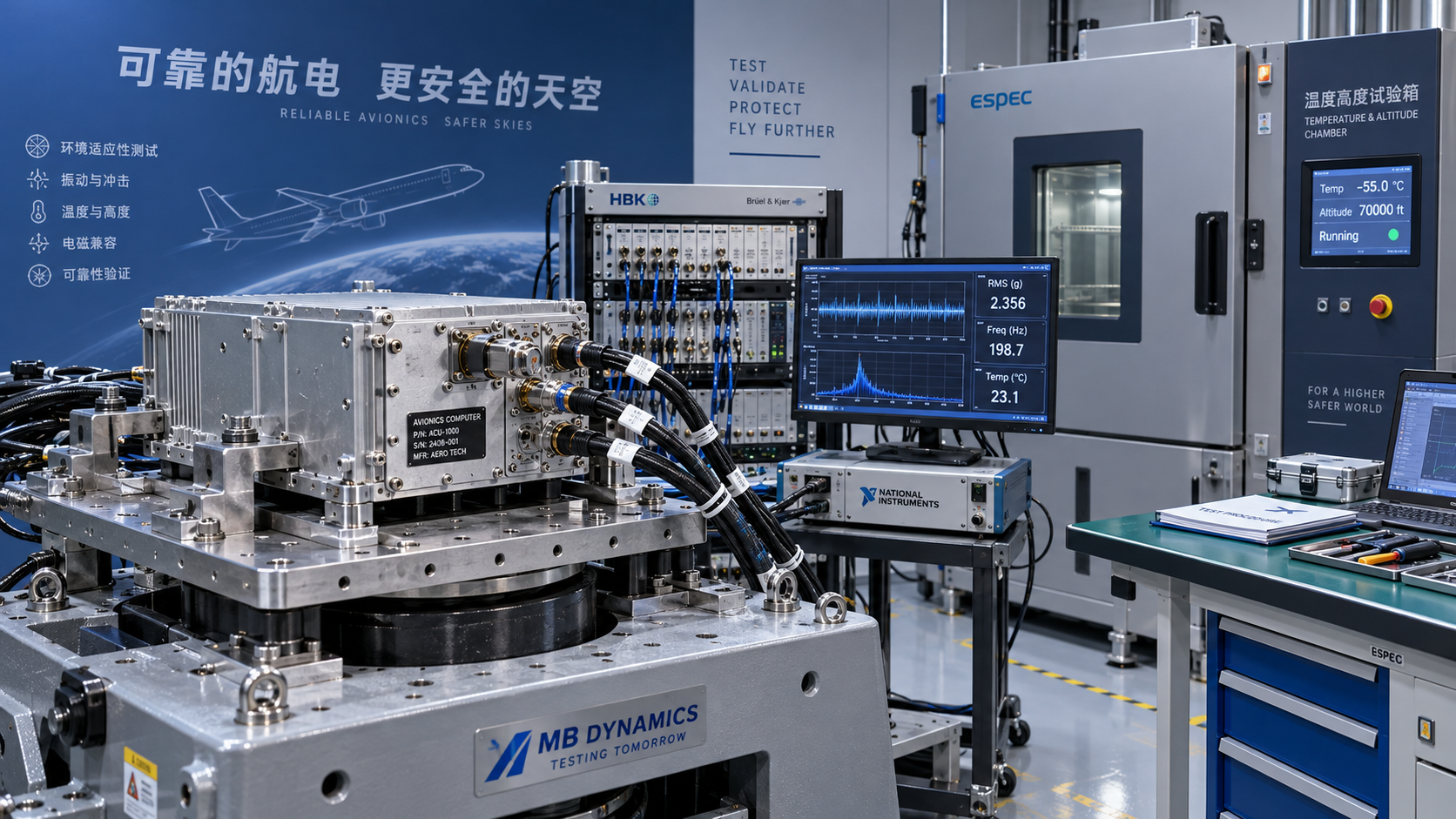
ISO/IEC 17025 addresses the competence of testing and calibration laboratories. It is not a general supplier quality-management certification, but it is highly relevant where acceptance depends on laboratory results: material chemistry, fatigue testing, flammability, environmental screening, electromagnetic compatibility, vibration, pressure testing, or calibration. The accredited scope is the decisive document. Accreditation for dimensional calibration does not cover electrical safety testing; accreditation for a limited temperature range does not establish competence for cryogenic measurement. Confirm that the method, parameter, range, and location are included in scope.
Environmental, resilience, and asset-related claims need boundaries
ISO 14001 establishes a management approach to environmental impacts. It does not certify that aluminium, composite resin, battery material, lubricant, coating, or packaging meets a particular chemical-restriction list. Product-level environmental statements require material declarations, controlled substance records, applicable test results, and revision control of the bill of materials. This distinction matters when substitutions are possible: a production site can maintain ISO 14001 while a changed adhesive, plating bath, flame retardant, or encapsulant creates a product-level compliance issue.
ISO 22301 becomes meaningful when continuity of supply depends on a particular facility, test chamber, qualified technician group, tooling set, or proprietary process. A business-continuity certificate should lead to questions about recovery priorities, alternate-site capability, protected tooling, backup of manufacturing data, validation of transferred processes, and the maximum interruption the programme can tolerate. An alternate site that lacks the qualified furnace, clean-room classification, approved inspection method, or process validation may preserve administration without restoring deliverable output.
Where long-life infrastructure is involved, ISO 55001 can be relevant to organizations responsible for managing physical assets across their life cycle. It may support confidence in maintenance planning, asset information, and risk-based decisions for fleets, depots, test facilities, or infrastructure equipment. It is less relevant to a supplier delivering a one-time manufactured component without continuing asset-management responsibility.
Use certification as a starting record, not the final decision
The strongest qualification file connects each claimed standard to the delivered scope. It distinguishes organization-wide certification from site-specific capability, verifies whether outsourced processes are controlled, and identifies where a sector approval, customer-mandated standard, technical qualification, or laboratory accreditation is required in addition to ISO certification.
Focus on evidence that changes with the product: configuration baselines, approved drawings, material and process records, test methods, calibration suitability, software versions, nonconformance disposition, and change notification. Those records reveal whether a supplier can repeatedly deliver the same controlled configuration after a material shortage, engineering update, equipment move, personnel change, or repair event. ISO standards provide the framework for that discipline; the technical evidence shows whether it is applied to the work that matters.
Article Categories
SYSTEM_ALERT_URGENT
Q3 SYMPOSIUM ON ORBITAL DYNAMICS
Registration for the Orbital Aerospace technical committee is now open. Node access required.
Taglist:
Recent Articles
![]() Oct 27, 2026FAA Certifies Boeing 737 MAX 10 After Years of DelaysFAA Certifies Boeing 737 MAX 10 After Years of Delays
 Oct 27, 2026Can an intermodal connectivity platform reduce rail handoff delays?Can an intermodal connectivity platform reduce rail handoff delays?
![]() Oct 26, 2026Chery Unveils Global Smart Mobility Strategy Targeting Robotaxis and eVTOLsChery Unveils Global Smart Mobility Strategy Targeting Robotaxis and eVTOLs
 Oct 26, 2026How to evaluate avionics for helicopters used in IFR operationsHow to evaluate avionics for helicopters used in IFR operations
![]() Oct 25, 2026Ukraine’s Defence Minister Says SpaceX Satellite Services Restored After Speed RestrictionsUkraine’s Defence Minister Says SpaceX Satellite Services Restored After Speed Restrictions
 Oct 25, 2026How satellite infrastructure for IoT affects sensor reporting delaysHow satellite infrastructure for IoT affects sensor reporting delays
![]() Oct 24, 2026China Successfully Launches Yaogan 50-03 SatelliteChina Successfully Launches Yaogan 50-03 Satellite
 Oct 24, 2026How gradients affect traction power needs in high-speed rolling stockHow gradients affect traction power needs in high-speed rolling stock
![]() Oct 23, 2026FAA Proposes Checks on Nearly 2,000 Boeing 737NGs Over Loss-of-Control RiskFAA Proposes Checks on Nearly 2,000 Boeing 737NGs Over Loss-of-Control Risk
 Oct 23, 2026How fuel choice affects specific impulse in liquid oxygen propulsionHow fuel choice affects specific impulse in liquid oxygen propulsion
![]() Oct 22, 2026QuantumScape Plans 100 MWh Solid-State Battery Line Targeting Aerospace and Other MarketsQuantumScape Plans 100 MWh Solid-State Battery Line Targeting Aerospace and Other Markets
 Oct 22, 2026How tank size limits hydrogen aircraft range on regional flightsHow tank size limits hydrogen aircraft range on regional flights
![]() Oct 21, 2026FAA Certifies Boeing 737-10, Clearing Regulatory Hurdle for DeliveriesFAA Certifies Boeing 737-10, Clearing Regulatory Hurdle for Deliveries
 Oct 21, 2026How are electric vertical takeoff aircraft certified in the US?How are electric vertical takeoff aircraft certified in the US?
![]() Oct 20, 2026Ohio Department of Transportation Releases Three-Year Advanced Air Mobility Action PlanOhio Department of Transportation Releases Three-Year Advanced Air Mobility Action Plan
 Oct 20, 2026How does magnetic flux density in tesla affect maglev lift force?How does magnetic flux density in tesla affect maglev lift force?
![]() Oct 19, 2026ZeroAvia Completes Key Ground Tests of ZA600 Hydrogen Fuel Cell PowertrainZeroAvia Completes Key Ground Tests of ZA600 Hydrogen Fuel Cell Powertrain
 Oct 19, 2026How spacecraft integration affects advanced propulsion costsHow spacecraft integration affects advanced propulsion costs
 Oct 18, 2026How chilldown prevents cavitation in cryogenic engine systemsHow chilldown prevents cavitation in cryogenic engine systems
 Oct 17, 2026How explainability affects algorithmic trust in AI flight systemsHow explainability affects algorithmic trust in AI flight systems
 Oct 16, 2026How to evaluate transportation technology for Middle East heatHow to evaluate transportation technology for Middle East heat
 Oct 15, 2026How common-cause failures defeat redundancy logic in European avionicsHow common-cause failures defeat redundancy logic in European avionics
 Oct 14, 2026How DO-160 applies to aerospace technology testing for avionicsHow DO-160 applies to aerospace technology testing for avionics
 Oct 13, 2026How fuel price volatility shapes commercial aviation cost trendsHow fuel price volatility shapes commercial aviation cost trends
 Oct 12, 2026How to qualify aerospace manufacturing components for traceabilityHow to qualify aerospace manufacturing components for traceability
 Oct 11, 2026Which certification hurdles are slowing hydrogen aviation in Europe?Which certification hurdles are slowing hydrogen aviation in Europe?
 Oct 10, 2026What evidence should a magnetic gap stability supplier provide?What evidence should a magnetic gap stability supplier provide?
 Oct 09, 2026Which ISO standards matter when qualifying industrial technology suppliers?Which ISO standards matter when qualifying industrial technology suppliers?
 Oct 08, 2026When does reusability actually lower launch vehicle costs?When does reusability actually lower launch vehicle costs?
 Oct 07, 2026Where to find reliable product knowledge resources in the Middle EastWhere to find reliable product knowledge resources in the Middle East
 Oct 06, 2026What drives high-speed rail systems cost per kilometer?What drives high-speed rail systems cost per kilometer?
 Oct 05, 2026When does hydrogen propulsion for UAV extend mission range enough to justify it?When does hydrogen propulsion for UAV extend mission range enough to justify it?
 Oct 04, 2026How rail systems integration reduces commissioning delaysHow rail systems integration reduces commissioning delays
 Oct 03, 2026How to evaluate an advanced propulsion manufacturer for hydrogen systemsHow to evaluate an advanced propulsion manufacturer for hydrogen systems
 Oct 02, 2026How to qualify aircraft components for OEM production approvalHow to qualify aircraft components for OEM production approval