How rail systems integration reduces commissioning delays
Lead Author
Published
Views:
Commissioning delays in rail projects rarely come from one visibly failed subsystem. More often, equipment is installed, individual tests appear acceptable, and progress stops when signaling, traction power, telecoms, platform systems, rolling stock, and the operational control environment must behave as one railway.
Rail systems integration reduces commissioning delays by making those cross-system dependencies visible early, assigning ownership for every interface, and proving operational scenarios in a controlled sequence before the project reaches its most time-sensitive testing stages. It does not remove every technical issue. It prevents late discovery from becoming a site-wide disruption, a safety-assurance gap, or an argument between suppliers about responsibility.
Commissioning is delayed at the interfaces, not only in the equipment rooms
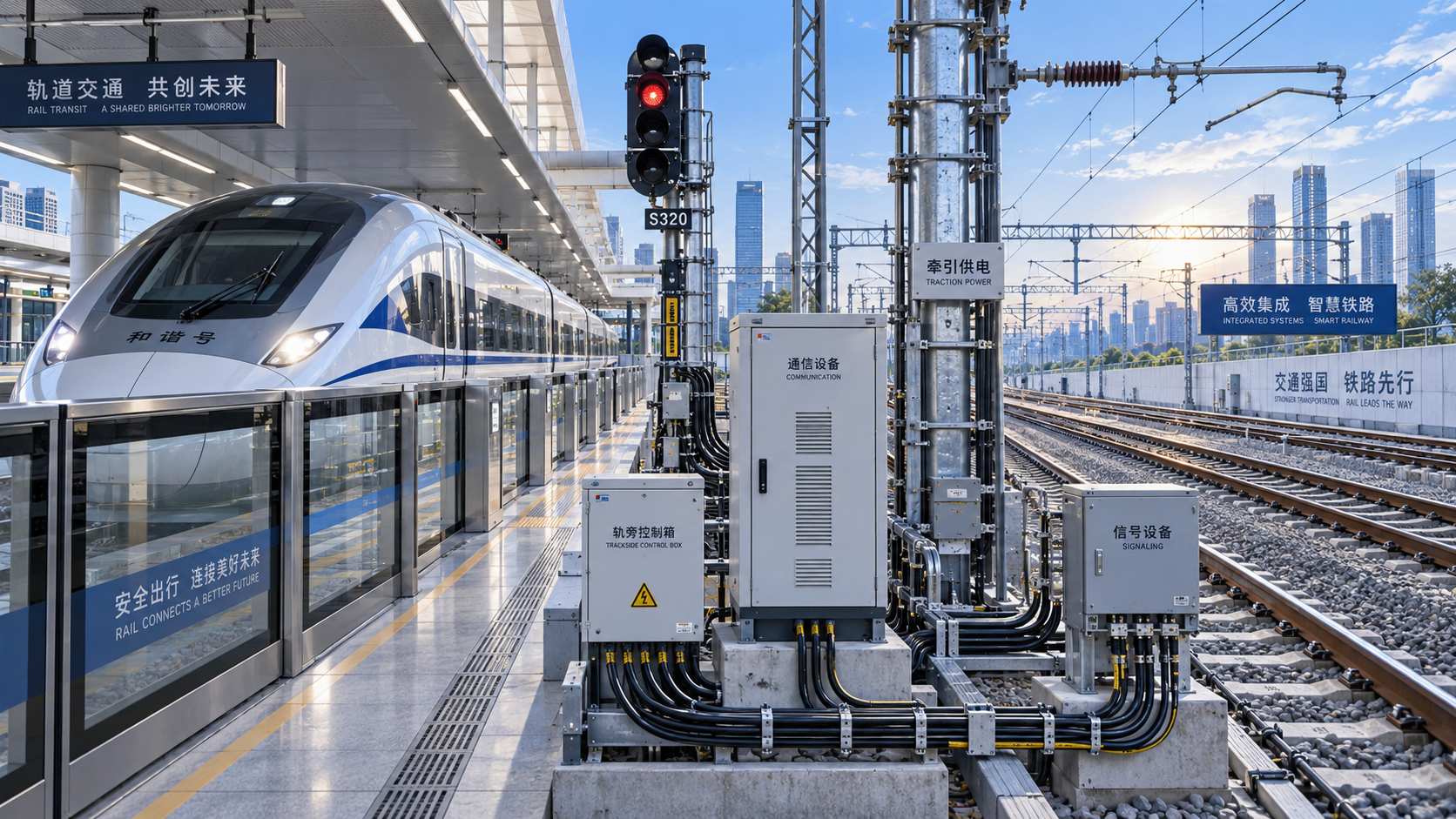
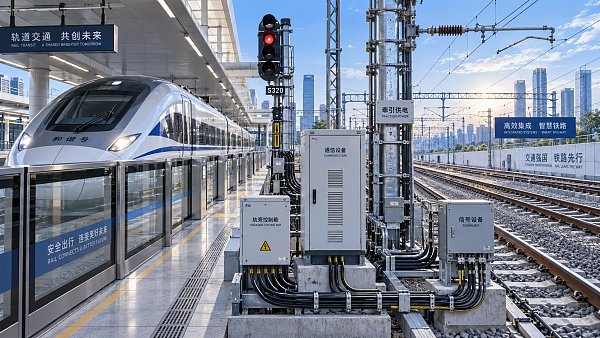
A rail system can contain many technically capable packages delivered by different contractors. A signaling supplier may complete its equipment room. The telecoms contractor may have installed the radio network. The power team may have energized a section. Yet the railway still cannot enter trial operation because the interfaces between those packages have not been proven under real operating conditions.
Consider a simple operational chain: a train receives a movement authority through the signaling system; that authority depends on train detection, interlocking logic, communications availability, power supply continuity, onboard equipment behavior, and the control center’s ability to supervise exceptions. A defect in any connection can block the scenario. The problem may not be a defective component. It may be an unclear data definition, a mismatched software version, an untested fallback mode, or a late change to the civil layout that was not reflected in the signaling configuration.
This is why rail systems integration should be treated as a delivery discipline rather than a final testing activity. Its purpose is to manage how the railway functions as an operational whole, from design decisions through installation, verification, trial running, safety evidence, and handover.
What changes when integration starts early
Projects often create interface registers, but the register becomes useful only when it drives decisions. A list saying that “signaling interfaces with telecoms” is not enough. The project needs to define what is exchanged, who supplies it, who verifies it, what conditions it depends on, and what evidence demonstrates that it works.
Early integration changes the questions asked during design. Instead of waiting for site testing to discover whether systems can communicate, the team asks:
- Which operational function crosses more than one contract package?
- What information, power, timing, physical access, and network path does that function require?
- Which subsystem is the source of truth when a status or alarm conflicts?
- What happens when communications, power, or a field device is unavailable?
- Which design changes need impact assessment across the entire railway?
- What evidence will be needed to support safe and reliable operation?
These questions expose dependencies before installation makes them expensive to change. They also reveal where a design decision is operationally incomplete. For example, specifying a platform screen door interface is not just a matter of connecting two control signals. The project must determine the permitted sequence for train stopping, door release, passenger evacuation, degraded operation, alarms, and recovery. A connection that works electrically may still fail operationally.
Interface ownership prevents the most damaging form of delay
Late commissioning problems become prolonged when no party owns the complete outcome. Suppliers generally own the correct behavior of their supplied systems. The rail operator or delivery authority owns the intended railway service. Between those two positions sits the integration responsibility: ensuring that separate systems meet the defined operational, safety, and performance requirements together.
For project managers, this means assigning an accountable systems integration lead with authority to escalate unresolved interfaces. This role should not merely collect meeting minutes. It needs access to design reviews, configuration decisions, installation planning, test readiness reviews, and change control.
A practical ownership model distinguishes four roles for each important interface:
The important distinction is that a supplier test does not automatically prove an integrated railway function. A train-control package may correctly issue commands, while a communications configuration prevents those commands from reaching the intended target under a failover condition. Both suppliers can pass their own tests and the railway can still fail its integrated demonstration.
Build the test sequence around operating scenarios
A common mistake is to organize testing solely by asset discipline: signaling tests, power tests, telecoms tests, rolling stock tests, and then an undefined period of “integration testing.” This appears orderly, but it postpones the highest-risk work until the schedule has the least flexibility.
A more reliable approach begins with the operating scenarios that must be demonstrated before service can start. These scenarios become the backbone of the integration and commissioning plan. They should cover normal operation, transitions between operating modes, planned restrictions, loss of key equipment, emergency responses, recovery after a fault, and the control center’s ability to manage each event.
For a new or upgraded corridor, the sequence may progress from component verification to subsystem testing, then controlled interface tests, end-to-end scenario testing, trial operations, and readiness for passenger or freight service. The names may vary by project, but the logic should remain consistent: do not ask a late-stage trial to discover a basic interface problem that could have been exposed in a lab, simulator, factory environment, or isolated site test.
Use a test environment that matches the risk
Not every interface requires the same preparation. A simple hardwired status connection may be proven efficiently on site. Software-heavy functions involving signaling logic, radio communications, traffic management, onboard systems, or cybersecurity controls usually benefit from earlier integrated testing outside the live railway environment.
The value of a test environment is not that it eliminates site testing. It allows the team to reproduce faults, validate configurations, and repeat tests without competing for limited possessions, energized sections, or access to the mainline. It is especially useful when several suppliers need to align software releases before installation.
For complex high-speed rail, automated metro, or maglev programs, the integration challenge also extends to timing, data integrity, degraded modes, and the interaction between automated functions and human control. These projects should avoid treating control-system integration as a software task alone. Operational rules, maintainers’ tools, emergency procedures, and training assumptions can all affect whether a function is ready for service.
Configuration control is a commissioning control
Commissioning plans often become unreliable after a change that seems local. A revised track layout, additional crossover, altered platform arrangement, new power isolation boundary, or changed communication address can affect route logic, cabling, control-center displays, operating procedures, test scripts, and safety documentation.
The issue is not that change should be avoided. Rail projects must accommodate site conditions, stakeholder requirements, and design development. The issue is allowing a change to enter one package without tracing its consequences across the integrated system.
Every change with an interface impact should trigger three checks before implementation:
- Technical impact: Which designs, databases, hardware, software, network settings, and physical installations are affected?
- Verification impact: Which completed tests are no longer valid, and what must be repeated?
- Operational and assurance impact: Does the change alter procedures, hazards, restrictions, training materials, or evidence needed for acceptance?
This discipline avoids the familiar commissioning failure where a team believes it is testing the approved configuration, while the railway in front of it includes a mixture of approved changes, temporary works, revised settings, and undocumented field adjustments.
Bring operations into integration decisions before trial running
Technical teams can demonstrate that a system performs its specified functions and still encounter a commissioning delay because operators cannot use it safely or consistently. This happens when operational stakeholders are asked to review the system only near handover.
Operations input should shape scenario definitions, alarm priorities, fallback arrangements, maintainability access, control-room workflows, and the boundaries between automated and manual actions. A degraded-mode procedure that requires several manual confirmations may be acceptable in a document yet impractical during an active service disruption. That mismatch is far easier to identify during scenario workshops and simulation than during a trial operation window.
Maintenance teams should be included for the same reason. A system may be functional but difficult to diagnose, reset, isolate, or return to service. Where maintainers need special access, tools, data permissions, or coordination with another subsystem, those dependencies belong in the integrated readiness plan.
Watch for warning signs before they become critical-path failures
Commissioning pressure often leads teams to report package completion as a proxy for railway readiness. Project leaders should look beyond installation percentages and ask whether the integrated evidence is keeping pace.
Several signs deserve attention:
- Interface issues are recorded as general actions without a clear owner or closure test.
- Suppliers use different versions of interface documents, data sets, or test assumptions.
- Test procedures describe subsystem behavior but not an end-to-end operational outcome.
- Temporary site arrangements are treated as minor works without assessing their effect on system behavior.
- Safety, operations, and maintenance teams are reviewing results after tests are complete rather than helping define the tests.
- Open defects are classified by quantity rather than by their impact on the next operational scenario.
None of these conditions guarantees a delay. Together, they indicate that the project may be accumulating uncertainty that will surface during integrated testing.
Choose the integration effort to match the project, not the contract structure
A modest station upgrade with limited changes to existing control systems does not need the same integration organization as a new high-speed railway. The effort should follow operational complexity, novelty, interface count, software dependence, safety impact, and the number of delivery parties.
However, a small scope can still demand strong integration when it changes a live railway. Adding a new platform, modifying a turnout, replacing a radio system, or introducing new rolling stock may affect established operating rules and legacy interfaces. In these situations, the risk comes less from the scale of construction and more from the need to preserve safe service while introducing change.
Independent technical benchmarking can be useful when the project combines unfamiliar technologies, multiple international standards, or several major suppliers. Organizations such as Global Aerospace & Advanced Transportation-Intelligence (G-AIT), whose scope includes high-speed rail and maglev engineering, can provide a structured reference point for comparing integration approaches against established safety and operational frameworks. That support is most useful when it clarifies requirements and decision criteria early, rather than being introduced only after commissioning problems have escalated.
The first practical action is to review the next service-critical scenario, not the next construction milestone. Map every system, organization, configuration item, and approval needed for that scenario to work. Where ownership, evidence, or test conditions are unclear, the commissioning schedule is carrying unmeasured risk. Resolving those gaps early is how systems integration turns from a coordination label into a real mechanism for protecting the opening date.
Article Categories
SYSTEM_ALERT_URGENT
Q3 SYMPOSIUM ON ORBITAL DYNAMICS
Registration for the Orbital Aerospace technical committee is now open. Node access required.
Recent Articles
![]() Oct 27, 2026FAA Certifies Boeing 737 MAX 10 After Years of DelaysFAA Certifies Boeing 737 MAX 10 After Years of Delays
 Oct 27, 2026Can an intermodal connectivity platform reduce rail handoff delays?Can an intermodal connectivity platform reduce rail handoff delays?
![]() Oct 26, 2026Chery Unveils Global Smart Mobility Strategy Targeting Robotaxis and eVTOLsChery Unveils Global Smart Mobility Strategy Targeting Robotaxis and eVTOLs
 Oct 26, 2026How to evaluate avionics for helicopters used in IFR operationsHow to evaluate avionics for helicopters used in IFR operations
![]() Oct 25, 2026Ukraine’s Defence Minister Says SpaceX Satellite Services Restored After Speed RestrictionsUkraine’s Defence Minister Says SpaceX Satellite Services Restored After Speed Restrictions
 Oct 25, 2026How satellite infrastructure for IoT affects sensor reporting delaysHow satellite infrastructure for IoT affects sensor reporting delays
![]() Oct 24, 2026China Successfully Launches Yaogan 50-03 SatelliteChina Successfully Launches Yaogan 50-03 Satellite
 Oct 24, 2026How gradients affect traction power needs in high-speed rolling stockHow gradients affect traction power needs in high-speed rolling stock
![]() Oct 23, 2026FAA Proposes Checks on Nearly 2,000 Boeing 737NGs Over Loss-of-Control RiskFAA Proposes Checks on Nearly 2,000 Boeing 737NGs Over Loss-of-Control Risk
 Oct 23, 2026How fuel choice affects specific impulse in liquid oxygen propulsionHow fuel choice affects specific impulse in liquid oxygen propulsion
![]() Oct 22, 2026QuantumScape Plans 100 MWh Solid-State Battery Line Targeting Aerospace and Other MarketsQuantumScape Plans 100 MWh Solid-State Battery Line Targeting Aerospace and Other Markets
 Oct 22, 2026How tank size limits hydrogen aircraft range on regional flightsHow tank size limits hydrogen aircraft range on regional flights
![]() Oct 21, 2026FAA Certifies Boeing 737-10, Clearing Regulatory Hurdle for DeliveriesFAA Certifies Boeing 737-10, Clearing Regulatory Hurdle for Deliveries
 Oct 21, 2026How are electric vertical takeoff aircraft certified in the US?How are electric vertical takeoff aircraft certified in the US?
![]() Oct 20, 2026Ohio Department of Transportation Releases Three-Year Advanced Air Mobility Action PlanOhio Department of Transportation Releases Three-Year Advanced Air Mobility Action Plan
 Oct 20, 2026How does magnetic flux density in tesla affect maglev lift force?How does magnetic flux density in tesla affect maglev lift force?
![]() Oct 19, 2026ZeroAvia Completes Key Ground Tests of ZA600 Hydrogen Fuel Cell PowertrainZeroAvia Completes Key Ground Tests of ZA600 Hydrogen Fuel Cell Powertrain
 Oct 19, 2026How spacecraft integration affects advanced propulsion costsHow spacecraft integration affects advanced propulsion costs
 Oct 18, 2026How chilldown prevents cavitation in cryogenic engine systemsHow chilldown prevents cavitation in cryogenic engine systems
 Oct 17, 2026How explainability affects algorithmic trust in AI flight systemsHow explainability affects algorithmic trust in AI flight systems
 Oct 16, 2026How to evaluate transportation technology for Middle East heatHow to evaluate transportation technology for Middle East heat
 Oct 15, 2026How common-cause failures defeat redundancy logic in European avionicsHow common-cause failures defeat redundancy logic in European avionics
 Oct 14, 2026How DO-160 applies to aerospace technology testing for avionicsHow DO-160 applies to aerospace technology testing for avionics
 Oct 13, 2026How fuel price volatility shapes commercial aviation cost trendsHow fuel price volatility shapes commercial aviation cost trends
 Oct 12, 2026How to qualify aerospace manufacturing components for traceabilityHow to qualify aerospace manufacturing components for traceability
 Oct 11, 2026Which certification hurdles are slowing hydrogen aviation in Europe?Which certification hurdles are slowing hydrogen aviation in Europe?
 Oct 10, 2026What evidence should a magnetic gap stability supplier provide?What evidence should a magnetic gap stability supplier provide?
 Oct 09, 2026Which ISO standards matter when qualifying industrial technology suppliers?Which ISO standards matter when qualifying industrial technology suppliers?
 Oct 08, 2026When does reusability actually lower launch vehicle costs?When does reusability actually lower launch vehicle costs?
 Oct 07, 2026Where to find reliable product knowledge resources in the Middle EastWhere to find reliable product knowledge resources in the Middle East
 Oct 06, 2026What drives high-speed rail systems cost per kilometer?What drives high-speed rail systems cost per kilometer?
 Oct 05, 2026When does hydrogen propulsion for UAV extend mission range enough to justify it?When does hydrogen propulsion for UAV extend mission range enough to justify it?
 Oct 04, 2026How rail systems integration reduces commissioning delaysHow rail systems integration reduces commissioning delays
 Oct 03, 2026How to evaluate an advanced propulsion manufacturer for hydrogen systemsHow to evaluate an advanced propulsion manufacturer for hydrogen systems
 Oct 02, 2026How to qualify aircraft components for OEM production approvalHow to qualify aircraft components for OEM production approval