Aerospace R&D Center Locations: What Matters Most
Lead Author
Published
Views:
Choosing the right Aerospace R&D center locations can shape innovation speed, certification success, supply chain resilience, and long-term competitiveness. For business evaluators comparing global aerospace and advanced transportation hubs, the real question is not only where engineering talent is concentrated, but which locations best support testing infrastructure, regulatory alignment, cross-border collaboration, and future-ready mobility development.
For B2B decision-makers, this is no longer a simple real-estate or labor-cost question. Aerospace R&D center locations influence prototype turnaround time, access to wind tunnels and propulsion labs, proximity to Tier 1 and Tier 2 suppliers, and alignment with FAA, EASA, UIC, and ISO-driven development processes.
In the context of advanced aviation, space systems, high-speed rail, maglev engineering, and urban air mobility, location strategy must be evaluated through a multi-factor lens. G-AIT’s institutional focus on benchmarking future mobility systems makes one point clear: the most competitive sites are those that reduce technical friction across engineering, validation, certification, and scale-up.
What Business Evaluators Should Prioritize in Aerospace R&D Center Locations
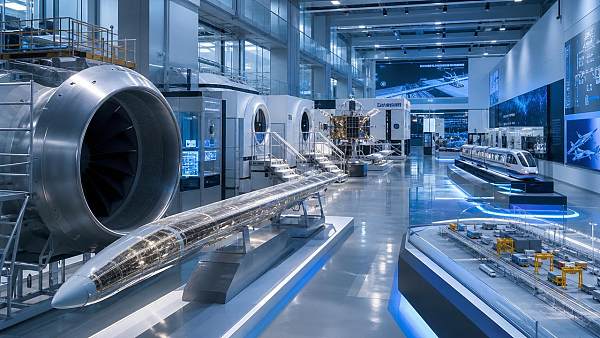
The strongest Aerospace R&D center locations usually combine 5 core assets: skilled engineering labor, specialized testing capacity, regulatory accessibility, supply chain depth, and cross-border program support. A location that is excellent in only 1 or 2 of these areas often underperforms during certification or industrialization.
For aerospace and advanced transportation programs, delays often emerge in the gap between concept maturity and system validation. A site with 2–4 nearby test facilities, subscale prototyping partners, and digital engineering vendors can shorten development cycles by weeks or even entire review phases.
Talent Density Is Only the First Filter
Many organizations begin with talent mapping, but engineering headcount alone is not enough. Business evaluators should separate general STEM availability from domain-specific expertise in composite structures, cryogenic systems, avionics software, rail signaling, autonomy stacks, and certification documentation.
A location may offer thousands of engineers, yet lack enough specialists in DO-178C software workflows, propulsion thermal testing, or high-speed rail systems integration. In practice, a smaller cluster with 200–500 highly relevant experts may create better program outcomes than a larger but less specialized metro area.
Key Talent Questions
- How many engineers have experience in regulated aerospace or mobility programs?
- Is there local access to systems safety, certification, and reliability specialists?
- Can the labor market support 3–5 years of expansion without severe wage inflation?
- Are universities producing graduates in propulsion, advanced materials, controls, and digital simulation?
Testing Infrastructure Often Determines Real Velocity
In evaluating Aerospace R&D center locations, testing access is often more decisive than office cost. Programs in next-generation airframes, eVTOL systems, satellite structures, and maglev subsystems require repeated test-validation loops. If teams must ship hardware across borders for every major test, cycle time can expand by 2–6 weeks per iteration.
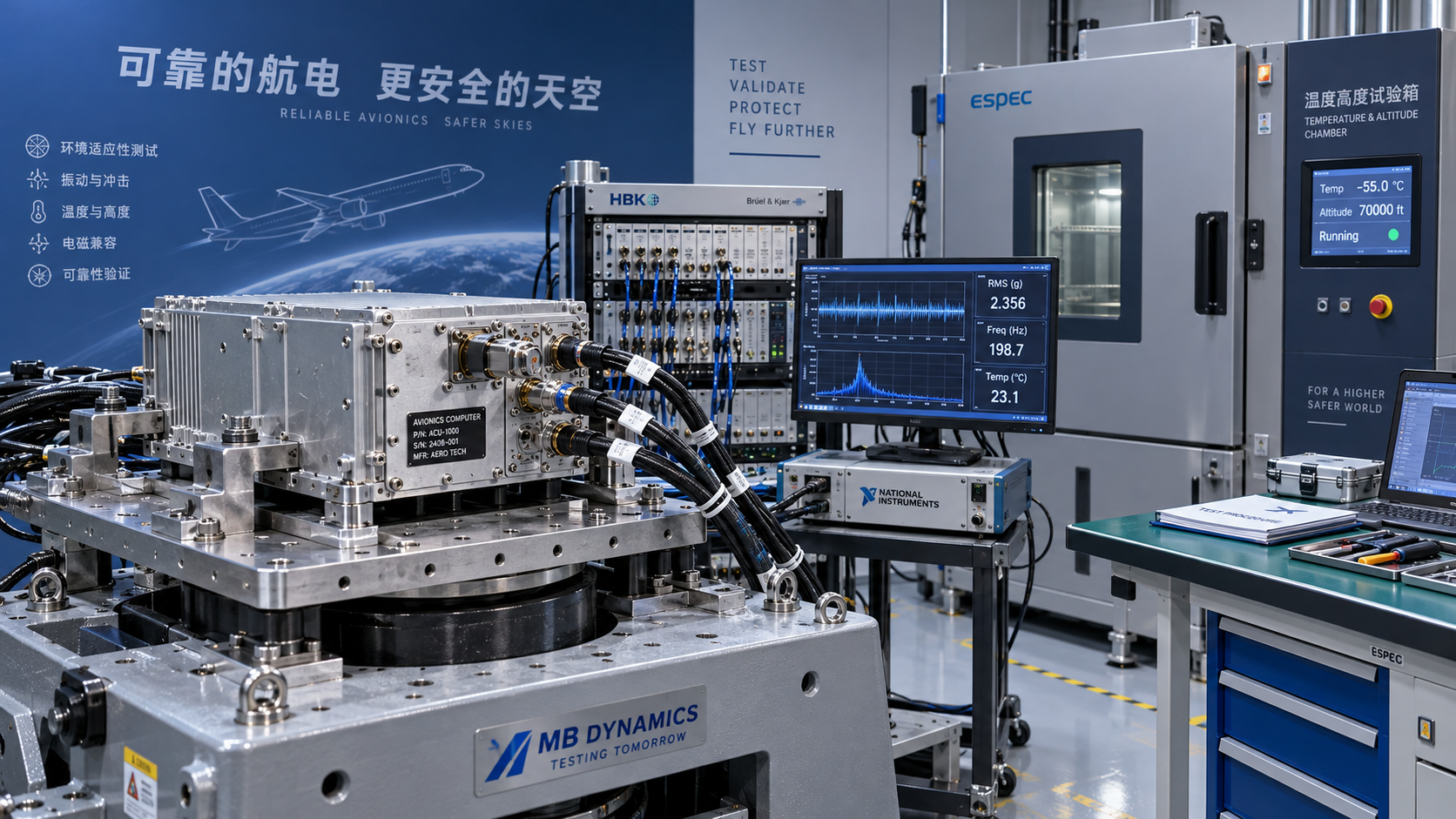
The most valuable clusters typically provide access within a 1–3 hour logistics radius to environmental test labs, structural fatigue rigs, EMI/EMC facilities, propulsion benches, rail dynamics test environments, or controlled flight-test corridors. That proximity reduces transport risk, scheduling uncertainty, and chain-of-custody complexity.
The table below outlines practical evaluation criteria that help business teams compare Aerospace R&D center locations beyond headline cost metrics.
The main takeaway is that competitive locations are ecosystem decisions, not single-variable decisions. A site with slightly higher labor cost can still outperform if it removes 3 major bottlenecks: test access, compliance coordination, and supplier lead-time volatility.
Comparing Regional Profiles for Future Mobility Programs
Different program types favor different regional strengths. Aerospace R&D center locations for satellite structures or cryogenic propulsion may not match the ideal locations for eVTOL systems, maglev control networks, or advanced commercial airframe integration. Business evaluators should therefore map site selection to program maturity, certification pathway, and supply chain dependence.
Mature Aerospace Clusters
Established aerospace regions typically offer strong regulatory literacy, dense supplier ecosystems, and access to experienced airworthiness professionals. These locations are often ideal for programs entering formal verification, hardware qualification, or customer acceptance readiness within 18–36 months.
Their trade-off is cost. Engineering salaries, facility leasing, and test scheduling can be 15%–40% higher than in emerging markets. However, these clusters may still deliver better total program economics if they reduce redesign loops or compliance delays.
Emerging Innovation Hubs
Emerging hubs often attract greenfield investment through lower operating costs, government incentives, and expanding technical universities. For concept development, digital engineering, simulation-heavy work, or subsystem prototyping, these locations can be highly efficient during the first 2–3 years of a program.
The risk is ecosystem immaturity. A lower-cost site may lack enough accredited labs, flight-test corridors, or specialized suppliers. Evaluators should verify whether the local environment supports at least 4 operational needs: rapid prototyping, secure data exchange, compliance review, and dependable logistics for sensitive hardware.
Cross-Industry Mobility Corridors
For organizations active in both aerospace and advanced transportation, cross-industry corridors can be strategically attractive. Regions that combine aviation engineering with rail electrification, autonomy software, power electronics, and composite manufacturing can support technology transfer across multiple business units.
This matters for G-AIT-aligned priorities such as zero-emission aviation, autonomous mobility, and extreme-environment logistics. Shared competency in sensors, lightweight materials, digital twins, and safety-critical control systems can lower duplicated investment across 2 or more innovation pillars.
The following table compares broad regional decision patterns often used in business evaluation frameworks for Aerospace R&D center locations.
This comparison shows why business evaluators should avoid one-size-fits-all decisions. The best Aerospace R&D center locations depend on whether the next milestone is concept maturity, validation readiness, certification entry, or industrial scale-up.
A Practical Evaluation Framework for Site Selection
A practical screening model should convert broad strategy into measurable criteria. Many organizations use a 4-step or 5-step site assessment process to compare Aerospace R&D center locations consistently across countries and technology segments.
Step 1: Define the Program Mission
Start by identifying what the site must actually do in the next 24 months. Is the mission advanced structures design, propulsion testing, software integration, subsystem validation, certification support, or multi-modal mobility systems benchmarking? The answer changes the location criteria immediately.
Step 2: Score Infrastructure Fit
Use a weighted matrix with 6–8 categories. Typical categories include engineering talent, lab access, supplier distance, regulatory support, digital infrastructure, logistics reliability, energy resilience, and expansion capacity. Weighting should reflect risk, not just cost.
Step 3: Validate Compliance and Security Exposure
For aerospace and advanced transportation programs, legal and procedural fit matters early. Export controls, data sovereignty, dual-use technology restrictions, and customer audit expectations can affect design collaboration from day 1. A lower-cost site may create hidden friction if secure data handling or controlled hardware movement becomes difficult.
Step 4: Test the Ecosystem Under Stress
Business evaluators should run scenario testing. Ask how the location performs if a key supplier slips by 6 weeks, if a prototype requires retest within 10 days, or if one certification package needs in-person regulator coordination. Resilient sites perform well under disruption, not only under normal conditions.
Recommended Due Diligence Checklist
- Map 12–18 month staffing needs by specialty, not by generic engineering titles.
- Verify access to at least 3 relevant validation or test resources.
- Review supplier travel time and logistics routing for critical hardware.
- Check certification, standards, and documentation support capacity.
- Assess security, export, and data-sharing constraints before final commitment.
Common Mistakes When Comparing Aerospace R&D Center Locations
A recurring mistake is over-weighting salary arbitrage. A site that saves 20% on labor but adds 3 extra validation loops, fragmented supplier coordination, and longer regulator engagement can become more expensive over a 2-year development cycle.
Another mistake is treating aerospace, space, rail, and UAM development as separate universes. In reality, future mobility programs increasingly share capabilities in simulation, autonomy, lightweight materials, battery systems, thermal management, and safety assurance. Integrated regions can create compounding strategic value.
Mistaking Office Capacity for R&D Readiness
A modern business park does not equal an effective R&D ecosystem. Evaluators should inspect the practical operating environment: test booking lead times, prototype transport constraints, power reliability, hazardous material handling, and availability of quality assurance partners.
Ignoring Expansion and Retention Risk
Some Aerospace R&D center locations look strong for an initial team of 30–50 engineers but struggle at 120 or 200. Talent saturation, supplier congestion, and rising lease pressure can affect long-term competitiveness. A good site should support phased growth without forcing a second relocation.
Underestimating Collaboration Friction
Cross-border programs require more than airport access. Time-zone overlap, language precision in technical documentation, secure model-sharing systems, and customer audit readiness all influence productivity. Even a 2-hour daily overlap gap can slow design review cycles for globally distributed teams.
How G-AIT-Oriented Organizations Can Build a Smarter Location Strategy
Organizations operating across advanced commercial aviation, space infrastructure, high-speed rail, UAM, and extreme-environment logistics need a portfolio approach. Instead of asking for one perfect location, they should define which sites support benchmark-driven innovation, which support certification execution, and which support scalable engineering operations.
This is where strategic benchmarking becomes valuable. A location should be measured against the actual demands of N-type composite fuselage development, cryogenic propulsion testing, 600 km/h rail signaling integration, or autonomous air-taxi control validation. Site strategy should follow technical reality, not generic expansion logic.
Build Around Capability Chains
The most effective Aerospace R&D center locations sit inside capability chains. That means engineering design, prototyping, testing, supplier support, compliance review, and customer-facing demonstration can all happen within a manageable operational network. The shorter and more reliable that chain, the stronger the business case.
Use Dual-Hub or Multi-Hub Models When Needed
In some cases, the best answer is not one site. A dual-hub model can place early-stage design and digital engineering in a cost-efficient location, while keeping qualification, regulator interaction, and high-value testing closer to a mature aerospace cluster. For complex portfolios, this model often balances cost, speed, and compliance more effectively.
The best Aerospace R&D center locations are those that strengthen innovation throughput, lower certification friction, and protect long-term supply chain resilience across multiple mobility segments. For business evaluators, the winning decision usually comes from ecosystem fit, measurable infrastructure access, and realistic scenario testing rather than headline cost alone.
If your team is assessing future-ready hubs for aerospace, space, rail, or urban air mobility programs, a structured benchmarking approach can reduce site-selection risk and improve investment confidence. Contact us to discuss your evaluation priorities, request a tailored assessment framework, or explore more location intelligence solutions for advanced mobility development.
Article Categories
SYSTEM_ALERT_URGENT
Q3 SYMPOSIUM ON ORBITAL DYNAMICS
Registration for the Orbital Aerospace technical committee is now open. Node access required.
Recent Articles
![]() Oct 27, 2026FAA Certifies Boeing 737 MAX 10 After Years of DelaysFAA Certifies Boeing 737 MAX 10 After Years of Delays
Oct 27, 2026FAA Certifies Boeing 737 MAX 10 After Years of DelaysFAA Certifies Boeing 737 MAX 10 After Years of Delays Oct 27, 2026Can an intermodal connectivity platform reduce rail handoff delays?Can an intermodal connectivity platform reduce rail handoff delays?
![]() Oct 26, 2026Chery Unveils Global Smart Mobility Strategy Targeting Robotaxis and eVTOLsChery Unveils Global Smart Mobility Strategy Targeting Robotaxis and eVTOLs
Oct 26, 2026Chery Unveils Global Smart Mobility Strategy Targeting Robotaxis and eVTOLsChery Unveils Global Smart Mobility Strategy Targeting Robotaxis and eVTOLs Oct 26, 2026How to evaluate avionics for helicopters used in IFR operationsHow to evaluate avionics for helicopters used in IFR operations
![]() Oct 25, 2026Ukraine’s Defence Minister Says SpaceX Satellite Services Restored After Speed RestrictionsUkraine’s Defence Minister Says SpaceX Satellite Services Restored After Speed Restrictions
Oct 25, 2026Ukraine’s Defence Minister Says SpaceX Satellite Services Restored After Speed RestrictionsUkraine’s Defence Minister Says SpaceX Satellite Services Restored After Speed Restrictions Oct 25, 2026How satellite infrastructure for IoT affects sensor reporting delaysHow satellite infrastructure for IoT affects sensor reporting delays
![]() Oct 24, 2026China Successfully Launches Yaogan 50-03 SatelliteChina Successfully Launches Yaogan 50-03 Satellite
Oct 24, 2026China Successfully Launches Yaogan 50-03 SatelliteChina Successfully Launches Yaogan 50-03 Satellite Oct 24, 2026How gradients affect traction power needs in high-speed rolling stockHow gradients affect traction power needs in high-speed rolling stock
![]() Oct 23, 2026FAA Proposes Checks on Nearly 2,000 Boeing 737NGs Over Loss-of-Control RiskFAA Proposes Checks on Nearly 2,000 Boeing 737NGs Over Loss-of-Control Risk
Oct 23, 2026FAA Proposes Checks on Nearly 2,000 Boeing 737NGs Over Loss-of-Control RiskFAA Proposes Checks on Nearly 2,000 Boeing 737NGs Over Loss-of-Control Risk Oct 23, 2026How fuel choice affects specific impulse in liquid oxygen propulsionHow fuel choice affects specific impulse in liquid oxygen propulsion
![]() Oct 22, 2026QuantumScape Plans 100 MWh Solid-State Battery Line Targeting Aerospace and Other MarketsQuantumScape Plans 100 MWh Solid-State Battery Line Targeting Aerospace and Other Markets
Oct 22, 2026QuantumScape Plans 100 MWh Solid-State Battery Line Targeting Aerospace and Other MarketsQuantumScape Plans 100 MWh Solid-State Battery Line Targeting Aerospace and Other Markets Oct 22, 2026How tank size limits hydrogen aircraft range on regional flightsHow tank size limits hydrogen aircraft range on regional flights
![]() Oct 21, 2026FAA Certifies Boeing 737-10, Clearing Regulatory Hurdle for DeliveriesFAA Certifies Boeing 737-10, Clearing Regulatory Hurdle for Deliveries
Oct 21, 2026FAA Certifies Boeing 737-10, Clearing Regulatory Hurdle for DeliveriesFAA Certifies Boeing 737-10, Clearing Regulatory Hurdle for Deliveries Oct 21, 2026How are electric vertical takeoff aircraft certified in the US?How are electric vertical takeoff aircraft certified in the US?
![]() Oct 20, 2026Ohio Department of Transportation Releases Three-Year Advanced Air Mobility Action PlanOhio Department of Transportation Releases Three-Year Advanced Air Mobility Action Plan
Oct 20, 2026Ohio Department of Transportation Releases Three-Year Advanced Air Mobility Action PlanOhio Department of Transportation Releases Three-Year Advanced Air Mobility Action Plan Oct 20, 2026How does magnetic flux density in tesla affect maglev lift force?How does magnetic flux density in tesla affect maglev lift force?
![]() Oct 19, 2026ZeroAvia Completes Key Ground Tests of ZA600 Hydrogen Fuel Cell PowertrainZeroAvia Completes Key Ground Tests of ZA600 Hydrogen Fuel Cell Powertrain
Oct 19, 2026ZeroAvia Completes Key Ground Tests of ZA600 Hydrogen Fuel Cell PowertrainZeroAvia Completes Key Ground Tests of ZA600 Hydrogen Fuel Cell Powertrain Oct 19, 2026How spacecraft integration affects advanced propulsion costsHow spacecraft integration affects advanced propulsion costs
 Oct 18, 2026How chilldown prevents cavitation in cryogenic engine systemsHow chilldown prevents cavitation in cryogenic engine systems
 Oct 17, 2026How explainability affects algorithmic trust in AI flight systemsHow explainability affects algorithmic trust in AI flight systems
 Oct 16, 2026How to evaluate transportation technology for Middle East heatHow to evaluate transportation technology for Middle East heat
 Oct 15, 2026How common-cause failures defeat redundancy logic in European avionicsHow common-cause failures defeat redundancy logic in European avionics
 Oct 14, 2026How DO-160 applies to aerospace technology testing for avionicsHow DO-160 applies to aerospace technology testing for avionics
 Oct 13, 2026How fuel price volatility shapes commercial aviation cost trendsHow fuel price volatility shapes commercial aviation cost trends
 Oct 12, 2026How to qualify aerospace manufacturing components for traceabilityHow to qualify aerospace manufacturing components for traceability
 Oct 11, 2026Which certification hurdles are slowing hydrogen aviation in Europe?Which certification hurdles are slowing hydrogen aviation in Europe?
 Oct 10, 2026What evidence should a magnetic gap stability supplier provide?What evidence should a magnetic gap stability supplier provide?
 Oct 09, 2026Which ISO standards matter when qualifying industrial technology suppliers?Which ISO standards matter when qualifying industrial technology suppliers?
 Oct 08, 2026When does reusability actually lower launch vehicle costs?When does reusability actually lower launch vehicle costs?
 Oct 07, 2026Where to find reliable product knowledge resources in the Middle EastWhere to find reliable product knowledge resources in the Middle East
 Oct 06, 2026What drives high-speed rail systems cost per kilometer?What drives high-speed rail systems cost per kilometer?
 Oct 05, 2026When does hydrogen propulsion for UAV extend mission range enough to justify it?When does hydrogen propulsion for UAV extend mission range enough to justify it?
 Oct 04, 2026How rail systems integration reduces commissioning delaysHow rail systems integration reduces commissioning delays
 Oct 03, 2026How to evaluate an advanced propulsion manufacturer for hydrogen systemsHow to evaluate an advanced propulsion manufacturer for hydrogen systems
 Oct 02, 2026How to qualify aircraft components for OEM production approvalHow to qualify aircraft components for OEM production approval