Cryogenic Propulsion for Satellite Infrastructure: Key Tradeoffs
Lead Author
Published
Views:
Cryogenic Propulsion systems for satellite infrastructure are reshaping how engineering teams evaluate orbital performance, storage efficiency, mission endurance, and lifecycle risk. For technical assessment professionals, the central question is not whether cryogenic architectures can deliver higher specific impulse, but whether those gains survive real-world constraints such as boil-off, insulation mass, launch integration, safety certification, and in-orbit operational complexity.
In practice, the key tradeoff is straightforward: cryogenic propulsion can unlock superior performance and cleaner combustion, yet it also introduces demanding thermal control requirements, tighter handling protocols, and more difficult system integration. For satellite infrastructure programs, the right decision depends on mission duration, orbital maneuver profile, refueling concept, ground support maturity, and tolerance for technical risk across the asset lifecycle.
What Technical Evaluators Need to Decide First
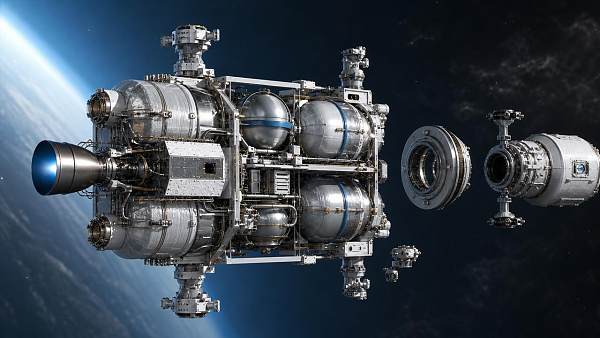
When assessing Cryogenic Propulsion systems for satellite infrastructure, the first task is to frame the evaluation around mission architecture rather than around propulsion efficiency alone. A system that appears attractive in engine performance data may become unfavorable once storage losses, dormant phases, and interface burden are included.
Technical assessment teams usually care most about five questions. Does cryogenic propulsion materially improve payload economics? Can propellant be stored long enough for the intended duty cycle? How much thermal management hardware is required? What are the failure consequences? And how difficult will qualification, operations, and sustainment become compared with storable alternatives?
These questions matter because satellite infrastructure is broad. It includes orbital transfer vehicles, servicing spacecraft, in-space logistics nodes, propellant depots, large platforms, and maneuverable support assets. The suitability of liquid oxygen, liquid hydrogen, or liquid methane changes dramatically across these roles. There is no universal best option.
For short-duration, high-energy missions, cryogenic propulsion often has a compelling value proposition. For long-duration parked spacecraft with infrequent burns, the same architecture may become burdensome unless zero-boil-off strategies, active cooling, or regular replenishment are available. Evaluators should therefore begin with the mission timeline before comparing propulsion cycles or thrust classes.
Why Cryogenic Propulsion Can Be Attractive for Satellite Infrastructure
The strongest argument for cryogenic systems is performance. Cryogenic propellants, especially hydrogen-oxygen combinations, offer high specific impulse, which can reduce total propellant mass or increase payload capacity. In satellite infrastructure, this translates into more flexible orbit raising, better deep-space transfer margins, or greater station support capability from the same launch envelope.
Another advantage is clean combustion behavior. Compared with some storable propellants, cryogenic combinations can reduce contamination risk for sensitive payload environments, docking interfaces, and servicing operations. This is especially relevant for modular orbital infrastructure where repeated proximity operations, transfer lines, and reusable propulsion assets demand cleaner long-term system behavior.
Cryogenic architectures also align with emerging in-space logistics concepts. If future infrastructure includes orbital depots, lunar resource utilization, or distributed transportation nodes, cryogenic propellants become more strategically interesting. Their role is not just in one spacecraft, but in enabling a scalable mobility network where refueling and transportation efficiency matter more than one-time launch simplicity.
For evaluators in advanced programs, methane-oxygen systems deserve special attention. They generally offer lower specific impulse than hydrogen-oxygen, but often provide better storage practicality, denser tanks, and simpler handling tradeoffs. In many satellite infrastructure cases, methane can represent a more balanced path between performance and operational realism.
Where the Tradeoffs Become Difficult
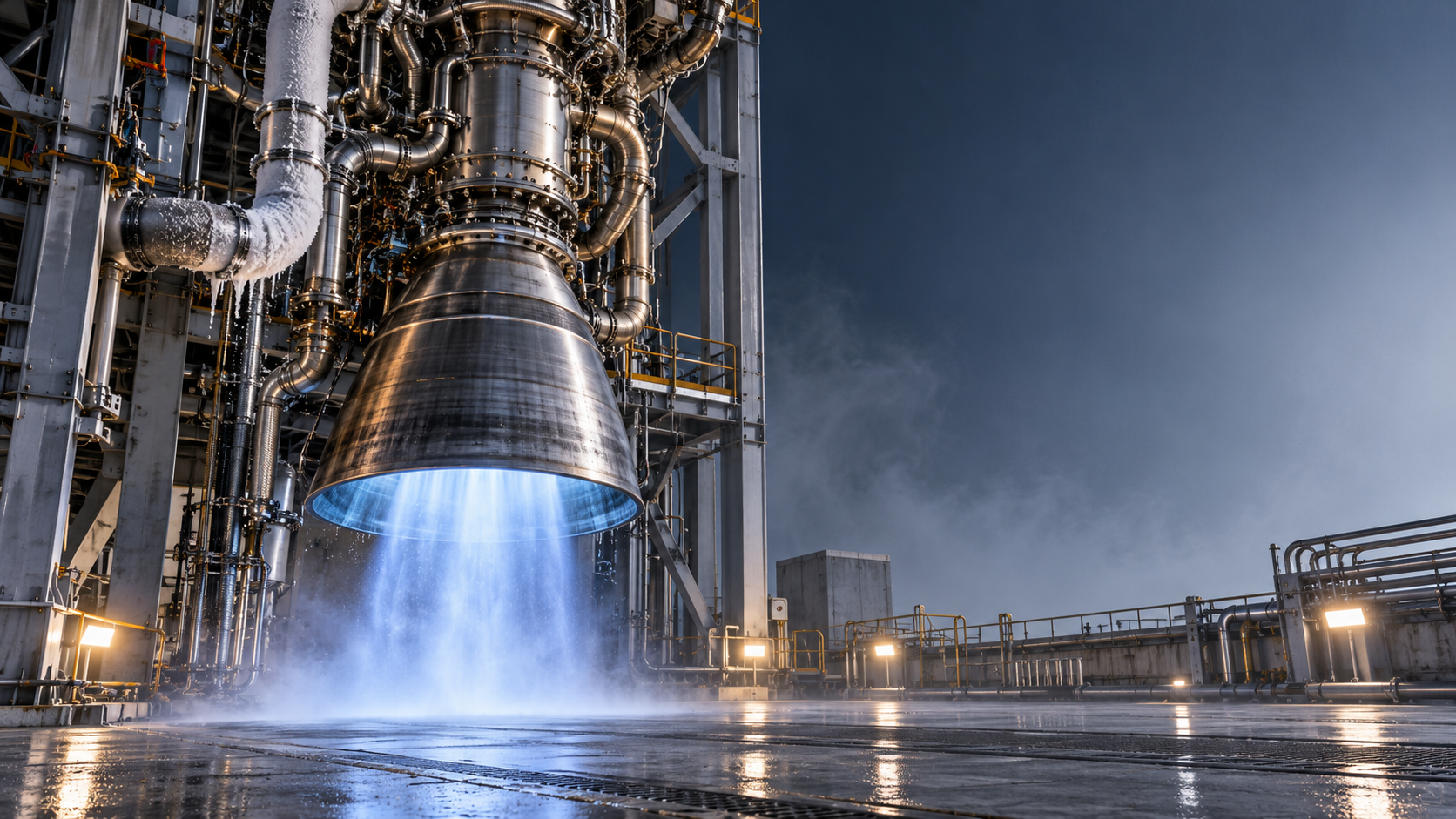
The main challenge is storage. Cryogenic fluids must remain at very low temperatures, and heat leakage drives vaporization over time. That means boil-off is not a secondary issue; it is a central architecture variable. Any assessment that ignores boil-off, venting, pressure control, or active refrigeration will overestimate practical mission performance.
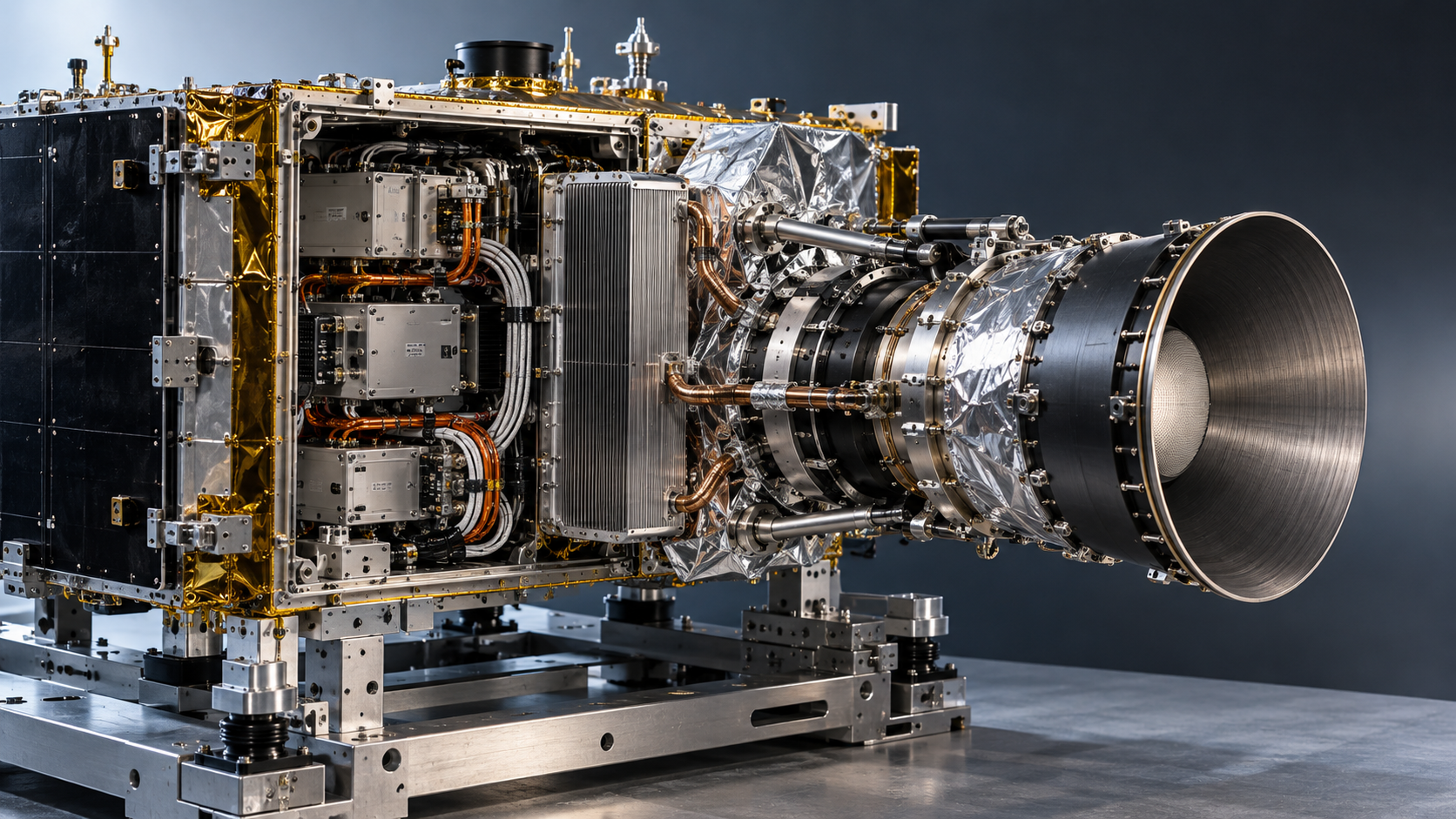
Insulation helps, but insulation adds mass, volume, integration complexity, and manufacturing cost. Multilayer insulation, vapor-cooled shields, sun shields, and low-conductivity supports can reduce losses, yet they also reshape spacecraft packaging and mechanical design. The evaluator must compare propulsion gains against the hardware required to preserve those gains.
Thermal management becomes even more difficult for spacecraft with long quiescent periods. A vehicle that performs one major transfer burn after months in orbit may need active cryocoolers, precise attitude management, or recurring propellant conditioning. These systems consume power, require redundancy, and create new fault modes that may offset the initial efficiency advantage.
Tank behavior in microgravity adds another layer of complexity. Propellant settling, stratification, slosh control, ullage management, and reliable acquisition during restart are all nontrivial. If the mission includes many starts, autonomous servicing, or docking-based refueling, fluid management technology becomes as important as engine performance data.
Safety is also more demanding. Extremely low temperatures can affect material properties, seal behavior, valve response, and line integrity. Leak detection, purge procedures, ignition control, and hazard isolation must be engineered carefully. For infrastructure assets expected to operate near other spacecraft or crewed systems, these concerns directly influence certification burden and operational acceptance.
How to Compare Cryogenic Options Against Storable and Electric Alternatives
Technical evaluators rarely assess cryogenic propulsion in isolation. The real decision is usually between cryogenic chemical systems, storable chemical propulsion, and electric propulsion. Each option serves a different part of the mission design space, and a fair comparison must extend beyond thrust or specific impulse tables.
Compared with storable propellants, cryogenic systems typically offer better performance but worse storage convenience. Storables simplify tank design, logistics, and long-duration readiness, which is why they remain attractive for many satellites requiring dependable maneuvering over years. However, toxicity, handling burden, contamination concerns, and lower performance can make them less appealing for future infrastructure models.
Compared with electric propulsion, cryogenic chemical systems deliver much higher thrust, making them valuable for rapid orbit changes, responsive logistics, and missions with strict time constraints. Electric propulsion is highly efficient in propellant use, but it demands long burn durations and substantial power. If schedule, collision avoidance, or infrastructure responsiveness matter, chemical cryogenic systems may be better aligned.
In many realistic programs, the answer is hybridization. A satellite infrastructure platform may use electric propulsion for efficient stationkeeping and cryogenic propulsion for high-thrust transfer, debris avoidance, or tug operations. Evaluators should therefore assess whether cryogenic propulsion is a full replacement or a complementary layer within a multi-mode mobility strategy.
Mission Profiles Where Cryogenic Systems Make the Most Sense
Cryogenic propulsion tends to make the strongest case in missions with high delta-v demand over a relatively constrained timeline. Examples include orbital transfer stages, responsive servicing vehicles, cislunar cargo movement, and infrastructure tugs that burn frequently enough to justify the thermal support system. In these cases, propulsion efficiency can outweigh storage penalties.
It also fits architectures where propellant turnover is rapid. If a depot, transfer stage, or servicing platform is refueled often and does not remain dormant for long periods, boil-off becomes more manageable. The same is true when active cooling is already justified by mission economics or when the broader infrastructure concept depends on cryogenic propellant distribution.
By contrast, cryogenic systems are less attractive for small satellites with very limited thermal budgets, long unattended lifetimes, and low maneuver demand. In such cases, simple storable systems or electric propulsion usually provide better lifecycle practicality. The key is not whether cryogenic propulsion is advanced, but whether the mission can operationally support it.
Large modular platforms occupy a middle ground. If they have abundant power, thermal control capacity, and servicing access, cryogenic propulsion can become viable for periodic repositioning or logistics support. If they are expected to remain passive for years without replenishment, the same system may become difficult to justify.
The Evaluation Framework Technical Teams Should Use
For a credible assessment, start with mission duty cycle. Map burn frequency, thrust requirements, total delta-v, dormant periods, expected storage duration, and contingency maneuvers. This reveals whether cryogenic performance benefits are likely to be preserved or eroded by thermal losses and support hardware.
Next, model system-level mass rather than propellant mass alone. Include tanks, insulation, chilldown hardware, pressurization, valves, feedlines, sensors, vent systems, and any cryocoolers or power conditioning equipment. Many evaluations fail because they compare engine efficiency to wet mass without accounting for the surrounding architecture.
Then assess operations. Ground fueling procedures, launch site compatibility, transportation constraints, countdown hold sensitivity, and pad turnaround all affect program viability. For in-space infrastructure, add transfer protocols, docking interfaces, fault recovery procedures, and propellant quality assurance during repeated use cycles.
Reliability analysis should address both classic propulsion risks and cryogenic-specific failure modes. These include thermal cycling fatigue, insulation degradation, valve freezing, line blockage, pressure excursions, sensor drift at low temperatures, and boil-off induced mission margin loss. Failure tolerance matters more than peak performance in critical infrastructure programs.
Finally, incorporate compliance and certification readiness. Programs operating across commercial, civil, and defense frameworks must consider safety case development, materials qualification, hazard controls, contamination standards, and interoperability expectations. A propulsion concept that is technically excellent but difficult to certify may still be the wrong choice for deployment-scale infrastructure.
Common Mistakes in Cryogenic Propulsion Assessments
One common mistake is assuming that a high specific impulse automatically produces a better mission outcome. In satellite infrastructure, stored energy is useful only if the propellant remains usable when needed. Losses from boil-off, settling operations, and thermal conditioning can materially reduce that advantage.
Another mistake is evaluating the engine without evaluating the logistics chain. Cryogenic propulsion is not just a tank and thruster decision. It affects integration flow, launch handling, safety processes, test infrastructure, and potentially the architecture of the wider orbital support network. Mature assessment must capture these dependencies early.
Teams also underestimate operational complexity. A propulsion system that works in controlled demonstrations may still impose heavy burdens on mission planning, autonomous controls, maintenance logic, or contingency procedures. Technical evaluators should ask whether the organization can support the system, not just whether the system can be built.
A final error is ignoring the evolution path. Some programs do not need full cryogenic capability on day one. A staged approach using methane first, hybrid architectures second, and depot-enabled scaling later may be more realistic than a direct leap into the most performance-optimized but operationally fragile configuration.
Bottom Line for Technical Assessment Professionals
Cryogenic Propulsion systems for satellite infrastructure are not a universal answer, but they are strategically important where high-energy maneuvering, reusable logistics, and future orbital transportation networks are priorities. Their value grows when missions are active, refuelable, thermally supported, and integrated into a broader infrastructure concept.
The decisive tradeoff is between performance potential and storage-operational burden. If your mission can tolerate or solve the thermal, safety, and integration challenges, cryogenic propulsion may deliver substantial architectural advantage. If not, the apparent efficiency benefit can disappear once lifecycle realities are included.
For technical evaluators, the best decision framework is mission-first, system-level, and risk-aware. Focus less on headline engine metrics and more on how the propulsion choice performs across storage duration, thermal control, safety compliance, restart reliability, and operational scalability. That is where real program value is determined.
In short, cryogenic propulsion should be selected not because it is advanced, but because it is appropriate. For next-generation satellite infrastructure, the winners will be the programs that match propulsion physics with disciplined engineering, realistic logistics, and certifiable operational design.
Article Categories
SYSTEM_ALERT_URGENT
Q3 SYMPOSIUM ON ORBITAL DYNAMICS
Registration for the Orbital Aerospace technical committee is now open. Node access required.
Recent Articles
![]() Oct 27, 2026FAA Certifies Boeing 737 MAX 10 After Years of DelaysFAA Certifies Boeing 737 MAX 10 After Years of Delays
Oct 27, 2026FAA Certifies Boeing 737 MAX 10 After Years of DelaysFAA Certifies Boeing 737 MAX 10 After Years of Delays Oct 27, 2026Can an intermodal connectivity platform reduce rail handoff delays?Can an intermodal connectivity platform reduce rail handoff delays?
![]() Oct 26, 2026Chery Unveils Global Smart Mobility Strategy Targeting Robotaxis and eVTOLsChery Unveils Global Smart Mobility Strategy Targeting Robotaxis and eVTOLs
Oct 26, 2026Chery Unveils Global Smart Mobility Strategy Targeting Robotaxis and eVTOLsChery Unveils Global Smart Mobility Strategy Targeting Robotaxis and eVTOLs Oct 26, 2026How to evaluate avionics for helicopters used in IFR operationsHow to evaluate avionics for helicopters used in IFR operations
![]() Oct 25, 2026Ukraine’s Defence Minister Says SpaceX Satellite Services Restored After Speed RestrictionsUkraine’s Defence Minister Says SpaceX Satellite Services Restored After Speed Restrictions
Oct 25, 2026Ukraine’s Defence Minister Says SpaceX Satellite Services Restored After Speed RestrictionsUkraine’s Defence Minister Says SpaceX Satellite Services Restored After Speed Restrictions Oct 25, 2026How satellite infrastructure for IoT affects sensor reporting delaysHow satellite infrastructure for IoT affects sensor reporting delays
![]() Oct 24, 2026China Successfully Launches Yaogan 50-03 SatelliteChina Successfully Launches Yaogan 50-03 Satellite
Oct 24, 2026China Successfully Launches Yaogan 50-03 SatelliteChina Successfully Launches Yaogan 50-03 Satellite Oct 24, 2026How gradients affect traction power needs in high-speed rolling stockHow gradients affect traction power needs in high-speed rolling stock
![]() Oct 23, 2026FAA Proposes Checks on Nearly 2,000 Boeing 737NGs Over Loss-of-Control RiskFAA Proposes Checks on Nearly 2,000 Boeing 737NGs Over Loss-of-Control Risk
Oct 23, 2026FAA Proposes Checks on Nearly 2,000 Boeing 737NGs Over Loss-of-Control RiskFAA Proposes Checks on Nearly 2,000 Boeing 737NGs Over Loss-of-Control Risk Oct 23, 2026How fuel choice affects specific impulse in liquid oxygen propulsionHow fuel choice affects specific impulse in liquid oxygen propulsion
![]() Oct 22, 2026QuantumScape Plans 100 MWh Solid-State Battery Line Targeting Aerospace and Other MarketsQuantumScape Plans 100 MWh Solid-State Battery Line Targeting Aerospace and Other Markets
Oct 22, 2026QuantumScape Plans 100 MWh Solid-State Battery Line Targeting Aerospace and Other MarketsQuantumScape Plans 100 MWh Solid-State Battery Line Targeting Aerospace and Other Markets Oct 22, 2026How tank size limits hydrogen aircraft range on regional flightsHow tank size limits hydrogen aircraft range on regional flights
![]() Oct 21, 2026FAA Certifies Boeing 737-10, Clearing Regulatory Hurdle for DeliveriesFAA Certifies Boeing 737-10, Clearing Regulatory Hurdle for Deliveries
Oct 21, 2026FAA Certifies Boeing 737-10, Clearing Regulatory Hurdle for DeliveriesFAA Certifies Boeing 737-10, Clearing Regulatory Hurdle for Deliveries Oct 21, 2026How are electric vertical takeoff aircraft certified in the US?How are electric vertical takeoff aircraft certified in the US?
![]() Oct 20, 2026Ohio Department of Transportation Releases Three-Year Advanced Air Mobility Action PlanOhio Department of Transportation Releases Three-Year Advanced Air Mobility Action Plan
Oct 20, 2026Ohio Department of Transportation Releases Three-Year Advanced Air Mobility Action PlanOhio Department of Transportation Releases Three-Year Advanced Air Mobility Action Plan Oct 20, 2026How does magnetic flux density in tesla affect maglev lift force?How does magnetic flux density in tesla affect maglev lift force?
![]() Oct 19, 2026ZeroAvia Completes Key Ground Tests of ZA600 Hydrogen Fuel Cell PowertrainZeroAvia Completes Key Ground Tests of ZA600 Hydrogen Fuel Cell Powertrain
Oct 19, 2026ZeroAvia Completes Key Ground Tests of ZA600 Hydrogen Fuel Cell PowertrainZeroAvia Completes Key Ground Tests of ZA600 Hydrogen Fuel Cell Powertrain Oct 19, 2026How spacecraft integration affects advanced propulsion costsHow spacecraft integration affects advanced propulsion costs
 Oct 18, 2026How chilldown prevents cavitation in cryogenic engine systemsHow chilldown prevents cavitation in cryogenic engine systems
 Oct 17, 2026How explainability affects algorithmic trust in AI flight systemsHow explainability affects algorithmic trust in AI flight systems
 Oct 16, 2026How to evaluate transportation technology for Middle East heatHow to evaluate transportation technology for Middle East heat
 Oct 15, 2026How common-cause failures defeat redundancy logic in European avionicsHow common-cause failures defeat redundancy logic in European avionics
 Oct 14, 2026How DO-160 applies to aerospace technology testing for avionicsHow DO-160 applies to aerospace technology testing for avionics
 Oct 13, 2026How fuel price volatility shapes commercial aviation cost trendsHow fuel price volatility shapes commercial aviation cost trends
 Oct 12, 2026How to qualify aerospace manufacturing components for traceabilityHow to qualify aerospace manufacturing components for traceability
 Oct 11, 2026Which certification hurdles are slowing hydrogen aviation in Europe?Which certification hurdles are slowing hydrogen aviation in Europe?
 Oct 10, 2026What evidence should a magnetic gap stability supplier provide?What evidence should a magnetic gap stability supplier provide?
 Oct 09, 2026Which ISO standards matter when qualifying industrial technology suppliers?Which ISO standards matter when qualifying industrial technology suppliers?
 Oct 08, 2026When does reusability actually lower launch vehicle costs?When does reusability actually lower launch vehicle costs?
 Oct 07, 2026Where to find reliable product knowledge resources in the Middle EastWhere to find reliable product knowledge resources in the Middle East
 Oct 06, 2026What drives high-speed rail systems cost per kilometer?What drives high-speed rail systems cost per kilometer?
 Oct 05, 2026When does hydrogen propulsion for UAV extend mission range enough to justify it?When does hydrogen propulsion for UAV extend mission range enough to justify it?
 Oct 04, 2026How rail systems integration reduces commissioning delaysHow rail systems integration reduces commissioning delays
 Oct 03, 2026How to evaluate an advanced propulsion manufacturer for hydrogen systemsHow to evaluate an advanced propulsion manufacturer for hydrogen systems
 Oct 02, 2026How to qualify aircraft components for OEM production approvalHow to qualify aircraft components for OEM production approval