Next-Gen Airframe Safety Standards: What Changed
Lead Author
Published
Views:
Aviation Safety Standards for next-gen airframes are changing faster than many compliance systems can adapt. New composites, digital controls, autonomous functions, and sustainability targets now influence certification from concept to service.
For technical benchmarking, inspection planning, and safety governance, the key question is not whether rules changed. It is how those changes affect design evidence, manufacturing controls, maintenance data, and audit readiness.
What changed in Aviation Safety Standards for next-gen airframes?

The biggest shift is scope. Aviation Safety Standards for next-gen airframes now assess the full lifecycle, not only structural strength and flight performance.
FAA and EASA increasingly expect proof across materials behavior, software assurance, human factors, cybersecurity interfaces, environmental resilience, and continuing airworthiness data.
Traditional metal airframe certification relied heavily on known fatigue histories. Next-generation structures use advanced composites, hybrid joints, additive parts, and embedded sensors.
That means evidence must cover damage tolerance, repairability, manufacturing variability, thermal response, lightning protection, and long-term degradation under real operating conditions.
Another major change is digital traceability. Aviation Safety Standards for next-gen airframes increasingly require connected records between design assumptions, production data, inspection results, and in-service events.
In practical terms, a compliance file now needs stronger linkage. Test coupons, process qualification, digital twins, software revisions, and sensor-based maintenance evidence must align.
Key areas that expanded
- Composite structure validation beyond static strength
- System safety interaction between airframe and autonomy
- Cyber-physical reliability for connected aircraft systems
- Production conformity under complex supplier networks
- Data continuity for maintenance and service-life extension
Why do next-gen materials and architectures create new compliance demands?
Aviation Safety Standards for next-gen airframes changed because the airframe itself changed. Material systems now behave differently under impact, moisture, heat cycles, and hidden internal damage.
Composite laminates may absorb damage without obvious surface signs. Bonded joints can challenge inspection routines. Mixed-material assemblies also raise galvanic, thermal, and load-transfer questions.
Blended wing bodies, distributed propulsion layouts, and lightweight integrated structures further complicate legacy assumptions. Loads are routed differently, and failure modes can become less intuitive.
As a result, standards now emphasize validation under realistic scenarios. Coupon testing alone is insufficient without subcomponent, full-scale, and service-representative verification.
This matters across the broader mobility sector too. Rail, space, and urban air mobility programs face similar pressure to prove safety under novel architecture conditions.
What evidence is commonly expected?
- Material allowables based on representative processes
- Environmental exposure and aging performance data
- Impact, fatigue, and residual strength assessments
- Inspection method capability for hidden defects
- Repair validation with clear return-to-service criteria
How are FAA and EASA expectations different from older certification thinking?
Older certification models often separated structure, systems, and operations more clearly. Current Aviation Safety Standards for next-gen airframes increasingly treat them as an integrated risk picture.
FAA and EASA both focus on safety intent, but both now expect deeper coordination between engineering evidence, process control, and post-delivery monitoring.
The change is especially visible in means of compliance. Applicants must justify simulation credibility, data assumptions, model correlation, and software-supported decision paths more rigorously.
For advanced transportation programs, this signals a wider industry lesson. Regulators increasingly trust digital methods only when verification pathways are transparent and repeatable.
Older versus newer compliance emphasis
Which risks are most often underestimated during implementation?
A common mistake is assuming compliance risk begins at the certification gate. In reality, Aviation Safety Standards for next-gen airframes are often weakened by early process gaps.
One gap is inconsistent material pedigree. If supplier process windows differ, structural performance may vary enough to challenge approved allowables.
Another issue is inspection overconfidence. Conventional non-destructive inspection methods may miss defects in thick composites, bonded structures, or complex additively manufactured features.
Digital evidence also creates risk. If simulation models, production records, and sensor outputs do not share consistent baselines, the compliance narrative becomes fragile.
Program teams also underestimate change control. Small design revisions can affect flutter margins, lightning performance, repair instructions, or maintenance intervals.
High-risk misunderstandings
- Assuming composite repairs are interchangeable across platforms
- Treating digital twin outputs as self-validating evidence
- Using legacy inspection intervals on new structures
- Separating software assurance from airframe safety cases
- Ignoring supplier process drift after initial qualification
How should organizations prepare for Aviation Safety Standards for next-gen airframes?
Preparation should start with a gap review across design, quality, testing, supplier management, and continuing airworthiness. Compliance is now cross-functional by default.
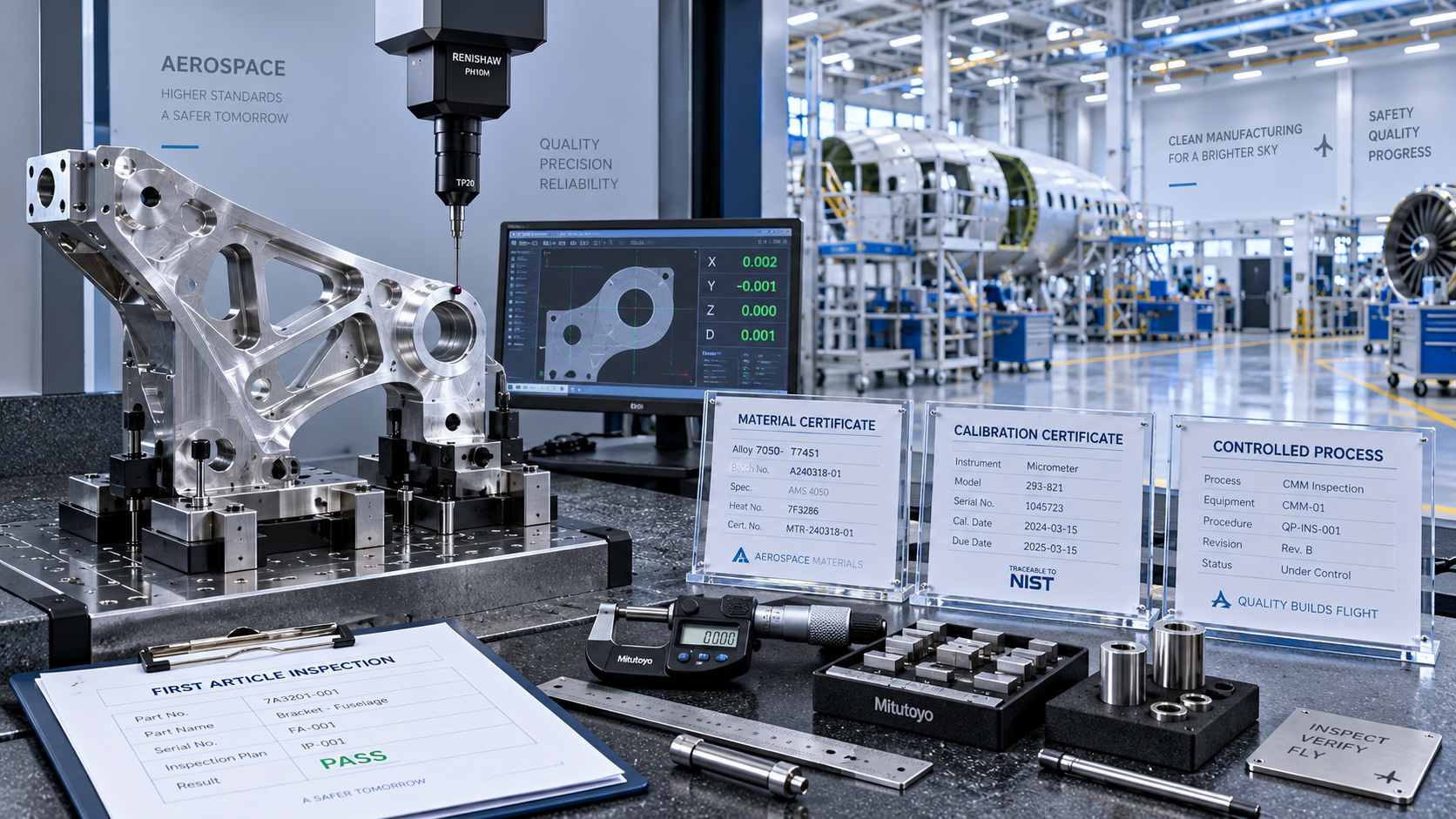
First, map every critical safety claim to evidence sources. Include material data, test correlation, production limits, software versions, and maintenance assumptions.
Second, strengthen process qualification. For Aviation Safety Standards for next-gen airframes, repeatability often matters as much as peak performance.
Third, upgrade inspection strategy. Use validated non-destructive evaluation methods, technician qualification controls, and defect acceptance criteria matched to the new structure type.
Fourth, create a live compliance thread. Engineering changes, supplier deviations, repair findings, and in-service anomalies should feed one governed dataset.
This is where institutions such as G-AIT add value. Benchmarking against FAA, EASA, ISO, and adjacent mobility sectors helps identify hidden gaps before audits expose them.
Recommended preparation checklist
What do these changes mean for cost, timelines, and decision quality?
Stricter Aviation Safety Standards for next-gen airframes may increase early program effort, but they usually reduce downstream rework, grounding risk, and fragmented corrective action costs.
Programs that delay evidence planning often pay more later. Retesting, document reconstruction, supplier escapes, and maintenance instruction revisions can extend schedules significantly.
The better approach is front-loaded discipline. Clear safety assumptions, measurable process controls, and benchmarked compliance frameworks improve decision quality across the program lifecycle.
In a broader industry context, this supports resilient mobility systems. Lessons from aviation now influence high-speed rail, UAM, and extreme-environment transportation safety architecture.
Quick FAQ summary
Aviation Safety Standards for next-gen airframes are no longer a narrow certification topic. They shape design choices, supplier governance, inspection methods, and long-term operational integrity.
The most effective next step is a structured benchmark review against current FAA and EASA expectations. That creates a practical roadmap for safer innovation, stronger audits, and faster compliance maturity.
Article Categories
SYSTEM_ALERT_URGENT
Q3 SYMPOSIUM ON ORBITAL DYNAMICS
Registration for the Orbital Aerospace technical committee is now open. Node access required.
Recent Articles
![]() Oct 27, 2026FAA Certifies Boeing 737 MAX 10 After Years of DelaysFAA Certifies Boeing 737 MAX 10 After Years of Delays
Oct 27, 2026FAA Certifies Boeing 737 MAX 10 After Years of DelaysFAA Certifies Boeing 737 MAX 10 After Years of Delays Oct 27, 2026Can an intermodal connectivity platform reduce rail handoff delays?Can an intermodal connectivity platform reduce rail handoff delays?
![]() Oct 26, 2026Chery Unveils Global Smart Mobility Strategy Targeting Robotaxis and eVTOLsChery Unveils Global Smart Mobility Strategy Targeting Robotaxis and eVTOLs
Oct 26, 2026Chery Unveils Global Smart Mobility Strategy Targeting Robotaxis and eVTOLsChery Unveils Global Smart Mobility Strategy Targeting Robotaxis and eVTOLs Oct 26, 2026How to evaluate avionics for helicopters used in IFR operationsHow to evaluate avionics for helicopters used in IFR operations
![]() Oct 25, 2026Ukraine’s Defence Minister Says SpaceX Satellite Services Restored After Speed RestrictionsUkraine’s Defence Minister Says SpaceX Satellite Services Restored After Speed Restrictions
Oct 25, 2026Ukraine’s Defence Minister Says SpaceX Satellite Services Restored After Speed RestrictionsUkraine’s Defence Minister Says SpaceX Satellite Services Restored After Speed Restrictions Oct 25, 2026How satellite infrastructure for IoT affects sensor reporting delaysHow satellite infrastructure for IoT affects sensor reporting delays
![]() Oct 24, 2026China Successfully Launches Yaogan 50-03 SatelliteChina Successfully Launches Yaogan 50-03 Satellite
Oct 24, 2026China Successfully Launches Yaogan 50-03 SatelliteChina Successfully Launches Yaogan 50-03 Satellite Oct 24, 2026How gradients affect traction power needs in high-speed rolling stockHow gradients affect traction power needs in high-speed rolling stock
![]() Oct 23, 2026FAA Proposes Checks on Nearly 2,000 Boeing 737NGs Over Loss-of-Control RiskFAA Proposes Checks on Nearly 2,000 Boeing 737NGs Over Loss-of-Control Risk
Oct 23, 2026FAA Proposes Checks on Nearly 2,000 Boeing 737NGs Over Loss-of-Control RiskFAA Proposes Checks on Nearly 2,000 Boeing 737NGs Over Loss-of-Control Risk Oct 23, 2026How fuel choice affects specific impulse in liquid oxygen propulsionHow fuel choice affects specific impulse in liquid oxygen propulsion
![]() Oct 22, 2026QuantumScape Plans 100 MWh Solid-State Battery Line Targeting Aerospace and Other MarketsQuantumScape Plans 100 MWh Solid-State Battery Line Targeting Aerospace and Other Markets
Oct 22, 2026QuantumScape Plans 100 MWh Solid-State Battery Line Targeting Aerospace and Other MarketsQuantumScape Plans 100 MWh Solid-State Battery Line Targeting Aerospace and Other Markets Oct 22, 2026How tank size limits hydrogen aircraft range on regional flightsHow tank size limits hydrogen aircraft range on regional flights
![]() Oct 21, 2026FAA Certifies Boeing 737-10, Clearing Regulatory Hurdle for DeliveriesFAA Certifies Boeing 737-10, Clearing Regulatory Hurdle for Deliveries
Oct 21, 2026FAA Certifies Boeing 737-10, Clearing Regulatory Hurdle for DeliveriesFAA Certifies Boeing 737-10, Clearing Regulatory Hurdle for Deliveries Oct 21, 2026How are electric vertical takeoff aircraft certified in the US?How are electric vertical takeoff aircraft certified in the US?
![]() Oct 20, 2026Ohio Department of Transportation Releases Three-Year Advanced Air Mobility Action PlanOhio Department of Transportation Releases Three-Year Advanced Air Mobility Action Plan
Oct 20, 2026Ohio Department of Transportation Releases Three-Year Advanced Air Mobility Action PlanOhio Department of Transportation Releases Three-Year Advanced Air Mobility Action Plan Oct 20, 2026How does magnetic flux density in tesla affect maglev lift force?How does magnetic flux density in tesla affect maglev lift force?
![]() Oct 19, 2026ZeroAvia Completes Key Ground Tests of ZA600 Hydrogen Fuel Cell PowertrainZeroAvia Completes Key Ground Tests of ZA600 Hydrogen Fuel Cell Powertrain
Oct 19, 2026ZeroAvia Completes Key Ground Tests of ZA600 Hydrogen Fuel Cell PowertrainZeroAvia Completes Key Ground Tests of ZA600 Hydrogen Fuel Cell Powertrain Oct 19, 2026How spacecraft integration affects advanced propulsion costsHow spacecraft integration affects advanced propulsion costs
 Oct 18, 2026How chilldown prevents cavitation in cryogenic engine systemsHow chilldown prevents cavitation in cryogenic engine systems
 Oct 17, 2026How explainability affects algorithmic trust in AI flight systemsHow explainability affects algorithmic trust in AI flight systems
 Oct 16, 2026How to evaluate transportation technology for Middle East heatHow to evaluate transportation technology for Middle East heat
 Oct 15, 2026How common-cause failures defeat redundancy logic in European avionicsHow common-cause failures defeat redundancy logic in European avionics
 Oct 14, 2026How DO-160 applies to aerospace technology testing for avionicsHow DO-160 applies to aerospace technology testing for avionics
 Oct 13, 2026How fuel price volatility shapes commercial aviation cost trendsHow fuel price volatility shapes commercial aviation cost trends
 Oct 12, 2026How to qualify aerospace manufacturing components for traceabilityHow to qualify aerospace manufacturing components for traceability
 Oct 11, 2026Which certification hurdles are slowing hydrogen aviation in Europe?Which certification hurdles are slowing hydrogen aviation in Europe?
 Oct 10, 2026What evidence should a magnetic gap stability supplier provide?What evidence should a magnetic gap stability supplier provide?
 Oct 09, 2026Which ISO standards matter when qualifying industrial technology suppliers?Which ISO standards matter when qualifying industrial technology suppliers?
 Oct 08, 2026When does reusability actually lower launch vehicle costs?When does reusability actually lower launch vehicle costs?
 Oct 07, 2026Where to find reliable product knowledge resources in the Middle EastWhere to find reliable product knowledge resources in the Middle East
 Oct 06, 2026What drives high-speed rail systems cost per kilometer?What drives high-speed rail systems cost per kilometer?
 Oct 05, 2026When does hydrogen propulsion for UAV extend mission range enough to justify it?When does hydrogen propulsion for UAV extend mission range enough to justify it?
 Oct 04, 2026How rail systems integration reduces commissioning delaysHow rail systems integration reduces commissioning delays
 Oct 03, 2026How to evaluate an advanced propulsion manufacturer for hydrogen systemsHow to evaluate an advanced propulsion manufacturer for hydrogen systems
 Oct 02, 2026How to qualify aircraft components for OEM production approvalHow to qualify aircraft components for OEM production approval