Do cryogenic propulsion systems suit satellite infrastructure?
Lead Author
Published
Views:
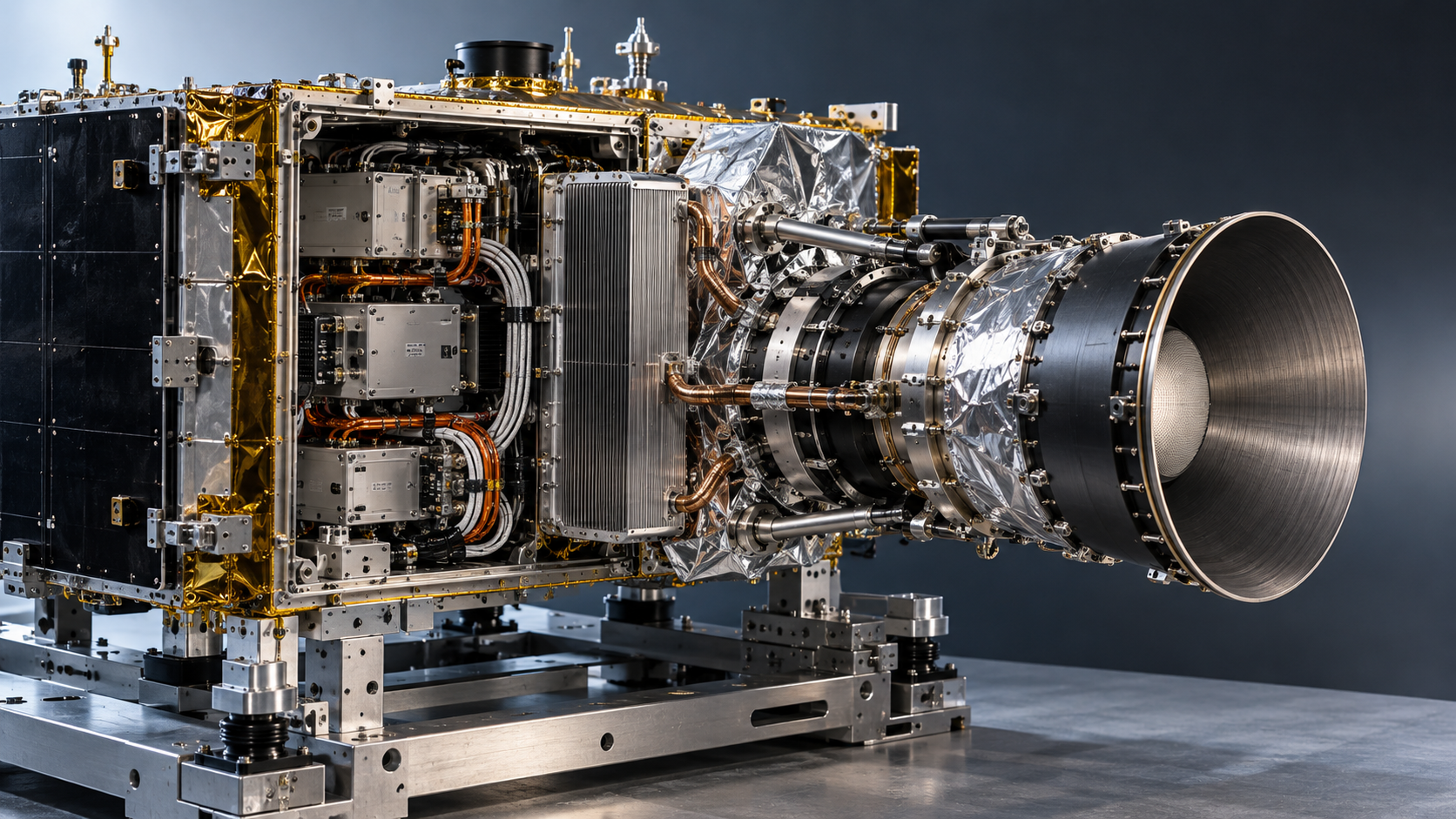
For a satellite operator, cryogenic propulsion is rarely a simple “higher performance” decision. It is a decision about how much operational complexity the program can absorb in exchange for greater mission energy, payload flexibility, or logistics capability. Cryogenic Propulsion systems for satellite infrastructure are therefore attracting serious attention in architectures that extend beyond a single spacecraft: orbital transfer vehicles, propellant depots, servicing platforms, lunar logistics chains, and high-energy missions all stand to benefit. Yet the same technology can be a poor fit for a conventional satellite designed to remain parked in orbit for years with minimal intervention.
The central question is not whether liquid oxygen, liquid hydrogen, liquid methane, or other low-temperature propellants can deliver strong specific impulse. They can. The more useful question for a technical evaluator is whether the full infrastructure stack—storage, insulation, boil-off management, transfer interfaces, fault detection, ground processing, and in-orbit operations—can preserve that performance until the mission needs it.
This distinction matters. In satellite infrastructure, a propulsion choice propagates into spacecraft layout, launch-site procedures, thermal design, operations staffing, insurance assumptions, and the eventual qualification roadmap. A subsystem that looks compelling in a trajectory model may become difficult to justify when its cryogenic lifetime and servicing needs are examined under real orbital conditions.
Where Cryogenic Propulsion Changes the Mission Equation
Cryogenic propellants are stored at temperatures far below ambient conditions. Hydrogen is particularly demanding; oxygen and methane present their own storage, handling, and material-compatibility constraints. In return, cryogenic chemical propulsion can provide substantially greater energy efficiency than many storable bipropellant systems, especially where large velocity changes are required.
That advantage is most meaningful when the vehicle has a job to do beyond routine station keeping. Consider a transfer stage moving payloads from low Earth orbit to geostationary orbit, cislunar space, or a high-energy escape trajectory. Every reduction in propellant mass can create room for more payload, additional shielding, reusable hardware, or mission reserve. In a logistics architecture built around repeated transfers, those gains can compound across missions.
Cryogenic propulsion may also be considered for:
- Reusable orbital transfer vehicles that operate between established nodes;
- Space tugs serving high-energy orbits where chemical storable systems become mass-limited;
- Propellant depot concepts intended to support aggregation and redistribution of consumables;
- Lunar and deep-space infrastructure, particularly when oxygen or hydrogen sourcing is part of a broader resource strategy;
- Large platform deployment missions where upper-stage performance constrains final orbit or delivered mass;
- Time-sensitive orbital logistics in which a higher-thrust option is preferred over low-thrust electric transfer.
There is an important boundary, however. For a communications, Earth-observation, or navigation satellite with modest orbit-raising and station-keeping requirements, electric propulsion or mature storable chemical propulsion may offer a more proportionate answer. Their lower storage burden can outweigh the specific-impulse advantage of cryogenic propellants. This is especially true when the spacecraft must remain autonomous for a decade or longer without planned servicing.
The Real Constraint: Keeping the Propellant Usable
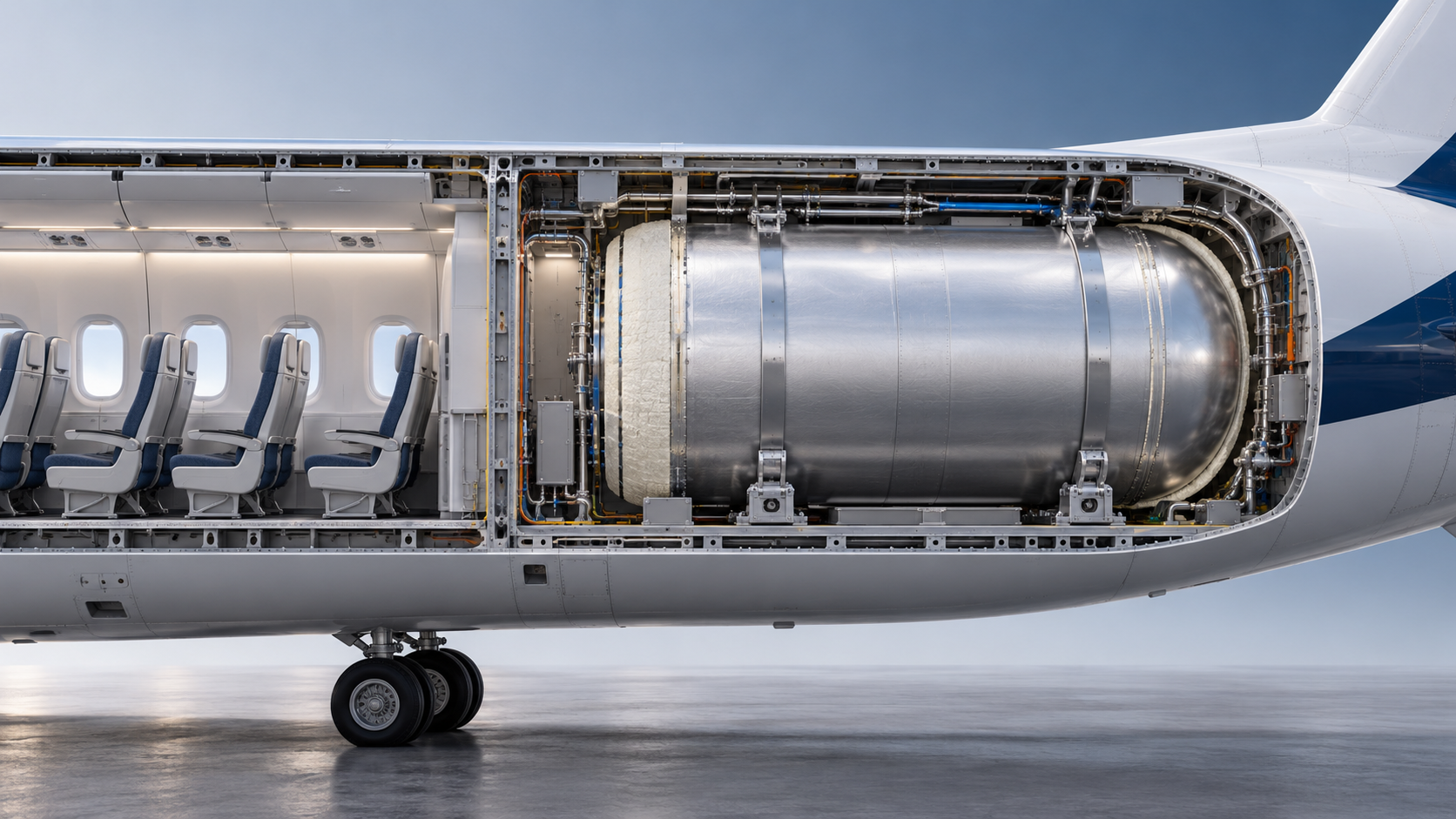
A cryogenic engine is only one part of the selection. Long-duration storage is usually the harder issue. Heat enters a tank through supports, plumbing penetrations, electrical paths, radiation, and imperfect insulation. Once a cryogenic propellant absorbs enough heat, pressure rises and the system must either vent vapor, actively cool the fluid, consume it, or tolerate a changing tank state.
For short mission durations, passive insulation, mission sequencing, and careful loading operations may be sufficient. For extended orbital storage, the design conversation shifts toward zero-boil-off or low-boil-off strategies. These may involve multilayer insulation, vapor-cooled shields, sunshield geometry, tank placement, active cryocoolers, thermal straps, and tightly managed spacecraft attitudes. Each measure can improve retention, but each also adds mass, power demand, interfaces, verification work, and potential failure modes.
A useful evaluation discipline is to separate engine readiness from propellant readiness. An engine may be restartable after a long coast, while the usable propellant quantity, temperature distribution, tank pressure, and liquid-vapor configuration may no longer be within required firing limits. A credible assessment must model the entire fluid state over time, not merely calculate an initial propellant load.
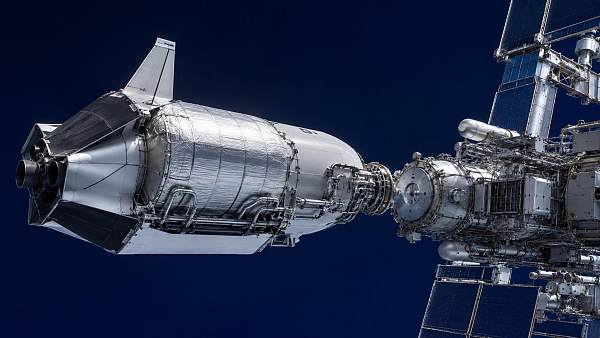
Microgravity further complicates matters. Propellant does not settle naturally at the bottom of a tank. Acquisition devices, surface-tension management, settling burns, tank pressure control, and line conditioning all affect whether a pump or engine receives liquid in the expected condition. These are manageable engineering problems, but they should not be treated as late-stage integration details. For an in-space logistics platform, they are mission-critical functions.
When the Infrastructure Case Is Strong
Cryogenic propulsion tends to make the most strategic sense when the spacecraft is not isolated. A one-off mission bears the full cost of specialized ground systems, loading discipline, thermal hardware, and operational expertise. A networked infrastructure architecture can spread those investments across many flights, vehicles, or customers.
For example, a depot-and-tug model can create a clearer rationale than a standalone cryogenic satellite. If propellant can be delivered, stored, gauged, transferred, and consumed through repeatable interfaces, the system begins to resemble an orbital utility rather than an experimental spacecraft. In that setting, standardization becomes as valuable as raw propulsion performance: common fill-and-drain ports, compatible docking interfaces, shared contamination rules, defined chilldown procedures, and interoperable telemetry can reduce the operational ambiguity that often surrounds cryogenic concepts.
Technical evaluators should be cautious about calling a vehicle “reusable” solely because its engine can restart. True reusability requires recoverable margins across multiple cycles: tank conditioning, seal performance, valve life, contamination control, sensor calibration, thermal recovery time, and propellant residual management. The vehicle must also be inspectable or diagnosable in a way that supports a practical turnaround decision.
A Selection Matrix Beyond Specific Impulse
A propulsion trade study often starts with thrust, specific impulse, total impulse, and dry mass. Those measures remain necessary, but they are not sufficient for satellite infrastructure decisions. The following questions reveal whether cryogenic propulsion is genuinely aligned with the architecture.
1. How long must the propellant remain on orbit?
Hours and days create one class of problem; months and years create another. Define the maximum dormant period, expected eclipse exposure, attitude profile, thermal environment, and allowable propellant loss. Do not use an average mission duration if the system must survive worst-case launch delays, contingency loitering, or missed rendezvous windows.
2. Is there enough power for thermal management?
Active cooling can reduce boil-off, but its value depends on uninterrupted electrical power, radiator performance, heat rejection geometry, and the behavior of the spacecraft during eclipse or safe mode. A power budget that works in nominal sunlight may fail to protect the propellant during a fault scenario. Thermal-control power should be assessed alongside the platform’s highest-priority loads, not as an isolated subsystem allocation.
3. Will refueling be routine, exceptional, or absent?
Cryogenic transfer is more persuasive when transfer is planned from the beginning. Retrofitting refueling capability after a spacecraft’s tanks, plumbing, avionics, and fault management have been frozen is expensive and often yields awkward compromises. If on-orbit transfer is part of the concept, the program should define transfer authority, residuals targets, contamination limits, coupling forces, disconnect behavior, and abort procedures early.
4. What is the consequence of venting?
Vent gas affects more than propellant inventory. It can alter attitude, disturb sensitive instruments, contaminate optical surfaces, complicate proximity operations, and create collision-avoidance concerns when vehicles operate near one another. The location, direction, frequency, and operational timing of vent events need to be part of the spacecraft-level analysis.
5. Is the qualification path mature enough for the mission schedule?
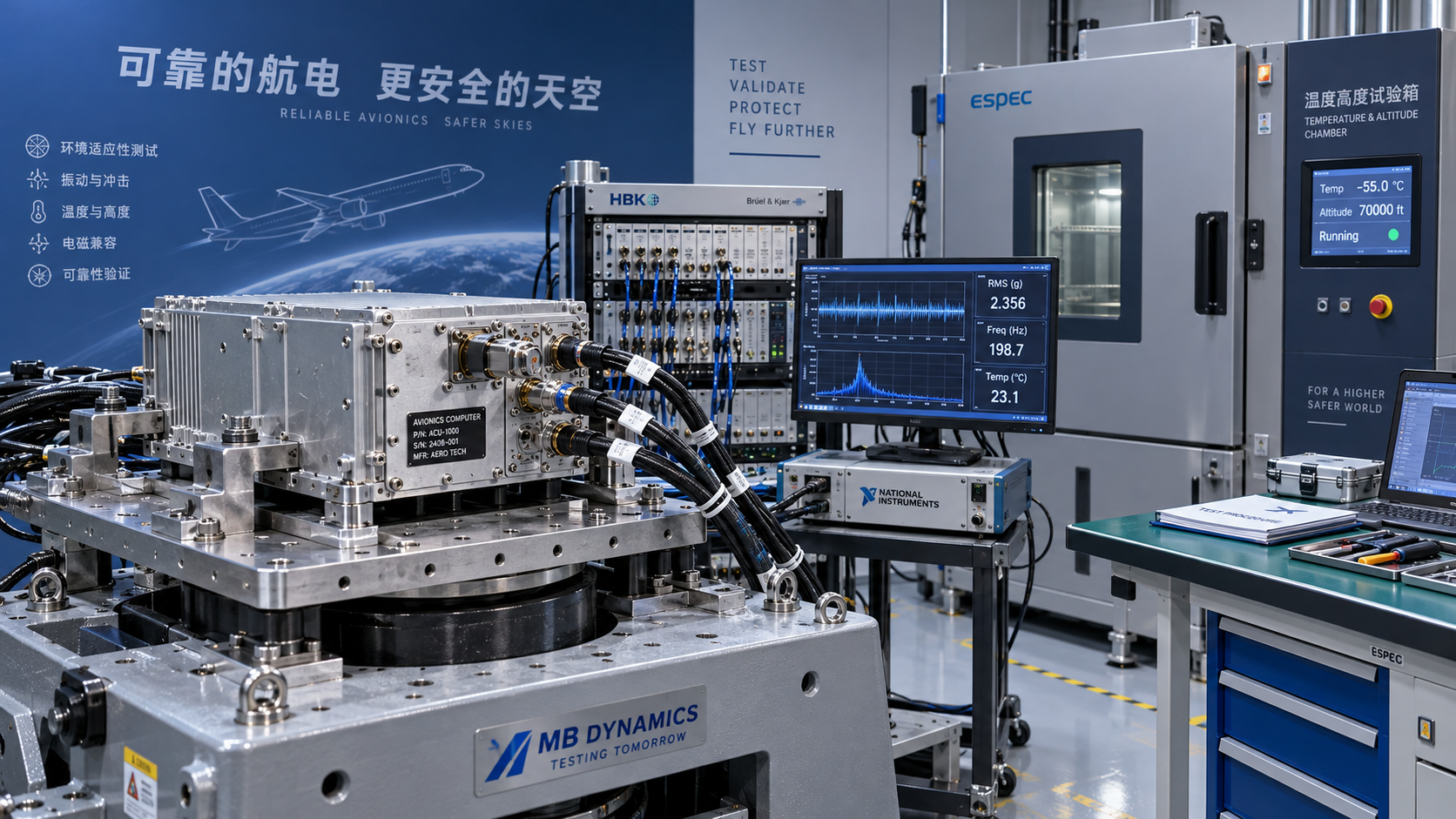
Qualification is not limited to firing an engine successfully. The program must demonstrate tank integrity through thermal cycles, valve and seal behavior at low temperatures, sensor accuracy, insulation durability, software control logic, pressure-relief function, and safe response to off-nominal thermal states. Ground testing cannot reproduce every orbital condition, so a sound verification plan needs a defensible combination of analysis, component testing, integrated testing, and flight demonstration.
Safety and Operations Cannot Be an Afterthought
Cryogenic propellants introduce a different operational culture from storable spacecraft propellants. Ground teams must manage cold surfaces, oxygen-enrichment risks where applicable, hydrogen leakage and flammability concerns, purging, inerting, vent routing, and strict sequencing during loading. On orbit, the system requires robust monitoring of pressure, temperature, liquid level or inferred mass, valve position, leak indicators, and thermal-control status.
The most resilient designs avoid relying on a single sensor or a single thermal assumption. Redundancy should be targeted at functions that prevent irreversible loss of propellant or an unsafe tank condition. Equally important is operational clarity: controllers need defined thresholds for when to cool, settle, vent, postpone a burn, or transition the vehicle into a protected state.
For organizations working across international aerospace supply chains, standards alignment should begin at the concept stage. Relevant requirements may touch launch-range safety, pressure systems, materials, contamination control, software assurance, and human-rated operations if crewed infrastructure is eventually involved. G-AIT’s cross-sector benchmarking perspective is useful here because the governing discipline is not only propulsion physics; it is also the ability to connect high-performance hardware with certification-minded systems engineering.
Common Misjudgments in Cryogenic Architecture Reviews
One recurring mistake is comparing a cryogenic system with a storable system at the engine level while excluding the thermal subsystem. A fair comparison includes insulation, radiators, power conditioning, cryocoolers where needed, structural supports, additional sensors, operational constraints, and the mass of retained propellant losses over the mission timeline.
Another is assuming that a successful launch-stage cryogenic design transfers directly to satellite infrastructure. Launch stages typically operate over relatively short periods and can accept planned depletion. An orbital platform may need repeated starts, long dormancy, rendezvous compatibility, and controllable residuals. The two environments share physics but not necessarily design priorities.
A third misjudgment is treating in-space refueling as a future add-on. If a mission depends on it economically or operationally, it must be reflected in interface control documents, autonomy design, fault protection, and ground operations from the outset.
A Practical Decision Rule for Technical Evaluators
Cryogenic propulsion is a strong candidate when higher mission energy has clear economic or strategic value, when the operating architecture can support disciplined thermal and fluid management, and when multiple missions or users can share the infrastructure burden. It is less suitable when long unattended storage is essential, service opportunities are uncertain, power margins are thin, or the mission’s velocity requirement can be met efficiently with electric or storable alternatives.
The best decision is rarely “cryogenic versus non-cryogenic” in the abstract. It is a comparison among complete operational systems. Evaluate the engine, tanks, thermal controls, transfer method, ground segment, autonomy, and qualification plan as one integrated chain. When that chain is credible, Cryogenic Propulsion systems for satellite infrastructure can unlock high-value orbital mobility. When it is not, their performance promise may be outweighed by the very infrastructure required to make that promise usable.
Article Categories
SYSTEM_ALERT_URGENT
Q3 SYMPOSIUM ON ORBITAL DYNAMICS
Registration for the Orbital Aerospace technical committee is now open. Node access required.
Recent Articles
![]() Oct 27, 2026FAA Certifies Boeing 737 MAX 10 After Years of DelaysFAA Certifies Boeing 737 MAX 10 After Years of Delays
Oct 27, 2026FAA Certifies Boeing 737 MAX 10 After Years of DelaysFAA Certifies Boeing 737 MAX 10 After Years of Delays Oct 27, 2026Can an intermodal connectivity platform reduce rail handoff delays?Can an intermodal connectivity platform reduce rail handoff delays?
![]() Oct 26, 2026Chery Unveils Global Smart Mobility Strategy Targeting Robotaxis and eVTOLsChery Unveils Global Smart Mobility Strategy Targeting Robotaxis and eVTOLs
Oct 26, 2026Chery Unveils Global Smart Mobility Strategy Targeting Robotaxis and eVTOLsChery Unveils Global Smart Mobility Strategy Targeting Robotaxis and eVTOLs Oct 26, 2026How to evaluate avionics for helicopters used in IFR operationsHow to evaluate avionics for helicopters used in IFR operations
![]() Oct 25, 2026Ukraine’s Defence Minister Says SpaceX Satellite Services Restored After Speed RestrictionsUkraine’s Defence Minister Says SpaceX Satellite Services Restored After Speed Restrictions
Oct 25, 2026Ukraine’s Defence Minister Says SpaceX Satellite Services Restored After Speed RestrictionsUkraine’s Defence Minister Says SpaceX Satellite Services Restored After Speed Restrictions Oct 25, 2026How satellite infrastructure for IoT affects sensor reporting delaysHow satellite infrastructure for IoT affects sensor reporting delays
![]() Oct 24, 2026China Successfully Launches Yaogan 50-03 SatelliteChina Successfully Launches Yaogan 50-03 Satellite
Oct 24, 2026China Successfully Launches Yaogan 50-03 SatelliteChina Successfully Launches Yaogan 50-03 Satellite Oct 24, 2026How gradients affect traction power needs in high-speed rolling stockHow gradients affect traction power needs in high-speed rolling stock
![]() Oct 23, 2026FAA Proposes Checks on Nearly 2,000 Boeing 737NGs Over Loss-of-Control RiskFAA Proposes Checks on Nearly 2,000 Boeing 737NGs Over Loss-of-Control Risk
Oct 23, 2026FAA Proposes Checks on Nearly 2,000 Boeing 737NGs Over Loss-of-Control RiskFAA Proposes Checks on Nearly 2,000 Boeing 737NGs Over Loss-of-Control Risk Oct 23, 2026How fuel choice affects specific impulse in liquid oxygen propulsionHow fuel choice affects specific impulse in liquid oxygen propulsion
![]() Oct 22, 2026QuantumScape Plans 100 MWh Solid-State Battery Line Targeting Aerospace and Other MarketsQuantumScape Plans 100 MWh Solid-State Battery Line Targeting Aerospace and Other Markets
Oct 22, 2026QuantumScape Plans 100 MWh Solid-State Battery Line Targeting Aerospace and Other MarketsQuantumScape Plans 100 MWh Solid-State Battery Line Targeting Aerospace and Other Markets Oct 22, 2026How tank size limits hydrogen aircraft range on regional flightsHow tank size limits hydrogen aircraft range on regional flights
![]() Oct 21, 2026FAA Certifies Boeing 737-10, Clearing Regulatory Hurdle for DeliveriesFAA Certifies Boeing 737-10, Clearing Regulatory Hurdle for Deliveries
Oct 21, 2026FAA Certifies Boeing 737-10, Clearing Regulatory Hurdle for DeliveriesFAA Certifies Boeing 737-10, Clearing Regulatory Hurdle for Deliveries Oct 21, 2026How are electric vertical takeoff aircraft certified in the US?How are electric vertical takeoff aircraft certified in the US?
![]() Oct 20, 2026Ohio Department of Transportation Releases Three-Year Advanced Air Mobility Action PlanOhio Department of Transportation Releases Three-Year Advanced Air Mobility Action Plan
Oct 20, 2026Ohio Department of Transportation Releases Three-Year Advanced Air Mobility Action PlanOhio Department of Transportation Releases Three-Year Advanced Air Mobility Action Plan Oct 20, 2026How does magnetic flux density in tesla affect maglev lift force?How does magnetic flux density in tesla affect maglev lift force?
![]() Oct 19, 2026ZeroAvia Completes Key Ground Tests of ZA600 Hydrogen Fuel Cell PowertrainZeroAvia Completes Key Ground Tests of ZA600 Hydrogen Fuel Cell Powertrain
Oct 19, 2026ZeroAvia Completes Key Ground Tests of ZA600 Hydrogen Fuel Cell PowertrainZeroAvia Completes Key Ground Tests of ZA600 Hydrogen Fuel Cell Powertrain Oct 19, 2026How spacecraft integration affects advanced propulsion costsHow spacecraft integration affects advanced propulsion costs
 Oct 18, 2026How chilldown prevents cavitation in cryogenic engine systemsHow chilldown prevents cavitation in cryogenic engine systems
 Oct 17, 2026How explainability affects algorithmic trust in AI flight systemsHow explainability affects algorithmic trust in AI flight systems
 Oct 16, 2026How to evaluate transportation technology for Middle East heatHow to evaluate transportation technology for Middle East heat
 Oct 15, 2026How common-cause failures defeat redundancy logic in European avionicsHow common-cause failures defeat redundancy logic in European avionics
 Oct 14, 2026How DO-160 applies to aerospace technology testing for avionicsHow DO-160 applies to aerospace technology testing for avionics
 Oct 13, 2026How fuel price volatility shapes commercial aviation cost trendsHow fuel price volatility shapes commercial aviation cost trends
 Oct 12, 2026How to qualify aerospace manufacturing components for traceabilityHow to qualify aerospace manufacturing components for traceability
 Oct 11, 2026Which certification hurdles are slowing hydrogen aviation in Europe?Which certification hurdles are slowing hydrogen aviation in Europe?
 Oct 10, 2026What evidence should a magnetic gap stability supplier provide?What evidence should a magnetic gap stability supplier provide?
 Oct 09, 2026Which ISO standards matter when qualifying industrial technology suppliers?Which ISO standards matter when qualifying industrial technology suppliers?
 Oct 08, 2026When does reusability actually lower launch vehicle costs?When does reusability actually lower launch vehicle costs?
 Oct 07, 2026Where to find reliable product knowledge resources in the Middle EastWhere to find reliable product knowledge resources in the Middle East
 Oct 06, 2026What drives high-speed rail systems cost per kilometer?What drives high-speed rail systems cost per kilometer?
 Oct 05, 2026When does hydrogen propulsion for UAV extend mission range enough to justify it?When does hydrogen propulsion for UAV extend mission range enough to justify it?
 Oct 04, 2026How rail systems integration reduces commissioning delaysHow rail systems integration reduces commissioning delays
 Oct 03, 2026How to evaluate an advanced propulsion manufacturer for hydrogen systemsHow to evaluate an advanced propulsion manufacturer for hydrogen systems
 Oct 02, 2026How to qualify aircraft components for OEM production approvalHow to qualify aircraft components for OEM production approval